Glen Oaks Was Built in 1947. The Asbestos Came With It.
If your building or home went up between the late 1940s and 1960s, there’s a real chance asbestos is somewhere inside it and a renovation, a permit application, or a water event is all it takes to make it your problem today. We handle asbestos abatement in Glen Oaks with the full NYC DEP compliance stack, 24/7 availability, and the licensing to see the job through from inspection to clearance.
I needed a professional consultation explanation of procedure for safe removal of Asbestos in my apartment complex. Without having an account yet, I was very impressed with the caring, knowledgeable and generous advice offered by Jessica, and will look forward to doing business in the future. Thank you so much! I feel much more informed about a sometimes scary endeavor. Peace. Nancy Silva Mineola, NY.
Mia Munoz
Used this company to clean up some water flood in my house. They were fast and easy to work with.very professional, Would recommend to anyone!
Nini Valle
Great company, had a flood and they responded quickly and efficiently. Billed my insurance company directly. I highly recommend this company!
joe colapietro, jr
I had pipe freeze in my basement right before a snow storm and they made to within an hour to help start the clean up process. They we by our side throughout the entire process and even helped with the insurance company. They did such a great job with the cleanup, repair, remidiation, I contracted them to perform the repairs and finishes in the basement. They came with enough manpower and material to get the job done. Leo and Jessica were nothing but a pleasure to deal with!!
Cristian Arredondo c
I had some water damage in my home and Green Island was able to take care of my issue quickly and effectively. I am very pleased with the work they did. They responded quickly and were very professional.
Michael M
Outstanding service! From the office to the field crew everyone was friendly, helpful and responsive. I highly recommend Green Island Group.
Your Glen Oaks Renovation Moves Forward. Your Family Stays Safe.
When asbestos shows up mid-project, everything stops. The contractor pauses. The permit gets flagged. Suddenly you’re not thinking about your renovation you’re trying to figure out who to call, what forms to file, and whether your family has been exposed to something dangerous. That’s a hard place to be, and it’s exactly the situation we help Glen Oaks residents get out of.
Glen Oaks Village was built in 1947 across 134 two-story brick buildings. The surrounding streets the Cape Cods and colonials in Parkwood Estates and beyond went up in the same decade. That era of construction is defined by one thing above all else: asbestos was standard. Floor tiles, pipe insulation, boiler wrap, ceiling texture, drywall compound it was everywhere, and in a lot of these buildings, it’s still there. Not always disturbed, not always dangerous yet, but present.
Once the abatement is done correctly and the air clearance confirms the space is clean, you get your life back. The renovation continues. The permit clears. The co-op board gets the documentation it needs. And you have a written record a clearance certificate that protects your property value whether you’re staying or eventually selling.
Every License the City Requires. One Number to Call.
We are a family-owned environmental remediation contractor serving Glen Oaks, Queens, all five NYC boroughs, Long Island, and the surrounding region. We hold the NYS Department of Labor Asbestos license, NYC DEP compliance credentials, NYC General Contractor license, NYC BIC license, USEPA Lead and RRP certification, and NYS/NYC MWBE certification the complete regulatory stack for asbestos abatement work in New York City, not just part of it.
That matters in Glen Oaks specifically. The area sits at the Queens-Nassau County border, and the regulatory environment is entirely NYC NYC DEP forms, NYC DOB permit clearance requirements, and the updated asbestos control rules that took effect in February 2025. We work in this framework every day. We know what an ACP-5 requires versus an ACP-7. We know what the co-op board at Glen Oaks Village expects in terms of documentation alongside the city paperwork.
We’re also IICRC certified for water damage restoration, which is relevant in older Queens housing stock where a pipe freeze or a roof leak can expose deteriorating insulation overnight. One call handles both.
From Glen Oaks Inspection to Clearance Certificate. Here's Exactly What Happens.
It starts with an inspection. A certified asbestos investigator assesses the area affected by your planned work whether that’s a basement renovation in Glen Oaks Village, a boiler replacement in a 1947 co-op building, or a bathroom gut in a Parkwood Estates colonial. Samples are collected and tested. You get a clear answer on what’s there, where it is, and what the regulatory path forward looks like.
If abatement is required, we file the appropriate notification with the NYC DEP ACP-5 for smaller scopes, ACP-7 for designated asbestos projects before any material is disturbed. This step is not optional in New York City, and it’s the step that a lot of property owners don’t realize has to happen before the DOB will issue a construction permit. We handle the paperwork, not you.
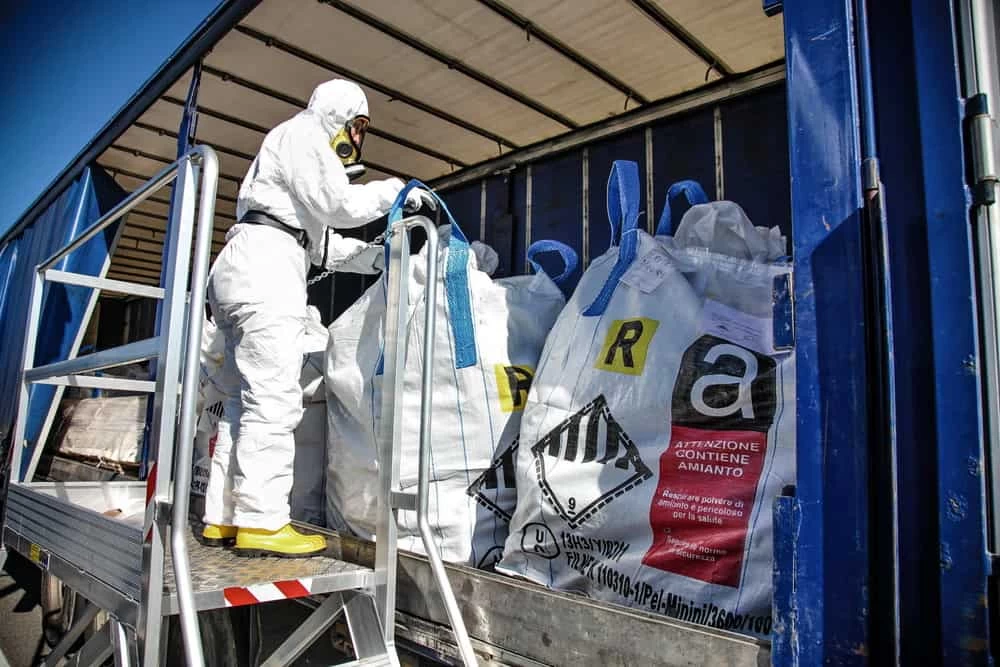
The removal itself is done under containment, with proper personal protective equipment and disposal protocols that meet both NYS DOL Industrial Code Rule 56 and EPA NESHAP requirements. When the work is complete, we conduct post-abatement air clearance testing. You receive a documented clearance certificate the kind that satisfies the NYC DEP, the DOB, your co-op board, and any future buyer’s attorney. If reconstruction follows, our NYC General Contractor license means we can take the project from cleared space to finished room without handing you off to someone new.
Asbestos abatement in Glen Oaks isn’t a single task it’s a sequence of regulated steps, and every one of them matters. The inspection and testing phase identifies asbestos-containing materials in the affected area: the 9×9 vinyl floor tiles common in postwar apartments, the pipe insulation wrapped around original boiler systems, the textured ceilings and joint compound from decades-old renovations. We document what we find and explain what it means for your specific project.
From there, we manage the full compliance chain DEP notification, containment setup, licensed removal, waste disposal, and post-clearance air monitoring. For Glen Oaks Village shareholders navigating the co-op board’s renovation approval process, we provide the complete documentation package that satisfies both city regulatory requirements and board-level oversight. For building managers dealing with Local Law 97 upgrade timelines boiler replacements, HVAC retrofits, insulation improvements across multiple buildings we can coordinate multi-unit assessments that keep capital improvement projects moving without compliance gaps.
Because older Queens buildings frequently contain both asbestos and lead-based paint, our USEPA Lead and RRP certification means we can address both hazards under one project scope. You don’t need two contractors, two contracts, or two sets of paperwork. And if the job involves water damage that uncovered the problem in the first place, our IICRC water restoration certification means we handle that too.
Do I need asbestos testing before renovating my Glen Oaks Village co-op unit?
Yes and this applies whether you’re adding a dormer, finishing a basement, updating a bathroom, or replacing flooring. Under NYC DEP rules, any work that could disturb asbestos-containing materials requires a certified asbestos investigation before the work begins. In a building constructed in 1947, the probability of encountering asbestos in floor tiles, pipe insulation, ceiling texture, or drywall compound is high enough that skipping this step is a real risk both to your health and to your permit timeline.
Beyond the regulatory requirement, Glen Oaks Village’s co-op board has its own renovation approval process. The board expects documentation that hazardous materials have been properly assessed before construction starts. Getting the asbestos investigation done early before you finalize your renovation scope with your contractor keeps everything on schedule and gives the board what it needs to approve the project without delays.
What's the difference between an ACP-5 and an ACP-7, and which one do I need?
An ACP-5 is an asbestos assessment report filed when the planned scope of work does not constitute a formal “Asbestos Project” as defined by the NYC DEP. It’s completed by a Certified Asbestos Investigator and essentially certifies that either no asbestos-containing materials are present in the affected area, or that the work won’t disturb any regulated materials. An ACP-7 is the notification required when the work does qualify as an Asbestos Project meaning regulated asbestos materials will be disturbed and must be removed under a licensed abatement contractor.
Which one applies to your situation depends on what’s found during the inspection and what your renovation involves. For most residential co-op renovations in Glen Oaks Village a bathroom gut, a flooring replacement, a basement buildout the determination comes down to what materials are present and how much will be disturbed. We assess the scope, determine the correct filing, and handle the submission with the NYC DEP so the right paperwork is in place before your contractor picks up a tool.
How does Local Law 97 affect asbestos abatement requirements in Glen Oaks buildings?
Local Law 97 mandates greenhouse gas emissions reductions for buildings over 25,000 square feet, and Glen Oaks Village with its 134 buildings and 2,904 units is squarely in scope. The compliance path for most buildings involves replacing aging boiler systems, upgrading HVAC equipment, and improving insulation. Every one of those projects in a building constructed in 1947 requires an asbestos assessment before the work begins, because the systems being replaced are exactly the kind that were routinely insulated with asbestos-containing materials during that era.
This isn’t a one-time issue. The Local Law 97 compliance timeline runs through the late 2020s, and the estimated cost of upgrades for Glen Oaks Village has been reported in the range of $24 to $50 million. That’s a multi-year wave of capital improvement projects, each of which needs asbestos clearance as a prerequisite. For co-op boards and building managers planning this work, getting a reliable abatement contractor who understands the NYC DEP process and can handle multiple buildings on a coordinated schedule is a practical necessity, not a nice-to-have.
What happens if asbestos is found during a water damage event in my Glen Oaks home?
Water damage in older Glen Oaks homes frequently uncovers asbestos-containing materials that were previously stable pipe insulation that was intact until a freeze-thaw cycle cracked it, floor tiles that held together until water got underneath them, ceiling materials that stayed put until a roof leak soaked through. Once those materials are disturbed or deteriorating, they can release fibers into the air, and that’s when the health risk becomes real and immediate.
The challenge in this situation is that you’re dealing with two emergencies at once the water damage itself and the potential asbestos exposure. We are both IICRC certified for water damage restoration and NYS DOL licensed for asbestos abatement, which means we can respond to the water event, identify any asbestos hazards it has created, and address both under a single mobilization. We also work directly with insurance carriers, which matters when you’re dealing with a water damage claim that now has an asbestos component. We’re available 24/7, and our typical response time is within the hour.
How much does asbestos removal cost for a home or co-op in Glen Oaks, NY?
Cost varies based on the type of material, the square footage involved, and the complexity of the regulatory filing required. As a general benchmark, asbestos inspection and testing typically runs in the range of $250 to $800. Removal costs for interior materials floor tiles, pipe insulation, ceiling texture generally fall between $5 and $20 per square foot, though in New York City, where labor costs are higher and regulatory compliance adds time to every project, you should expect the higher end of that range to be more representative.
For a typical co-op unit renovation in Glen Oaks Village, the total abatement cost depends heavily on how many materials are affected and whether the filing requires an ACP-5 or a full ACP-7 Asbestos Project notification. Larger-scope projects boiler room insulation removal, multi-room flooring abatement, or building-wide assessments for capital improvement planning will be priced differently than a single-room residential job. We provide clear, itemized estimates before any work begins so you understand exactly what you’re paying for and why.
Is Green Island Group licensed to handle asbestos abatement in Glen Oaks specifically?
Yes and the distinction matters in Glen Oaks more than most people realize. New York City has its own asbestos regulatory framework that operates on top of the state requirements. The NYC Department of Environmental Protection requires DEP-specific filings, compliance with the NYC asbestos control program rules (including amendments that took effect in February 2025), and coordination with the NYC Department of Buildings for permit clearance. Contractors who hold only a NYS DOL Asbestos license but lack active NYC credentials may not be current on the city-specific requirements and that creates compliance exposure for the property owner, not just the contractor.
We hold the NYS DOL Asbestos license, an active NYC BIC license, and a NYC General Contractor license. We operate in the NYC DEP regulatory environment regularly, across all five boroughs, and we’re current on the 2025 rule amendments. For Glen Oaks residents specifically whether you’re in a Glen Oaks Village co-op, a single-family home on the Queens side of the Nassau border, or a building managed by a co-op board navigating capital improvement compliance we have the credentials the city actually requires, not just the ones that look good on a website.