If your Glendale home was built before 1980, asbestos abatement isn’t a maybe it’s a real possibility. We handle the inspection, removal, and NYC DEP clearance so you’re not left figuring it out alone.
I needed a professional consultation explanation of procedure for safe removal of Asbestos in my apartment complex. Without having an account yet, I was very impressed with the caring, knowledgeable and generous advice offered by Jessica, and will look forward to doing business in the future. Thank you so much! I feel much more informed about a sometimes scary endeavor. Peace. Nancy Silva Mineola, NY.
Mia Munoz
Used this company to clean up some water flood in my house. They were fast and easy to work with.very professional, Would recommend to anyone!
Nini Valle
Great company, had a flood and they responded quickly and efficiently. Billed my insurance company directly. I highly recommend this company!
joe colapietro, jr
I had pipe freeze in my basement right before a snow storm and they made to within an hour to help start the clean up process. They we by our side throughout the entire process and even helped with the insurance company. They did such a great job with the cleanup, repair, remidiation, I contracted them to perform the repairs and finishes in the basement. They came with enough manpower and material to get the job done. Leo and Jessica were nothing but a pleasure to deal with!!
Cristian Arredondo c
I had some water damage in my home and Green Island was able to take care of my issue quickly and effectively. I am very pleased with the work they did. They responded quickly and were very professional.
Michael M
Outstanding service! From the office to the field crew everyone was friendly, helpful and responsive. I highly recommend Green Island Group.
Most Glendale homeowners don’t go looking for asbestos. They find it mid-renovation when a contractor pulls up old floor tiles, or after a pipe bursts in a basement that hasn’t been touched in decades. By the time you’re calling someone, the clock is already ticking you’ve got a contractor scheduled, a permit pending, or a real estate closing on the horizon.
That’s where the outcome matters most. When asbestos abatement is done right, you get more than a clean space. You get the ACP-5 clearance documentation that the NYC Department of Buildings requires before issuing your renovation permit. You get air quality results that confirm your family is safe to return. And if this started with a water damage event which is common in Glendale’s aging pre-war rowhouses and semi-detached homes you get documentation that satisfies your insurance carrier and closes the claim.
Glendale’s housing stock is dense, the buildings are old, and the materials inside them reflect decades of construction practices that relied heavily on asbestos. The neighborhood’s brick rowhouses and attached homes, many dating back to the early 1900s, almost always contain asbestos in multiple places simultaneously floor tiles, pipe insulation, boiler room materials, joint compound, and sometimes roofing. Getting it handled properly the first time means your renovation moves forward, your sale doesn’t fall apart, and you’re not revisiting this problem six months from now.
We hold both the NYS Department of Labor Asbestos Handling License and the NYC Department of Environmental Protection Asbestos Contractor License the two separate credentials required to legally perform asbestos abatement anywhere in New York City, including Glendale. Many contractors working out of Nassau County or Westchester hold the state license but not the NYC DEP license. That gap matters here because Glendale is Queens, and Queens plays by New York City’s rules.
We’ve completed more than 5,000 abatement projects including occupied urban residential buildings, multi-family structures, and mixed-use properties throughout the five boroughs. We know the ARTS filing system, the ACP-5 form process, the 7-day DEP notification requirement, and how to coordinate clearance documentation so your NYC DOB permit doesn’t stall. We also hold M/WBE certification from the NYS Office of General Services, a government-issued credential that goes beyond standard licensing.
Every person who walks into your Glendale property carries their own individual NYS DOL handler or supervisor certification not just a company-level license. That’s the standard on every job.
From Free Inspection to Clearance Docs Here's the Sequence
It starts with a free on-site inspection. One of our licensed inspectors comes to your Glendale property, walks through the areas in question, identifies which materials need laboratory testing, and gives you a clear picture of what you’re actually dealing with no charge, no obligation. For homes in Glendale’s historic districts or along the older corridors near Myrtle Avenue and Cooper Avenue, that initial assessment often turns up asbestos in more than one material type. You’ll know exactly what’s there before any decisions are made.
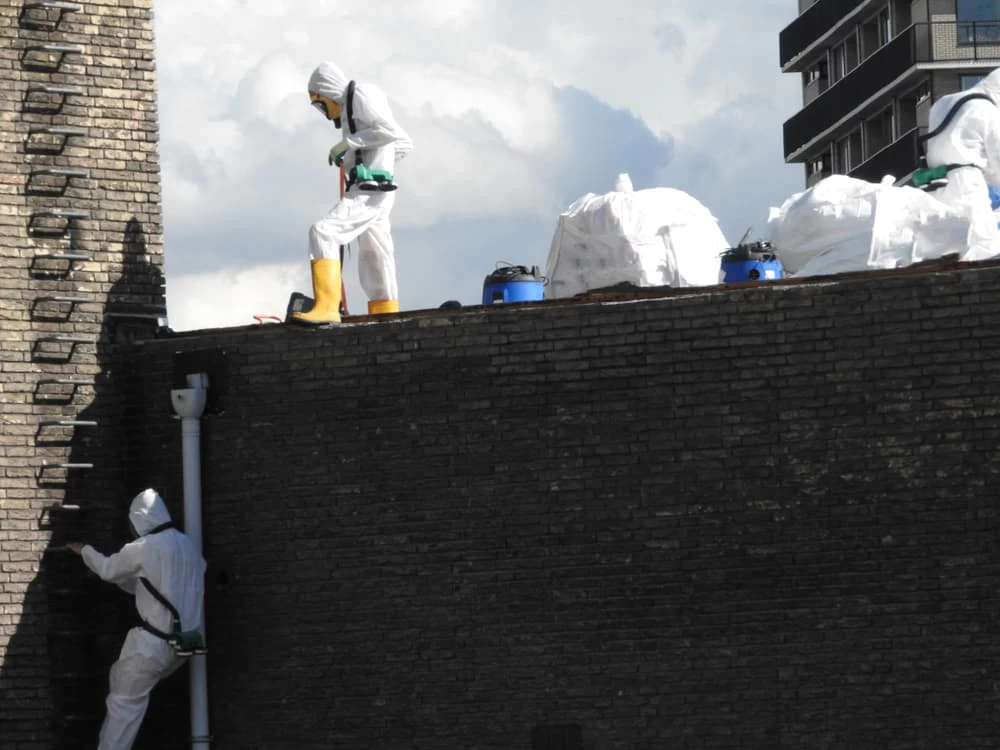
Once the scope is confirmed, we set up full negative air pressure containment in every work area. This matters especially in Glendale’s attached and semi-detached housing environment, where you’re often sharing a wall with a neighbor. Air flows into the containment zone, not out of it, using HEPA-filtered scrubbers and sealed polyethylene barriers. Every material floor tiles, pipe insulation, popcorn ceiling texture, duct wrap, joint compound, whatever’s present is removed, packaged, and transported to a licensed disposal facility.
After removal, post-abatement air clearance testing is conducted by an independent certified industrial hygienist. The results confirm that fiber counts are at safe levels, and that documentation is handed to you in the format the NYC DEP and NYC DOB require. If you’re working toward an ACP-5 filing, that clearance is the final piece. If you’re dealing with an insurance claim, it’s what closes it out. Either way, you walk away with a paper trail that proves the job was done correctly.
Every Material Type, One Licensed Team, One Clearance Report
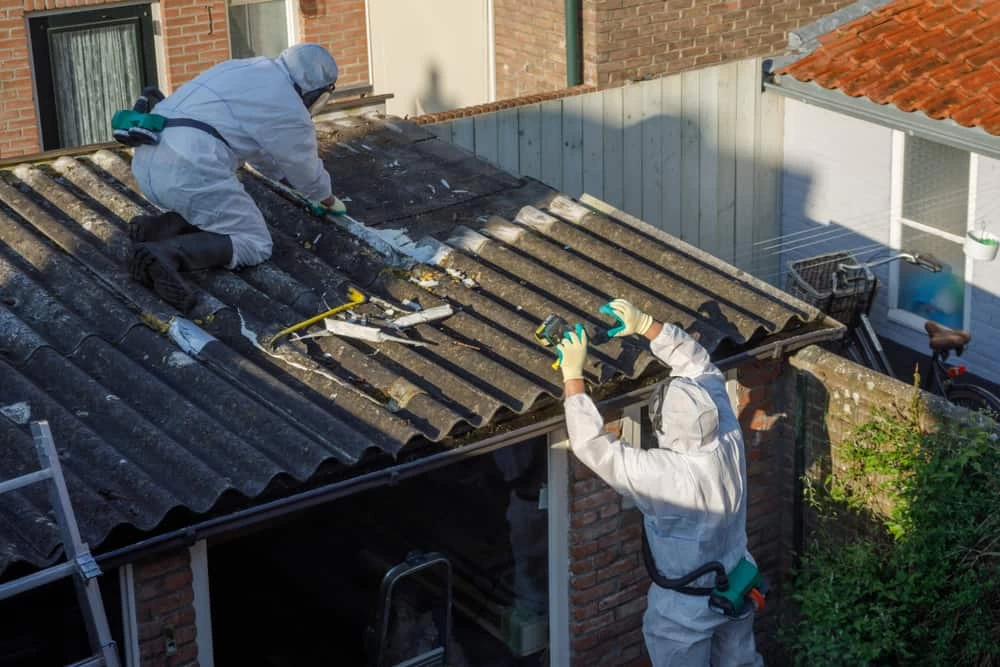
Asbestos doesn’t usually show up in just one place in a Glendale home. A house built in 1940 or 1955 might have asbestos-containing vinyl floor tiles in the kitchen and basement, pipe insulation wrapped around the heating system, textured acoustic ceiling material in the living room, and joint compound behind the walls. We handle all of it asbestos tile removal, popcorn ceiling removal, pipe and boiler insulation, duct wrap, roofing underlayment, and siding so you’re not coordinating multiple contractors or getting multiple clearance reports for a single property.
For Glendale homeowners navigating the NYC permit process, the practical value of that single-scope approach is real. The ACP-5 form requires a licensed investigator to certify that all ACMs have been properly abated before the NYC Department of Buildings will issue your renovation permit. If you’ve only addressed one material type and missed another, the permit process stalls. Our inspectors are trained to identify every common asbestos-containing material in the pre-war and mid-century building stock that defines this neighborhood, so nothing gets missed on the first pass.
If your abatement is connected to a water damage event a burst pipe, basement flooding, or storm damage to an older Glendale home we also handle direct billing with your insurance carrier. You don’t have to manage the paperwork on top of everything else. We coordinate the claim, complete the abatement, and deliver the documentation your insurer needs to close it out.
Do I need an ACP-5 form before renovating my Glendale home?
Yes and this is one of the most important things to understand before you start any renovation project in Glendale. Because Glendale is within New York City, the NYC Department of Buildings requires a completed ACP-5 form before issuing a renovation or demolition permit on any property. The ACP-5 must be filed by a licensed asbestos investigator and certifies either that no asbestos-containing materials are present in the areas to be disturbed, or that all ACMs have been properly abated.
This isn’t a formality you can work around. It’s a hard stop in the NYC permit process no ACP-5, no permit. For Glendale homeowners with a contractor already scheduled or a closing date on the calendar, a delayed or incomplete ACP-5 filing can push an entire project back by weeks. We handle this filing as part of the abatement process and know the NYC DEP’s ARTS electronic submission system, the 7-day advance notification requirement, and how to sequence the clearance documentation so your permit timeline doesn’t slip.
How do I know if my Glendale home actually has asbestos?
The short answer is: you can’t know without testing. Visual inspection alone cannot confirm whether a material contains asbestos it requires laboratory analysis of a physical sample. What you can do is understand the risk level based on your home’s age. If your Glendale home was built before 1980, the NYC DEP’s own guidance states that asbestos can be found in almost all buildings of that vintage, and the majority of Glendale’s housing stock predates that threshold by decades.
The materials most likely to contain asbestos in a Glendale home are 9×9 and 12×12 inch vinyl floor tiles, pipe and boiler insulation, acoustic ceiling texture, drywall joint compound, and roofing underlayment. Many of Glendale’s brick rowhouses and semi-detached homes especially those in the historic corridors of western Glendale were built when these materials were standard. A free on-site inspection from us will identify which materials need to be sampled and tested, so you know exactly what you’re dealing with before any renovation work begins.
What happens if asbestos is disturbed during a renovation in Queens?
If asbestos-containing material is disturbed without proper containment and removal procedures, microscopic fibers become airborne and can be inhaled which is where the health risk comes from. In a practical sense for a Glendale homeowner, it also creates a serious regulatory problem. Disturbing ACMs without following NYC DEP protocols can result in stop-work orders, fines, and mandatory remediation that is significantly more expensive than planned abatement would have been.
In Glendale’s attached and semi-detached housing environment, the risk extends beyond your own unit. Shared walls, common basement spaces, and adjacent units mean that fiber migration from an improperly handled disturbance can affect your neighbors. If a renovation contractor pulls up old floor tiles or opens a wall without first confirming the materials are asbestos-free, the right move is to stop work immediately, ventilate the space, and call a licensed abatement contractor. Do not run fans or HVAC systems that could spread fibers further. We can assess the situation, contain the affected area, and get you back on track with the proper clearance documentation.
How long does asbestos abatement typically take for a Glendale property?
The timeline depends on how much material needs to be removed and how many areas of the property are affected. For a single-material abatement say, floor tile removal in one room of a Glendale rowhouse the work itself can often be completed in one to two days. A larger scope involving pipe insulation, ceiling texture, and floor materials across multiple rooms or levels will take longer, typically three to five days for the physical removal phase.
What most Glendale homeowners don’t factor in initially is the regulatory timeline on top of the physical work. NYC DEP requires a minimum 7-day advance notification before most asbestos abatement projects can begin. That means from the time you confirm the scope of work and sign off on the estimate, there’s a mandatory waiting period before the crew can mobilize. Planning for that window upfront especially if you have a contractor scheduled or a permit deadline is essential. We factor this into the project schedule from the start so there are no surprises when the calendar fills in.
Is asbestos abatement covered by homeowners insurance in New York?
It depends on how the asbestos was discovered and what triggered the abatement need. In New York, homeowners insurance policies generally do not cover asbestos abatement as a standalone, planned project. However, if asbestos-containing materials were disturbed or damaged as a direct result of a covered loss a burst pipe, water damage from a storm, or a structural event the abatement required to remediate that damage is often covered as part of the broader claim.
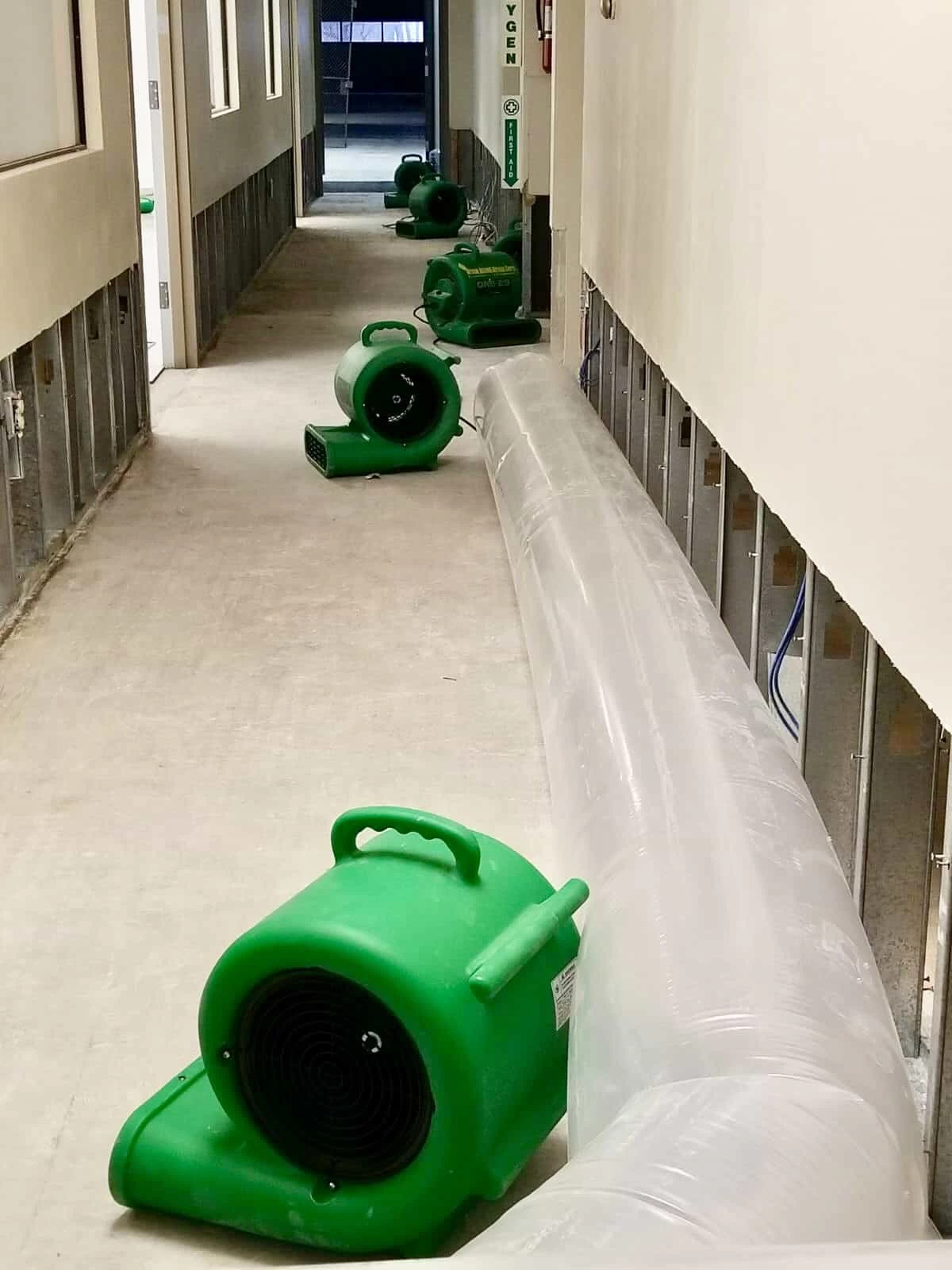
This scenario is particularly common in Glendale, where the older housing stock means aging pipe systems and original plumbing are frequently involved in water damage events. A burst pipe in a pre-war Glendale home can saturate asbestos-containing floor tiles and damage pipe insulation simultaneously, creating a situation where both water damage restoration and asbestos abatement need to happen together. We handle direct billing with insurance carriers, which means we work with your insurer directly rather than putting the paperwork burden on you. If you’re unsure whether your specific situation is covered, we can help you understand what documentation your carrier will need.
Do I need to leave my home during asbestos abatement in Glendale?
For most abatement projects in occupied residential properties, yes you and your family should not be in the home during active removal work. This isn’t a blanket rule for every scenario, but for the type of abatement work common in Glendale’s older housing stock floor tile removal, pipe insulation, or ceiling texture temporary relocation during the work period is the standard recommendation. The containment systems we set up are designed to prevent fiber migration, but keeping occupants out of the work area during removal is the safest approach.
In Glendale’s semi-detached and rowhouse environment, this also means communicating with adjacent neighbors if the work is near a shared wall or common space. We address this as part of the job setup the negative air pressure containment and HEPA filtration systems are specifically designed for dense residential environments where the work area shares boundaries with neighboring units. Once the removal is complete and post-abatement air clearance testing confirms that fiber counts are at safe levels, you’ll have the documentation that confirms it’s safe to return. That clearance report is the objective answer to the question not just a contractor’s word.