If your home was built before 1980 and most in Glenerie Lake Park were asbestos abatement may not be optional. We’re NYS DOL licensed and ready to handle it the right way.
I needed a professional consultation explanation of procedure for safe removal of Asbestos in my apartment complex. Without having an account yet, I was very impressed with the caring, knowledgeable and generous advice offered by Jessica, and will look forward to doing business in the future. Thank you so much! I feel much more informed about a sometimes scary endeavor. Peace. Nancy Silva Mineola, NY.
Mia Munoz
Used this company to clean up some water flood in my house. They were fast and easy to work with.very professional, Would recommend to anyone!
Nini Valle
Great company, had a flood and they responded quickly and efficiently. Billed my insurance company directly. I highly recommend this company!
joe colapietro, jr
I had pipe freeze in my basement right before a snow storm and they made to within an hour to help start the clean up process. They we by our side throughout the entire process and even helped with the insurance company. They did such a great job with the cleanup, repair, remidiation, I contracted them to perform the repairs and finishes in the basement. They came with enough manpower and material to get the job done. Leo and Jessica were nothing but a pleasure to deal with!!
Cristian Arredondo c
I had some water damage in my home and Green Island was able to take care of my issue quickly and effectively. I am very pleased with the work they did. They responded quickly and were very professional.
Michael M
Outstanding service! From the office to the field crew everyone was friendly, helpful and responsive. I highly recommend Green Island Group.
Most homeowners in Glenerie Lake Park aren’t thinking about asbestos until something forces the issue a renovation, a sale, or water damage from the Esopus Creek finding its way into a wall or floor they weren’t planning to touch. By the time you’re searching for answers, you’re already dealing with a timeline, a contractor waiting on you, or an insurance claim in motion. Getting this handled correctly the first time means your project doesn’t stall, your air clearance results are documented, and you’re not left wondering whether the job was actually done.
The older cottages along Glenerie Boulevard were built in an era when asbestos was in nearly everything floor tile adhesive, pipe insulation on boilers, popcorn ceilings, attic vermiculite. Many of those materials are still intact and undisturbed, which is fine until a renovation or flood event changes that. When asbestos-containing materials get wet, cut, or broken apart, the fibers become airborne. That’s when exposure happens, and that’s when NYS Industrial Code Rule 56 requires a licensed contractor not a general handyman to step in.
When the work is done right, you get documented air clearance results showing the space is clean, a compliant project file that satisfies the Town of Ulster Building Department, and the ability to move forward whether that’s finishing your renovation, listing the property, or simply knowing your family isn’t breathing something they shouldn’t be.
Licensed Asbestos Contractor Serving Glenerie Lake Park
The License That Actually Matters Here
We hold a valid NYS DOL Asbestos Handling License the specific credential required under New York State law to legally perform asbestos abatement. That’s not a general contractor license dressed up with environmental language. It’s the actual state-issued certification that allows this work to be done, and it’s something a lot of contractors operating in the Ulster County area simply don’t have.
We serve the full corridor between Kingston and Saugerties, which puts Glenerie Lake Park squarely in the middle of our regular service area. We’ve worked in the same type of properties you’ll find along the Esopus Creek older cottages, converted seasonal homes, pre-war construction with original mechanical systems. We understand what those buildings typically contain and what it takes to clear them safely.
Beyond asbestos, we also handle water damage restoration, mold remediation, lead abatement, and demolition. For a waterfront community where flood damage and hazardous materials sometimes show up together, that full-service capability matters more than it would almost anywhere else.
Asbestos Remediation Process in Glenerie Lake Park
No Guesswork Here's Exactly What the Process Looks Like
It starts with an inspection. Before anything is removed, the materials in question need to be identified and sampled. If asbestos-containing materials are confirmed, we prepare a project scope and handle the permit application with the Town of Ulster Building Department so you’re not navigating that process on your own, especially if you’re managing the renovation from out of town.
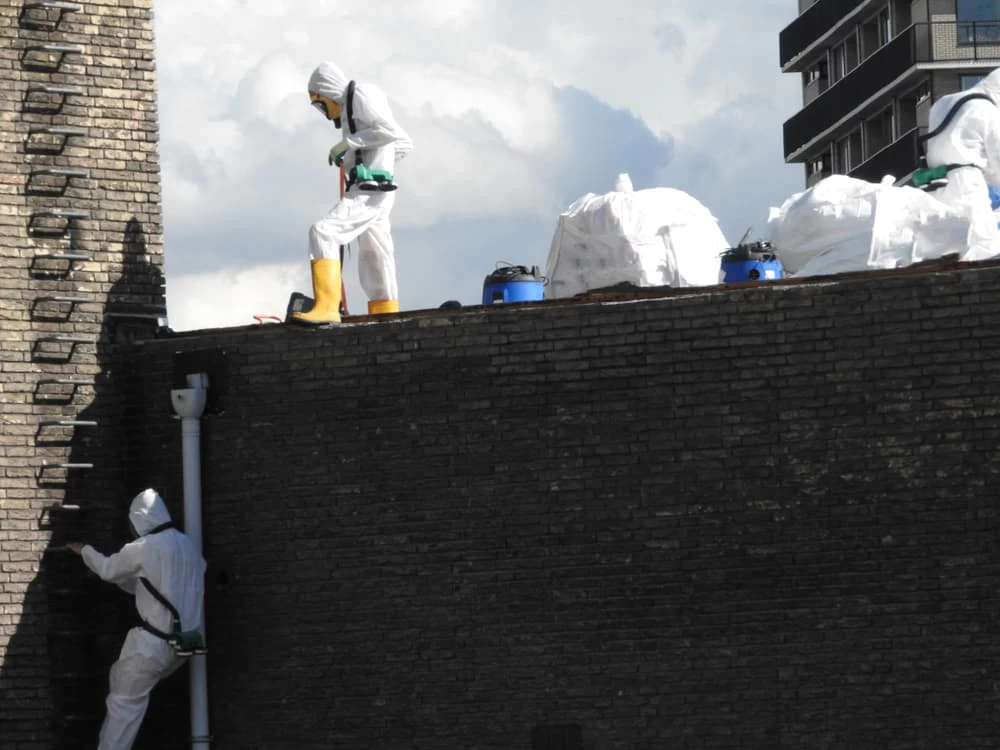
Once permits are in place, the abatement work begins under strict containment protocols required by NYS Industrial Code Rule 56. The area is sealed off, negative air pressure is established, and the materials are removed by our licensed technicians using proper protective equipment and disposal procedures. Nothing is bagged and thrown in a dumpster asbestos waste requires transport to an approved NYS disposal facility, and that documentation becomes part of your permanent project file.
After removal, air monitoring is conducted to confirm that fiber levels meet clearance standards. You receive the results in writing. That documentation matters whether you’re satisfying a building inspector, closing a real estate transaction, or simply keeping a record for a property that’s been in the family since the 1920s. The project isn’t considered complete until the clearance test confirms it.
Asbestos abatement in older Glenerie Lake Park homes typically involves one or more of the following: floor tile removal (especially the 9×9 inch vinyl tiles common in mid-century cottages, along with the black mastic adhesive beneath them), pipe insulation on older boiler and hot water systems, popcorn acoustic ceiling removal, vermiculite attic insulation, and drywall joint compound in pre-1980 construction. Each of these materials requires a different removal approach, and all of them fall under NYS Industrial Code Rule 56 when the disturbed area exceeds 10 square feet or 25 linear feet.
For properties along the Esopus Creek, there’s an added layer of complexity. Flood intrusion can saturate materials that were previously stable, making previously non-friable asbestos friable and airborne during cleanup. If you’re dealing with water damage alongside a suspected asbestos issue, we can assess and address both asbestos abatement and water damage restoration under one roof, which removes the coordination burden entirely.
Every job includes containment setup, licensed removal, proper waste transport to an approved facility, post-abatement air monitoring, and a written clearance report. We also bill insurance companies directly when the work is part of a covered claim, which is common in this area given the Esopus Creek’s history of flooding and storm-related property damage.
Does my Glenerie Lake Park cottage actually need an asbestos inspection before renovating?
If your home was built before 1980, yes and in Glenerie Lake Park, the majority of the housing stock falls into that category. Under NYS Industrial Code Rule 56, any renovation that will disturb 10 or more square feet or 25 or more linear feet of suspect material requires a proper asbestos survey before work begins. This applies whether you’re updating a kitchen, replacing flooring, upgrading a heating system, or tearing out a ceiling.
The practical reason this matters is that your general contractor likely can’t legally proceed if asbestos is discovered mid-project without a licensed abatement contractor stepping in. Getting the inspection done upfront keeps your renovation on schedule and keeps everyone on the right side of state law. For older creek-side cottages in Glenerie Lake Park many of which were originally built as seasonal homes and have had multiple owners since an inspection also gives you a clear picture of what you’re actually working with before any walls come down.
How much does asbestos removal typically cost in Ulster County, NY?
Cost depends heavily on scope what materials are involved, how much square footage or linear footage needs to be removed, and whether the project requires emergency response or standard scheduling. For a residential job in Ulster County, most asbestos abatement projects run somewhere between $1,500 and $10,000 for a contained scope. Larger projects involving multiple material types pipe insulation, floor tiles, ceiling texture, and attic vermiculite together can run higher.
What affects cost in a community like Glenerie Lake Park specifically is the age and condition of the properties. Older cottages with original boiler systems, original flooring, and original ceiling finishes often have asbestos present in several locations simultaneously. It’s not unusual to find floor tile adhesive, pipe insulation, and a popcorn ceiling in the same structure. Getting a proper scope assessment before the work starts is the most reliable way to understand what you’re actually dealing with and what the realistic cost range will be for your specific property.
What happens if flood damage disturbs asbestos in my home near the Esopus Creek?
This is one of the more common scenarios in Glenerie Lake Park, and it’s one that requires fast, careful handling. When water intrudes into an older home and saturates walls, floors, or mechanical spaces, materials that were previously stable can become friable meaning the asbestos fibers can now break apart and become airborne. At that point, standard water damage cleanup procedures are not appropriate until the asbestos is assessed and, if necessary, removed by a licensed contractor.
The right sequence is: stop the water intrusion, assess for asbestos before any demolition or drying work disturbs suspect materials, and then proceed with abatement before the water damage remediation continues. We handle both sides of this asbestos abatement and water damage restoration which means you’re not trying to schedule two separate specialty contractors in the middle of an already stressful situation. If your insurance covers the water damage, we bill the carrier directly, which removes another layer of complexity from a situation that already has enough moving parts.
Is asbestos abatement required before selling a home in the Town of Ulster?
New York State doesn’t require asbestos abatement as a condition of every home sale, but it does require disclosure of known hazardous materials under the Property Condition Disclosure Act. If an inspection during the sale process identifies asbestos-containing materials, the buyer has options they can negotiate remediation as part of the transaction, request a price reduction, or walk away. In practice, most buyers and their lenders want the issue resolved before closing, which means abatement often ends up happening anyway, just under more time pressure.
For properties in Glenerie Lake Park, where many homes are older cottages with original finishes and mechanical systems, asbestos is a realistic finding during a pre-sale inspection. Getting ahead of it before you list rather than discovering it mid-transaction gives you control over the timeline, the contractor selection, and the cost. We’ve worked with homeowners in this exact situation and can provide the documentation a buyer’s attorney or lender will need to confirm the work was done by a licensed, compliant contractor.
How long does an asbestos abatement project take from start to finish?
A straightforward residential project say, floor tile removal or pipe insulation on a single boiler typically takes one to three days of active abatement work, plus the time needed for permit processing and post-clearance air monitoring. In the Town of Ulster, permit processing through the Building Department adds time to the front end of the project, which is why it’s worth starting the process as early as possible rather than waiting until your renovation contractor is already on-site and waiting.
More complex projects involving multiple material types, larger square footage, or properties with difficult access can take longer. The post-abatement air monitoring is a required step and adds time at the back end, but it’s also the step that gives you a documented clearance result proof that the job was done correctly and completely. For homeowners managing a renovation timeline or a real estate transaction with a closing date, understanding the full schedule upfront is important. We walk through realistic timelines during the initial assessment so there are no surprises mid-project.
Can you handle asbestos in older popcorn ceilings in Glenerie Lake Park homes?
Yes, and popcorn ceiling texture is one of the most common asbestos-containing materials found in homes built between the late 1950s and the late 1970s which covers a significant portion of the housing stock in Glenerie Lake Park. The texture was applied as a spray-on acoustic finish, and asbestos was a standard additive in many of the products used during that era. It’s not present in every popcorn ceiling, but it’s common enough that testing before any ceiling work is the standard approach.
The removal process for asbestos popcorn ceilings involves containment of the space, wet application to the texture to minimize fiber release, careful scraping and collection, and proper disposal at an approved NYS facility. It’s not a job for a painter or a general contractor it requires the same licensed abatement process as any other asbestos material under state law. If you’re planning to renovate, repaint, or re-drywall a room in an older Glenerie Lake Park cottage and the ceiling has that textured finish, getting it tested first is the right move before anyone picks up a scraper.