I needed a professional consultation explanation of procedure for safe removal of Asbestos in my apartment complex. Without having an account yet, I was very impressed with the caring, knowledgeable and generous advice offered by Jessica, and will look forward to doing business in the future. Thank you so much! I feel much more informed about a sometimes scary endeavor. Peace. Nancy Silva Mineola, NY.
Mia Munoz
Used this company to clean up some water flood in my house. They were fast and easy to work with.very professional, Would recommend to anyone!
Nini Valle
Great company, had a flood and they responded quickly and efficiently. Billed my insurance company directly. I highly recommend this company!
joe colapietro, jr
I had pipe freeze in my basement right before a snow storm and they made to within an hour to help start the clean up process. They we by our side throughout the entire process and even helped with the insurance company. They did such a great job with the cleanup, repair, remidiation, I contracted them to perform the repairs and finishes in the basement. They came with enough manpower and material to get the job done. Leo and Jessica were nothing but a pleasure to deal with!!
Cristian Arredondo c
I had some water damage in my home and Green Island was able to take care of my issue quickly and effectively. I am very pleased with the work they did. They responded quickly and were very professional.
Michael M
Outstanding service! From the office to the field crew everyone was friendly, helpful and responsive. I highly recommend Green Island Group.
You stop second-guessing the air in your own home. That’s the most honest way to describe what licensed asbestos removal actually delivers not just a cleaner space, but the documented proof that it’s safe to be there. Post-abatement air clearance testing isn’t optional in New York State anymore. When it’s done right, you walk away with paperwork that says so.
Glenham’s housing stock tells a specific story. The hamlet grew around the Glenham Woolen Mill and later expanded to house workers from the Texaco Research Center that operated here from 1931 through 2003. Homes built during that era the 1940s, 50s, and 60s are exactly the ones most likely to contain asbestos in floor tiles, pipe insulation, boiler wrap, and attic materials. If you’re renovating, selling, or just dealing with something that’s been on your list for too long, knowing what’s in your home isn’t optional.
Fishkill Creek runs through this area, and spring flooding in older Glenham homes near the creek can disturb materials that have been undisturbed for decades. A water event that cracks old pipe insulation or lifts floor tiles doesn’t just create a moisture problem it can create an exposure problem at the same time. We handle both. One call, one crew, one less thing to coordinate when the situation is already stressful enough.
We’ve been doing this work in New York State for over 12 years, with more than 5,000 completed projects across the state including Dutchess County and the Hudson Valley corridor. That’s not a marketing number. That’s the difference between a crew that’s seen your exact situation before and one that’s figuring it out on your property.
Our team holds NYS Department of Labor handler and supervisor certifications, complies fully with Industrial Code Rule 56, and disposes of all waste at NYS DEC-approved facilities. We’re also MWBE-certified and approved as a contractor for New York State agencies credentials that are government-issued, not self-reported. For homeowners in the Town of Fishkill navigating building permits and compliance requirements, that matters.
When you call us in Glenham, you’re not reaching a national call center. You’re reaching a team that understands the regulatory environment specific to this area, has worked in homes like yours, and will be straight with you about what we find.
No Surprises Here's What the Process Actually Looks Like
It starts with an inspection. A certified inspector identifies where asbestos-containing materials are present, what condition they’re in, and whether they pose an active risk or can be safely managed in place. Not everything needs to be removed immediately but you need to know what you’re dealing with before any renovation, demolition, or repair work begins. The Town of Fishkill requires building permits before excavation, demolition, or significant construction, and asbestos abatement must be completed in compliance with NYS Labor Law before a Certificate of Occupancy can be issued. Getting the inspection done early keeps your project on schedule.
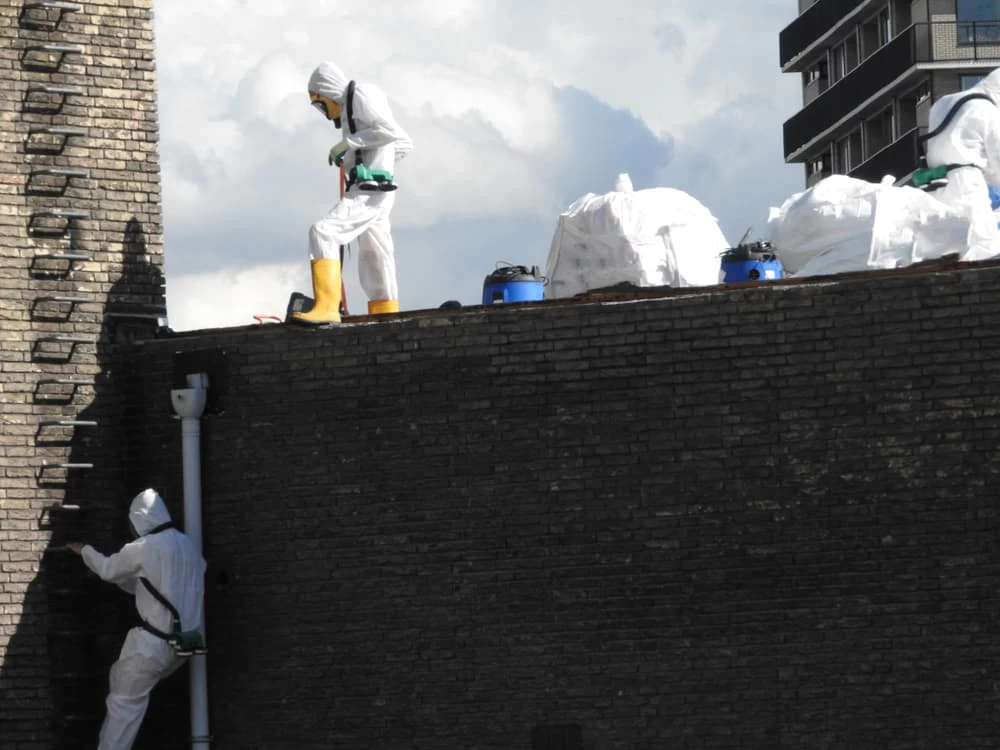
Once the scope is confirmed, our abatement crew sets up containment sealing the work area to prevent fiber migration to the rest of your home. Certified handlers remove the materials using approved methods, and all waste is packaged and transported by licensed haulers to permitted disposal facilities. This isn’t a step that can be skipped or substituted. New York State regulations are specific, and the penalties for non-compliance stop work orders, fines, mandatory corrective work add real cost and delay to any project.
After removal, post-abatement air clearance testing confirms that fiber levels are back within safe limits before anyone re-enters the space. You receive documentation of the completed work, which matters if you’re selling, refinancing, or simply want a record that the job was done correctly. From first call to final clearance, the process is straightforward and we’re available 24 hours a day if something comes up outside of business hours.
Asbestos Removal Services Fishkill Dutchess County
Every Material, Every Vintage, Handled to Code
Asbestos shows up in more places than most homeowners expect. In Glenham’s mid-century homes the kind built during the Texaco era along the Route 9D corridor the most common locations are 9×9 vinyl floor tiles, pipe and boiler insulation, popcorn ceilings, roofing shingles, and textured wall coatings. We handle all of it. Asbestos tile removal, popcorn ceiling removal, pipe wrap abatement, attic insulation removal the full scope of what an older home in this area is likely to contain.
For homeowners near Fishkill Creek dealing with water damage alongside a potential asbestos issue, we also handle mold remediation and water damage restoration. That means you’re not managing three separate contractors for what is ultimately one problem. Our team coordinates the full scope of work so the timeline stays manageable and nothing falls through the cracks between services.
Every project in Glenham and the surrounding Town of Fishkill area is completed in full compliance with NYS DOL Industrial Code Rule 56, EPA NESHAP standards, and NYS DEC disposal regulations. Documentation is provided at every stage from initial inspection findings through final air clearance results. If your project requires Town of Fishkill building permits or involves a pre-sale inspection, that paperwork is part of what you walk away with.
Does my Glenham home actually need an asbestos inspection before renovating?
If your home was built before 1980, yes and in Glenham specifically, that covers a significant portion of the housing stock. The hamlet’s residential development was closely tied to the Texaco Research Center, which operated from 1931 through 2003. Homes built during the mid-20th century to house workers and families in Glenham are exactly the vintage most likely to contain asbestos in floor tiles, pipe insulation, boiler wrap, and ceiling materials.
New York State Labor Law and Industrial Code Rule 56 require that asbestos-containing materials be identified and properly abated before any renovation or demolition work disturbs them. This isn’t a suggestion it’s a legal requirement. If you start a renovation and asbestos is discovered mid-project by a building inspector or a contractor, work stops until it’s resolved. Getting the inspection done before you start keeps your project moving and keeps you on the right side of the Town of Fishkill’s permit requirements.
How much does asbestos removal typically cost in the Dutchess County area?
The honest answer is that cost depends on the scope how much material is present, where it’s located, and what condition it’s in. Nationally, the average asbestos removal project runs around $2,000 to $3,000. In New York State, costs run higher, and that’s not arbitrary. NYS DOL requires licensed handlers and certified supervisors. Disposal must be handled by licensed haulers to NYS DEC-approved facilities. Post-abatement air clearance testing is now required documentation for residential projects. These aren’t add-ons they’re legal requirements built into the cost of doing the job correctly.
A contractor who quotes significantly below market in the Dutchess County area is almost certainly skipping one of those steps. That creates liability for you as the property owner, not just for them. The right question isn’t “how do I find the cheapest option” it’s “how do I make sure this is done in a way that holds up to inspection, protects my family, and doesn’t come back as a problem when I sell.” We provide transparent estimates before any work begins so you know exactly what you’re paying for.
What types of asbestos materials are most common in older Fishkill area homes?
In homes built during the 1940s through 1970s which describes a large portion of the residential properties in and around Glenham the most frequently encountered asbestos-containing materials are 9×9 vinyl floor tiles, pipe and boiler insulation, spray-applied popcorn ceilings, roofing shingles, and exterior siding. These materials were standard construction products during that era and were used widely in the worker housing built around the Texaco Research Center corridor.
The tricky part is that many of these materials are hidden. Floor tiles are often covered by newer flooring. Pipe insulation is in basements and utility rooms. Popcorn ceilings may have been painted over multiple times. The material doesn’t become hazardous just by existing it becomes hazardous when it’s disturbed. Sanding, scraping, cutting, or demolishing these materials without knowing what they contain is where exposure risk actually happens. A proper inspection identifies what’s present and what condition it’s in before any work begins.
Can I stay in my home during asbestos abatement in Glenham?
It depends on the scope and location of the work. For small, contained projects like removing a section of floor tile in a single room it’s sometimes possible to remain in other parts of the home while work is underway, provided the work area is properly sealed and negative air pressure is maintained. For larger projects involving multiple areas, boiler rooms, or attic spaces, temporary relocation is typically the safer and more practical choice.
We’ll give you a straight answer about this during the initial consultation, based on the specific scope of your project. What you should never do is remain in a space where abatement is actively occurring without proper containment in place. The containment setup plastic sheeting, sealed doorways, negative air pressure units with HEPA filtration is what prevents fiber migration to the rest of your home. If a contractor tells you containment isn’t necessary for your project, that’s a red flag worth taking seriously.
How does winter weather in the Hudson Valley affect asbestos risk in older homes?
The Hudson Valley’s freeze-thaw cycle is one of the more underappreciated factors in asbestos risk for older Glenham homes. When temperatures drop sharply and then rise again which happens repeatedly through a typical Glenham winter the expansion and contraction that occurs in aging pipe insulation, boiler wrap, and other thermal materials can cause deterioration that wouldn’t happen in a more stable climate. Material that was intact in October can be crumbling and friable by February.
Friable asbestos material that can be crumbled by hand pressure is the most hazardous form because it releases fibers into the air most readily. Homeowners who discover deteriorating insulation around pipes or a boiler during the heating season are often dealing with both an urgent heating issue and a potential asbestos exposure situation at the same time. We’re available 24 hours a day, every day of the year, for exactly this kind of situation. A two-hour response time from first call to crew on-site has been documented by our Glenham customers because a January emergency doesn’t wait until Monday morning.
Does Green Island Group handle asbestos removal for homes near the Glenham Mills site?
Yes and it’s worth understanding what that proximity does and doesn’t mean. The former Texaco Research Center at Glenham Mills is currently undergoing NYS DEC-supervised environmental remediation for petroleum, solvent, and chemical contamination. The primary contaminants at that site are not asbestos. However, the buildings on that 153-acre campus date to the 1930s through 1960s, and any future renovation or demolition work on those structures would almost certainly involve asbestos abatement given their construction vintage.
For homeowners in the surrounding area, the Glenham Mills story is relevant context, not direct contamination risk. What it does reflect is that this is a community that has been living alongside environmental remediation as an active, ongoing conversation one that involves public meetings at Fishkill Town Hall, DEC oversight, and a multi-phase cleanup timeline. Residents here understand better than most why professional remediation matters and why cutting corners on environmental cleanup creates problems that outlast the original decision. We bring that same standard of documented, compliant, fully licensed work to every residential and commercial asbestos project in the Glenham area.