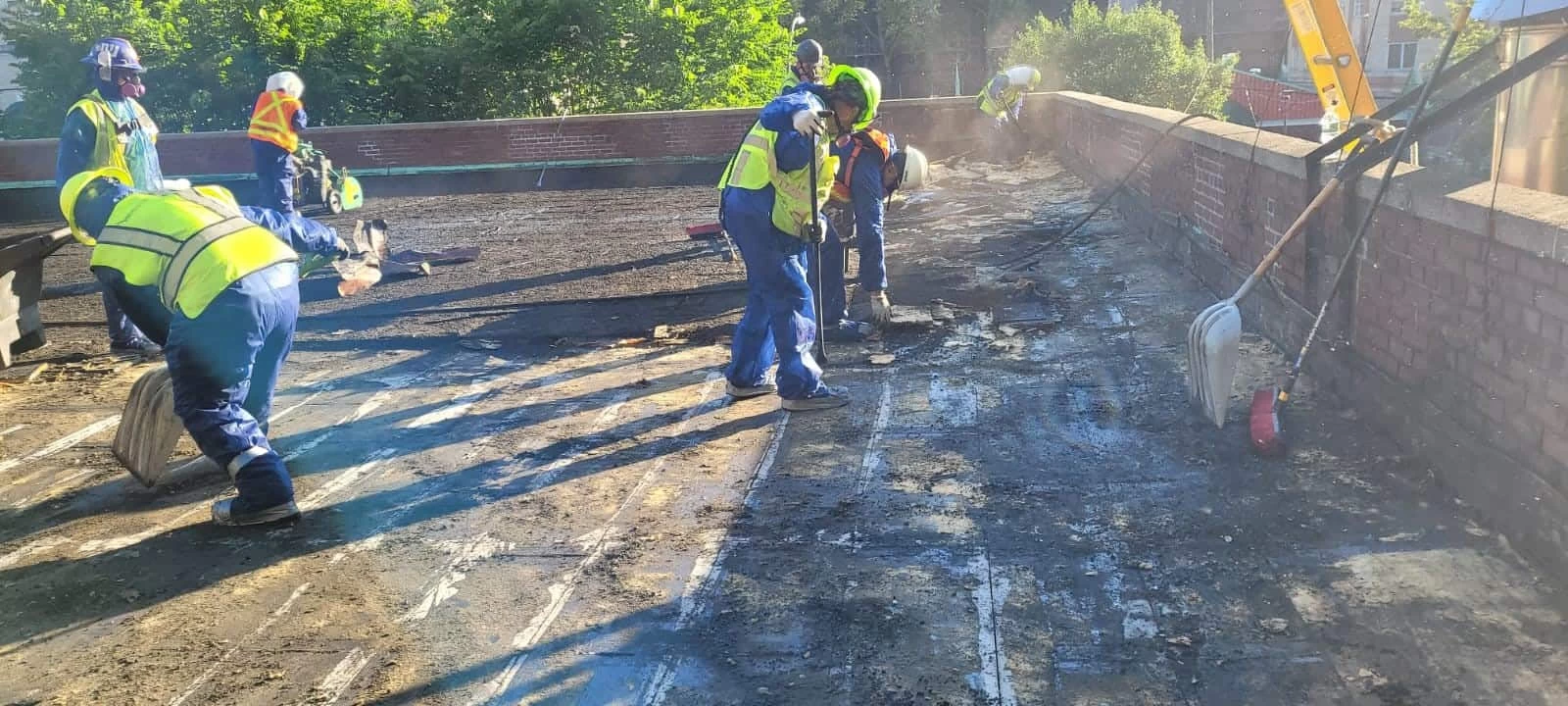
When Midtown's Oldest Buildings Hide the Biggest Risks
Grand Central’s pre-war towers and mid-century office blocks carry decades of asbestos and one renovation or pipe failure can expose it fast. We handle asbestos abatement in Grand Central, NY with full NYC DEP compliance, same-day response, and zero guesswork on your end.
I needed a professional consultation explanation of procedure for safe removal of Asbestos in my apartment complex. Without having an account yet, I was very impressed with the caring, knowledgeable and generous advice offered by Jessica, and will look forward to doing business in the future. Thank you so much! I feel much more informed about a sometimes scary endeavor. Peace. Nancy Silva Mineola, NY.
Mia Munoz
Used this company to clean up some water flood in my house. They were fast and easy to work with.very professional, Would recommend to anyone!
Nini Valle
Great company, had a flood and they responded quickly and efficiently. Billed my insurance company directly. I highly recommend this company!
joe colapietro, jr
I had pipe freeze in my basement right before a snow storm and they made to within an hour to help start the clean up process. They we by our side throughout the entire process and even helped with the insurance company. They did such a great job with the cleanup, repair, remidiation, I contracted them to perform the repairs and finishes in the basement. They came with enough manpower and material to get the job done. Leo and Jessica were nothing but a pleasure to deal with!!
Cristian Arredondo c
I had some water damage in my home and Green Island was able to take care of my issue quickly and effectively. I am very pleased with the work they did. They responded quickly and were very professional.
Michael M
Outstanding service! From the office to the field crew everyone was friendly, helpful and responsive. I highly recommend Green Island Group.
The buildings surrounding Grand Central Terminal are some of the most architecturally significant in the world and some of the most likely to contain asbestos. The Chrysler Building opened in 1930. The Chanin Building in 1928. The majority of Midtown East’s 171 office buildings were constructed during the peak era of asbestos use, and more than a third of structures in this neighborhood predate 1940. When you’re managing, renovating, or living in one of these buildings near Grand Central, asbestos isn’t a hypothetical it’s a real possibility sitting behind your walls, under your floors, and wrapped around your pipes.
Once abatement is complete, the immediate difference is clearance. Your renovation permit moves forward. Your DOB filing goes through. Your contractor can start work. If you’re a property manager dealing with a burst pipe that exposed insulation, your tenants can return. If you’re a developer converting a pre-1980 office floor to residential units, your timeline stays intact. That’s what proper asbestos removal actually delivers not just a cleaner space, but the ability to keep moving.
For co-op boards in Tudor City, building engineers managing Park Avenue towers, or individual owners renovating a Turtle Bay apartment, the documentation matters just as much as the work itself. Post-abatement air clearance testing confirms that fiber levels are safe, and that report becomes part of your permanent record for your insurer, your attorney, your next buyer, and the NYC DEP file that stays open until it’s closed correctly.
We are a full-service environmental remediation company based in Bohemia, NY, serving the entire New York metro area including Manhattan’s most complex commercial and residential buildings. We handle asbestos abatement, water damage restoration, mold remediation, demolition, and more, all under one license and one contract. In a neighborhood like Grand Central, where a single building can have asbestos, active water damage, and a pending DOB permit all at once, that matters.
The Grand Central area operates under some of the strictest asbestos regulations in the country NYC DEP Title 15 Chapter 1, NYC DOB permit requirements, NYS DOL 12 NYCRR Part 56, and in many cases, NYC Landmarks Preservation Commission oversight for designated structures. Our certified professionals know these frameworks and handle the filing process directly, so you’re not left navigating a regulatory maze on your own.
Available 24 hours a day, 7 days a week, with documented response times of 30 minutes to one hour, we’re built for the pace and complexity this neighborhood demands.
It starts with a free inspection. One of our certified professionals comes to your building whether that’s a pre-war residential tower in Murray Hill, a commercial floor on Lexington Avenue, or a conversion project near 42nd Street and assesses what you’re actually dealing with. Samples are collected and sent to an accredited lab. You get a straight answer on what’s there, where it is, and what the regulations require.
If abatement is needed, we handle the NYC DEP permit filing before work begins. In New York City, projects must be filed with the DEP at least seven days prior to start, and your DOB permit won’t move until asbestos requirements are documented and satisfied. We manage that process entirely the notification, the permit, the coordination with building management, and the scheduling that fits your building’s operational reality. In occupied office towers or residential co-ops, that often means nights and weekends. That’s built into how we work, not an exception to it.
The physical abatement follows strict containment and removal protocols. When the work is done, post-abatement air clearance testing is conducted by an independent party to confirm fiber levels are safe. You receive a complete documentation package clearance results, disposal records, and permit sign-off everything you need for your insurer, your attorney, or your next DOB filing.
Asbestos doesn’t show up in just one place. In the pre-war and mid-century buildings that define the Grand Central submarket, it can be in floor tiles, ceiling plaster, pipe insulation, ductwork, fireproofing spray, drywall joint compound, and roofing materials sometimes several of these at once. Our abatement services cover all of it, from asbestos tile removal and popcorn ceiling removal to pipe insulation and commercial fireproofing in multi-story office buildings.
The scope of work here runs the full range. A single-unit bathroom renovation in a Tudor City co-op is a very different project from a full-floor abatement in a 1960s office tower being converted to residential use on Third Avenue. We handle both. For the large-scale office-to-residential conversions concentrated in Midtown East including projects near East 42nd Street where some of the largest conversions in NYC history are currently underway we have the capacity, certifications, and regulatory experience to operate at that scale without disrupting your project timeline.
Because asbestos in this neighborhood is frequently discovered alongside water damage or during demolition, the multi-service capability matters. If a burst pipe exposes asbestos-wrapped insulation in a pre-war building, you’re not calling two separate contractors and hoping they coordinate. We handle the asbestos abatement and the water damage remediation together, under one contract, with one point of contact from start to final clearance.
Does my Grand Central area building actually need an asbestos inspection before renovating?
If your building was constructed before 1987 which covers the overwhelming majority of residential and commercial structures in the Grand Central submarket New York City requires an asbestos assessment before the NYC Department of Buildings will issue a permit. That’s not optional, and it applies whether you’re renovating a single apartment bathroom or doing a full commercial fit-out on a leased office floor.
The assessment must be conducted by a NYC DEP Certified Asbestos Investigator. They’ll evaluate the materials in the scope of work, collect samples if needed, and submit findings to the DEP as part of the notification process. Even if the survey comes back negative, that result has to be documented and filed before your DOB permit moves forward. Skipping this step doesn’t save time it creates delays, fines, and potential liability that will cost far more to untangle later.
How long does asbestos abatement take for a Manhattan apartment or office renovation?
For a typical residential scope floor tile removal, pipe insulation in one or two rooms, or popcorn ceiling in a single unit abatement usually runs one to three days once the permit is filed and the work crew is on-site. Larger commercial scopes, like a full-floor abatement in a pre-1980 office building or a multi-unit residential conversion, can take one to two weeks or more depending on the volume of material and the building’s scheduling constraints.
In buildings throughout the Grand Central area, scheduling is often the more complex variable. Occupied office towers and residential co-ops frequently require work to happen during nights or weekends to avoid disrupting tenants or building operations. We build that flexibility into every project from the start. The NYC DEP permit filing required at least seven days before work begins is handled by our team, so that lead time is accounted for in your overall project schedule rather than landing on you as a surprise.
What materials in older Midtown buildings most commonly contain asbestos?
In the pre-war and mid-century buildings that make up most of the Grand Central neighborhood’s building stock, asbestos was used extensively across a wide range of materials. The most common ones found during renovation and inspection work include floor tiles and the adhesive beneath them, pipe and boiler insulation, spray-applied fireproofing on structural steel, ceiling plaster and textured coatings, drywall joint compound, and ductwork insulation.
Buildings constructed between the 1920s and early 1970s which accounts for a significant portion of the residential and commercial stock in Turtle Bay, Murray Hill, Tudor City, and the office towers immediately surrounding Grand Central Terminal were built during the period when asbestos use in construction was at its peak. It’s not unusual to find multiple types of asbestos-containing materials in a single unit or floor, particularly in buildings that have undergone partial renovations over the decades without full abatement. A proper pre-renovation survey will identify exactly what’s present and where, so there are no surprises once demolition begins.
What happened with asbestos at Grand Central Terminal, and is it still a concern?
Grand Central Terminal, which opened in 1913, was built during an era when asbestos was standard in large-scale construction particularly for fireproofing and insulation in high-traffic public buildings. The $425 million restoration undertaken between 1990 and 1998 included one of the largest asbestos abatement projects of its kind, addressing widespread contamination throughout the terminal’s infrastructure.
Asbestos is still present in parts of the terminal today. Disturbing those areas through repairs, infrastructure maintenance, or unexpected failures can release fibers as happened in 2007, when an underground steam pipe explosion near the terminal released asbestos into the surrounding neighborhood and forced nearby residents to temporarily relocate. That event is a real-world reminder that asbestos risk in this area isn’t limited to planned renovations. It can emerge from aging infrastructure at any time. For property owners and managers in the blocks surrounding the terminal, understanding what’s in your building and having a plan in place before something goes wrong is the only responsible approach.
Can we handle the NYC DEP permit filing, or do I have to do that myself?
We handle the entire NYC DEP permit process on your behalf. That includes coordinating the Certified Asbestos Investigator assessment, preparing and submitting the required DEP notification which must be filed at least seven days before work begins and ensuring all post-abatement documentation is completed correctly for your records and for the DOB file.
This matters more than it might seem. The NYC asbestos regulatory framework involves multiple agencies DEP, DOB, and in some cases the Landmarks Preservation Commission for designated buildings in Midtown East and a misstep at any point can delay your project or create compliance issues that follow the property for years. For commercial property managers, developers running conversion timelines, and co-op boards dealing with a building-wide renovation, having a contractor who manages the regulatory process end-to-end means your team stays focused on the project rather than the paperwork. The DEP rules were also updated as recently as February 2025, so working with a contractor who stays current on those changes is not a small thing.
How much does asbestos abatement typically cost for a building near Grand Central?
For residential projects a single room, a bathroom renovation, or pipe insulation removal in one unit costs in the Manhattan market typically run between $2,200 and $6,500 all-in, depending on the volume of material, the type of asbestos-containing material involved, and the access conditions in the building. That range increased roughly 8 to 12 percent in 2025 and 2026 due to updated NYS DOL licensing requirements and higher disposal fees. The pre-renovation asbestos survey itself, which is required before any DOB permit is issued, typically adds $650 to $2,200 depending on the scope of the inspection.
Commercial projects full-floor abatements in office towers, large-scale pre-renovation clearances for conversion projects, or multi-unit residential work scale significantly beyond those figures. The right way to get an accurate number for your specific building and scope is a direct inspection, not a ballpark from a website. We offer free inspections with no obligation, so you know exactly what you’re dealing with before any commitment is made. In a market where the cost of a delayed DOB permit or a compliance violation can dwarf the cost of the abatement itself, starting with an accurate assessment is the only move that makes financial sense.