Great Neck Estates homes carry real history — and real asbestos risk. We deliver licensed asbestos abatement that protects your property and the people inside it.
I needed a professional consultation explanation of procedure for safe removal of Asbestos in my apartment complex. Without having an account yet, I was very impressed with the caring, knowledgeable and generous advice offered by Jessica, and will look forward to doing business in the future. Thank you so much! I feel much more informed about a sometimes scary endeavor. Peace. Nancy Silva Mineola, NY.
Mia Munoz
Used this company to clean up some water flood in my house. They were fast and easy to work with.very professional, Would recommend to anyone!
Nini Valle
Great company, had a flood and they responded quickly and efficiently. Billed my insurance company directly. I highly recommend this company!
joe colapietro, jr
I had pipe freeze in my basement right before a snow storm and they made to within an hour to help start the clean up process. They we by our side throughout the entire process and even helped with the insurance company. They did such a great job with the cleanup, repair, remidiation, I contracted them to perform the repairs and finishes in the basement. They came with enough manpower and material to get the job done. Leo and Jessica were nothing but a pleasure to deal with!!
Cristian Arredondo c
I had some water damage in my home and Green Island was able to take care of my issue quickly and effectively. I am very pleased with the work they did. They responded quickly and were very professional.
Michael M
Outstanding service! From the office to the field crew everyone was friendly, helpful and responsive. I highly recommend Green Island Group.
When asbestos is handled correctly — not just covered up or rushed through — you get something most homeowners don’t expect: actual peace of mind. Your renovation can move forward. Your home can be listed, sold, or refinished without a liability cloud hanging over it. That’s the real outcome. Not just a cleared job site, but a property that’s documented, compliant, and protected.
Great Neck Estates sits on a peninsula surrounded by water, and that coastal environment matters more than most people realize. The elevated humidity and salt air that come with living between Manhasset Bay and the Long Island Sound can accelerate the breakdown of older building materials — including asbestos-containing ones. What was once a stable floor tile or pipe wrap can become friable and fiber-releasing faster in these conditions. Getting ahead of that is the difference between a controlled abatement and an emergency one.
The housing stock in Great Neck Estates also tells a story. This village has been incorporated since 1911, and a significant portion of its homes were built between the 1920s and 1970s — exactly the era when asbestos was standard in flooring, insulation, ceiling texture, and more. When you’re renovating, selling, or even just doing routine work on a home that age, knowing what’s inside the walls isn’t optional. It’s how you protect an asset worth well over a million dollars.
We are a licensed asbestos abatement contractor serving Nassau County’s North Shore, including Great Neck Estates and the surrounding peninsula villages. We hold an active NYS Department of Labor license under Industrial Code Rule 56 — the state regulation that governs every aspect of asbestos removal in New York. That’s not a marketing point. It’s a legal requirement, and it’s the first thing you should verify before hiring anyone for this work.
We’ve worked in homes throughout Great Neck Estates — from older Colonials and Tudors near Middle Neck Road to mid-century properties that haven’t been touched in decades. We know what these homes tend to contain, where the risk areas typically are, and what it takes to move through the process cleanly and efficiently without disrupting your timeline more than necessary.
What you get with us is a clear process, honest communication, and documentation that holds up — whether you’re dealing with a Great Neck Estates building permit, a real estate attorney, or a title company asking questions at closing.
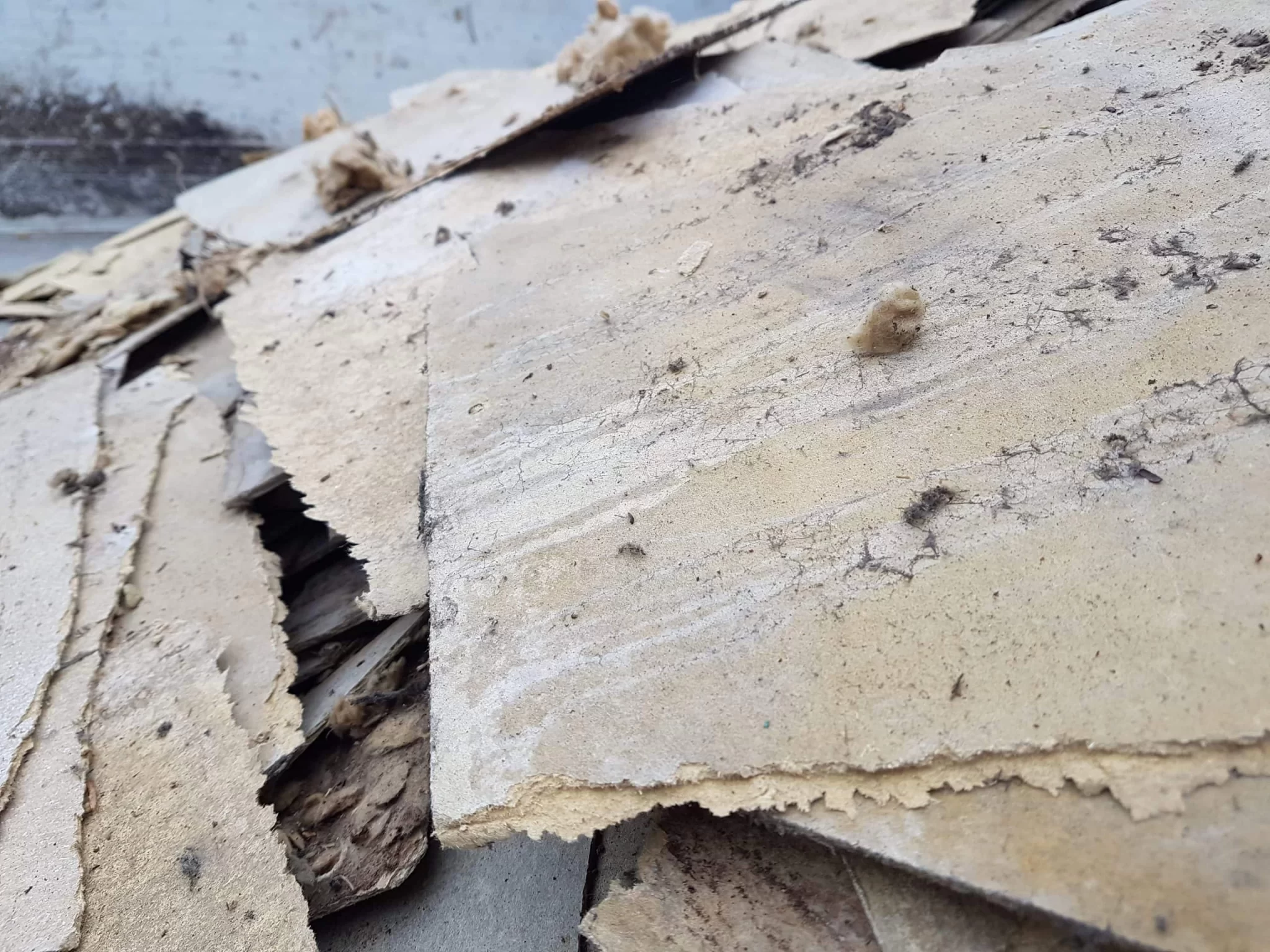
It starts with an inspection. A certified inspector walks the property, identifies materials that are suspected to contain asbestos, and collects samples for laboratory analysis. In a Great Neck Estates home — especially one built before 1980 — that typically means looking at floor tiles, pipe and boiler insulation, ceiling texture, drywall compound, roofing materials, and sometimes exterior siding. The lab results tell us exactly what we’re dealing with before any work begins.
Once we know what’s there, we put together an abatement plan. For projects that meet the threshold under NYS Industrial Code Rule 56 — generally anything involving more than 10 square feet of material or 25 linear feet of pipe insulation — we file the required notification with the NYS Department of Labor before work starts. This step protects you legally and ensures the project is on record. If you’re pulling a building permit through the Village of Great Neck Estates or Nassau County, that documentation matters.
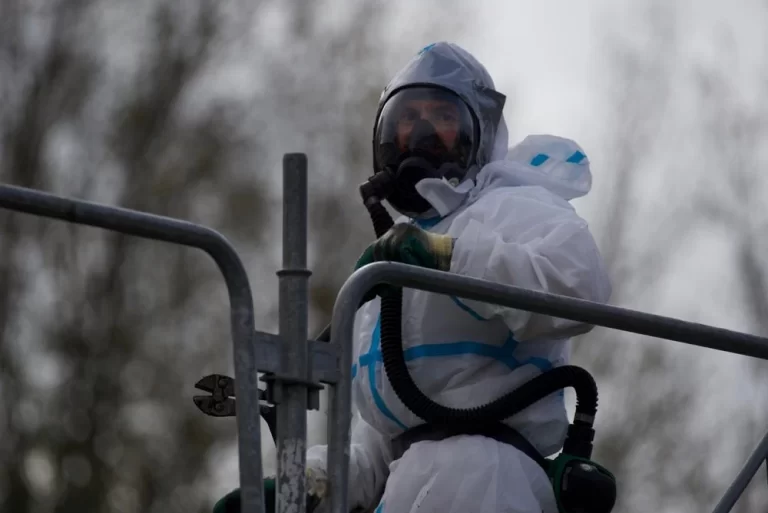
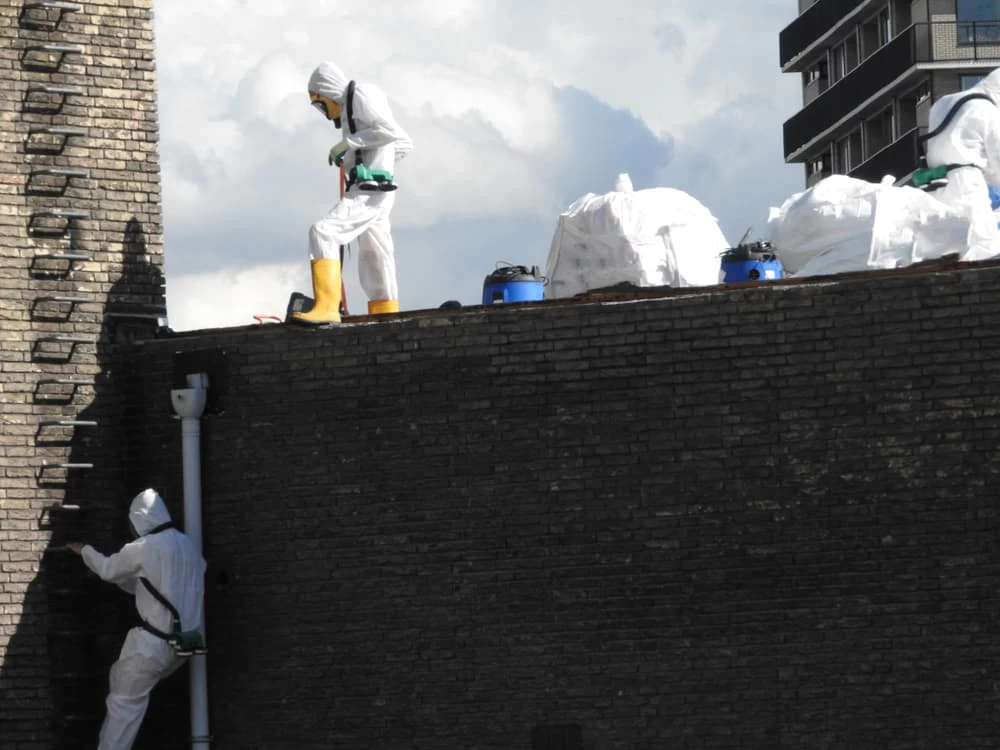
The removal itself is done under full containment: negative air pressure, HEPA filtration, decontamination chambers, and proper disposal through a licensed waste carrier. When the work is complete, post-abatement air clearance testing confirms the space is clean. You receive a complete documentation package — inspection report, air monitoring results, waste manifests, and clearance certificate — everything your contractor, attorney, or building department needs to move forward.
The Specific Work Great Neck Estates Homes Actually Need
Two of the most common asbestos issues we find in Great Neck Estates homes are vinyl floor tiles and sprayed acoustic ceilings. The 9-by-9-inch floor tiles found in older kitchens, basements, and entryways throughout this village were almost universally manufactured with asbestos through the 1970s. Asbestos tile removal has to be done carefully — disturbing those tiles without proper containment releases fibers that are invisible and odorless, which makes them easy to underestimate. We handle this work with full enclosure protocols so that the rest of your home stays unaffected.
Asbestos popcorn ceiling removal is the other job that comes up constantly in mid-century Great Neck Estates properties. Sprayed-on acoustic texture was standard from the 1950s through 1977, when the EPA banned its residential use. If your home has that textured ceiling and it hasn’t been tested, it’s worth knowing before you sand, scrape, or renovate around it. We test first, and if asbestos is confirmed, we remove it under the same containment standards we apply to every other regulated material.
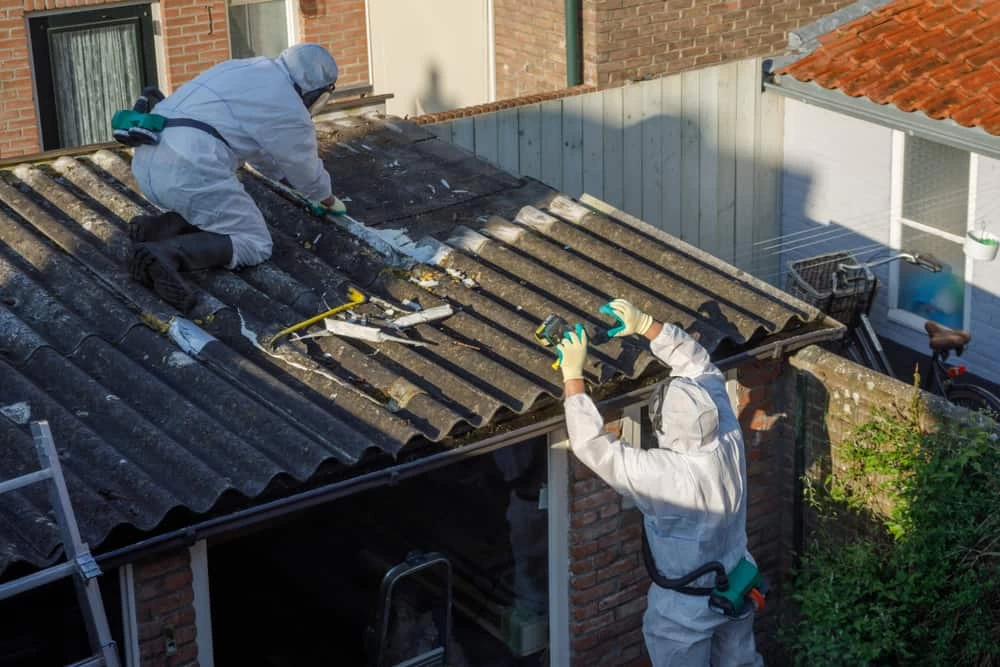
Beyond tiles and ceilings, we also handle pipe and boiler insulation — common in the older heating systems throughout this peninsula — as well as roofing materials, drywall compound, and exterior asbestos cement siding. Every project includes the full documentation package required for compliance with NYS DOL regulations, Nassau County building department requirements, and the Village of Great Neck Estates permitting process.
Does asbestos abatement in Great Neck Estates require a village permit?
Great Neck Estates is a fully incorporated village with its own mayor, Board of Trustees, and local building code — which means permitting here works differently than in unincorporated Nassau County communities. For most renovation or demolition projects, you’ll need to satisfy both village-level and Nassau County building department requirements, in addition to the NYS Department of Labor notification process required under Industrial Code Rule 56.
The practical answer is: it depends on the scope of the project. Asbestos abatement itself is regulated at the state level through the NYS DOL, but the renovation work that follows — framing, drywall, flooring installation — typically requires village building permits. Nassau County also requires documentation of asbestos compliance before certain permits are issued or closed out. We help coordinate this process and provide the paperwork your contractor, attorney, or building department will ask for, so nothing stalls at the wrong moment.
How do I know if my older Great Neck Estates home actually contains asbestos?
The honest answer is that you don’t know until it’s tested. Visual inspection alone can’t confirm asbestos — the only way to know for certain is to collect samples and send them to an accredited laboratory. That said, if your home was built before 1980, the probability is high that at least some materials contain asbestos. In Great Neck Estates, where a meaningful portion of the housing stock dates to the 1920s through 1960s, this is a very common situation.
The materials most likely to contain asbestos in homes of that era include vinyl floor tiles, pipe and boiler insulation, sprayed acoustic ceiling texture, drywall joint compound, roof shingles, and window caulking. If you’re planning a renovation — even something as routine as pulling up old flooring or scraping a ceiling — you should have those materials tested before any work disturbs them. Disturbing asbestos-containing materials without proper containment is both a health risk and a legal violation in New York State.
What does asbestos abatement actually cost for a Nassau County home?
Cost depends on what’s there, how much of it there is, and where it’s located. A single-room floor tile removal in a Great Neck Estates home might run in the range of $1,500 to $3,000. A larger project — full basement insulation removal, multiple rooms of tile, or a whole-home popcorn ceiling job — can range from $5,000 to $15,000 or more depending on square footage and complexity. These are real numbers, not minimums designed to get you on the phone.
What drives cost up is scope and access. Pipe insulation wrapped around an older boiler system in a tight mechanical room takes more time and care than open-floor tile removal. Air monitoring, NYS DOL notification filing, laboratory analysis, and post-clearance testing are all part of a compliant job — and they add cost, but they also add legal protection. In a market where homes regularly trade above $1.3 million, the cost of proper abatement is almost always a fraction of what a disclosure issue or incomplete remediation would cost you at closing.
Can my renovation contractor just remove the asbestos materials themselves?
No — not legally, and not safely. In New York State, asbestos abatement must be performed by a contractor holding an active NYS Department of Labor license under Industrial Code Rule 56. Individual workers must also be certified. A general contractor, handyman, or unlicensed crew cannot legally disturb regulated asbestos-containing materials, and if they do, the liability falls on the property owner as much as the contractor.
This comes up frequently in Great Neck Estates renovation projects. A GC starts demoing a kitchen or bathroom, finds suspicious floor tiles or insulation, and work has to stop. At that point, you need a licensed abatement contractor to come in, assess the situation, contain the area, and complete the removal before the renovation can resume. If materials were already disturbed, the scope of work — and the cost — increases. The cleanest path is always to test before renovation begins, not after something’s already been touched.
How long does asbestos abatement take, and will I need to leave my home?
Timeline depends on the size and location of the work. A contained single-room project — like asbestos tile removal in a kitchen or a basement pipe wrap — can often be completed in one to two days. Larger projects involving multiple areas or whole-floor tile removal can take three to five days. Post-abatement air clearance testing adds time as well, since the results need to come back from the lab before the containment is broken and the space is released.
Whether you need to vacate depends on where the work is happening and how the containment is set up. For work in a basement or a single room with proper negative-air containment, many homeowners can remain in other parts of the house. For larger projects or work in central living areas, temporary relocation is often the safer and more practical choice. We walk through this with every client before work begins so there are no surprises — especially important in a village like Great Neck Estates where families are often managing school schedules, work commutes, and renovation timelines all at once.
Is asbestos common in Great Neck Estates homes specifically, or is this a general Long Island issue?
It’s both, but Great Neck Estates has some specific characteristics that make asbestos more prevalent here than in many other Nassau County communities. The village was incorporated in 1911, and a significant share of its housing was built between the 1920s and the 1970s — the exact decades when asbestos was used most heavily in residential construction. Unlike post-war suburbs like Levittown or East Meadow, which were built rapidly in the late 1940s on relatively uniform plans, Great Neck Estates has a more varied and older housing stock that includes pre-war Colonials, Tudors, and custom-built estates where asbestos-containing materials were layered in during original construction and subsequent renovations.
The coastal environment adds another layer. The humidity and moisture exposure that come with living on a water-surrounded peninsula can degrade older building materials over time, making previously stable asbestos-containing materials more likely to become friable. If your home has been through any water intrusion, storm damage, or prolonged moisture issues — which is not uncommon on the North Shore — that’s an additional reason to have materials assessed before disturbing them. The combination of age, architectural character, and coastal conditions makes professional testing a genuinely smart first step for any Great Neck Estates homeowner planning renovation work.