Great Neck Homes Have History — Some of It Needs to Go
Half the homes on the Great Neck peninsula were built before 1950. If yours is one of them, asbestos abatement isn’t a maybe — it’s likely part of your renovation plan whether you know it yet or not.
I needed a professional consultation explanation of procedure for safe removal of Asbestos in my apartment complex. Without having an account yet, I was very impressed with the caring, knowledgeable and generous advice offered by Jessica, and will look forward to doing business in the future. Thank you so much! I feel much more informed about a sometimes scary endeavor. Peace. Nancy Silva Mineola, NY.
Mia Munoz
Used this company to clean up some water flood in my house. They were fast and easy to work with.very professional, Would recommend to anyone!
Nini Valle
Great company, had a flood and they responded quickly and efficiently. Billed my insurance company directly. I highly recommend this company!
joe colapietro, jr
I had pipe freeze in my basement right before a snow storm and they made to within an hour to help start the clean up process. They we by our side throughout the entire process and even helped with the insurance company. They did such a great job with the cleanup, repair, remidiation, I contracted them to perform the repairs and finishes in the basement. They came with enough manpower and material to get the job done. Leo and Jessica were nothing but a pleasure to deal with!!
Cristian Arredondo c
I had some water damage in my home and Green Island was able to take care of my issue quickly and effectively. I am very pleased with the work they did. They responded quickly and were very professional.
Michael M
Outstanding service! From the office to the field crew everyone was friendly, helpful and responsive. I highly recommend Green Island Group.
Your Great Neck Renovation Moves Forward — Safely and Legally
When you’re renovating a home in Great Neck, the last thing you want is a surprise that shuts the whole project down. But in a community where the median home was built in 1952, that surprise has a name — and it shows up in floor tiles, pipe insulation, popcorn ceilings, and behind walls that haven’t been touched in decades. Getting ahead of it isn’t just smart. Under New York State Industrial Code Rule 56, it’s required by law before any renovation or demolition work begins.
What changes after proper asbestos abatement isn’t just the air quality — it’s your ability to move forward. Your contractor can pull permits from Great Neck’s building department. Your renovation can start on schedule. And if you’re selling, your buyer’s attorney doesn’t have a reason to hold up the deal. In Great Neck’s active real estate market, where homes regularly trade above $900,000, that documentation matters more than most people realize until they need it.
The homes here aren’t generic suburban builds. Kings Point estates, Craftsman-era homes in Great Neck Estates, post-war colonials throughout the peninsula — these are architecturally significant properties with original materials that need to be handled carefully, not ripped out carelessly. The outcome you’re looking for isn’t just removal. It’s removal done right, with the paperwork to prove it.
We Know Great Neck's Homes — Because We Work Here Every Day
Green Island Group is a fully licensed and certified asbestos abatement contractor serving Great Neck and the surrounding Nassau County area, including every village on the peninsula — Kings Point, Great Neck Estates, Great Neck Plaza, Russell Gardens, Saddle Rock, Kensington, and Thomaston. We know the housing stock here. We know what materials were used in these homes, what eras they come from, and what a proper abatement looks like in a 1940s colonial versus a mid-century ranch.
Every project we handle is managed in full compliance with NYS Industrial Code Rule 56 — from the initial certified inspection through air clearance testing and licensed waste disposal. You get every document at the end: survey reports, clearance results, disposal manifests. Not because it’s a nice touch, but because in a market like Great Neck, that paperwork protects your investment long after we’re gone.
We’re not a national aggregator with a local phone number. We’re a Long Island company, and Great Neck is our backyard.
No Guesswork — Here's Exactly What Happens on Your Great Neck Property
It starts with a certified inspection. A NYS-licensed asbestos inspector walks your property and identifies any materials that need to be tested — floor tiles, ceiling texture, pipe insulation, roofing, siding, joint compound. Samples go to an accredited lab. You get a written survey report that documents everything found and its condition. This report is what your contractor needs before pulling a permit from any of the nine village building departments on the Great Neck peninsula.
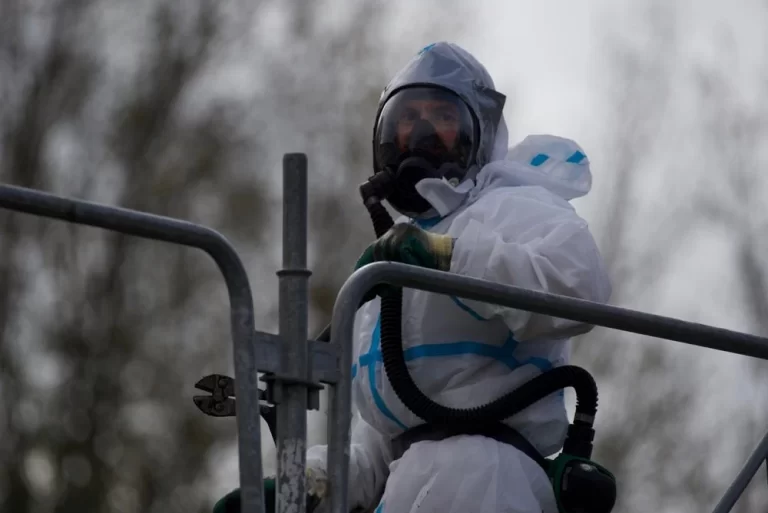
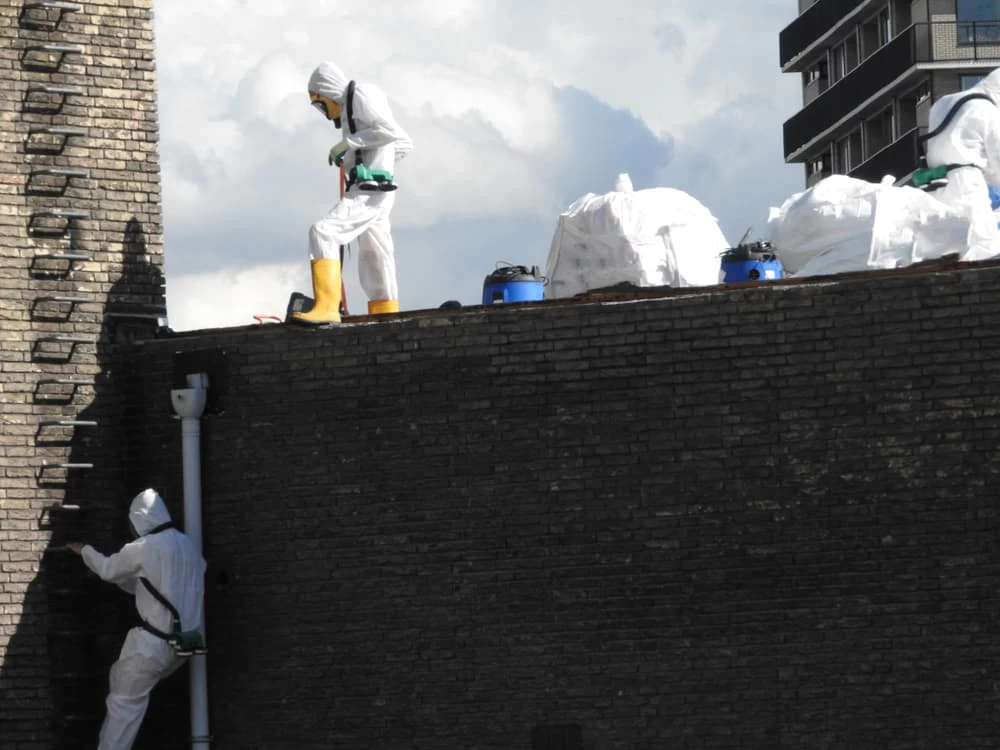
If abatement is required, we handle the full scope. Work areas are sealed and contained. Negative air pressure is maintained throughout the removal to prevent fiber migration into the rest of your home. Materials are removed by certified workers, sealed in approved containers, and transported to a licensed disposal facility — with a manifest that tracks the waste from your property to its final destination.
Once removal is complete, air clearance testing is conducted by a certified professional to confirm the space is clean. You don’t just get a verbal “all clear” — you get written clearance documentation. For Great Neck homeowners planning a kitchen gut, a basement renovation, or a full home remodel, this is the sequence that keeps your project legal, your family safe, and your timeline intact.
Asbestos Remediation for Great Neck, NY Properties
What We Handle — From Old Tiles to Textured Ceilings
The most common asbestos-containing materials we find in Great Neck homes are vinyl floor tiles — the 9×9 and 12×12 inch tiles installed in kitchens, bathrooms, and basements from the 1940s through the 1970s. They’re often hidden under newer flooring that was laid right on top. Asbestos tile removal is one of the most routine parts of what we do in this area, and it comes up constantly in homes throughout the peninsula that are being renovated for the first time in decades.
Popcorn ceiling removal is another frequent service call. If your Great Neck home was built before 1981 and still has its original textured ceiling, there’s a real chance it contains asbestos. Attempting to scrape it without testing first isn’t just dangerous — it can spread fibers through your HVAC system and into every room. We test before we touch, contain the work area fully, and provide air clearance confirmation when the job is done.
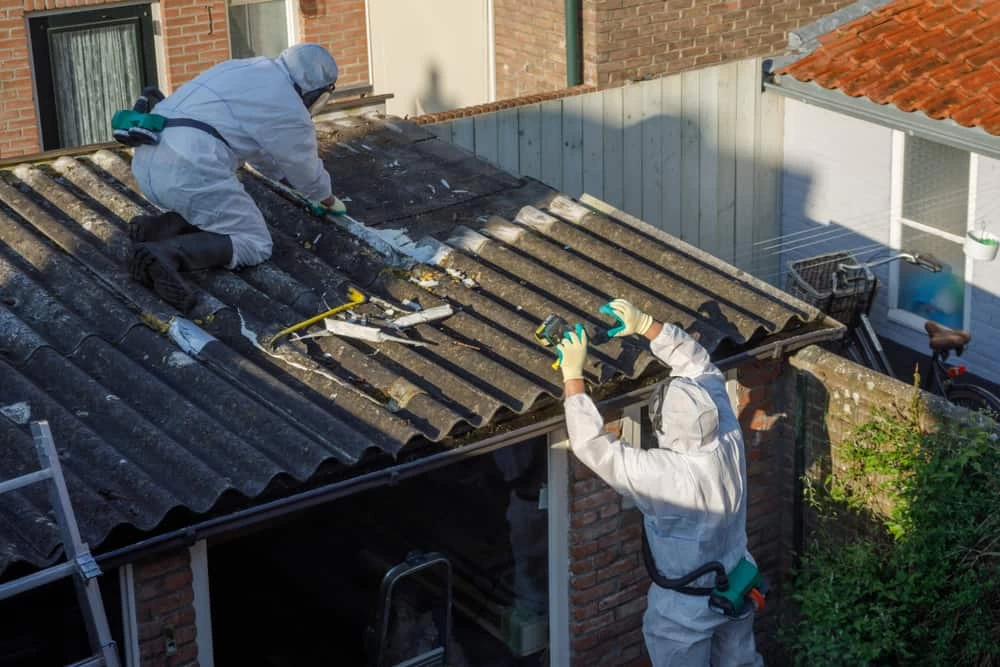
Beyond tiles and ceilings, we handle pipe and duct insulation removal — a significant issue in Great Neck’s older homes with steam heating systems — along with asbestos siding removal, roofing material abatement, and full pre-renovation surveys for properties undergoing major work. Whether you’re in a Kings Point waterfront estate or a Great Neck Plaza apartment building, the scope of service is the same: complete, compliant, and documented from start to finish.
Does my Great Neck home actually need an asbestos inspection before renovation?
If your home was built before 1980 — which covers the vast majority of properties on the Great Neck peninsula — yes, a certified asbestos inspection is required by New York State law before renovation or demolition work begins. This requirement comes from NYS Industrial Code Rule 56, administered by the Department of Labor’s Asbestos Control Bureau. It’s not a suggestion, and it’s not something your general contractor can skip around. The building departments across Great Neck’s nine villages are required to verify compliance before issuing permits.
The practical reason this matters: many renovation projects in Great Neck uncover asbestos-containing materials mid-project when a contractor disturbs a tile, a ceiling, or an old pipe wrap. At that point, work stops, the site has to be assessed, and your timeline takes a hit. A pre-renovation survey done upfront costs far less — in time and money — than an unplanned abatement discovered after demolition has already started.
How much does asbestos removal typically cost for a Great Neck home?
Cost depends heavily on what’s found, where it is, and how much of it there is. A straightforward asbestos tile removal in a single room is going to look very different from a full-home survey and multi-material abatement in a 3,500 square foot Great Neck colonial. That said, most residential abatement projects in Nassau County fall somewhere between a few hundred dollars for a limited scope removal and several thousand for more extensive work involving multiple material types or larger square footage.
What’s worth understanding is that in a market like Great Neck — where median home values sit close to $1 million — the cost of proper abatement is almost always a fraction of what a delayed renovation, a failed home inspection, or a liability issue down the road would cost. The inspection itself is typically a few hundred dollars and gives you a clear picture of what you’re dealing with before any work starts. That’s the right place to begin.
What materials in older Great Neck homes most commonly contain asbestos?
The most common finds in Great Neck’s pre-1980 housing stock are vinyl floor tiles — particularly the 9×9 inch tiles used in kitchens, bathrooms, and basements from the 1940s through the early 1970s. They’re often still in place under newer flooring. Spray-applied popcorn ceiling texture is another frequent one, especially in homes built between the late 1950s and early 1980s. Pipe and duct insulation is a significant concern in homes with older steam heating systems, which are common throughout the peninsula’s post-war housing stock.
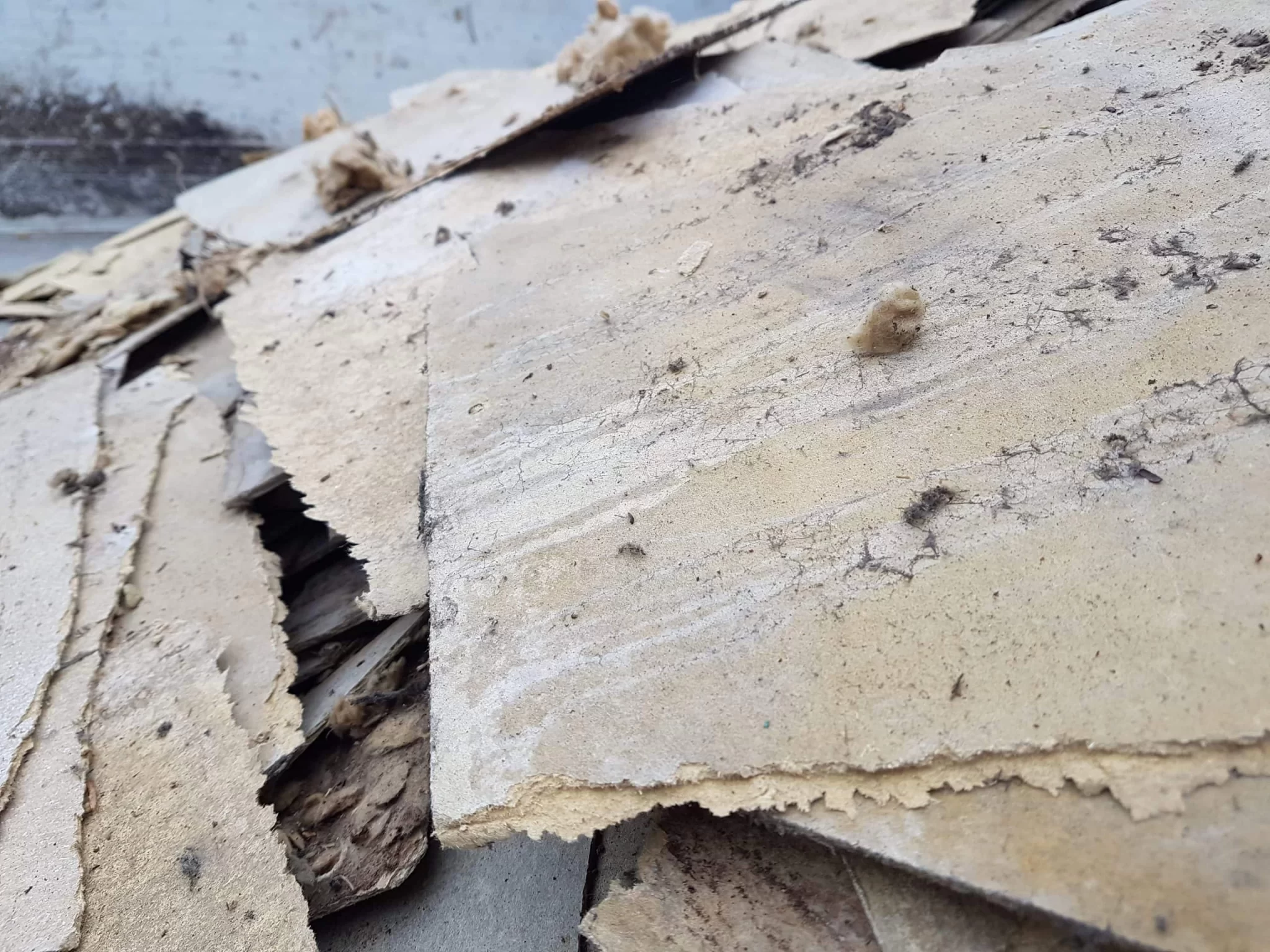
Other materials that regularly test positive include roofing felt and asbestos cement shingles from the 1940s–1960s, exterior asbestos cement siding, and pre-1977 drywall joint compound. The challenge is that none of these materials look different from their non-asbestos counterparts. The only way to know is to test. Visual identification alone — even by an experienced contractor — is not sufficient and is not legally acceptable under ICR 56.
Can my contractor just work around the asbestos instead of removing it?
In some cases, encapsulation — sealing the material rather than removing it — is a legitimate and compliant option. This approach works when the asbestos-containing material is in good condition, not friable (meaning it won’t crumble or release fibers under normal conditions), and won’t be disturbed by the planned renovation. A certified inspector determines whether encapsulation is appropriate or whether full removal is required based on the material’s condition and the scope of the planned work.
That said, encapsulation is not always the right call for Great Neck homeowners planning significant renovations. If you’re gutting a kitchen, finishing a basement, or replacing flooring, the materials in question are going to be disturbed — which means encapsulation isn’t an option and removal is required. The certified survey is what establishes which path applies to your specific situation. Skipping that step and assuming encapsulation is fine is not a compliant approach and can create real liability, especially in a real estate market as active and legally scrutinized as Great Neck’s.
How long does asbestos abatement take, and will my family need to leave?
Timeline depends on the scope of work. A single-room tile removal might be completed in a day. A more involved project — multiple material types, larger areas, or a full pre-renovation abatement in a larger home — can take several days to a week. The certified inspection and lab results typically take a few days before abatement can begin, so it’s worth factoring that into your renovation planning timeline.
As for whether your family needs to vacate: during active abatement, the work area is sealed and under negative air pressure, which is designed to prevent fiber migration into the rest of your home. For limited, well-contained scopes, families sometimes remain in other parts of the house. For larger or more complex projects, temporary relocation during the abatement phase is often the more practical choice. We’ll give you a straightforward assessment of what makes sense for your specific project so you can plan accordingly — no vague answers, no surprises.
Is asbestos abatement required before selling a home in Great Neck, NY?
There’s no blanket legal requirement that forces a seller to complete asbestos abatement before listing a home in New York. But in practice, Great Neck’s real estate market makes it a very common and often necessary step. Buyer inspections in this price range — where homes regularly sell above $900,000 — are thorough, and buyers’ attorneys scrutinize environmental disclosures carefully. When asbestos is identified during a buyer’s inspection, it becomes a negotiating point, a potential deal-breaker, or a required remediation condition before closing.
Sellers who address known asbestos issues before listing avoid that friction entirely. They can provide documentation — a completed survey, an abatement certificate, air clearance results — that gives buyers and their attorneys confidence the issue has been properly resolved. In a community like Great Neck, where homes are significant financial assets and transactions involve experienced legal representation on both sides, that documentation carries real weight. Getting ahead of it is almost always the cleaner path.