Great Neck Plaza's Older Buildings Deserve More Than a Generic Crew
From pre-war apartments on Middle Neck Road to post-war co-ops throughout the village, asbestos abatement in Great Neck Plaza requires someone who actually knows what they’re walking into. We’ve spent years inside the buildings that define this community — the garden co-ops, the mid-rises, the steam-heated pre-wars — and we understand the specific risks that come with each era of construction.
I needed a professional consultation explanation of procedure for safe removal of Asbestos in my apartment complex. Without having an account yet, I was very impressed with the caring, knowledgeable and generous advice offered by Jessica, and will look forward to doing business in the future. Thank you so much! I feel much more informed about a sometimes scary endeavor. Peace. Nancy Silva Mineola, NY.
Mia Munoz
Used this company to clean up some water flood in my house. They were fast and easy to work with.very professional, Would recommend to anyone!
Nini Valle
Great company, had a flood and they responded quickly and efficiently. Billed my insurance company directly. I highly recommend this company!
joe colapietro, jr
I had pipe freeze in my basement right before a snow storm and they made to within an hour to help start the clean up process. They we by our side throughout the entire process and even helped with the insurance company. They did such a great job with the cleanup, repair, remidiation, I contracted them to perform the repairs and finishes in the basement. They came with enough manpower and material to get the job done. Leo and Jessica were nothing but a pleasure to deal with!!
Cristian Arredondo c
I had some water damage in my home and Green Island was able to take care of my issue quickly and effectively. I am very pleased with the work they did. They responded quickly and were very professional.
Michael M
Outstanding service! From the office to the field crew everyone was friendly, helpful and responsive. I highly recommend Green Island Group.
When asbestos is handled correctly, you stop worrying about what’s hiding inside your walls, floors, or ceiling. You get documentation that holds up — with your co-op board, your real estate attorney, your building inspector, and anyone else who needs a paper trail. That peace of mind matters a lot when a closing deadline is approaching or a renovation is already in motion.
Great Neck Plaza’s housing stock is dense and old. Apartments in this village date from the early 1900s through the 1980s, which means vinyl floor tiles, pipe insulation, boiler room wrapping, and textured spray ceilings from that era are common finds — especially in the garden co-op buildings and mid-rise complexes that define so much of the village. When those materials get disturbed during a renovation or repair, the risk is real and the regulatory exposure is immediate.
The village also has its own local asbestos law — Chapter 76 of the Great Neck Plaza Village Code — which adds certification requirements on top of what New York State already mandates. We know that law exists and what it requires. When the work is done right the first time, you move forward. When it isn’t, you’re back to square one.
Nassau County-Based, and We Know This Building Stock
Green Island Group is a Nassau County environmental remediation contractor — not a national franchise with a local phone number, and not a company based elsewhere targeting your zip code with a landing page. We’re based here in Nassau County, we work here, and we know the difference between a pre-war steam-heated apartment building and a 1970s mid-rise co-op because we’ve been inside both.
We’re fully licensed under New York State’s Industrial Code Rule 56 and compliant with Great Neck Plaza’s Chapter 76 local asbestos ordinance. That combination matters in this village specifically, because Great Neck Plaza is one of the few communities on Long Island that has enacted its own asbestos law above and beyond state requirements. Not every contractor knows that. We do.
Whether you’re a co-op board member at Alden Gardens dealing with shared mechanical systems, or a homeowner on the south end of the village preparing for a sale, you get a team that understands your specific situation — not a crew that treats every job the same.
No Surprises — Here's Exactly How the Work Gets Done
It starts with a certified inspection. Before any abatement work begins in Great Neck Plaza, New York State requires a mandatory asbestos survey conducted by a certified inspector. This isn’t optional — it’s the foundation of a legally compliant project, and it’s what tells us exactly what we’re dealing with and where.
Once the survey confirms the presence of asbestos-containing materials, we handle all required notifications to the NYS Department of Labor and coordinate with the Great Neck Plaza Building Department for any associated permits. The village’s Building Department operates Monday through Friday and Saturday mornings, and no work is permitted on Sundays — so we build your project schedule around those windows from the start.
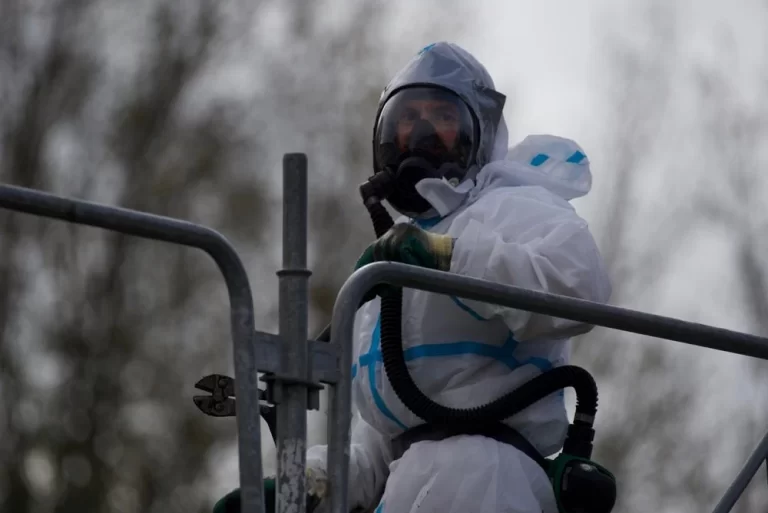
On-site, we establish full containment with negative air pressure and HEPA filtration, set up decontamination chambers, and remove the materials according to ICR 56 protocols. For multi-unit buildings — which make up the majority of Great Neck Plaza’s residential stock — we take extra care to protect neighboring units and shared building systems throughout the process. When the work is complete, air clearance testing confirms the space is safe, and you receive a full compliance documentation package: disposal manifests, clearance results, and everything else your attorney, board, or inspector will ask for.
Asbestos Tile and Ceiling Removal in Great Neck Plaza
Every Material Type, Every Building Type in the Village
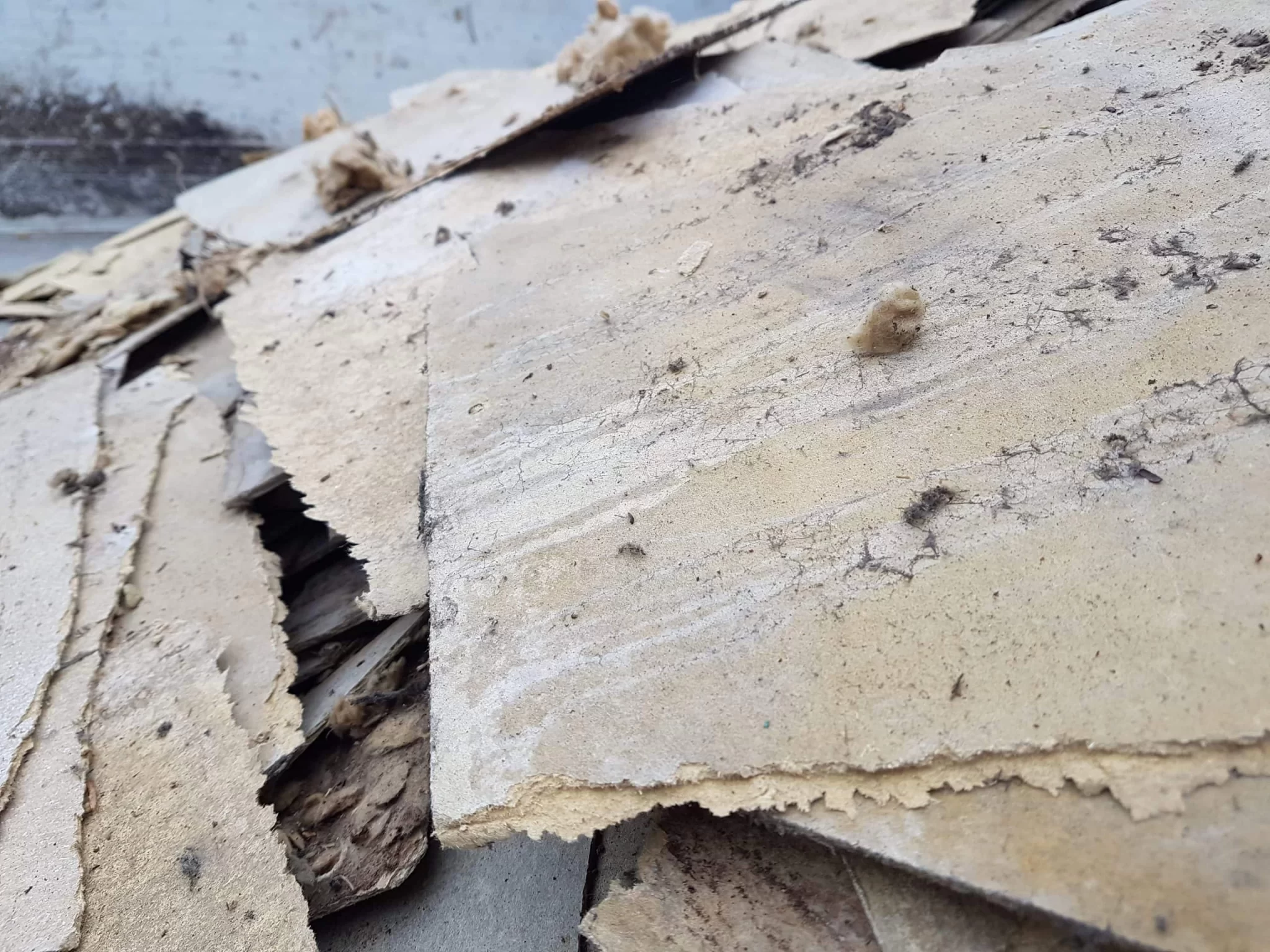
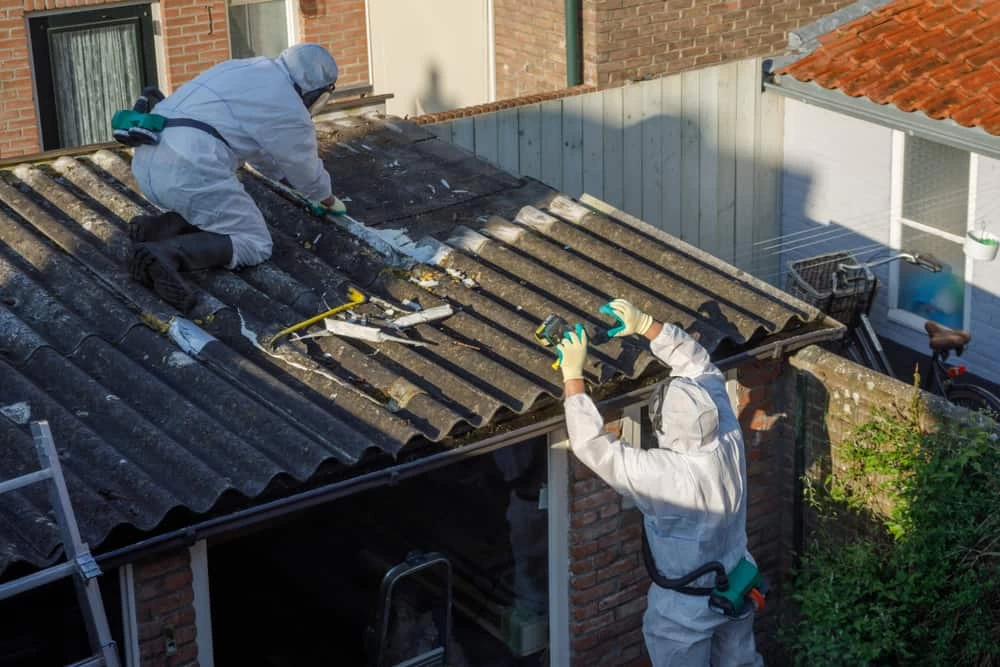
Asbestos shows up differently depending on when a building was constructed and how it was used. In Great Neck Plaza’s older apartment buildings and co-ops, the most common materials we encounter are vinyl floor tiles and the adhesive mastic beneath them, textured popcorn ceilings applied before 1978, pipe and boiler insulation in steam-heated pre-war buildings, roofing materials, and drywall joint compounds. Each one requires its own handling protocol, and each one needs to be properly identified before any renovation or demolition begins.
Asbestos tile removal in Great Neck Plaza is particularly common given the post-war construction era of so many units along Middle Neck Road and throughout the garden apartment complexes. The tiles themselves are often still intact, but the mastic underneath is frequently more hazardous — and it gets disturbed the moment flooring work starts. Asbestos popcorn ceiling removal is another frequent request, especially from co-op owners renovating units before listing or after purchase.
For commercial properties along the Middle Neck Road corridor, the same rules apply — and in some cases, the stakes are higher because business operations can’t afford extended downtime. We work around your schedule and produce the documentation your contractor, your landlord, and the village will require before any build-out or renovation can legally proceed.
Does Great Neck Plaza have its own asbestos rules beyond New York State law?
Yes — and this is one of the most important things to know before hiring anyone for asbestos work in Great Neck Plaza. The village enacted Chapter 76 of its Village Code in 1987, which specifically requires that workers who handle asbestos during construction, repair, renovation, or demolition within Great Neck Plaza be appropriately trained, and that supervisors of that work be certified. The Board of Trustees was explicit that these requirements exist in addition to — not instead of — whatever New York State law requires.
That means any contractor working in Great Neck Plaza needs to satisfy both the state’s Industrial Code Rule 56 standards and the village’s own Chapter 76 requirements simultaneously. If your contractor only knows the state rules, they’re already operating outside of what the village expects. That gap can surface during a building permit review or a post-project inspection, and the consequences land on the property owner, not the contractor. It’s worth asking specifically about Chapter 76 compliance before signing anything.
Is asbestos common in Great Neck Plaza apartment buildings and co-ops?
Very common — and that’s not an exaggeration. The village’s own website notes that its apartments date from the early 1900s to the 1980s, which places a large portion of the residential stock squarely within the decades when asbestos-containing materials were standard in American construction. Vinyl floor tiles, pipe insulation, boiler room wrapping, textured spray ceilings, roofing materials, and window caulking installed before 1980 all potentially contain asbestos.
In a dense, multi-family community like Great Neck Plaza — where buildings like the Alden Gardens co-op complex and the Kenwood Apartments represent classic post-war construction — shared mechanical systems are a particular concern. Steam riser insulation, branch heating line wrapping, and boiler room materials in multi-unit buildings can contain asbestos that affects multiple units at once. A renovation in one apartment can disturb those shared systems, triggering abatement requirements that go well beyond the individual unit. That’s why a certified inspection before any renovation is not just smart — it’s legally required in New York State.
Do I need an asbestos inspection before renovating my Great Neck Plaza home or unit?
Under New York State’s Industrial Code Rule 56, a mandatory asbestos survey by a certified inspector is required before any renovation, demolition, or significant alteration of a building where asbestos-containing materials may be present. This applies to residential and commercial properties alike. In Great Neck Plaza specifically, where so much of the housing stock was built during the asbestos-use era, skipping this step isn’t just a regulatory risk — it’s a health risk.
The survey identifies exactly what materials are present, where they are, and whether they’re in a condition that poses a risk during the planned work. If asbestos is found, abatement must be completed by a licensed contractor before the renovation proceeds. If nothing is found, you have a certified report documenting that — which is useful for real estate transactions, permit applications, and your own records. Either way, the inspection gives you a clear picture of what you’re working with before any walls come down or floors come up.
How does asbestos abatement work in a shared co-op building in Great Neck Plaza?
Multi-unit abatement in a co-op or apartment building is more involved than a single-family home project, and Great Neck Plaza’s housing stock makes this scenario very common. When asbestos is found in a shared building system — pipe insulation, boiler room materials, or branch heating lines — the abatement scope often extends beyond the individual unit that triggered the inspection. The co-op board typically needs to be involved in authorizing the work, and the project documentation needs to reflect the full scope of what was addressed.
On the execution side, we establish containment protocols in a multi-unit building designed to protect neighboring units throughout the process. Negative air pressure systems and decontamination chambers prevent cross-contamination in shared hallways and mechanical spaces. Scheduling also matters — we coordinate with building management and the co-op board to minimize disruption to other residents. When the work is complete, you receive a full compliance package that the board, the building’s managing agent, and any future buyer’s inspector can review.
What does asbestos abatement cost for a typical unit in Great Neck Plaza, NY?
Cost depends on the scope — what materials are present, how much of it there is, and whether it’s in a single unit or a shared building system. For a typical residential abatement in Great Neck Plaza involving vinyl floor tile removal or popcorn ceiling removal in a single apartment, costs generally range from a few hundred dollars for a small, straightforward job to several thousand for larger or more complex scopes. Projects involving pipe insulation, boiler rooms, or multi-unit shared systems will be priced based on the full extent of the work required.
What drives cost up in this market isn’t the labor — it’s the regulatory layer. Great Neck Plaza’s Chapter 76 requirements, combined with New York State’s ICR 56 mandates, mean that compliant abatement involves certified workers, air monitoring, proper containment, licensed disposal, and full documentation. Contractors who quote significantly below market are often cutting corners on one or more of those requirements. In a co-op building where the board and future buyers will scrutinize the paperwork, that’s a risk that tends to cost more to fix than it saved upfront.
How long does asbestos abatement take for a Great Neck Plaza apartment or co-op unit?
For a standard single-unit residential project — floor tile removal, popcorn ceiling removal, or pipe insulation in one apartment — the abatement work itself typically takes one to three days. The full timeline from initial inspection to final air clearance is usually one to two weeks, depending on scheduling, permit processing through the Great Neck Plaza Building Department, and the complexity of the scope.
For projects in shared building systems or larger commercial spaces along Middle Neck Road, the timeline extends based on the scale of the work and the coordination required with building management or the co-op board. One thing that affects scheduling in Great Neck Plaza specifically is the village’s building permit process — no work is permitted on Sundays, and the Building Department has set operating hours through the week and Saturday mornings. We factor all of that into your project timeline from the first conversation, so there are no surprises when the calendar gets tight around a closing date or a renovation start.