If your home was built before 1980, there’s a real chance asbestos is somewhere inside it and a renovation, a sale, or a storm can change everything. We provide licensed asbestos abatement in Great River, NY, so you know exactly what you’re dealing with before anything gets disturbed.
I needed a professional consultation explanation of procedure for safe removal of Asbestos in my apartment complex. Without having an account yet, I was very impressed with the caring, knowledgeable and generous advice offered by Jessica, and will look forward to doing business in the future. Thank you so much! I feel much more informed about a sometimes scary endeavor. Peace. Nancy Silva Mineola, NY.
Mia Munoz
Used this company to clean up some water flood in my house. They were fast and easy to work with.very professional, Would recommend to anyone!
Nini Valle
Great company, had a flood and they responded quickly and efficiently. Billed my insurance company directly. I highly recommend this company!
joe colapietro, jr
I had pipe freeze in my basement right before a snow storm and they made to within an hour to help start the clean up process. They we by our side throughout the entire process and even helped with the insurance company. They did such a great job with the cleanup, repair, remidiation, I contracted them to perform the repairs and finishes in the basement. They came with enough manpower and material to get the job done. Leo and Jessica were nothing but a pleasure to deal with!!
Cristian Arredondo c
I had some water damage in my home and Green Island was able to take care of my issue quickly and effectively. I am very pleased with the work they did. They responded quickly and were very professional.
Michael M
Outstanding service! From the office to the field crew everyone was friendly, helpful and responsive. I highly recommend Green Island Group.
Most homeowners in Great River aren’t thinking about asbestos until something forces the issue a contractor pulls up old flooring, a ceiling gets damaged in a storm, or a buyer’s inspector flags something during due diligence. At that point, the question isn’t whether to deal with it. It’s who you trust to handle it correctly.
When asbestos is properly identified and removed, you get something most people don’t expect: clarity. You can move forward with a renovation without stopping mid-project. You can list your home without last-minute surprises derailing the closing. You can let a contractor swing a hammer without wondering what’s inside the wall.
Great River’s housing stock much of it built between the 1940s and 1970s sits right in the window where asbestos was standard in everything from floor tiles to pipe insulation to textured ceilings. Add in the salt air and humidity that come with living on the Great South Bay, and materials that might hold up fine in a drier inland community can deteriorate faster here. Cracked tiles, flaking ceilings, and crumbling pipe wrap aren’t just cosmetic issues once those materials become friable, they become a health concern. Getting ahead of it protects your family and your investment.
We’re a licensed environmental remediation contractor serving Suffolk County, with an established presence throughout the Town of Islip including work in North Great River, the hamlet directly north of Great River on the other side of Sunrise Highway. We know the housing stock in this area. We know what materials show up in homes of this era, and we know what the Town of Islip Building Department and the NYS Department of Labor require before, during, and after any abatement project.
Every project we take on is performed by NYS DOL-certified workers under Industrial Code Rule 56 the state regulation that governs all asbestos work in New York. That means proper containment, documented air monitoring, compliant disposal, and a paper trail that holds up whether you’re pulling a permit, closing a sale, or simply protecting your family.
We’re not a national chain. We’re a Long Island company that works in communities like Great River because we understand what’s at stake in homes like yours.
It starts with a survey. Before anything is touched, a certified inspector assesses your home for asbestos-containing materials floors, ceilings, walls, mechanical systems, whatever the scope of your project requires. If you’re planning a renovation, this survey isn’t optional under New York State law. It has to happen first, and it has to be done by someone qualified to do it.
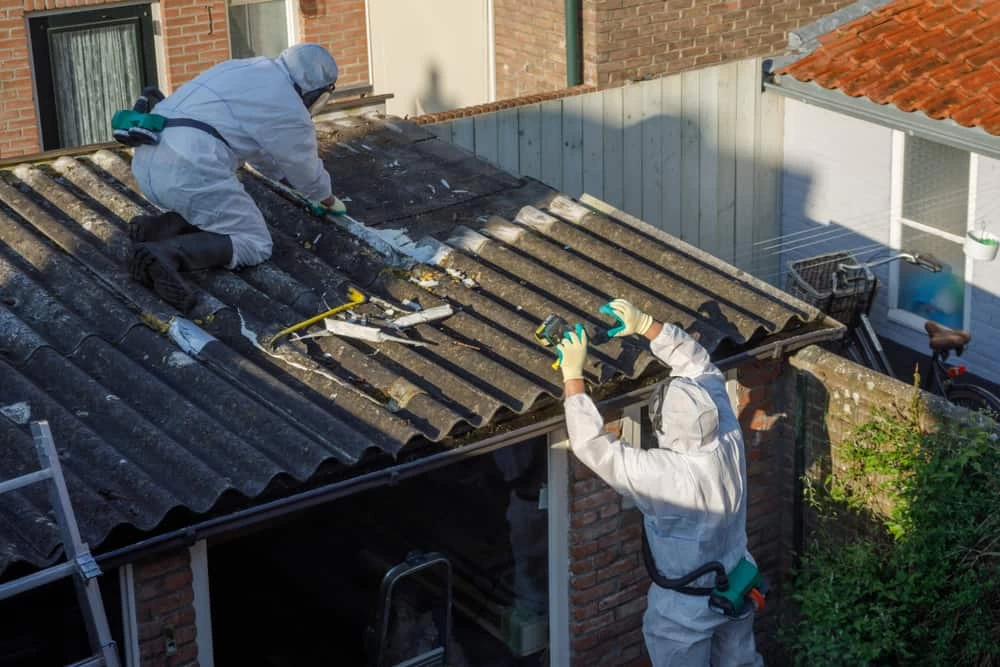
If asbestos is found, we file the required notification with the NYS DOL Asbestos Control Bureau and establish a containment area before removal begins. That means negative air pressure, sealed work zones, and certified workers in proper protective equipment not someone with a dust mask and a garbage bag. During the work, air monitoring runs continuously to confirm that fibers aren’t migrating outside the containment area.
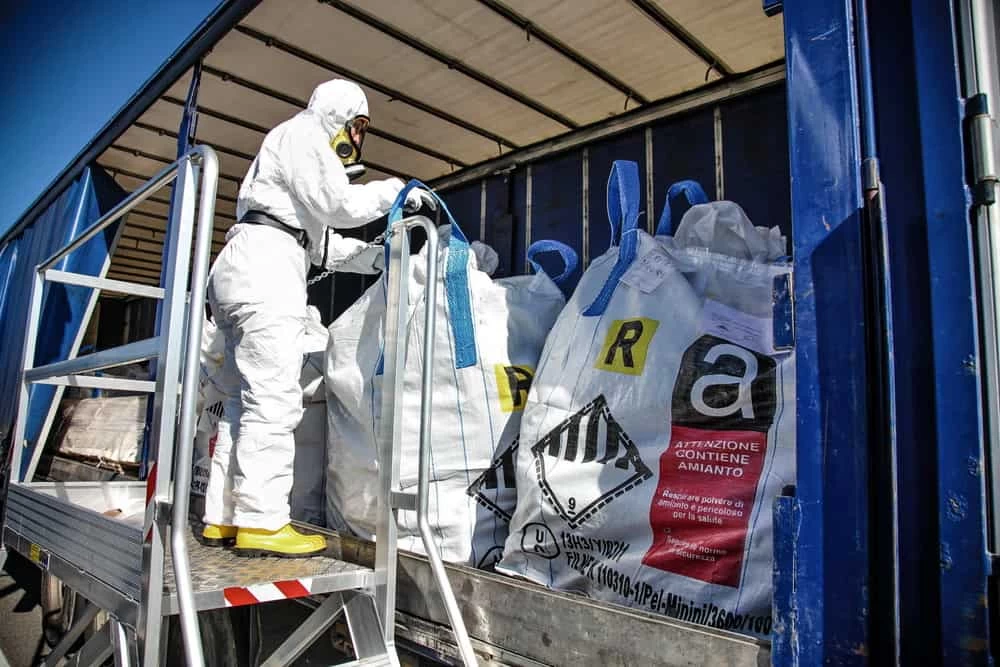
Once removal is complete, we conduct post-clearance air sampling to verify the space is safe. All asbestos-containing waste is properly containerized, labeled, and transported to an approved disposal facility fully documented with manifests you can keep on file. In a community where homes regularly change hands at significant values, that documentation matters. It protects you at closing, it satisfies the Town of Islip’s permitting process, and it gives you a record that the work was done right.
The Materials We Find Most Often in Great River Homes
In Great River’s pre-1980 homes, the asbestos-containing materials that come up most often are vinyl floor tiles especially the 9×9 and 12×12 tiles common in post-war construction, often found hiding under carpeting, hardwood, or newer flooring. Asbestos tile removal is one of the most frequent calls we get from homeowners planning kitchen renovations, basement finishing projects, or full-floor replacements. The tiles themselves may be stable, but the adhesive underneath them often contains asbestos too, which changes the scope of the work.
Popcorn ceiling removal is another common project in this area. Textured spray ceilings were applied widely across Long Island homes from the late 1950s through the early 1980s, and a significant portion of them contain chrysotile asbestos. If you’re modernizing an older Great River home which local real estate data shows is a defining pattern here, where buyers frequently purchase existing homes and renovate them substantially testing that ceiling before any work begins isn’t just smart, it’s legally required if the material tests positive.
Beyond tile and ceiling work, we also handle pipe and boiler insulation removal, joint compound, roofing materials, and attic insulation. If your home is near the water or has experienced storm damage or moisture intrusion both real possibilities given Great River’s position on the Great South Bay deteriorated insulation and damaged materials need to be assessed before any repair or restoration work begins. We handle the full scope, from initial testing through final clearance.
Do I need an asbestos survey before renovating my Great River home?
Yes and this isn’t just a recommendation. Under New York State Industrial Code Rule 56, any renovation that may disturb building materials in a structure that could contain asbestos requires a pre-renovation survey conducted by a certified inspector before work begins. This applies to residential properties, not just commercial buildings.
In Great River, where a large portion of the housing stock was built between the 1940s and 1970s, the odds of encountering asbestos-containing materials during a renovation are genuinely high. Floor tiles, wall and ceiling textures, pipe insulation, and joint compound from that era frequently contain asbestos. If a contractor disturbs those materials without a prior survey and they test positive, you’re looking at a work stoppage, potential fines, and a remediation project that’s now significantly more complicated than it needed to be. Getting the survey done first is the move that keeps your project on track.
How do I know if my floors or ceilings in Great River contain asbestos?
You can’t tell by looking. Asbestos fibers are microscopic, and the materials that contain them vinyl tiles, textured ceilings, joint compound look identical to non-asbestos versions of the same products. The only way to know is to have a sample collected by a certified inspector and sent to an accredited laboratory for analysis.
That said, age is a strong indicator. If your Great River home was built before 1980 and still has original flooring, ceilings, or wall finishes, there’s a meaningful probability that at least some of those materials contain asbestos. Many homes in this area have never been fully assessed. A pre-renovation or pre-sale inspection is the only way to get a definitive answer and it gives you documentation either way, which matters whether you’re renovating, selling, or simply want to know what’s in your home.
What happens if asbestos is found during a renovation or home inspection?
Work stops until the material is properly addressed. Under NYS ICR 56, once asbestos-containing material is identified in a work area, it cannot be disturbed by unlicensed workers. The area needs to be secured, and a licensed abatement contractor needs to take over that portion of the project.
That sounds disruptive, but it’s far less disruptive than the alternative which is disturbing the material unknowingly, releasing fibers into the air, and then dealing with a contaminated work area, potential health exposure, and a remediation project that now involves decontaminating surfaces throughout the affected space. If asbestos is found during a real estate transaction in Great River, the same principle applies: the discovery doesn’t have to kill the deal, but it does need to be addressed by a licensed contractor with proper documentation before closing. Buyers at this price point will want to see the clearance report.
How much does asbestos abatement typically cost for a home in Great River, NY?
It depends on the scope what materials are involved, how much square footage needs to be addressed, and how accessible the work area is. A single-room asbestos tile removal in a Great River home might run in the range of $1,500 to $3,500. A more involved project full popcorn ceiling removal throughout a home, or pipe insulation removal in a basement mechanical room can reach $5,000 to $15,000 or more depending on the conditions.
What’s worth keeping in mind is that in a market where Great River homes sell for $1 million to over $2 million, the cost of professional abatement is a small fraction of the property’s value and the cost of doing it incorrectly is much higher. Improper removal, undocumented work, or a contractor who isn’t licensed under NYS ICR 56 can create liability issues that surface at closing, complicate a permit application, or require the work to be redone entirely. Getting a proper quote from a licensed contractor upfront is always the more cost-effective path.
Can a storm or flooding in Great River disturb asbestos in my home?
Yes, and this is something South Shore homeowners don’t always think about until it happens. Great River’s location on the Great South Bay puts it in the path of nor’easters, coastal flooding events, and tropical weather that can cause real structural damage to older homes. When water intrudes into a basement, soaks through walls, or damages a ceiling, it can compromise materials that were previously stable including pipe insulation, floor tiles, and ceiling textures that contain asbestos.
Once those materials are waterlogged, cracked, or physically disturbed by storm damage, they can become friable meaning fibers can be released into the air. If you’re dealing with storm or flood damage in a pre-1980 Great River home, it’s important to have the affected areas assessed before any cleanup or repair work begins. Mold remediation and water damage restoration contractors may not be equipped to identify or handle asbestos-containing materials, and disturbing them in the process of cleaning up creates a secondary problem. We handle both asbestos abatement and environmental remediation, so the assessment and the work can happen under one roof.
What does the asbestos disposal process look like, and is it regulated in New York?
Asbestos disposal in New York is tightly regulated, and the requirements go well beyond just bagging the material and hauling it away. Under NYS DEC regulations and ICR 56, all asbestos-containing waste must be double-bagged in labeled, leak-tight containers, transported by a licensed carrier, and delivered to an approved solid waste facility with a complete chain-of-custody manifest documenting every step from removal to final disposal.
For Great River homeowners, this matters for a practical reason: the disposal documentation becomes part of your project record. If you sell your home, refinance, or pull permits for future work, that paperwork demonstrates that the abatement was handled correctly and completely. It’s not just a regulatory formality it’s protection for you as the property owner. Any contractor who can’t produce disposal manifests at the end of a project is a contractor who hasn’t completed the job. Every project we complete includes full disposal documentation as a standard part of what you receive when the work is done.