When Asbestos Turns Up in Your Greenville Renovation
When asbestos turns up mid-renovation in a Greene County farmhouse, you need someone licensed, accountable, and ready to move not a landing page with a 1-800 number.
I needed a professional consultation explanation of procedure for safe removal of Asbestos in my apartment complex. Without having an account yet, I was very impressed with the caring, knowledgeable and generous advice offered by Jessica, and will look forward to doing business in the future. Thank you so much! I feel much more informed about a sometimes scary endeavor. Peace. Nancy Silva Mineola, NY.
Mia Munoz
Used this company to clean up some water flood in my house. They were fast and easy to work with.very professional, Would recommend to anyone!
Nini Valle
Great company, had a flood and they responded quickly and efficiently. Billed my insurance company directly. I highly recommend this company!
joe colapietro, jr
I had pipe freeze in my basement right before a snow storm and they made to within an hour to help start the clean up process. They we by our side throughout the entire process and even helped with the insurance company. They did such a great job with the cleanup, repair, remidiation, I contracted them to perform the repairs and finishes in the basement. They came with enough manpower and material to get the job done. Leo and Jessica were nothing but a pleasure to deal with!!
Cristian Arredondo c
I had some water damage in my home and Green Island was able to take care of my issue quickly and effectively. I am very pleased with the work they did. They responded quickly and were very professional.
Michael M
Outstanding service! From the office to the field crew everyone was friendly, helpful and responsive. I highly recommend Green Island Group.
Your Renovation Moves Forward. Your Family Stays Safe.
Discovering asbestos in your Greenville home doesn’t have to shut everything down. What it does require is a licensed contractor who handles it correctly the first time so your project gets back on track and the air in your home is documented clean before anyone moves back in.
Greenville’s housing stock tells the story. Farmhouses built in the 1800s, mid-century rural homes along Route 81, older properties near Freehold these are beautiful structures, but they were built during the exact decades when asbestos showed up in floor tiles, pipe insulation, ceiling materials, and roofing. When you start pulling things apart, you find what’s been sitting there quietly for decades.
The Catskill Mountain winters up here don’t help. Freeze-thaw cycles crack older pipe insulation. Ice dam damage disturbs attic materials. A burst pipe in a 1940s basement can expose deteriorated insulation that was stable the day before. When that happens, you’re not dealing with a scheduled renovation anymore you’re dealing with an emergency. We’re available 24 hours a day, every day of the year, because that’s when these situations actually happen.
Green Island Group holds a valid NYS Department of Labor Asbestos Contractor License the credential required by New York State law to legally perform asbestos abatement anywhere in Greene County, including Greenville. You can look it up on the NYS DOL website right now. That’s not something most contractors tell you to do, but we’re comfortable with it.
Beyond residential work in Greenville and the surrounding area, we’ve performed asbestos abatement for the NYS Office of General Services, the Dormitory Authority of the State of New York, the NYS Office of Mental Health, Nassau County, and Suffolk County. Government agencies don’t hire contractors without verifying licensing, insurance, and safety records. That vetting process is more rigorous than any review platform.
We’ve been working throughout the Hudson Valley and upstate New York for over 12 years as an independently owned company not a franchise, not a call center routing your job to whoever’s available. When you call, you’re talking to people who stand behind the work.
No Surprises Here's What the Job Actually Looks Like
It starts with an assessment. Before anything is disturbed, we identify the materials in question, confirm whether they contain asbestos through proper sampling, and give you a clear scope of work. In Greenville’s older homes especially the farmhouses and Victorian-era properties common throughout the town that assessment often turns up more than one type of material. Floor tiles, pipe insulation, and ceiling materials can all be present in the same structure. You should know what you’re dealing with before work begins.
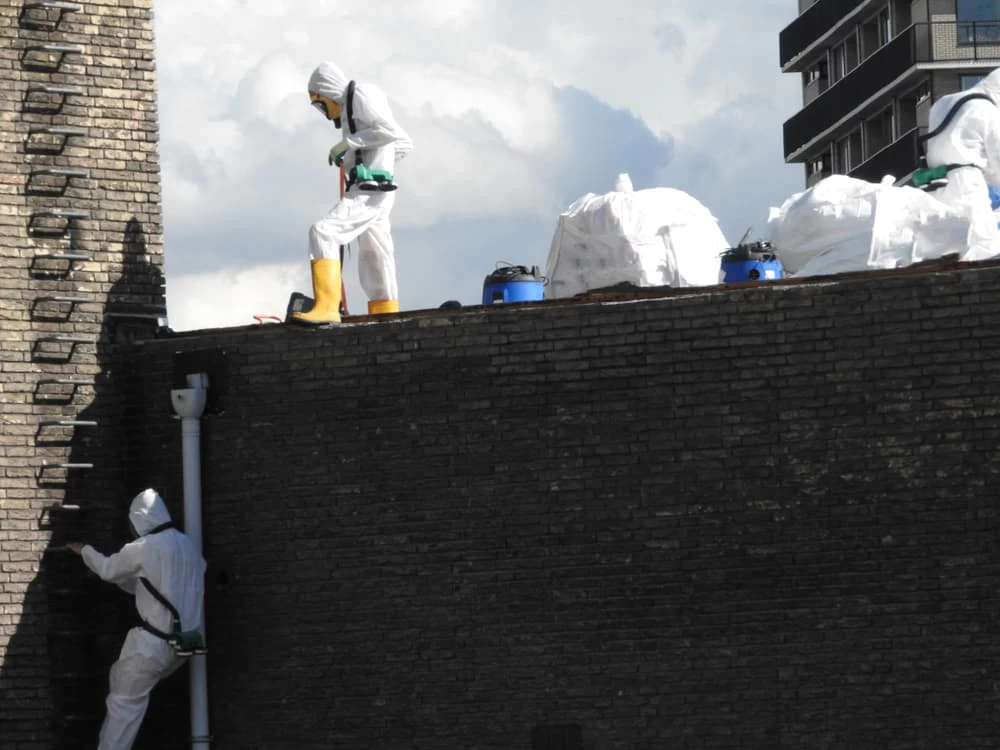
Once the scope is confirmed, we establish a contained work area using negative air pressure and proper barriers so that asbestos fibers stay isolated during removal. All materials are wetted, double-bagged in 6-mil poly, labeled according to OSHA requirements, and transported to a licensed Class II disposal facility. New York State has specific requirements under Industrial Code Rule 56 for how every step of this process is handled we follow them, and we document that we followed them.
After the work is done, an independent industrial hygienist performs post-abatement air monitoring. If the air clears, you receive a written clearance certificate. That document is what your contractor needs to resume work, what your lender may require, and what closes a real estate transaction when asbestos remediation was a condition of sale. You don’t get that from a company that just removes the material and hands you a receipt.
Greenville properties don’t usually present with just one asbestos issue. A homeowner pulling up old flooring in a 1950s farmhouse may be looking at asbestos floor tiles, deteriorated pipe insulation in the basement, and popcorn ceiling material in the rooms above all at once. We handle asbestos tile removal, asbestos popcorn ceiling removal, pipe insulation, roofing materials, transite siding, joint compound, and attic insulation under one roof. You’re not coordinating multiple specialty contractors for a single project.
The same goes for what often comes with asbestos in homes this age. Moisture damage, mold, and lead paint frequently show up alongside asbestos in Greene County’s older housing stock particularly in properties that have been through decades of Catskill winters. We also handle mold remediation, lead abatement, water damage, and fire damage. One call covers the full picture.
For qualifying projects, we offer financing at 0% APR up to $200,000. No other asbestos abatement contractor currently serving the Greenville area offers financing at this level. If your asbestos discovery is connected to an insured loss a storm, a burst pipe, water damage we bill insurance directly and work through the claims process with you. Asbestos abatement is already disruptive enough. The financial side of it shouldn’t make it worse.
Does my older Greenville home actually need professional asbestos abatement before renovating?
If your home was built before 1980 which covers the majority of Greenville’s housing stock, including the farmhouses, Victorians, and mid-century rural homes throughout the town there’s a real possibility that asbestos-containing materials are present somewhere in the structure. That doesn’t mean your home is dangerous to live in. Asbestos that’s intact and undisturbed generally doesn’t pose an immediate risk. The problem starts when renovation work disturbs it.
Under New York State Industrial Code Rule 56, asbestos abatement in New York must be performed by a licensed contractor. That’s not optional, and it’s not just a formality it’s a legal requirement with fines that can reach $10,000 per day per violation for unlicensed work. Before your contractor opens walls, pulls flooring, or disturbs any insulation in a pre-1980 Greenville home, proper testing and abatement by a licensed professional protects you legally, financially, and physically.
How long does asbestos removal typically take for a home in Greene County?
The timeline depends entirely on what materials are involved, how much of them there are, and where they’re located in the structure. A straightforward asbestos floor tile removal in a single room can often be completed in one to two days. Pipe insulation removal in a basement, or popcorn ceiling removal across multiple rooms, typically takes longer sometimes three to five days for a full project, not counting the post-abatement air monitoring period.
In Greenville’s older homes, it’s common for the initial assessment to reveal more material than expected. A farmhouse that appears to have one area of concern often has asbestos in multiple locations floor tiles in one room, pipe insulation in the basement, roofing felt under the shingles. Getting an accurate scope of work upfront is what prevents a project from stalling mid-job. We walk through the full picture before work begins so you know what the timeline actually looks like before any work starts.
Can I stay in my house during asbestos abatement in Greenville, NY?
It depends on the scope and location of the work. For smaller, contained projects like asbestos tile removal in a single room or a basement pipe insulation job it’s sometimes possible to remain in other parts of the home while work is underway, as long as proper containment is in place and the work area is fully isolated. For larger projects involving multiple rooms or materials in living areas, vacating the home during active abatement is the standard recommendation.
What matters most is what happens after the work is done. Under New York State’s Industrial Code Rule 56, a space cannot be reoccupied until post-abatement air monitoring has been completed by an independent industrial hygienist and the results confirm that airborne fiber levels meet state safety standards. That clearance is documented in writing. Until you have that clearance certificate in hand, the area should stay off-limits regardless of what the work area looks like visually. Air quality after abatement is what the certificate confirms, not appearance.
What does asbestos abatement cost for a typical home in Greenville, NY?
Cost varies based on the type of material, the volume, and the complexity of access. As general reference points for the upstate New York market: asbestos popcorn ceiling removal typically runs $3 to $8 per square foot, asbestos floor tile removal falls in the $5 to $15 per square foot range, and pipe insulation removal generally runs $25 to $75 per linear foot. Full residential projects in Greenville homes can range from $1,500 on the low end for a small, contained job to $30,000 or more for a larger multi-material scope.
What drives cost up isn’t the removal itself it’s the combination of material types, access difficulty, disposal requirements, and post-abatement clearance. Older Greenville homes with multiple ACM types in hard-to-reach spaces like crawlspaces or attics will cost more than a straightforward single-room job. We provide written estimates with a clear scope before any work begins. And for qualifying projects, 0% APR financing up to $200,000 is available which is relevant when asbestos turns up unexpectedly mid-renovation and the budget wasn’t built around it.
Is asbestos removal required before selling a house in Greene County, New York?
New York State does not have a law that automatically requires asbestos removal as a condition of selling a home. However, the practical reality in today’s Greenville real estate market particularly with the volume of buyers coming from the New York City area who are accustomed to thorough environmental due diligence is that asbestos is increasingly flagged during home inspections and increasingly made a condition of sale by buyers and their lenders.
If a home inspector identifies suspected asbestos-containing materials in a Greenville property, buyers will often request either remediation before closing or a price adjustment. Lenders, particularly for FHA and VA loans, can require documentation of abatement as a condition of financing. If you’re selling a pre-1980 home in Greenville and asbestos is flagged, having a licensed contractor complete the abatement and produce a clearance certificate is typically the fastest path to keeping the transaction on track. That documentation the written clearance from an independent industrial hygienist is what satisfies buyers, attorneys, and lenders.
A burst pipe exposed old insulation in my Greenville basement what should I do first?
Don’t disturb it. That’s the first and most important step. Pipe insulation in homes built before 1980 which is the majority of Greenville’s older housing stock has a high likelihood of containing asbestos, and insulation that has been wetted or physically damaged by a burst pipe can become friable, meaning fibers can become airborne when handled. Until the material is tested, treat it as if it contains asbestos and keep people away from the area.
Call a licensed asbestos contractor before your plumber goes back in, before you start cleanup, and before any restoration work begins. We’re available around the clock for exactly this kind of situation Catskill Mountain winters produce burst pipes and ice dam damage in older Greenville homes on a regular basis, and these aren’t scenarios that wait for business hours. We’ll assess the material, handle the abatement under proper containment, and coordinate the clearance documentation so your plumber and restoration crew can get back in safely. If the damage is covered by homeowner’s insurance, we bill directly and manage the documentation through the claims process.