Flood damage doesn’t end when the water recedes. If your Hammel home was built before 1980, there’s a real chance disturbed materials contain asbestos and that means work stops until it’s handled correctly.
I needed a professional consultation explanation of procedure for safe removal of Asbestos in my apartment complex. Without having an account yet, I was very impressed with the caring, knowledgeable and generous advice offered by Jessica, and will look forward to doing business in the future. Thank you so much! I feel much more informed about a sometimes scary endeavor. Peace. Nancy Silva Mineola, NY.
Mia Munoz
Used this company to clean up some water flood in my house. They were fast and easy to work with.very professional, Would recommend to anyone!
Nini Valle
Great company, had a flood and they responded quickly and efficiently. Billed my insurance company directly. I highly recommend this company!
joe colapietro, jr
I had pipe freeze in my basement right before a snow storm and they made to within an hour to help start the clean up process. They we by our side throughout the entire process and even helped with the insurance company. They did such a great job with the cleanup, repair, remidiation, I contracted them to perform the repairs and finishes in the basement. They came with enough manpower and material to get the job done. Leo and Jessica were nothing but a pleasure to deal with!!
Cristian Arredondo c
I had some water damage in my home and Green Island was able to take care of my issue quickly and effectively. I am very pleased with the work they did. They responded quickly and were very professional.
Michael M
Outstanding service! From the office to the field crew everyone was friendly, helpful and responsive. I highly recommend Green Island Group.
A stopped renovation is a stressful thing. You’ve got a contractor waiting, a permit in limbo, and someone telling you that the floor tiles or the pipe wrap has to be tested before anyone touches anything else. That’s exactly where this process starts and where having the right team makes the difference between a two-day delay and a two-week one.
Hammel is one of the more complex places in all of Queens to do this kind of work. We’re on a barrier island, accessible by bridge, with a housing stock that’s almost entirely pre-1980. The Hammel Houses were built between 1952 and 1955 right in the middle of the era when asbestos was standard in floor tile adhesive, pipe insulation, and ceiling materials. The bungalow-era homes that predate even those buildings add another layer. Saltwater air accelerates material deterioration here faster than it would in an inland neighborhood, which means materials that might stay stable for decades elsewhere can become friable on the Rockaway Peninsula sooner than anyone expects.
What you get on the other side of proper abatement is simple: a clearance certificate, a green light from NYC DEP, and the ability to move forward with your renovation, your sale, or your insurance claim without the threat of a regulatory stop-work order hanging over the project.
Every License Required. No Shortcuts on the Rockaway Peninsula.
We hold NYS DOL Asbestos Licensing, NYC BIC authorization, USEPA Lead/RRP Certification, and IICRC Water Damage certification the full stack required to legally perform asbestos abatement in New York City. That matters in Hammel because Queens Community District 14 operates under NYC DEP oversight, which adds a regulatory layer that many contractors outside the five boroughs simply aren’t equipped to navigate.
We’ve been active in the 11693 ZIP code and know what the Rockaway Peninsula demands. The bridge access, the coastal building conditions, the post-Sandy renovation context none of that is new to us. We also carry direct insurance billing capability, which is relevant in a neighborhood where a significant portion of abatement projects are tied to flood damage claims rather than planned renovations.
When you call, someone picks up. When we say we’re coming, we come across the Cross Bay Veterans Memorial Bridge and all the way to Beach Channel Drive if that’s where you need us.
What Actually Happens From First Call to Final Clearance
The first step is inspection. A licensed assessor comes to your property, identifies any suspect materials floor tiles, ceiling texture, pipe wrap, drywall compound and collects samples for lab analysis. In a pre-1980 home on the Rockaway Peninsula, there are usually several materials worth testing, not just one. You get a clear picture of what’s there, what condition it’s in, and what needs to happen before any renovation work can legally continue.
If abatement is required, we file with NYC DEP through the ARTS system that’s the Asbestos Reporting and Tracking System at least seven days before work begins. That filing is what allows the NYC Department of Buildings to release your permit. We handle the paperwork. You don’t have to figure out the forms or the timelines.
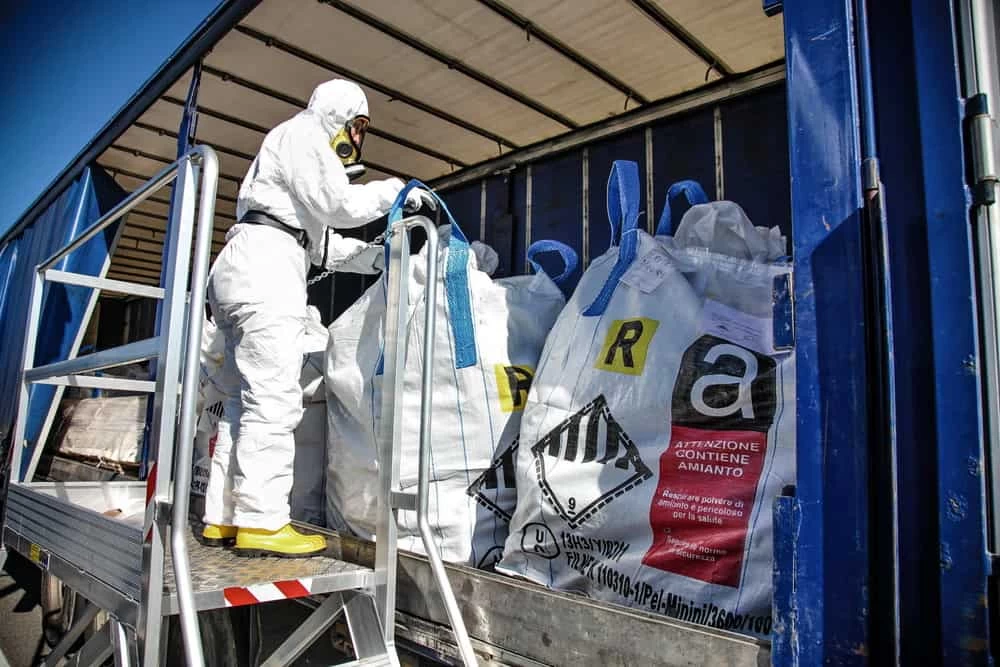
On the day of abatement, the work area is sealed, negative air pressure is established, and the material is removed or encapsulated depending on what the assessment determined. Microtrap air scrubbers run throughout the entire process. When the physical work is done, post-removal air quality testing confirms the space is clear. That clearance certificate is what closes out the DEP requirement, satisfies your insurance adjuster, and lets your contractor get back to work.
Asbestos Tile and Popcorn Ceiling Removal, Queens NY
Built for the Homes That Actually Exist Here
The housing stock in Hammel isn’t abstract it’s 1950s NYCHA construction, early 20th-century bungalows converted to year-round rentals, and post-Sandy rebuilds that opened up walls nobody had touched in fifty years. Asbestos shows up in specific, predictable places in these buildings: the 9×9 black or beige floor tiles and their adhesive, the popcorn ceiling texture applied through the 1970s, the gray pipe wrap on older heating systems, and the joint compound used in drywall installation before 1980.
Asbestos tile removal and asbestos popcorn ceiling removal are two of the most common scopes we handle in this area. Both require proper containment, licensed removal, and post-clearance air testing and both are subject to NYC DEP filing requirements if the square footage meets the regulated threshold. For smaller scopes that fall below that threshold, we’ll tell you that clearly rather than file unnecessarily and extend your timeline.
In cases where the material is intact and won’t be disturbed by planned work, encapsulation is a legitimate option it typically costs 15 to 25 percent less than full removal and is fully compliant when done correctly. We assess each situation honestly and recommend what’s right for your property, not what’s easiest to upsell.
Does flood damage to my Hammel home mean I need asbestos testing before repairs?
In most cases involving a pre-1980 home in Hammel, yes. When floodwater damages older building materials floor tiles, ceiling surfaces, pipe insulation, wall systems those materials can become disturbed or friable, meaning they can release asbestos fibers into the air. Under NYC DEP regulations, any renovation or repair work that disturbs suspect materials in a pre-1980 building requires an asbestos assessment before work can legally begin.
On the Rockaway Peninsula, this isn’t hypothetical. Tidal flooding, nor’easters, and the long tail of Hurricane Sandy damage have put a significant number of Hammel homes through exactly this situation. If your contractor has stopped work and told you asbestos needs to be addressed first, that’s the right call not a delay tactic. Getting the inspection done quickly is the fastest way to get your repair project moving again, and it’s the only way to do it without creating regulatory liability for yourself as the property owner.
What's the difference between asbestos removal and asbestos encapsulation, and which do I need?
Removal means the asbestos-containing material is physically taken out of the building, bagged, and disposed of at a licensed facility. Encapsulation means the material is sealed with a specialized coating so it can’t release fibers. Both are legal and code-compliant under NYC DEP guidelines when performed correctly by a licensed contractor.
Which one is right for your property depends on the condition of the material and what you plan to do with the space. If the material is intact, undisturbed, and won’t be touched by any planned renovation work, encapsulation is often a reasonable choice and it typically runs 15 to 25 percent less than full removal. If the material is damaged, deteriorating, or in a space that will be renovated, full removal is usually the better long-term decision. In a coastal environment like Hammel, where salt air and humidity accelerate material breakdown, we tend to look carefully at the actual condition of the material before recommending encapsulation because something that looks stable today may not stay that way.
How does NYC DEP asbestos filing work, and do I have to handle it myself?
You don’t have to handle it yourself and honestly, most homeowners shouldn’t try to. The NYC DEP requires that regulated asbestos abatement projects be filed through the Asbestos Reporting and Tracking System, known as ARTS, at least seven days before any abatement work begins. Until that filing is complete and DEP requirements are satisfied, the NYC Department of Buildings won’t release a renovation or alteration permit on a pre-1980 property.
When you work with us, we manage the DEP filing as part of the project. We know the forms, the timelines, and what the system requires because we do this in New York City specifically, not just in Nassau or Suffolk County where state-level rules apply without the additional city layer. The seven-day advance requirement means that if you’re in a time-sensitive situation a pre-sale inspection flagged asbestos, or a contractor is standing by waiting to start the sooner we can get the assessment done and the filing submitted, the better. Don’t wait on this part.
How much does asbestos removal cost for a home in Hammel, NY?
The honest answer is that it depends on what’s there and how much of it needs to be addressed. Nationally, asbestos removal runs roughly $5 to $20 per square foot for interior work, and the average homeowner project lands around $2,200. New York City pricing tends to run higher than national averages the regulatory requirements, licensed labor, DEP filing, and post-clearance air testing all add real cost that you won’t see in a national estimate.
Inspection and testing typically costs between $250 and $800 and is a required first step before any abatement work can be scoped or priced. In Hammel specifically, many projects involve multiple material types floor tile, ceiling texture, and pipe wrap are often all present in the same pre-1980 home so it’s worth doing a thorough assessment rather than testing one material and discovering others mid-project. If your abatement is tied to a flood damage or storm insurance claim, we bill insurance directly, which removes the out-of-pocket burden and simplifies the process considerably.
Can I stay in my home during asbestos abatement, or do I need to leave?
For most regulated abatement projects, you’ll need to vacate the affected area and depending on the scope and location of the work, that may mean leaving the home entirely for the duration of the project. The work area is sealed with plastic sheeting and negative air pressure is maintained throughout, which contains any fibers within the containment zone. But for whole-floor or whole-room scopes, staying in an adjacent room isn’t a safe or practical option.
The timeline depends on the scope. A single-room floor tile removal might be completed in a day. A larger scope involving multiple materials across multiple areas will take longer and the post-removal air clearance testing adds time at the end, since that result needs to confirm the space is clear before the containment comes down. If you’re in a rental situation in Hammel, your landlord is responsible for providing safe housing during abatement that’s not optional. If you’re the property owner and need guidance on what to expect day by day, we walk through that with you before work begins so there are no surprises.
Is asbestos common in the older bungalows and pre-war homes still found in the Rockaways?
Yes, and it’s worth understanding why. The original Hammel community developed as a summer resort in the early 20th century, with bungalows and seasonal structures built throughout the 1920s, 30s, and 40s. Many of those structures were later converted to year-round housing, modified, and renovated over the decades often with materials that contained asbestos. Asbestos use in residential construction peaked from roughly the 1940s through the late 1970s, which means any home built or significantly renovated during that window is a candidate for testing.
In these older Rockaway Peninsula homes, the most common locations are floor tile and the black adhesive beneath it, textured ceiling coatings, pipe and boiler insulation, and older drywall joint compound. The fact that many of these homes went through storm damage and subsequent repair after Hurricane Sandy means some of those materials have already been disturbed and in some cases, that disturbance happened before anyone tested for asbestos. If you’re now planning additional work on a bungalow-era or pre-war home in Hammel, a proper assessment before you start is the only way to know what you’re dealing with and stay on the right side of NYC DEP requirements.