If your Hampton Bays home was built before 1980, there’s a real chance asbestos is somewhere inside it and a renovation, a storm, or a failed inspection can bring it to the surface fast.
I needed a professional consultation explanation of procedure for safe removal of Asbestos in my apartment complex. Without having an account yet, I was very impressed with the caring, knowledgeable and generous advice offered by Jessica, and will look forward to doing business in the future. Thank you so much! I feel much more informed about a sometimes scary endeavor. Peace. Nancy Silva Mineola, NY.
Mia Munoz
Used this company to clean up some water flood in my house. They were fast and easy to work with.very professional, Would recommend to anyone!
Nini Valle
Great company, had a flood and they responded quickly and efficiently. Billed my insurance company directly. I highly recommend this company!
joe colapietro, jr
I had pipe freeze in my basement right before a snow storm and they made to within an hour to help start the clean up process. They we by our side throughout the entire process and even helped with the insurance company. They did such a great job with the cleanup, repair, remidiation, I contracted them to perform the repairs and finishes in the basement. They came with enough manpower and material to get the job done. Leo and Jessica were nothing but a pleasure to deal with!!
Cristian Arredondo c
I had some water damage in my home and Green Island was able to take care of my issue quickly and effectively. I am very pleased with the work they did. They responded quickly and were very professional.
Michael M
Outstanding service! From the office to the field crew everyone was friendly, helpful and responsive. I highly recommend Green Island Group.
The biggest thing that changes isn’t just the air quality it’s the certainty. You know what’s in your walls. You know your family isn’t breathing something that was quietly deteriorating behind a ceiling or under a floor. That peace of mind is real, and it’s the whole point.
In Hampton Bays, the housing stock tells the story. A large share of homes here were built between the 1950s and 1970s originally as seasonal fishing cottages and summer retreats, many of which have since been converted to year-round living. Those homes were built fast and cheap, with materials that were standard at the time: vinyl floor tiles with asbestos-laden adhesive, spray-applied popcorn ceilings, pipe insulation, and asbestos cement siding. If you’re renovating one of those homes today, you’re opening up decades of history with every wall you touch.
The coastal environment here makes it worse. The combination of salt air off Shinnecock Bay, high humidity, and the freeze-thaw cycles that come with Long Island winters accelerates the breakdown of older building materials. What might sit stable in a drier inland home can become friable crumbling and releasing fibers faster in a waterfront or bay-adjacent property. Proper abatement doesn’t just remove the material. It removes the risk before it becomes a health event, a regulatory problem, or a deal-killer on a sale.
We’re a licensed asbestos abatement contractor serving Hampton Bays and the broader Suffolk County area, including the East End communities that most larger firms write off as too far out. We don’t treat Hampton Bays as an afterthought. It’s part of our regular service area, and we understand what that means in practice the Town of Southampton permitting process, the Suffolk County Health Department notification requirements, the NYSDOL Rule 56 compliance standards, and the specific building types common to this part of Long Island.
We’ve worked on mid-century ranches near Ponquogue, older bay-front properties along Tiana Bay, and homes in the Canoe Place corridor with layered renovation histories that go back decades. Every project gets the same thing: a thorough inspection, a clear scope of work, and documentation that holds up whether you need it for a renovation permit, a real estate closing, or your own records.
It starts with an inspection. Before anything is touched, we assess the property and identify any suspected asbestos-containing materials flooring, ceilings, pipe insulation, roofing, siding, ductwork, whatever applies to your specific home. If testing is needed, samples are collected and sent to a certified lab. You get real results, not assumptions.
Once the scope is confirmed, we handle the permitting. In Hampton Bays, that means filing the appropriate notifications with the Suffolk County Health Department and coordinating with the Town of Southampton Building Department before work begins. This step trips up a lot of homeowners who try to manage it themselves the paperwork is specific, the timelines matter, and missing a step can shut a project down. We’ve done this enough times that it’s not a problem.
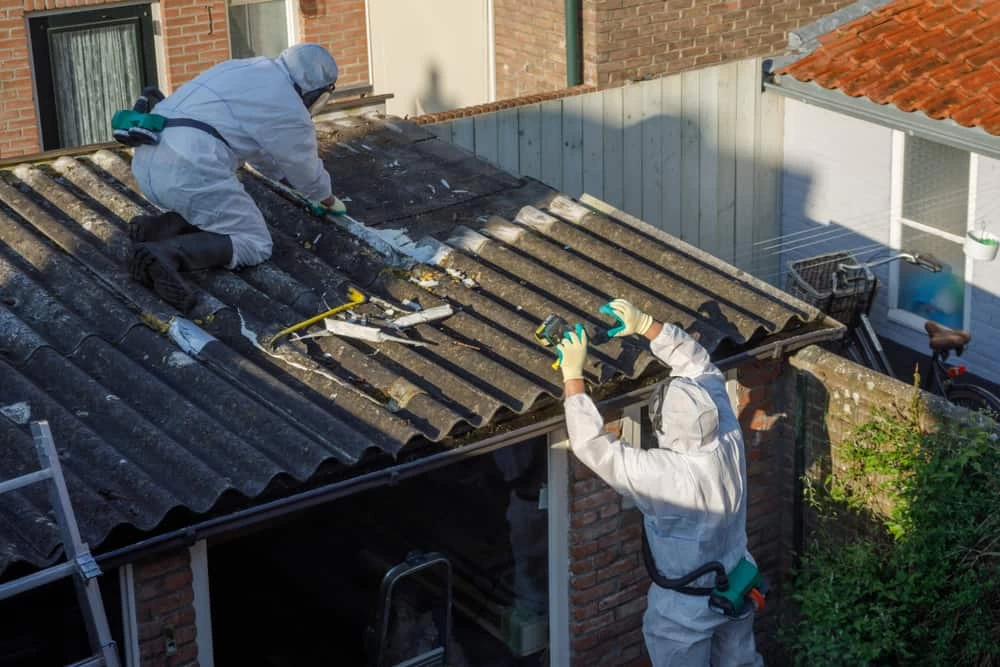
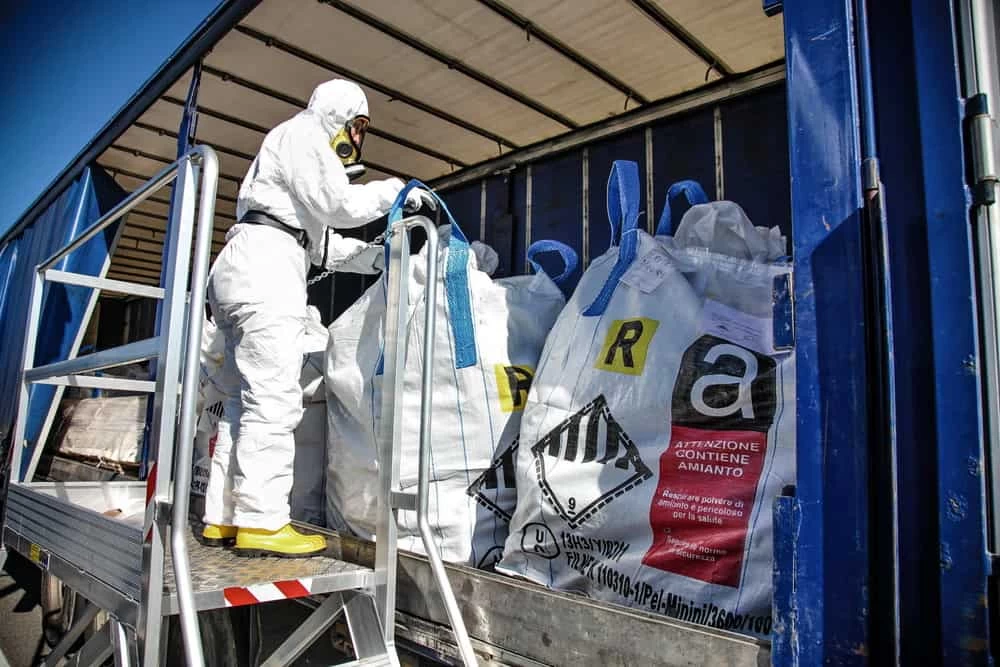
The abatement itself is done under full containment negative air pressure, proper PPE, sealed work zones following NYSDOL Industrial Code Rule 56 to the letter. When the material is removed, it’s bagged, labeled, and transported by licensed haulers to an approved disposal facility. Then comes air clearance testing, conducted by a third-party monitor where required by the project scope. You get a clearance certificate when the job is done. That document is what your contractor, your real estate attorney, or your buyer’s agent needs to move forward and it’s something only a properly licensed abatement contractor can provide.
Every Material, Every Location in Hampton Bays, Done Right
Asbestos doesn’t live in just one place in older homes, and in Hampton Bays specifically, it tends to show up in a few very predictable spots. The 9×9 vinyl floor tiles and the black mastic adhesive underneath them are one of the most common finds in 1960s and 1970s ranches here. Popcorn ceilings are another. Spray-applied acoustic texture was standard in residential construction through the late 1970s, and a significant portion of it contained chrysotile asbestos. Scraping or sanding that ceiling without proper abatement isn’t just dangerous it’s a regulatory violation.
We handle the full range of asbestos-containing materials: floor tiles and adhesive, popcorn and textured ceiling removal, pipe and duct insulation, asbestos cement siding, roofing felt and shingles, joint compound, and boiler wrap. For properties along Dune Road or the barrier island accessible via the Ponquogue Bridge we account for the additional logistical considerations that come with working in sensitive coastal areas near protected waterways, including proper waste containment and transport protocols.
Whether you’re doing a full gut renovation, replacing a roof, updating a bathroom, or preparing a property for sale, the scope of what we cover is built around what your specific home actually needs not a one-size package. You’ll know exactly what’s included, what it costs, and what documentation you’ll receive when the work is complete.
Does asbestos abatement in Hampton Bays require a permit from the town?
Yes and it requires more than one. In New York State, any asbestos abatement project that involves more than 25 linear feet or 10 square feet of asbestos-containing material must comply with NYSDOL Industrial Code Rule 56, which includes permitting, certified workers and supervisors, and in many cases third-party air monitoring. That’s the state layer.
At the local level, Hampton Bays falls under the Town of Southampton’s jurisdiction not an incorporated village which means all building permits and land use approvals flow through the Town of Southampton Building Department. On top of that, Suffolk County Health Department requires specific pre-abatement notifications before work can legally begin. Missing either of those steps can halt your project and expose you to regulatory violations. We handle all of this as part of the job. If you’re managing a renovation or preparing a property for sale, the last thing you want is a permit issue delaying your timeline.
How do I know if my Hampton Bays home actually contains asbestos?
The honest answer is that you can’t know without testing. Visual inspection alone doesn’t tell you whether a material contains asbestos it has to be sampled and analyzed by a certified laboratory. What you can do is look at the age of your home and the materials present. If your Hampton Bays property was built before 1980, the probability is meaningful. The most common culprits in homes from this era are 9×9 vinyl floor tiles and the adhesive beneath them, spray-applied popcorn ceilings, pipe and duct insulation, roofing felt, and older joint compound.
In Hampton Bays specifically, a lot of the housing stock was originally built as seasonal fishing cottages or summer retreats constructed quickly, with whatever materials were standard and affordable at the time. Many of those homes have since been converted to year-round use and renovated multiple times, which means asbestos-containing materials may have been disturbed, partially removed, or covered over without proper documentation. A professional inspection gives you a clear picture of what’s actually there before any work begins.
What does asbestos abatement typically cost in Hampton Bays, NY?
The cost depends on the scope what materials are present, how much of it there is, where it’s located, and whether third-party air monitoring is required. For limited work like removing asbestos floor tile in a single room, you might be looking at $2,000 to $5,000. A larger project full popcorn ceiling removal throughout a home, pipe insulation, or a combination of materials can run $10,000 to $30,000 or more depending on square footage and complexity.
In Hampton Bays, where median home values are now well above $900,000 and waterfront properties regularly trade at $1.5 million and higher, the cost of professional abatement is a manageable line item relative to what’s at stake. Cutting corners on abatement hiring an unlicensed contractor, skipping air monitoring, or mishandling disposal can result in project shutdowns, regulatory fines, failed real estate transactions, and health liability that far exceeds what proper abatement would have cost. The investment is in documentation, compliance, and a result that holds up.
Can I renovate my Hampton Bays home without testing for asbestos first?
Not legally, if the home was built before 1980 and the renovation involves disturbing materials that could contain asbestos. New York State requires that any demolition or significant renovation project include an asbestos inspection prior to work beginning. That requirement exists precisely because renovation work opening walls, pulling up floors, removing ceilings is one of the most common ways asbestos fibers get released into the air.
Contractors who skip this step are putting themselves and their clients at legal and health risk. In practice, many renovation projects in Hampton Bays come to a stop when a contractor opens something up and realizes they’re looking at suspected asbestos-containing material mid-job. At that point, work has to stop, the area has to be assessed, and abatement has to happen before construction can continue. Getting the inspection done before demolition starts is almost always faster and less disruptive than dealing with it after the fact.
Does storm damage in Hampton Bays trigger asbestos abatement requirements?
It can, and it’s more common than most people expect. Hampton Bays is a coastal community with documented exposure to nor’easters, tropical storm impacts, and flooding particularly in the barrier island areas along Dune Road and the Ponquogue Bridge corridor, and in the bay-adjacent neighborhoods along Shinnecock Bay and Tiana Bay. When storm or flood damage requires tearing out water-damaged walls, ceilings, or flooring in a pre-1980 home, that remediation work can easily encounter asbestos-containing materials that were previously undisturbed.
Once those materials are disturbed even by water damage they become a regulated abatement situation. Repairs can’t legally proceed until the asbestos is properly assessed, contained, and removed. If you’re dealing with post-storm damage in an older Hampton Bays property, the right sequence is: stop work on the damaged area, have the materials tested, and bring in a licensed abatement contractor before the general contractor continues. It adds a step, but it keeps the project compliant and your family protected.
Will asbestos abatement affect my ability to sell my Hampton Bays property?
Done properly, abatement actually protects your sale it doesn’t complicate it. In the Hamptons real estate market, where buyers are sophisticated and transactions routinely exceed $1 million, home inspectors regularly flag suspected asbestos-containing materials in pre-1980 homes. When that happens, buyers and their attorneys often require documented abatement as a condition of closing. If you don’t have clearance documentation, you’re either renegotiating the price or losing the deal.
What we provide at the end of every abatement project air monitoring results, waste manifests, and a certified clearance certificate is exactly what a real estate attorney or buyer’s agent needs to move forward. Hampton Bays properties with documented abatement and clean clearance paperwork don’t just close more smoothly. They remove a significant liability from the transaction that would otherwise sit on the table throughout the negotiation. If you’re preparing a property for listing, getting abatement handled before you go to market is the cleaner, stronger position to be in.