Over half of Harrison’s housing stock was built before 1960 and those homes weren’t built with today’s safety standards in mind. If you’re renovating, selling, or dealing with water damage in a Downtown, West Harrison, or Purchase property, asbestos abatement may be the step standing between you and moving forward safely.
I needed a professional consultation explanation of procedure for safe removal of Asbestos in my apartment complex. Without having an account yet, I was very impressed with the caring, knowledgeable and generous advice offered by Jessica, and will look forward to doing business in the future. Thank you so much! I feel much more informed about a sometimes scary endeavor. Peace. Nancy Silva Mineola, NY.
Mia Munoz
Used this company to clean up some water flood in my house. They were fast and easy to work with.very professional, Would recommend to anyone!
Nini Valle
Great company, had a flood and they responded quickly and efficiently. Billed my insurance company directly. I highly recommend this company!
joe colapietro, jr
I had pipe freeze in my basement right before a snow storm and they made to within an hour to help start the clean up process. They we by our side throughout the entire process and even helped with the insurance company. They did such a great job with the cleanup, repair, remidiation, I contracted them to perform the repairs and finishes in the basement. They came with enough manpower and material to get the job done. Leo and Jessica were nothing but a pleasure to deal with!!
Cristian Arredondo c
I had some water damage in my home and Green Island was able to take care of my issue quickly and effectively. I am very pleased with the work they did. They responded quickly and were very professional.
Michael M
Outstanding service! From the office to the field crew everyone was friendly, helpful and responsive. I highly recommend Green Island Group.
When asbestos is properly removed and documented, the project you’ve been putting off can finally move forward. No more waiting on contractors who won’t start until the material is cleared. No more uncertainty about what’s sitting behind your walls or under your floors. You get a clean environment, a paper trail that holds up, and the ability to move on whether that means finishing a renovation or closing a sale.
For Harrison homeowners, that documentation piece carries real weight. When your property is transacting above $1 million, buyers, lenders, and title companies want to see proof not just your word that the asbestos was handled. A formal post-abatement clearance certificate is what makes the difference between a deal that closes and one that stalls.
Harrison’s older housing stock also means the risk isn’t hypothetical. Homes in West Harrison’s Silver Lake area, pre-war colonials near Downtown, and mid-century ranches throughout the school district corridors were built during the height of asbestos use. Pipe insulation, floor tiles, boiler wrap, popcorn ceilings these materials are common in this zip code. Knowing they’ve been properly addressed by a licensed contractor with documented clearance testing gives you something no amount of assumption can offer.
The Credentials Here Are Government-Issued, Not Self-Assigned
We are a full-service environmental remediation contractor serving Harrison, Westchester County, and the broader New York metro area. We hold the NYS Department of Labor Asbestos Handling License, the NYC DEP Asbestos Contractor License, EPA certification, and individual worker certifications for every handler on every job credentials that are publicly verifiable and not just listed on a website. We also carry a Minority/Women-owned Business Enterprise certification from the NYS Office of General Services, a formal state designation that no other asbestos contractor currently marketing to the Harrison area holds.
With more than 5,000 completed projects across New York’s pre-1980 residential and commercial building stock, we’ve worked on homes and buildings identical to what you’ll find in Harrison from occupied single-family renovations in the Purchase area to co-op building abatement in West Harrison. Every project ends with post-abatement air clearance documentation provided as a standard deliverable, not an add-on. And the inspection to get started is free.
No Guesswork Here's Exactly What the Process Looks Like
It starts with a free on-site inspection. One of our representatives comes to your Harrison property, walks the space, identifies materials that warrant testing, and gives you a clear picture of what you’re actually dealing with no charge, no obligation. If asbestos-containing materials are confirmed, you’ll receive a straightforward scope of work and a real estimate before anything else happens.
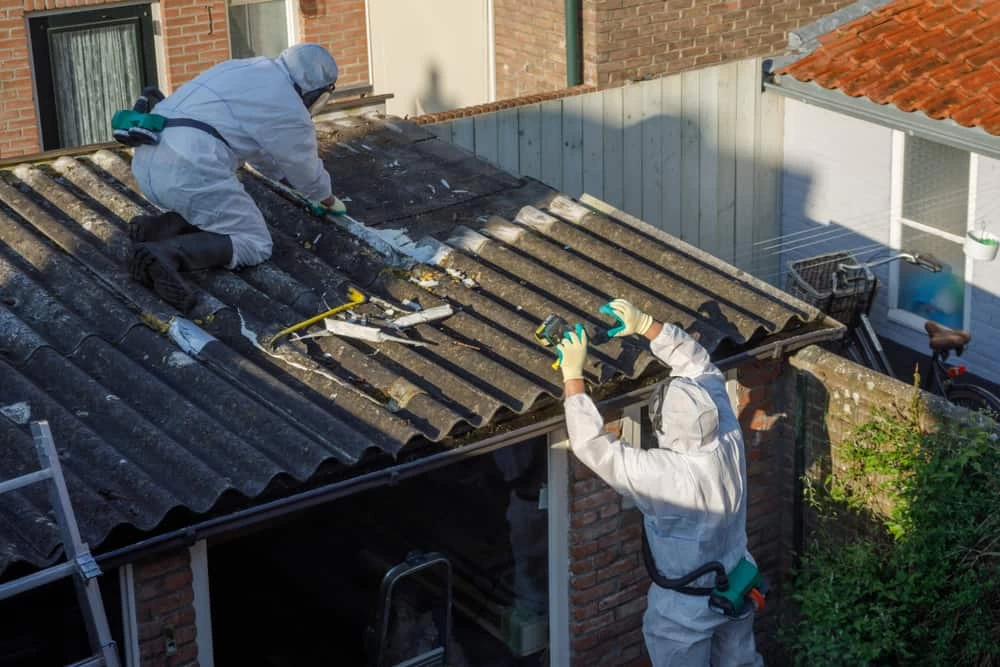
Once the project begins, we establish full containment around the affected areas. This means negative air pressure, proper barriers, and worker protection that meets NYS Industrial Code Rule 56 the state regulation that governs all asbestos abatement work in Westchester County. For Harrison properties, that often means working around occupied spaces, coordinating with co-op boards, or sequencing work to fit a renovation timeline that other contractors are waiting on. We handle all of that in-house, without subcontracting the core work to a third party.
After removal, independent post-abatement air clearance testing is conducted. When the results come back clean, you receive formal written clearance documentation the record that your property meets the applicable safety standard. That document is what your real estate attorney, your lender, or your insurance carrier will ask for. We provide it on every project, as a matter of course.
Every Material Type, One Contractor, One Chain of Custody
Harrison’s pre-1960 housing stock contains the full range of asbestos-era materials and we handle all of them. That includes 9×9 and 12×12 vinyl asbestos floor tiles common in kitchens and bathrooms of older Downtown and West Harrison homes, acoustic spray ceiling texture in living areas, asbestos-wrapped steam pipes in basements, boiler insulation in mechanical rooms, asbestos-containing joint compound on drywall, and transite siding on some exterior applications. You don’t need to hire separate contractors for different materials or worry about gaps in accountability we manage the full scope under one license, one crew, and one disposal chain.
For the commercial side of Harrison specifically the office parks and corporate campuses along I-287 in the Purchase corridor we also handle pre-renovation and pre-demolition asbestos surveys and abatement under EPA NESHAP regulations. Buildings from the 1960s and 1970s along Westchester Avenue are well within the asbestos-use era, and any significant renovation to those properties legally requires a licensed survey and abatement before work proceeds.
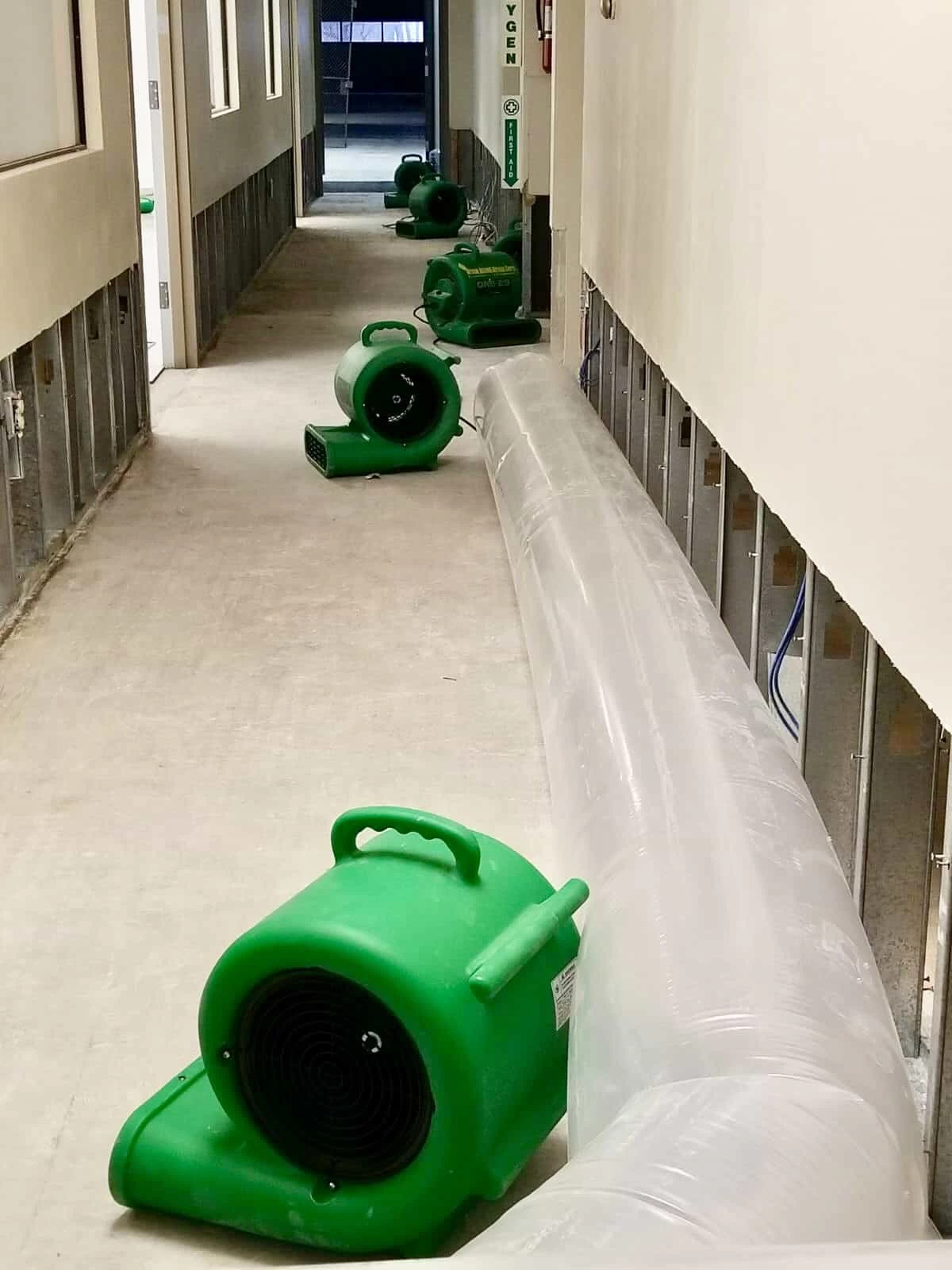
If your abatement is tied to a water damage event a pipe burst in an older Harrison home, basement flooding near the Silver Lake area, or storm-related water intrusion we work directly with insurance carriers and handle billing on your behalf. You deal with enough when a pipe goes. The insurance coordination shouldn’t be one more thing on your list.
Does my older Harrison home actually need asbestos testing before I renovate?
If your home was built before 1980, testing before renovation isn’t just a good idea in many cases it’s legally required. Under NYS Industrial Code Rule 56, renovation work that disturbs building materials in pre-1980 structures must be preceded by an asbestos assessment. That applies whether you’re pulling up old floor tiles, opening walls, replacing pipe insulation, or taking down a popcorn ceiling.
In Harrison specifically, where roughly 55% of the housing stock predates 1960, this isn’t a rare edge case it’s the norm. The materials used in Downtown colonials, West Harrison mid-century homes, and older co-op buildings in the Silver Lake community were almost all sourced from an era when asbestos was standard. Testing before you demo isn’t about being overly cautious. It’s about not putting your contractor, your family, or your renovation timeline at risk because you skipped a step that costs far less than the alternative.
How long does asbestos abatement typically take for a residential project in Harrison?
For most residential projects a single room of floor tile, a section of pipe insulation, or a popcorn ceiling in one or two rooms the active abatement work typically takes one to three days. The timeline depends on the scope, the material type, and how accessible the affected area is. After abatement is complete, post-clearance air testing is conducted, and you’ll need to wait for the results before re-occupying the space or allowing other contractors back in. That testing and documentation step usually adds one to two business days.
For larger projects whole-floor tile removal in a West Harrison co-op, multi-room ceiling abatement in a Downtown colonial, or building-level work the timeline extends accordingly. We scope every project in detail during the free inspection so you have a realistic picture before anything starts. If you’re working against a renovation deadline or a real estate closing date, that upfront clarity matters.
What happens if asbestos is discovered mid-renovation in my Harrison home?
Stop the work. That’s the honest answer. If a contractor opens a wall, pulls up flooring, or disturbs a ceiling and finds material that looks like it could contain asbestos especially in a pre-1980 Harrison home work should pause until the material is tested. Disturbing asbestos-containing material without proper containment releases fibers that are invisible, don’t settle, and don’t go away on their own.
This situation comes up more often than people expect in Harrison, particularly during kitchen and bathroom renovations in older Downtown homes or basement work in West Harrison properties near Silver Lake. The good news is that a mid-renovation discovery doesn’t have to derail everything. We can respond quickly, assess the material, establish proper containment, and get the abatement done so your renovation contractor can get back on-site. The free inspection applies here too if you’ve found something and you’re not sure what it is, call before anyone touches it again.
Is asbestos abatement in Harrison, NY covered by homeowners insurance?
It depends on what triggered the abatement. If asbestos-containing materials were disturbed as a direct result of a covered event a pipe burst, basement flooding, or storm damage there’s a reasonable chance your homeowners insurance policy will cover the abatement as part of the broader water damage or emergency remediation claim. Policies vary, and the language around environmental hazards is often specific, so it’s worth reviewing your coverage or calling your carrier before assuming either way.
What we can do is work directly with your insurance carrier on your behalf. That means handling the documentation, the billing coordination, and the communication with the adjuster so you’re not stuck in the middle trying to translate contractor scope into insurance language. For Harrison homeowners dealing with a pipe freeze in an older home or storm water intrusion in a West Harrison basement, that direct billing relationship takes one significant burden off your plate during an already stressful situation.
What asbestos materials are most commonly found in Harrison's older homes?
The most frequently encountered materials in Harrison’s pre-1960 housing stock are 9×9 vinyl floor tiles the small square tiles common in kitchens, bathrooms, and basements of homes built from the 1940s through the late 1970s. The adhesive backing on those tiles, called mastic, often contains asbestos as well, even when the tile itself tests negative. Pipe insulation is another common find, particularly in older Downtown homes with steam heating systems where the pipes running through basements and utility spaces were wrapped in asbestos-containing material.
Acoustic spray ceiling texture what most people call popcorn ceiling is also widespread in Harrison homes built from the late 1950s through the 1970s. Asbestos-containing joint compound on drywall seams, boiler insulation in mechanical rooms, and occasionally transite board siding on exterior applications round out the most common discoveries. We know where to look in homes of this era, which is part of why the free inspection is a useful first step before you assume what’s there or what isn’t.
How do I choose a licensed asbestos contractor in Westchester County?
The first thing to verify is the NYS Department of Labor Asbestos Handling License this is the foundational legal requirement for any contractor performing asbestos abatement in Westchester County, including Harrison. It’s a public record, and you can look it up on the NYS DOL’s online database using the contractor’s name or license number. If a contractor can’t give you that license number or avoids the question, that’s a clear signal to keep looking.
Beyond the license itself, ask whether the contractor’s individual workers hold state-issued asbestos handler certifications not just the company. Ask who performs the post-abatement air clearance testing and whether you’ll receive written documentation of the results. Ask whether they subcontract any part of the work. In Harrison, where homes are high-value and real estate transactions often hinge on clean environmental records, the documentation trail matters as much as the abatement itself. We hold the full license stack, employ certified handlers on every project, and provide post-clearance documentation as a standard part of every job not something you have to request separately.