Most homes in Hartsdale were built when asbestos was standard. If you’re renovating, selling, or just not sure what’s in your walls asbestos abatement starts with knowing exactly what you’re dealing with.
I needed a professional consultation explanation of procedure for safe removal of Asbestos in my apartment complex. Without having an account yet, I was very impressed with the caring, knowledgeable and generous advice offered by Jessica, and will look forward to doing business in the future. Thank you so much! I feel much more informed about a sometimes scary endeavor. Peace. Nancy Silva Mineola, NY.
Mia Munoz
Used this company to clean up some water flood in my house. They were fast and easy to work with.very professional, Would recommend to anyone!
Nini Valle
Great company, had a flood and they responded quickly and efficiently. Billed my insurance company directly. I highly recommend this company!
joe colapietro, jr
I had pipe freeze in my basement right before a snow storm and they made to within an hour to help start the clean up process. They we by our side throughout the entire process and even helped with the insurance company. They did such a great job with the cleanup, repair, remidiation, I contracted them to perform the repairs and finishes in the basement. They came with enough manpower and material to get the job done. Leo and Jessica were nothing but a pleasure to deal with!!
Cristian Arredondo c
I had some water damage in my home and Green Island was able to take care of my issue quickly and effectively. I am very pleased with the work they did. They responded quickly and were very professional.
Michael M
Outstanding service! From the office to the field crew everyone was friendly, helpful and responsive. I highly recommend Green Island Group.
You stop guessing. That’s the first thing. Whether you found suspect floor tiles pulling up a kitchen in Poets’ Corner or a contractor flagged your popcorn ceiling mid-renovation, the anxiety of not knowing is often worse than the problem itself. Once the material is properly identified, contained, and removed by our licensed crew, you have documentation that says exactly what was done and that documentation matters here in Hartsdale.
Hartsdale’s real estate market is active and moving fast. Median home prices jumped nearly 40% year-over-year heading into 2025. In that kind of market, an unresolved asbestos disclosure can stall or kill a deal. Post-abatement air clearance certification the paperwork that confirms the work was done right is what your buyer’s inspector, their lender, and the title company are going to want to see. It’s not optional anymore.
For the co-op buildings clustered near the Hartsdale Metro-North station, the stakes are different but just as real. Boiler replacements, pipe repairs, common-area renovations these projects can’t move forward in a building constructed in the 1950s or 1960s without first clearing the asbestos question. Getting that handled cleanly, with proper containment and disposal documentation, is what lets the rest of the project proceed on schedule.
We hold the NYS Department of Labor Asbestos Handling License, EPA certification, NYS DEC disposal compliance, and individual certifications for every handler and supervisor on every job. That last part matters state law requires individual worker credentials, not just a company-level license. Every person who walks into your Hartsdale home or building is certified by New York State. You can look it up.
We also hold an M/WBE certification from the NYS Office of General Services a formal state-issued credential that required documentation and government review. For co-op boards and property managers in Greenburgh who have fiduciary obligations around contractor selection, that kind of vetting is relevant. It’s not a marketing badge. It’s a government record.
With more than 5,000 completed projects across the New York metro area including throughout Westchester County and Hartsdale specifically we’ve worked in pre-war single-family homes, mid-century split-levels, and occupied multi-unit buildings. The scenarios that feel complicated to most homeowners are ones we’ve handled before.
No Surprises Here's What the Process Actually Looks Like
It starts with a free on-site inspection. One of our certified inspectors comes to your property, assesses the suspect materials floor tiles, ceiling texture, pipe insulation, joint compound, whatever’s in question and gives you a straight answer about what you have. No charge for that. No obligation to move forward. Just information.
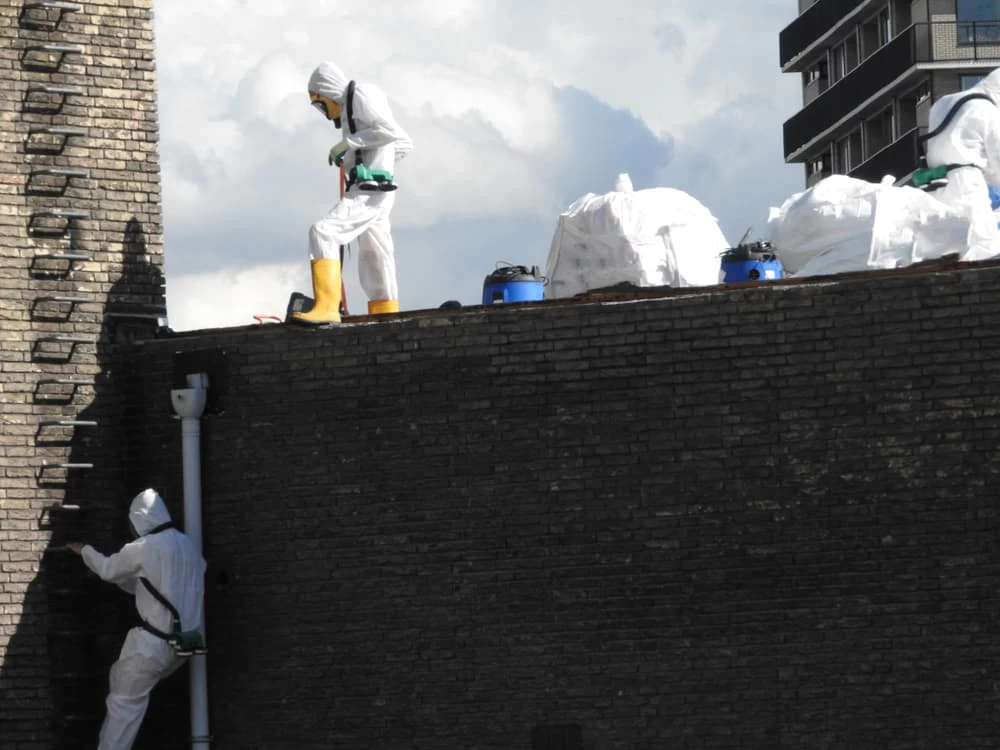
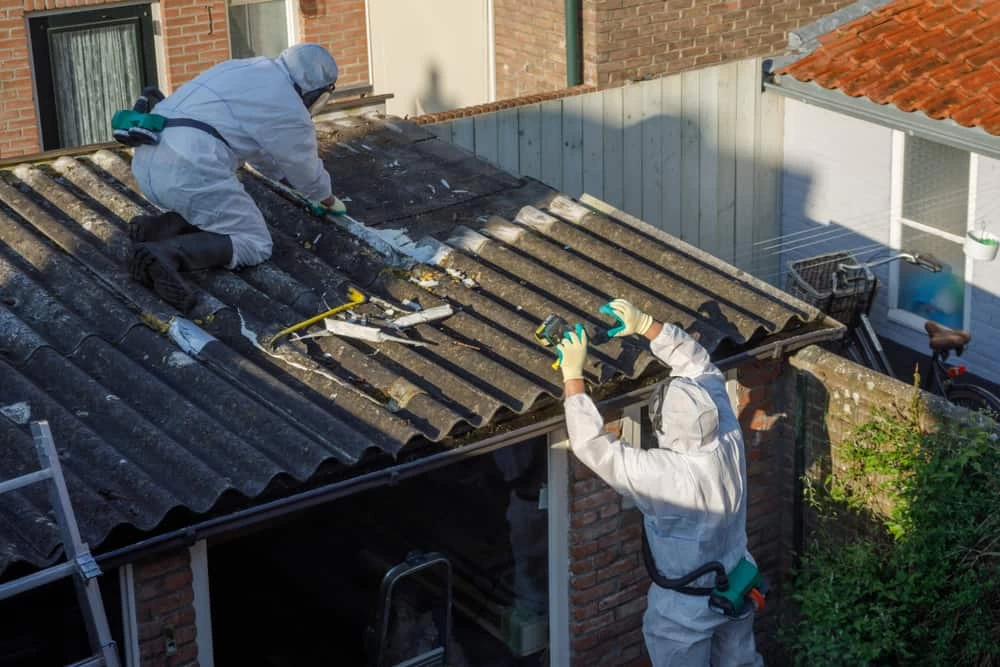
If abatement is needed, the next step is containment. The work area gets sealed off with negative air pressure barriers to prevent fiber migration into the rest of the building. This is especially important in occupied co-op buildings near the Hartsdale train station, where adjacent units and shared corridors need to stay protected throughout the process. We use wet methods during removal to suppress airborne fibers, and all waste is bagged, labeled, and transported by a licensed hauler under a certified disposal manifest as required under NYS Industrial Code Rule 56.
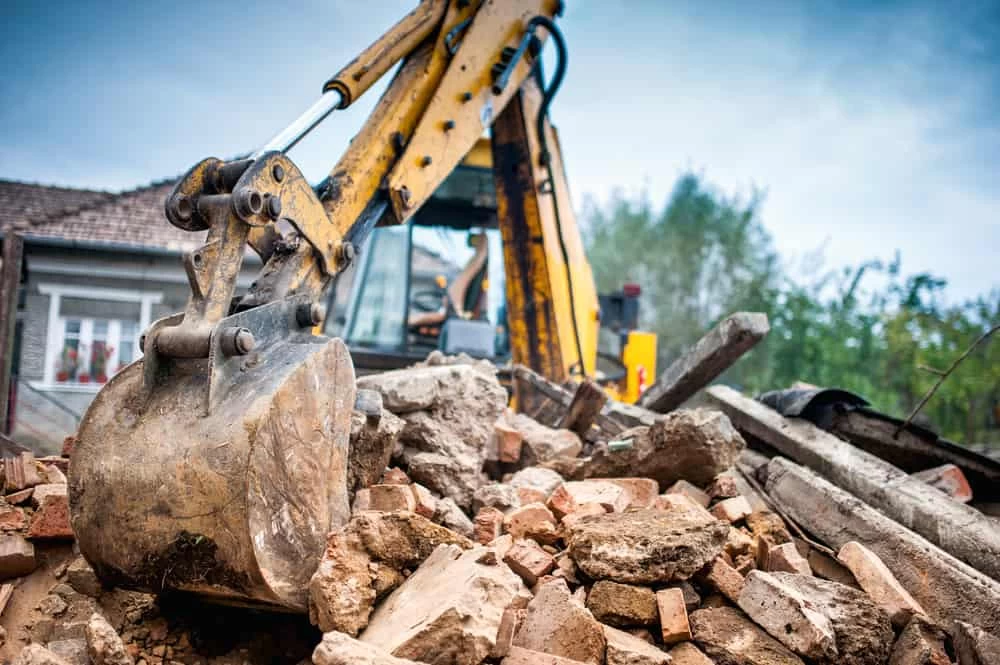
Because Hartsdale is an unincorporated hamlet within the Town of Greenburgh, all renovation and demolition permits run through the Greenburgh Building Department. Any project that disturbs suspect materials in a pre-1980 building requires asbestos assessment and licensed abatement before permitted work can proceed. Our documentation package satisfies that requirement directly. Once abatement is complete, post-clearance air testing is conducted, and you receive a formal clearance certificate confirming the space is safe the document your contractor, your buyer, or your board needs before anything moves forward.
Every Material Type Found in Hartsdale Homes We Handle Them All
Over 85% of Hartsdale’s housing was built before 1980. That means vinyl asbestos floor tiles the 9×9 and 12×12 formats that were standard in mid-century construction are extremely common throughout the Woodlands, College Corner, and surrounding neighborhoods. Popcorn and acoustic ceiling texture from the same era is another frequent find, particularly in the co-op buildings and apartment complexes that make up nearly half of Hartsdale’s housing stock. We handle both, along with pipe and duct insulation, drywall joint compound, roofing materials, transite siding, and boiler room insulation.
This matters because older Hartsdale homes often have more than one ACM type present at the same time. A homeowner pulling up kitchen flooring might have vinyl asbestos tile on the floor, joint compound behind the walls, and original pipe insulation in the basement all in the same project. You shouldn’t have to coordinate three separate contractors for that. We assess and handle every material type in a single engagement.
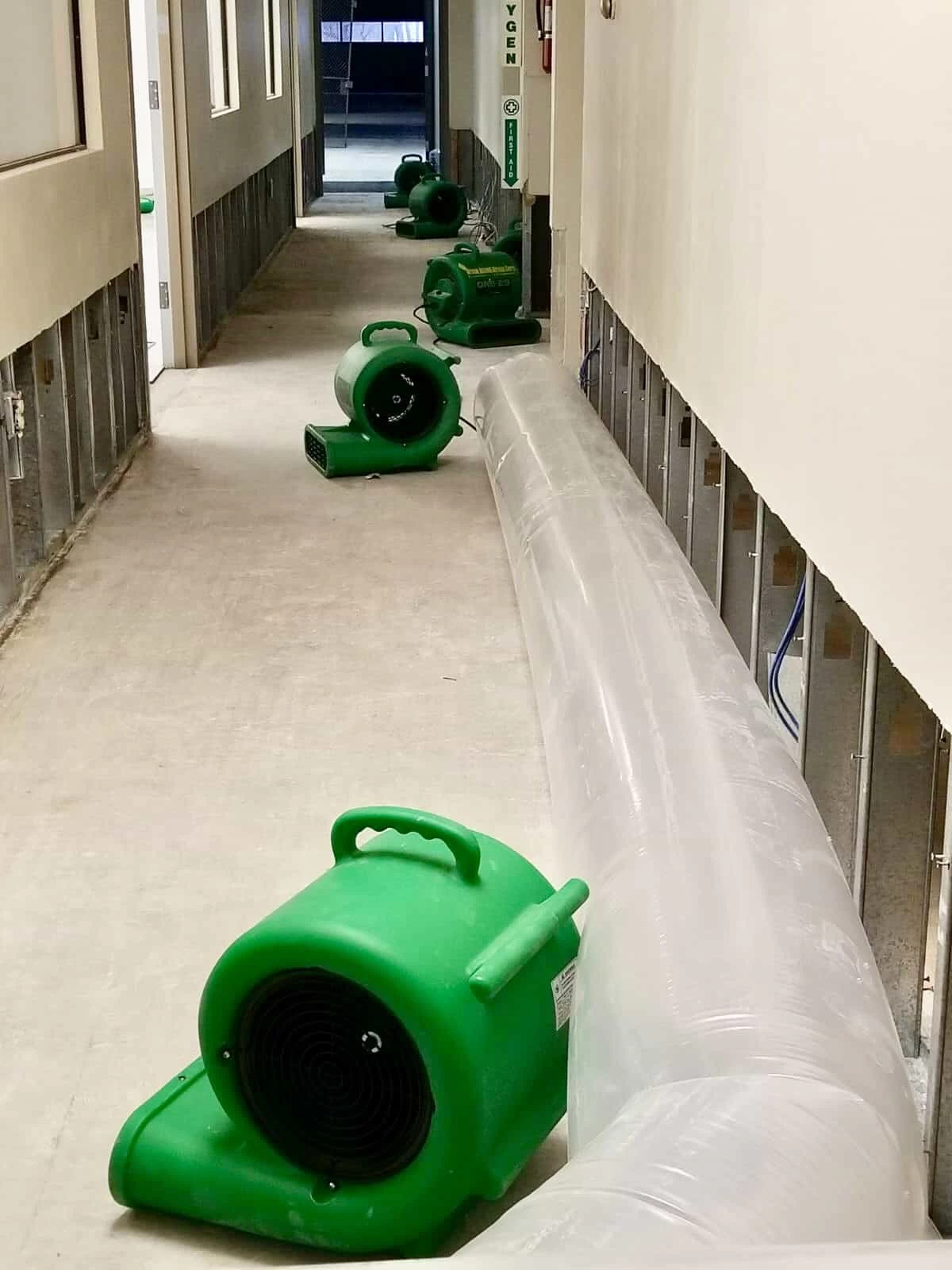
For properties in Hartsdale’s Bronx River flood zones, water damage events add another layer. Flooding or pipe failures in older buildings can disturb asbestos-containing materials in basements and lower floors, triggering a mandatory abatement requirement at the same time as the water damage restoration need. We operate across both services asbestos abatement and water damage restoration so you’re not managing two separate contractors, two timelines, and two insurance claims at once.
Does my Hartsdale home actually need an asbestos inspection before I renovate?
If your home was built before 1980 which describes the vast majority of properties in Hartsdale then yes, an asbestos assessment is required before any renovation work that could disturb suspect materials. Under NYS Industrial Code Rule 56, a certified NYS Asbestos Inspector must survey the affected areas before work begins. This isn’t a suggestion. It’s a state-level requirement, and the Town of Greenburgh Building Department won’t issue a permit for renovation or demolition work in an older building without it being addressed.
The practical reality is that most Hartsdale homes contain at least one type of asbestos-containing material floor tiles, ceiling texture, pipe insulation, or joint compound simply because of when they were built. Getting an inspection before your renovation contractor starts demo work protects you legally, keeps your project on schedule, and prevents the far more disruptive scenario of discovering asbestos mid-job. Our inspection is free, so there’s no reason to skip it.
How long does asbestos abatement typically take for a Hartsdale property?
It depends on the scope how many materials are involved, where they’re located, and whether the building is occupied. For a single-room floor tile removal in a Hartsdale single-family home, the abatement itself can often be completed in one to two days. A larger project involving multiple material types pipe insulation, ceiling texture, and floor tile across several rooms might take three to five days, plus the post-clearance air testing window before the space can be reoccupied.
Co-op and apartment buildings near the Hartsdale train station introduce additional scheduling factors. Work in occupied buildings needs to be coordinated around tenant notification requirements and board approval timelines, and containment has to be set up in a way that protects adjacent units and shared corridors. We have extensive experience working in exactly these kinds of buildings the scheduling and containment logistics are not new problems. When you call for your free inspection, we’ll give you a realistic timeline based on what’s actually in front of us, not a generic estimate.
What does asbestos abatement cost in Westchester County, and what affects the price?
Pricing varies based on the type of material, the square footage involved, and the complexity of the containment setup. A straightforward vinyl asbestos tile removal in a single room typically runs in the range of a few hundred dollars. A more involved project multiple material types, a larger footprint, or an occupied multi-unit building can reach several thousand dollars. For significant whole-home or building projects, costs can range from $5,000 to $15,000 or more depending on scope.
What drives cost up isn’t the removal itself it’s the containment, the air monitoring, the certified disposal, and the post-clearance documentation. These aren’t optional add-ons. They’re legally required under NYS Industrial Code Rule 56, and they’re what makes the work defensible if a buyer’s inspector, a lender, or the Greenburgh Building Department asks for documentation. In Hartsdale’s current real estate market, cutting corners on abatement to save a few hundred dollars upfront can cost you far more when a deal falls apart at inspection. A free on-site assessment is the only accurate way to quote your specific project.
I found what looks like old floor tiles in my Hartsdale home do they contain asbestos?
The short answer is: possibly, and it’s worth finding out before you disturb them. Vinyl floor tiles manufactured before 1980 particularly the 9×9 inch format that was standard in mid-century construction frequently contained asbestos as a binding agent. These tiles are extremely common in Hartsdale homes built during the 1940s, 1950s, and 1960s, which make up the majority of the hamlet’s single-family housing stock. The tile itself, if intact and undisturbed, is generally considered low-risk. The problem comes when you cut, sand, scrape, or break it that’s when fibers become airborne.
You cannot tell whether a tile contains asbestos just by looking at it. The only way to know is laboratory testing of a sample taken by a certified inspector. We can collect that sample during the free inspection visit and get it to a certified lab. If the results come back negative, you have documentation that clears the material. If they come back positive, you know exactly what you’re dealing with before your renovation contractor starts pulling up the floor which is a much better position to be in than discovering it mid-demo.
My Hartsdale co-op board needs documentation before approving our renovation what does that look like?
Co-op boards in Hartsdale particularly in the buildings along East and West Hartsdale Avenue and the High Point community near the train station typically require proof that asbestos has been assessed and, if found, properly abated before they’ll approve an alteration agreement for interior renovation work. What that documentation looks like in practice is a combination of the pre-abatement inspection report, our project documentation, the certified disposal manifest, and the post-abatement air clearance certificate.
We provide all of these as standard project deliverables. The clearance certificate in particular is what most co-op boards and their managing agents want to see it’s the independent confirmation that air fiber counts were below the clearance threshold after the work was completed. If your board or managing agent has specific documentation requirements, let us know before the project starts. We’ve worked with enough Westchester co-op boards to know that getting the paperwork right the first time is faster than going back and forth after the fact.
Can water damage in my Hartsdale home trigger an asbestos abatement requirement?
Yes and this is something a lot of Hartsdale homeowners don’t realize until they’re already in the middle of a water damage situation. Hartsdale has documented flood zones along the Bronx River, and the hamlet’s older building stock means that basements and lower floors in many homes and apartment buildings contain asbestos-containing materials floor tiles, pipe insulation, or boiler room ACMs that can be disturbed when water intrudes. When that happens, the water damage restoration and the asbestos abatement have to be addressed together, not sequentially.
Trying to dry out and restore a flooded basement that contains disturbed asbestos-containing materials without first addressing the abatement is both a regulatory violation and a health risk. We handle both services water damage restoration and asbestos abatement under one roof. That means one point of contact, one coordinated project timeline, and one insurance claim rather than two separate contractors working around each other. If your insurer is involved, we work directly with insurance carriers on billing, which removes you from the middle of the paperwork process at exactly the moment when you have enough to deal with already.