Hastings Homes Have History Some of It Needs to Go
Most homes in Hastings-on-Hudson were built during the decades when asbestos was standard. If you’re renovating, selling, or just found something suspicious, we handle asbestos abatement the right way licensed, documented, and done without subcontracting the actual work.
I needed a professional consultation explanation of procedure for safe removal of Asbestos in my apartment complex. Without having an account yet, I was very impressed with the caring, knowledgeable and generous advice offered by Jessica, and will look forward to doing business in the future. Thank you so much! I feel much more informed about a sometimes scary endeavor. Peace. Nancy Silva Mineola, NY.
Mia Munoz
Used this company to clean up some water flood in my house. They were fast and easy to work with.very professional, Would recommend to anyone!
Nini Valle
Great company, had a flood and they responded quickly and efficiently. Billed my insurance company directly. I highly recommend this company!
joe colapietro, jr
I had pipe freeze in my basement right before a snow storm and they made to within an hour to help start the clean up process. They we by our side throughout the entire process and even helped with the insurance company. They did such a great job with the cleanup, repair, remidiation, I contracted them to perform the repairs and finishes in the basement. They came with enough manpower and material to get the job done. Leo and Jessica were nothing but a pleasure to deal with!!
Cristian Arredondo c
I had some water damage in my home and Green Island was able to take care of my issue quickly and effectively. I am very pleased with the work they did. They responded quickly and were very professional.
Michael M
Outstanding service! From the office to the field crew everyone was friendly, helpful and responsive. I highly recommend Green Island Group.
A Clean Clearance Record Protects Your Home's Value in Hastings-on-Hudson's Market
In a market where Hastings-on-Hudson homes regularly sell above asking price and go to contract in under a month, asbestos showing up mid-transaction isn’t just a health concern it’s a deal-breaker. Buyers walk. Prices get renegotiated. Closings get delayed. When abatement is done right and documented properly, you have something concrete to hand a buyer’s agent, a lender, or a title company without the conversation grinding to a halt.
The housing stock in Hastings-on-Hudson tells the whole story. Neighborhoods like Hudson Heights, Shado-Lawn, and Ravensdale were developed between the 1910s and 1950s squarely within the window when asbestos was built into floor tiles, pipe insulation, ceiling texture, and drywall compound as a matter of course. That’s just the reality of older homes here, and it’s something a licensed contractor can assess and address before it becomes your problem at the worst possible moment.
What you get at the end of a properly completed abatement project is documentation post-abatement air clearance results that confirm fiber counts are within safe limits. That paperwork isn’t a formality. It’s what protects your property’s value, satisfies your insurance carrier, and gives you something real to show anyone who asks.
We’ve completed more than 5,000 asbestos abatement projects across New York City, Westchester County, Long Island, and the surrounding metro area. Every phase of the work inspection, containment, removal, disposal, and post-abatement air clearance is handled in-house. We don’t subcontract the core job to someone else and call it done.
The license stack matters here. Working in Hastings-on-Hudson falls under NYS Department of Labor jurisdiction, not NYC DEP and those aren’t interchangeable. We hold the NYS DOL Asbestos Handling License required for legal abatement work in Westchester County, along with EPA certification and NYS DEC compliance for certified disposal with a documented waste manifest. These are public records. You can verify them directly on the NYS DOL contractor database.
We’re also NYS M/WBE certified through the Office of General Services and an approved contractor for New York State agencies credentials that reflect a level of vetting that goes beyond a standard contractor license.
Asbestos Remediation Process in Hastings-on-Hudson, NY
From First Call to Clearance Certificate No Guesswork
It starts with a free on-site inspection. One of our licensed professionals comes to your home, assesses the materials present, and tells you plainly what requires abatement, what can be managed in place, and what the process looks like from there. For a lot of Hastings-on-Hudson homeowners especially those in pre-1960 homes along the Broadway corridor or in the Hudson Heights and Ravensdale neighborhoods this inspection often turns up more than one material type. Floor tiles, pipe insulation, ceiling texture. The inspection covers all of it.
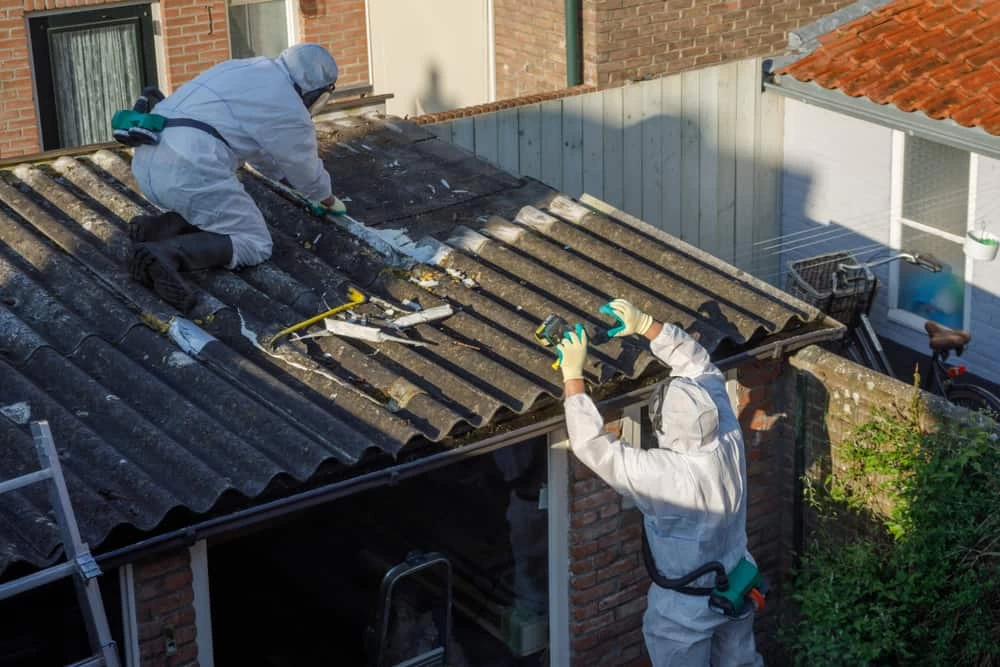
Once the scope is confirmed, the work begins with proper containment. Negative-air-pressure systems are set up so that air flows into the work area rather than out of it, and HEPA-filtered air scrubbers run throughout the job. This matters in homes where the kitchen, living areas, or bedrooms sit close to the area being abated which describes most of Hastings-on-Hudson’s older residential stock. In many project scenarios, the rest of the home remains occupiable while work is underway.
After removal, all asbestos-containing material is sealed, labeled, and transported to a certified disposal facility with a documented waste manifest the chain-of-custody record required under NYS Industrial Code Rule 56. The project closes with post-abatement air clearance testing. You receive the clearance documentation. That’s the record that confirms the work was done correctly and the air is clean.
Asbestos Tile and Popcorn Ceiling Removal, Westchester NY
Every Material Type Found in Hastings-on-Hudson Homes, Covered
The asbestos abatement work we handle in Hastings-on-Hudson covers the full range of materials common in the village’s housing stock. Vinyl floor tiles particularly the 9×9 and 12×12 formats standard in 1940s and 1950s construction are among the most frequent finds during kitchen and basement renovations. Popcorn ceiling texture applied through the 1970s is another common one, especially in post-WWII homes and in older apartment buildings like those along Broadway. Pipe and boiler insulation is nearly universal in pre-1960 homes with steam heat systems. Drywall joint compound and roofing materials round out the list for homes from that era.
For multi-family properties including the pre-war buildings that have been part of Hastings-on-Hudson’s residential landscape for decades the work involves the same licensed process, the same containment standards, and the same clearance documentation. Tenant safety and regulatory compliance aren’t separate concerns; the process handles both together.
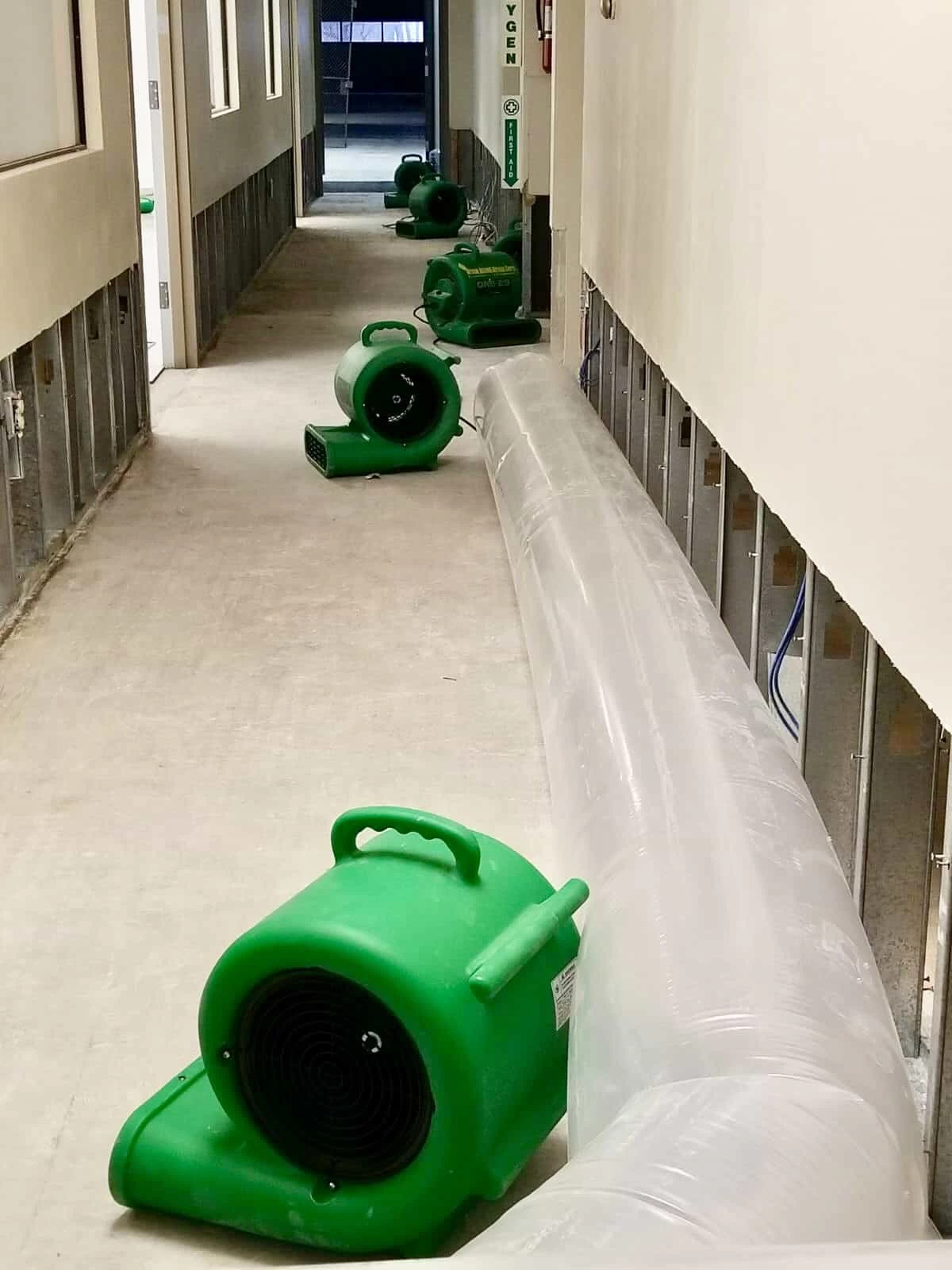
If you’re dealing with a water damage event that disturbed floor tiles or pipe insulation, we work directly with insurance carriers and handle billing coordination so you’re not stuck managing that piece on top of everything else. The abatement, the documentation, and the insurance side of it can all move together without you serving as the go-between.
Does my Hastings-on-Hudson home actually need asbestos testing before I renovate?
If your home was built before 1980 which covers the vast majority of Hastings-on-Hudson’s residential housing stock then yes, testing before renovation is the right move, and in many cases it’s required. Under NYS Industrial Code Rule 56, disturbing asbestos-containing materials without proper assessment and containment is a regulatory violation. More practically, once you’ve broken a floor tile or cut into a wall with asbestos-containing compound, you’ve already created an exposure event that’s harder and more expensive to address after the fact.
The good news is that testing doesn’t have to be a drawn-out process. A licensed inspector can assess your home, collect samples, and give you a clear picture of what’s present and what the abatement scope looks like before your renovation contractor sets foot in the space. For homes in Hudson Heights, Shado-Lawn, or anywhere along the Broadway corridor in Hastings-on-Hudson, that pre-renovation assessment is worth doing early before you’re on a contractor’s schedule and under time pressure.
What materials in older Westchester County homes most commonly contain asbestos?
The materials that turn up most often in Hastings-on-Hudson and the broader Westchester County housing stock are vinyl floor tiles (the 9×9 and 12×12 formats used heavily in mid-century construction), acoustic ceiling texture (the spray-applied popcorn finish common from the 1950s through the late 1970s), and pipe and boiler insulation in homes with steam heating systems. Drywall joint compound used through the 1970s is another one that surprises homeowners it’s not as visible as floor tiles, but it’s present in a lot of the older homes in this area.
Roofing materials, transite siding, and certain types of plaster also contain asbestos in homes from this period. Asbestos was genuinely useful it was a fire retardant, an insulator, and a binding agent so manufacturers put it in a wide range of building products. If your home was built before 1980, it’s reasonable to assume that at least one of these materials is present somewhere, and a professional inspection will tell you exactly where.
How long does asbestos abatement typically take for a single-family home?
The timeline depends on the scope how many materials are involved, where they’re located, and how large the affected area is. For a straightforward job like floor tile removal in a single room or popcorn ceiling abatement in one or two spaces, the work itself often takes one to two days. Larger projects involving multiple material types across several areas of the home which is common in Hastings-on-Hudson’s older pre-1960 housing stock can take three to five days or more.
What adds time to the process isn’t the removal itself it’s the containment setup, the air clearance testing that follows, and the documentation that comes at the end. Those steps can’t be skipped or rushed. Post-abatement air clearance requires that fiber counts in the work area fall below the threshold before containment comes down, and that testing takes time to process. When you’re planning a renovation timeline, it’s worth building in a buffer around the abatement phase so your renovation contractor isn’t waiting on clearance results to proceed.
Do I need a permit for asbestos abatement in Hastings-on-Hudson, NY?
Asbestos abatement in Hastings-on-Hudson is governed by NYS Industrial Code Rule 56, which requires a licensed contractor, certified workers, proper containment, air monitoring, and certified disposal with a documented waste manifest. That framework applies regardless of whether a local building permit is also required. For renovation projects that involve structural work or changes to building systems, the Town of Greenburgh Building Department which covers Hastings-on-Hudson as a village within the town may require a permit that involves asbestos inspection or clearance as part of the approval process.
In practice, the most important thing is that the contractor you hire holds a valid NYS DOL Asbestos Handling License. That’s the foundational credential for legal abatement work in Westchester County, and it’s verifiable on the NYS DOL public database. If your project also involves demolition or significant renovation, your contractor should be able to tell you upfront whether additional notifications or permits are required for your specific scope of work.
Can asbestos abatement be done while my family is still living in the house?
In many cases, yes but it depends on where the work is happening and how the containment is set up. When negative-air-pressure containment is properly installed, air flows into the work area rather than out of it, which means asbestos fibers are contained within the abatement zone and don’t migrate into the rest of the home. HEPA-filtered air scrubbers run continuously during the work to capture any airborne particles. Under these conditions, it’s often possible for residents to remain in unaffected areas of the home while abatement is underway in a separate zone.
That said, there are situations where temporary relocation makes more sense particularly when the work involves a central area of the home, a shared HVAC system, or materials in multiple rooms. For families with young children, which describes a significant portion of Hastings-on-Hudson’s demographic given the strength of the local school district, the decision is worth discussing with the inspector before work begins. A straightforward conversation about the scope and the containment plan will give you a clear answer for your specific situation.
Will asbestos abatement affect my home's value or help with a sale in Hastings-on-Hudson?
Done properly and documented correctly, abatement almost always helps. In Hastings-on-Hudson’s real estate market where homes average over a million dollars for detached single-family properties and routinely go to contract in under a month asbestos discovered during a buyer’s inspection is one of the most common reasons deals get complicated. Buyers ask for price reductions. Contingencies get added. Some buyers walk entirely. A seller who has already abated and can hand over a formal clearance certificate removes that friction before it starts.
The clearance documentation matters as much as the abatement itself. It’s not enough to say the work was done you need the paper trail showing that post-abatement air testing was completed, fiber counts came back within safe limits, and a licensed contractor performed the work under NYS DOL requirements. That’s the record that satisfies a buyer’s attorney, a lender’s underwriter, or a title company. For a home in a market this competitive, having that documentation in hand before you list is a straightforward way to protect both the sale and the price.