Estate Homes in the Hewletts Deserve More Than a Guess
Older homes in Hewlett Neck carry a lot of history — and sometimes, hazardous materials hiding inside the walls, floors, and ceilings. We provide licensed asbestos abatement for Five Towns homeowners who need it done right the first time.
I needed a professional consultation explanation of procedure for safe removal of Asbestos in my apartment complex. Without having an account yet, I was very impressed with the caring, knowledgeable and generous advice offered by Jessica, and will look forward to doing business in the future. Thank you so much! I feel much more informed about a sometimes scary endeavor. Peace. Nancy Silva Mineola, NY.
Mia Munoz
Used this company to clean up some water flood in my house. They were fast and easy to work with.very professional, Would recommend to anyone!
Nini Valle
Great company, had a flood and they responded quickly and efficiently. Billed my insurance company directly. I highly recommend this company!
joe colapietro, jr
I had pipe freeze in my basement right before a snow storm and they made to within an hour to help start the clean up process. They we by our side throughout the entire process and even helped with the insurance company. They did such a great job with the cleanup, repair, remidiation, I contracted them to perform the repairs and finishes in the basement. They came with enough manpower and material to get the job done. Leo and Jessica were nothing but a pleasure to deal with!!
Cristian Arredondo c
I had some water damage in my home and Green Island was able to take care of my issue quickly and effectively. I am very pleased with the work they did. They responded quickly and were very professional.
Michael M
Outstanding service! From the office to the field crew everyone was friendly, helpful and responsive. I highly recommend Green Island Group.
When asbestos abatement is handled properly, you don’t just get a cleaner home — you get a home you can actually renovate, sell, or restore without legal exposure, project shutdowns, or health concerns hanging over your head. That matters everywhere, but it matters especially in Hewlett Neck, where the homes are large, historically significant, and often in the middle of major renovation work.
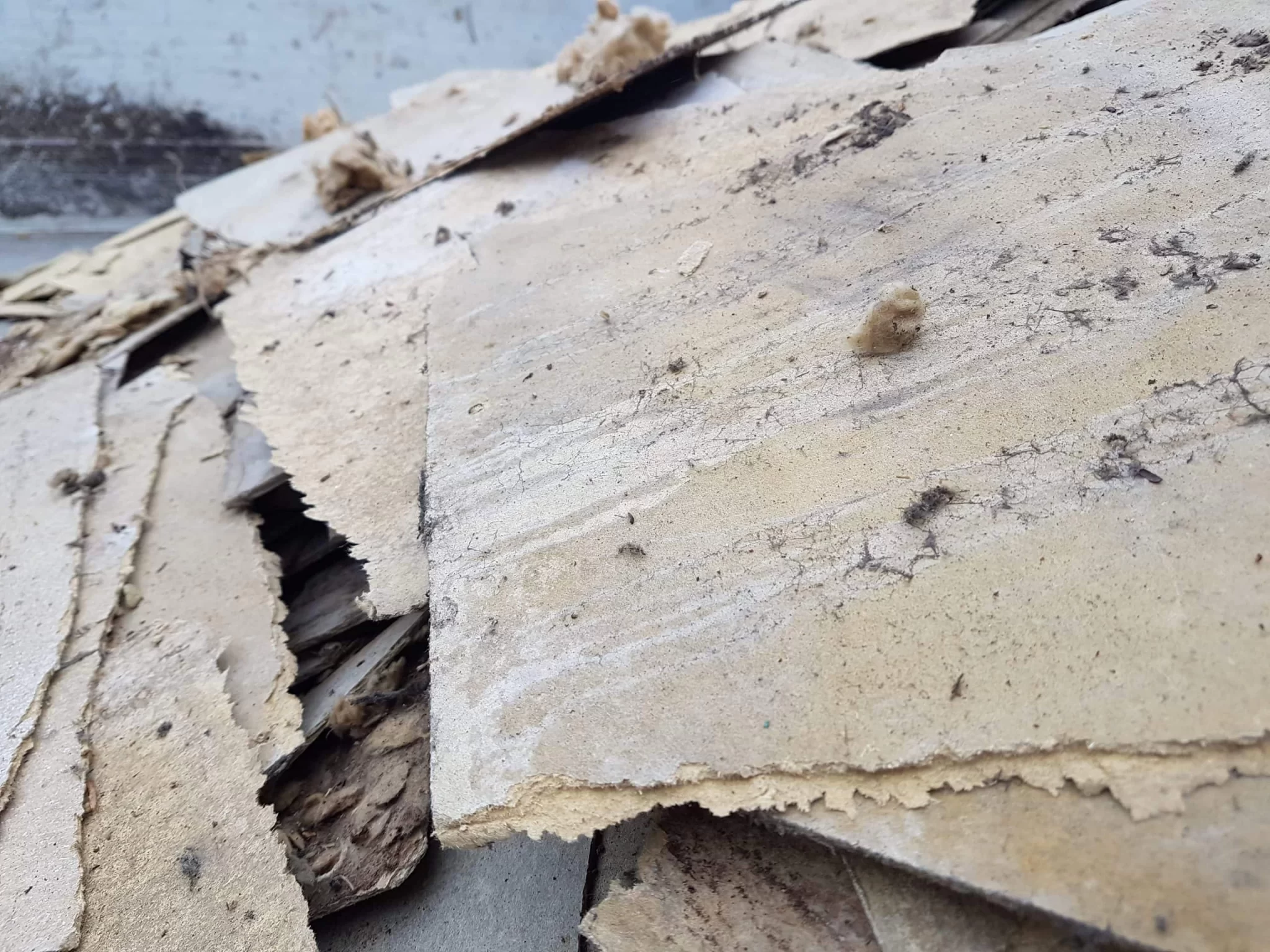
Most of the homes in this village were built during or after the 1920s estate-building boom, with some structures dating back centuries. That means asbestos-containing materials — floor tiles, pipe insulation, joint compound, popcorn ceilings, roofing materials — are common finds when walls get opened and floors get pulled. We identify all of it before your general contractor touches anything, which keeps your project on schedule and keeps you on the right side of New York State law.
Hewlett Neck’s location along Jamaica Bay and Hewlett Bay also adds a layer most homeowners don’t immediately think about. When storm surge or floodwater saturates walls and ceilings in an older home, it can make previously stable asbestos-containing materials friable — meaning they can release fibers into the air. If your home took on water during a nor’easter or coastal storm, that’s not just a water damage situation. It needs to be assessed for asbestos before any reconstruction begins.
We’re a Nassau County–based environmental services contractor, which means when you call us for asbestos abatement in Hewlett Neck, you’re not getting an out-of-area crew that has to look up the local requirements. We already know them — and we hold every license and certification required to work in this county.
That includes New York State DOL licensing under Industrial Code Rule 56 and Nassau County’s Environmental Hazard Remediation Professional credentials. Both are legally required for any asbestos abatement work in this area. We handle the required advance notifications to the NYS Department of Labor, the air monitoring during the project, the regulated waste disposal, and the final clearance certification — all of it, under one roof.
We’ve built a service footprint throughout the Five Towns — Hewlett, Hewlett Harbor, Hewlett Bay Park, Woodmere, and the surrounding communities — and we understand the housing stock, the permit environment, and what homeowners in Hewlett Neck actually expect from a contractor. The estates and older residential properties here have specific challenges: original finishes that need careful handling, complex floor plans with multiple affected areas, and the added complication of coastal flood risk that most inland contractors don’t factor into their approach.
It starts with a site assessment and a certified pre-renovation asbestos survey. A licensed inspector walks the property, collects samples from any suspected materials, and produces a written report. In Hewlett Neck, where homes regularly exceed 3,000 to 5,000 square feet and may have original finishes, tile work, and insulation that hasn’t been touched in decades, this step is not a formality — it’s how you find out what you’re actually dealing with before anyone swings a hammer.
Once the survey confirms the presence of asbestos-containing materials, we file the required 10-day advance notification with the New York State Department of Labor. That’s a legal requirement under ICR 56, and it cannot be skipped. While that window runs, we coordinate with your general contractor or restoration team so there’s no unnecessary delay to your overall project timeline.
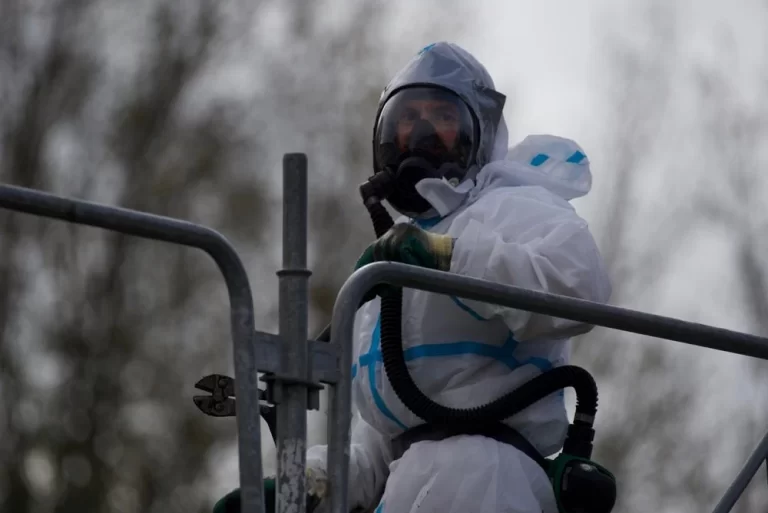
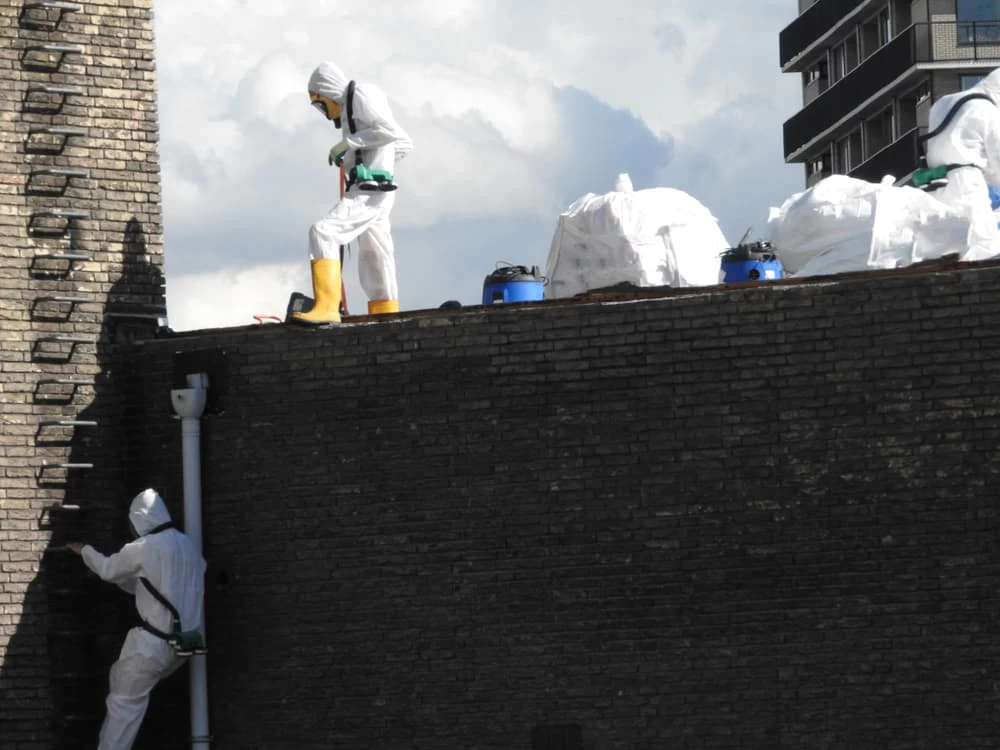
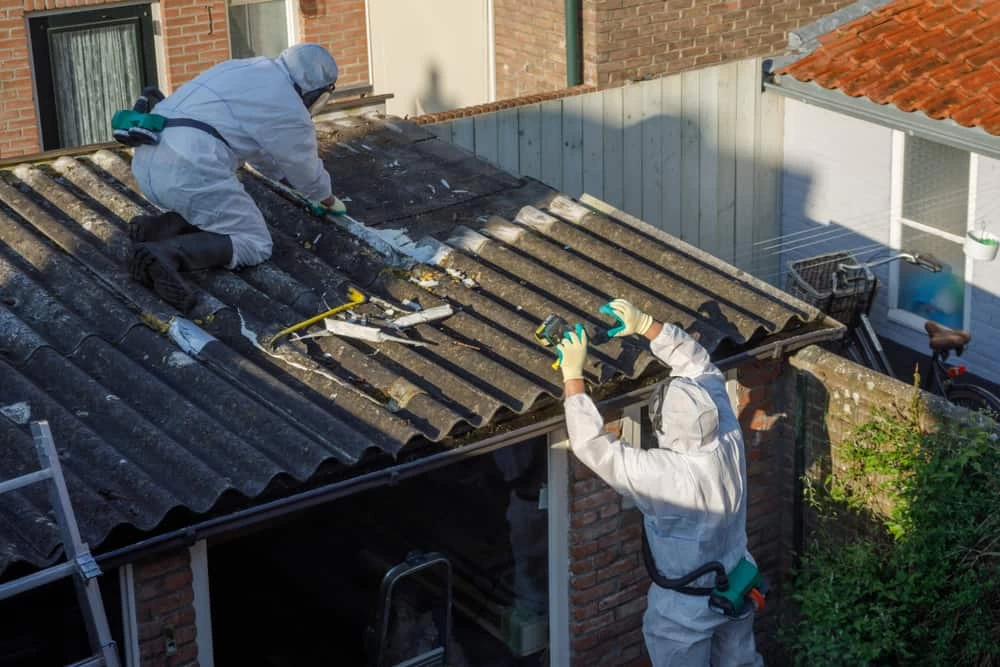
The abatement itself is done under full containment — negative air pressure, HEPA filtration, proper personal protective equipment, and strict decontamination protocols throughout. When the removal is complete, a licensed industrial hygienist conducts clearance air monitoring to confirm the space is safe. You receive the full documentation package at the end: the survey report, the notification confirmation, the air monitoring data, the waste disposal manifests, and the clearance certification. That paperwork matters — for your renovation, for your insurance, and for any future real estate transaction involving your property.
The Materials Most Commonly Found in Hewlett Neck Homes
The homes in Hewlett Neck were built across several distinct eras, and each era came with its own set of building materials — many of which we now know contained asbestos. Vinyl asbestos floor tiles were standard in homes built and renovated from the 1930s through the 1970s, and they’re still sitting beneath newer flooring in a significant number of properties in this village. Asbestos tile removal requires full containment and regulated disposal — it cannot be handled as part of a standard flooring demo.
Popcorn ceilings applied before 1978 are another common find in Five Towns homes from the mid-century period. The texture itself often contained asbestos, and painting over it doesn’t neutralize the risk — it just covers it. Our popcorn ceiling removal process includes full room containment, negative air pressure, licensed removal by EHRT-certified technicians, and clearance air testing before containment comes down.
Beyond tile and ceilings, we also handle pipe insulation, joint compound, roofing shingles, siding, and HVAC insulation — the full range of materials that show up in pre-1980 construction. For homeowners in Hewlett Neck managing a whole-house renovation, a pre-sale preparation, or post-storm reconstruction, we assess everything in a single mobilization so nothing gets missed and your project doesn’t stall mid-way through because an unexpected material turns up.
Does my Hewlett Neck home actually need an asbestos survey before renovation?
If your home was built before 1980 — which describes the vast majority of properties in Hewlett Neck — then yes, a pre-renovation asbestos survey is legally required under New York State Industrial Code Rule 56 before any renovation or demolition work that could disturb suspected materials. This isn’t a recommendation. It’s a mandate, and violations carry civil penalties.
The practical reason matters just as much as the legal one. Asbestos-containing materials in older homes are often hidden beneath newer finishes — under vinyl flooring, behind drywall, inside wall cavities around old pipe runs. We identify those materials before your contractor disturbs them, which protects your family, keeps your project legal, and avoids the cost and delay of stopping a renovation mid-stream to deal with an unexpected find. In a home the size of most Hewlett Neck properties, that survey is one of the most cost-effective steps you can take before a major project.
How much does asbestos abatement typically cost for a large home in Nassau County?
Cost depends heavily on what materials are present, how many rooms are affected, and the overall scope of the work. For a targeted single-room project — one bathroom with asbestos tile, for example, or a single ceiling — you’re typically looking at a range of $2,200 to $6,500 in the Nassau County market. For a whole-house pre-renovation abatement on a larger property, the range can run from $18,000 to $45,000 or more depending on the scope.
For Hewlett Neck specifically, where homes regularly exceed 3,000 square feet and may have multiple affected areas across different decades of construction, a thorough survey upfront is the most reliable way to get an accurate number. The survey identifies exactly what needs to be removed, which means your abatement estimate reflects the actual scope rather than a ballpark. Contractors who quote without surveying first are guessing — and in a home of this scale, that guess usually goes in the wrong direction.
What happens if asbestos is found during a renovation already in progress?
Work stops. Under New York State law, once asbestos-containing materials are identified mid-project, the area must be secured and a licensed abatement contractor must be brought in before any further demolition or construction activity can continue. This is one of the most disruptive and expensive scenarios a homeowner can face — not because the abatement itself is unusually costly, but because the project delays, contractor coordination issues, and potential regulatory exposure that come with an unplanned stop add up quickly.
The straightforward way to avoid this is a pre-renovation survey before the project starts. In Hewlett Neck’s older housing stock, where original materials are frequently buried under decades of renovation layers, the probability of encountering asbestos mid-project without a prior survey is real. A survey costs a fraction of what an unplanned work stoppage costs — in time, in contractor fees, and in the stress of managing an active job site that suddenly can’t move forward.
Can asbestos become a problem after storm or flood damage in Hewlett Neck?
Yes — and this is something a lot of homeowners in coastal Nassau County don’t think about until it’s already a problem. When floodwater saturates walls, floors, and ceilings in an older home, it can cause previously stable asbestos-containing materials to become friable, meaning the fibers can become airborne. Hewlett Neck’s location adjacent to Jamaica Bay and Hewlett Bay puts it in a recognized flood zone, and the South Shore took significant damage during Superstorm Sandy and has seen repeated coastal storm impacts since.
If your home experienced water intrusion during a major storm event, the right sequence is assessment before reconstruction — not the other way around. We evaluate the affected materials before any demolition or drying work begins. This protects the workers doing the remediation, protects your family, and protects you from liability. Coordinating asbestos assessment with your water damage restoration team from the start is far simpler than trying to address it after walls have already been opened.
Do I need to notify anyone before asbestos removal work starts at my home?
Yes. New York State Industrial Code Rule 56 requires a licensed contractor to submit a 10-day advance notification to the NYS Department of Labor before asbestos abatement work begins on any project above the regulatory threshold. This applies to residential properties, not just commercial or industrial sites. The notification must include specific project details, and work cannot legally begin until the notification window has passed.
On top of the state requirement, Nassau County requires that the abatement contractor hold an Environmental Hazard Remediation Professional license and that all technicians performing the work hold EHRT certification. We handle the notification filing and hold all required state and county credentials — you don’t need to manage that process yourself. When the project is complete, you receive documentation confirming that all regulatory requirements were met, which is important for your records and for any future sale or insurance claim involving the property.
How do I know if my Hewlett Neck home has asbestos in the popcorn ceilings or floor tiles?
You can’t know for certain by looking at it. Asbestos-containing materials don’t look any different from materials that don’t contain asbestos — the only way to confirm is through laboratory testing of a collected sample. That’s part of what a certified pre-renovation survey covers. Our inspectors take samples from suspected materials, send them to an accredited lab, and give you a written report with the results.
In Hewlett Neck, the homes most likely to have asbestos in popcorn ceilings are those built or renovated between the early 1950s and 1978, when asbestos was banned from textured ceiling products. For floor tiles, the window is wider — vinyl asbestos tiles were used from the 1930s through the mid-1980s. If your home has original tile floors or acoustic ceilings from any of those periods, sampling before you disturb them is the only responsible approach. It’s a straightforward process, it doesn’t damage the materials, and it gives you a definitive answer rather than a guess.