When a 1940s Highland Falls Home Says Stop, We Move Fast
Most asbestos discoveries happen mid-project and suddenly your renovation is on hold, your contractor is idle, and you need answers now. We provide licensed asbestos abatement in Highland Falls with same-day response, full NYS DOL compliance, and written clearance documentation when the work is done.
I needed a professional consultation explanation of procedure for safe removal of Asbestos in my apartment complex. Without having an account yet, I was very impressed with the caring, knowledgeable and generous advice offered by Jessica, and will look forward to doing business in the future. Thank you so much! I feel much more informed about a sometimes scary endeavor. Peace. Nancy Silva Mineola, NY.
Mia Munoz
Used this company to clean up some water flood in my house. They were fast and easy to work with.very professional, Would recommend to anyone!
Nini Valle
Great company, had a flood and they responded quickly and efficiently. Billed my insurance company directly. I highly recommend this company!
joe colapietro, jr
I had pipe freeze in my basement right before a snow storm and they made to within an hour to help start the clean up process. They we by our side throughout the entire process and even helped with the insurance company. They did such a great job with the cleanup, repair, remidiation, I contracted them to perform the repairs and finishes in the basement. They came with enough manpower and material to get the job done. Leo and Jessica were nothing but a pleasure to deal with!!
Cristian Arredondo c
I had some water damage in my home and Green Island was able to take care of my issue quickly and effectively. I am very pleased with the work they did. They responded quickly and were very professional.
Michael M
Outstanding service! From the office to the field crew everyone was friendly, helpful and responsive. I highly recommend Green Island Group.
Highland Falls is a compact village where most of the housing stock was built in the 1940s and 1970s both peak eras for asbestos use in residential construction. Floor tiles, pipe insulation, popcorn ceilings, boiler wrap, and joint compound from that period routinely contain asbestos-containing materials. When a contractor pulls up old flooring on one of the residential streets off Route 218 and finds something suspicious, that project doesn’t move forward until the hazard is properly assessed and removed by a licensed professional.
What you get on the other side of that process isn’t just a cleared space it’s documentation. A written clearance certificate from an independent industrial hygienist confirms the air is clean, the work was done right, and the space is safe to reoccupy. That matters whether you’re a homeowner finishing a kitchen renovation, a landlord with a tenant waiting to move in, or a military family navigating a real estate transaction on a tight timeline before a West Point assignment cycle ends.
Highland Falls also sits along the Hudson River in a documented flood zone. When storm water gets into a pre-1980 building and it has, repeatedly the water damage remediation almost always disturbs asbestos in walls, floors, and mechanical systems. Having one contractor who handles both the asbestos abatement and the water damage restoration means you’re not managing two separate crews during the most stressful week of the year.
We are an independently owned environmental remediation contractor serving Highland Falls, the Hudson Valley, Orange County, and the broader New York metro area. We hold the NYS Department of Labor Asbestos Contractor License required to legally perform asbestos abatement in Highland Falls and throughout Orange County and that license is publicly verifiable on the NYS DOL website, not something you have to take our word for.
Our client list includes the NYS Office of General Services, the Dormitory Authority of the State of New York, and multiple county governments. These aren’t referrals they’re public-sector procurement relationships that require competitive bidding, insurance minimums, licensing verification, and safety record review. If state agencies trust us with public buildings, the standard we bring to your Highland Falls property is the same one.
We also hold dual NYS and NYC Minority/Women-Owned Business Enterprise certification an audited government designation, not a self-reported badge. For a community that lives alongside one of the most institutionally rigorous environments in the country, that kind of third-party accountability isn’t a marketing detail. It’s the baseline you should expect from anyone you let into your home.
Asbestos Remediation Process in Highland Falls, NY
From Discovery to Clearance Here's What to Expect
It usually starts with a call. Maybe your contractor stopped work and flagged something in the floor tile. Maybe you’re getting ready to list your home and the inspector raised a concern. Maybe you just had water in the basement after a storm and you’re not sure what’s behind the walls. Whatever the situation, we assess it first quickly and without pressure so you understand what you’re actually dealing with before any decisions are made.
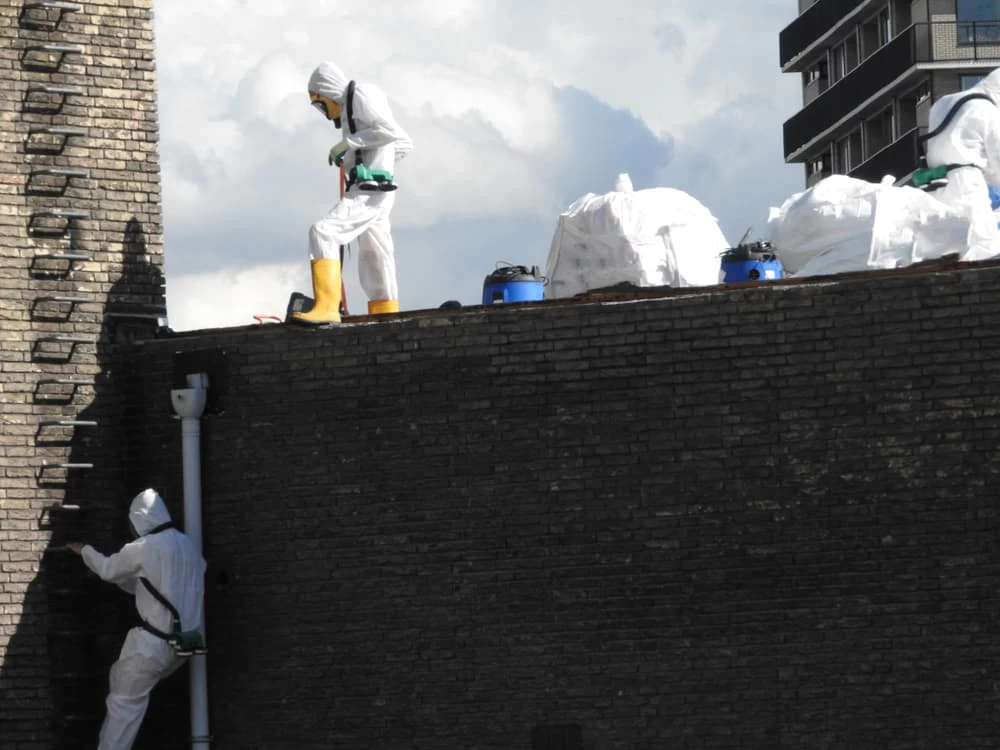
If asbestos-containing materials are confirmed, we file the required NYS DOL notification before any work begins. This is a legal requirement under Industrial Code Rule 56, and it’s non-negotiable in New York State regardless of project size. We handle that paperwork. The work area is then contained and placed under negative air pressure to prevent fiber migration into the rest of the structure a step that matters especially in the compact, older homes common throughout Highland Falls, where living spaces are close together and HVAC systems can spread contamination quickly if the containment isn’t right.
Once the materials are removed and disposed of properly, an independent industrial hygienist conducts post-abatement air monitoring. That’s a third party not us confirming the space is clean. When it passes, you receive a written clearance certificate. For military families managing a housing transition, landlords with tenant obligations, or homeowners in the middle of a real estate transaction, that document is what moves everything forward.
Asbestos Removal and Abatement in Orange County NY
One Crew Handles What Highland Falls Homes Actually Throw at You
The older housing stock in Highland Falls rarely presents a single problem. A 1940s bungalow undergoing renovation might have asbestos floor tile in the kitchen, asbestos pipe insulation in the basement, and lead paint on the trim all in the same project. We handle asbestos abatement, mold remediation, lead paint removal, and water damage restoration under one roof. For homeowners and military families who don’t have an established local contractor network, that’s a real reduction in stress.
On the asbestos side specifically, the materials we most commonly encounter in Highland Falls properties include 9×9 vinyl floor tiles and their mastic adhesive, popcorn ceiling texture applied through the 1970s, pipe and boiler insulation in older mechanical systems, and textured drywall joint compound. Asbestos popcorn ceiling removal and asbestos tile removal are two of the most frequent requests we get in this area, and both require proper containment, licensed removal, and post-abatement clearance not just a scrape-and-go approach.
We also bill insurance companies directly for applicable damage-related claims and offer 0% APR financing up to $200,000 for qualifying projects. Asbestos discovery mid-renovation is almost never budgeted for. The financing option exists specifically for that situation so an unexpected finding doesn’t shut down a project you were already committed to finishing.
Do Highland Falls homes built in the 1940s commonly contain asbestos?
Yes and it’s more common than most homeowners expect. Homes built in the 1940s and through the 1970s in Highland Falls were constructed during the peak era of asbestos use in residential building materials. The most frequently found materials include 9×9 vinyl floor tiles and the black mastic adhesive underneath them, pipe and boiler insulation in basement mechanical systems, popcorn ceiling texture, and in some cases, joint compound used on drywall seams. The tricky part is that none of these materials look hazardous. The tile on your kitchen floor may look like ordinary vinyl. The insulation wrapped around the pipes in your basement may look like standard wrap. You can’t identify asbestos by looking at it only testing confirms it.
If your home in Highland Falls was built before 1980 and you’re planning any renovation that disturbs walls, floors, or ceilings, having a licensed inspector assess the materials before work begins is the right move. It protects you, your contractor, and anyone else in the building.
Can my general contractor remove asbestos during a renovation in New York State?
No. In New York State, asbestos abatement must be performed by a contractor holding a valid NYS Department of Labor Asbestos Contractor License. A general contractor no matter how experienced cannot legally remove asbestos-containing materials unless they hold that specific license. This is governed by Industrial Code Rule 56, which covers every property in Orange County including Highland Falls. Violations carry significant fines, and work performed by an unlicensed contractor produces no legal clearance documentation, which means you’re left with no paper trail and potential liability exposure.
This comes up often in renovation projects in the village where a general contractor pulls up old flooring or opens a wall and finds suspicious material. At that point, work must stop until a licensed asbestos contractor assesses and removes the hazard. We work directly with general contractors in this situation to minimize project downtime we come in, handle the abatement, produce the clearance documentation, and hand the space back so the renovation can continue.
What is a clearance certificate and why do I need one after asbestos removal?
A clearance certificate is a written document issued after post-abatement air monitoring confirms that airborne asbestos fiber levels in the treated space are below the legal threshold for safe reoccupancy. In New York State, this monitoring must be performed by an independent industrial hygienist not the same contractor who did the removal. That separation is intentional. It’s a built-in check that the work was done correctly, and it’s required under NYS DOL regulations before the space can be used again.
For Highland Falls residents, this document matters beyond just regulatory compliance. If you’re selling a home, your buyer’s lender may require it. If you’re a landlord, it’s the documentation that protects you if a tenant raises a health concern later. If you’re a military family in a housing transition, it’s what your property manager or relocation coordinator will ask for. We coordinate the independent hygienist and deliver the clearance certificate as a standard part of every project it’s not an add-on.
Does flood or water damage in an older home create an asbestos risk in Highland Falls?
It can, and this is a scenario that comes up specifically in Highland Falls because of the village’s documented history with severe storm and flood events along the Hudson River. When water penetrates a pre-1980 structure getting into walls, under flooring, or into the mechanical room the remediation process almost always disturbs building materials that were installed during the era of asbestos use. Wet drywall that needs to come out, damaged flooring that needs to be pulled, compromised pipe insulation all of these can contain asbestos-containing materials that become a hazard once disturbed.
This is why we handle both asbestos abatement and water damage restoration. When a storm event hits a 1940s or 1970s home in Highland Falls, you shouldn’t have to call two separate contractors and coordinate their schedules in the middle of a crisis. We assess both hazards together, address them in the right order, and document everything. We’re also available 24 hours a day, 7 days a week because water damage and storm emergencies don’t wait for Monday morning.
How long does asbestos abatement typically take for a home in Highland Falls?
It depends on the scope, but for a typical residential project in Highland Falls a single room of floor tile removal, a section of pipe insulation, or a popcorn ceiling in one or two rooms the abatement work itself often takes one to two days. The full timeline from start to clearance certificate is typically three to five days when you factor in the required NYS DOL pre-notification period and the post-abatement air monitoring conducted by the independent industrial hygienist.
Larger projects full-floor asbestos tile removal in a multi-story home, extensive pipe insulation throughout a basement mechanical system, or a whole-house assessment prior to a major renovation will take longer, and we’ll walk you through a realistic timeline before any work begins. For homeowners in the middle of a real estate transaction with a closing deadline, or military families working around an assignment date, we understand that timing matters and we build the schedule around your situation as much as the regulatory requirements allow.
Is asbestos abatement covered by homeowners insurance in New York?
It depends on how the asbestos was discovered and what caused the disturbance. Standard homeowners insurance policies in New York generally do not cover asbestos removal that’s identified during a planned renovation that’s considered a pre-existing condition. However, if asbestos-containing materials were disturbed or exposed as a direct result of a covered event a storm, flooding, fire, or sudden water damage there’s a reasonable basis to file a claim, and many policies will cover at least a portion of the remediation costs when asbestos removal is tied to that covered loss.
This is particularly relevant in Highland Falls, where storm and flood damage to older homes is a documented and recurring reality. We bill insurance companies directly and handle the documentation and adjuster communications on your behalf, so you’re not navigating the claims process alone while also managing the remediation. If you’re unsure whether your situation qualifies, call us we’ll give you a straight answer based on what we’ve seen work and what hasn’t, without pushing you toward a claim that doesn’t make sense for your policy.