When Your 1960s Highland Mills Home Stops Your Renovation Cold
Most asbestos discoveries in Highland Mills happen mid-project and suddenly everything stops. We get you back on track fast, with licensed asbestos removal and every document you need to move forward.
I needed a professional consultation explanation of procedure for safe removal of Asbestos in my apartment complex. Without having an account yet, I was very impressed with the caring, knowledgeable and generous advice offered by Jessica, and will look forward to doing business in the future. Thank you so much! I feel much more informed about a sometimes scary endeavor. Peace. Nancy Silva Mineola, NY.
Mia Munoz
Used this company to clean up some water flood in my house. They were fast and easy to work with.very professional, Would recommend to anyone!
Nini Valle
Great company, had a flood and they responded quickly and efficiently. Billed my insurance company directly. I highly recommend this company!
joe colapietro, jr
I had pipe freeze in my basement right before a snow storm and they made to within an hour to help start the clean up process. They we by our side throughout the entire process and even helped with the insurance company. They did such a great job with the cleanup, repair, remidiation, I contracted them to perform the repairs and finishes in the basement. They came with enough manpower and material to get the job done. Leo and Jessica were nothing but a pleasure to deal with!!
Cristian Arredondo c
I had some water damage in my home and Green Island was able to take care of my issue quickly and effectively. I am very pleased with the work they did. They responded quickly and were very professional.
Michael M
Outstanding service! From the office to the field crew everyone was friendly, helpful and responsive. I highly recommend Green Island Group.
The median home in Highland Mills was built in 1966. That puts most of the housing stock the split-levels off Route 32, the bi-levels near Central Valley, the Phase 1 units at Timber Ridge squarely in the window when asbestos was standard in floor tiles, pipe insulation, popcorn ceilings, and joint compound. It wasn’t a corner-cutting choice back then. It was just how homes were built. The problem is that those materials don’t stay stable forever, especially when someone starts pulling up floors or opening walls.
When asbestos gets disturbed during a renovation, the work has to stop. That’s not optional it’s the law in New York State, and it exists for good reason. What matters at that point is how fast you can get a licensed contractor on-site, how clearly they explain what needs to happen, and whether they’ll hand you documentation that actually satisfies your lender, your attorney, or the Village of Woodbury’s building department.
That’s the outcome that matters here. Not just removal removal that’s verified by an independent industrial hygienist, documented in writing, and done by a contractor whose NYS Department of Labor license you can look up yourself. When we finish a job in Highland Mills, you walk away with a clearance certificate and a complete project record. Your contractor can get back to work. Your closing can proceed. Your family can come home.
We’ve been doing licensed environmental remediation work across New York for over 12 years. We’re independently owned, not a franchise with a local phone number. The team that shows up to your home in Highland Mills is the same team that’s performed abatement work for the NYS Office of General Services, DASNY, and county-level government clients agencies that vet contractors hard before awarding a single contract.
Our NYS Department of Labor Asbestos Contractor License is the specific credential required to legally perform abatement anywhere in New York State under 12 NYCRR Part 56. It’s publicly searchable on the NYS DOL website. We encourage you to check it before you hire us. That’s not a sales line. That’s just how this decision should be made.
We work throughout Orange County and know the regulatory environment in Highland Mills including what the Village of Woodbury’s building department needs, what NYS DOL Part 56 requires, and what an independent industrial hygienist needs to issue your clearance certificate. We also hold dual NYS and NYC M/WBE certification, which means government agencies have audited our financials and compliance record and found us legitimate. That’s a different kind of credential than a five-star review.
From Discovery to Clearance Here's What Happens in Highland Mills
Most calls we get from Highland Mills homeowners start the same way: a contractor pulled up old vinyl floor tiles, or started demo on a popcorn ceiling, and stopped when they saw something they weren’t sure about. The first step is assessment. Before any removal happens, the suspect material needs to be tested by a qualified industrial hygienist to confirm whether it contains asbestos and at what concentration. That result determines the scope of the project.
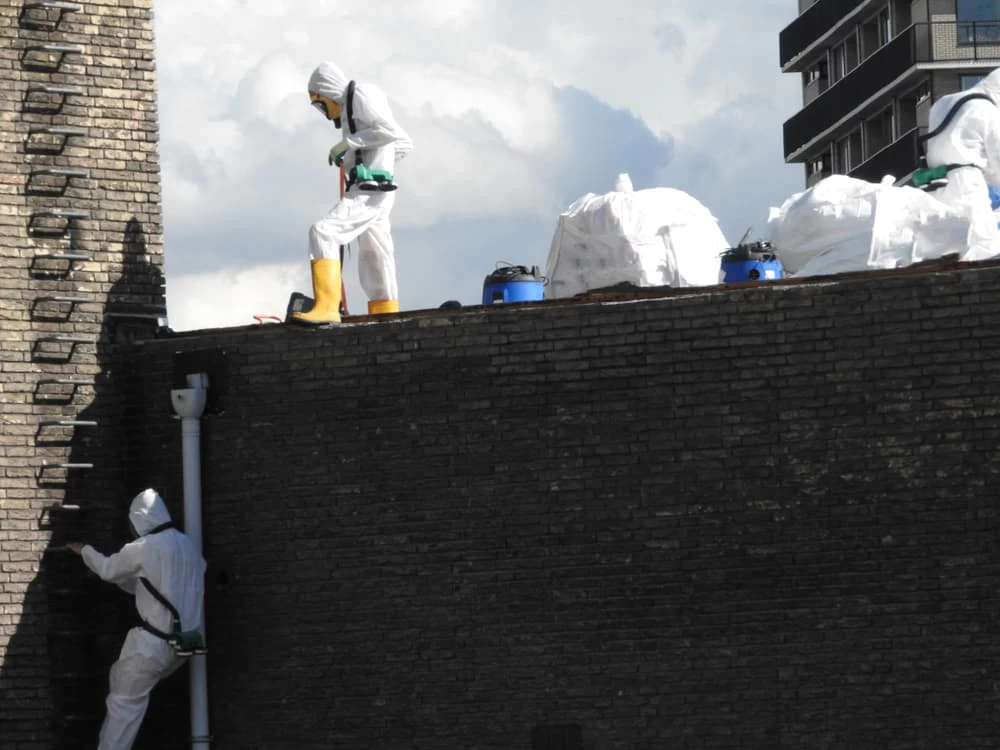
Once the scope is confirmed, we handle all required notifications under NYS DOL Part 56 including any NESHAP filings with the NYS DEC if the project involves demolition. For most residential abatement projects in the Highland Mills area, the work itself takes one to two days. The containment goes up, the material is removed using proper negative-pressure enclosures, and all waste is packaged and transported to a licensed disposal facility with a documented chain of custody. Your household doesn’t have to live with uncertainty about where the material went.
After removal, an independent industrial hygienist not us, a separate third party conducts post-abatement air monitoring. If the air clears, they issue a written clearance certificate. That certificate, along with your waste disposal manifests and project records, is your complete documentation package. For anyone in the middle of a real estate transaction or a renovation permit, that paperwork is what makes everything else possible. We coordinate the whole process so you’re not managing four separate parties during an already stressful situation.
Asbestos abatement isn’t one-size-fits-all, and the scope of a job in Highland Mills depends on what materials are present, where they are, and what triggered the discovery. The most common scenarios we handle here are vinyl asbestos floor tile removal the 9×9 and 12×12 tiles found in almost every post-war split-level and ranch home in the area along with popcorn ceiling removal, pipe and boiler insulation removal, and transite siding abatement. Homes in the Timber Ridge community, where Phase 1 construction dates to the late 1970s, frequently have asbestos-containing ceiling tiles and textured finishes that require professional handling before any renovation work can continue.
Every project includes proper containment setup, licensed removal by NYS-certified asbestos handlers, licensed waste transport and disposal with full manifests, and coordination of post-abatement air monitoring by an independent industrial hygienist. The clearance certificate is part of the job not an add-on. We also handle the regulatory paperwork, including any required notifications to the NYS DEC for demolition-related projects.
If your situation involves more than asbestos which is common in Highland Mills homes from the 1960s, where you might also have mold from a basement moisture issue or lead paint on original trim we handle all of it. Asbestos remediation, mold remediation, lead abatement, and water damage restoration are all in-house services. One licensed team, one scope of work, one documentation package. We also offer 0% APR financing up to $200,000 for qualifying projects and bill insurance companies directly when the abatement is connected to a covered damage event.
Do I need a permit for asbestos abatement in Highland Mills, NY?
Asbestos abatement in Highland Mills falls under two separate regulatory layers, and both matter. At the state level, all abatement work must comply with NYS Department of Labor regulations under 12 NYCRR Part 56 this governs licensing, containment procedures, worker certification, and waste disposal. That framework applies regardless of project size or location within New York State.
At the local level, renovation work in Highland Mills runs through the Village of Woodbury’s building department, since Highland Mills is a hamlet within the Village rather than a standalone municipality. If your renovation requires a building permit, the Village may require documentation that suspect materials have been assessed before inspections can proceed. For demolition projects, there’s an additional layer: NESHAP regulations require notification to the NYS Department of Environmental Conservation before demolition of any structure containing regulated quantities of asbestos. We handle all required notifications and coordinate with the Village of Woodbury’s building department as part of the project you don’t have to figure out which agency needs what and when.
How do I know if my Highland Mills home actually contains asbestos?
You can’t tell by looking. Asbestos fibers are microscopic, and the materials that contain them floor tiles, pipe insulation, popcorn ceilings, joint compound look completely normal. The only way to know for certain is to have a sample collected and analyzed by an accredited laboratory. A qualified industrial hygienist takes small samples from suspect materials, sends them for analysis, and gives you a written report with the results.
In Highland Mills, the housing stock makes testing a practical necessity for any pre-renovation due diligence. The median construction year here is 1966, and homes built between the 1940s and late 1970s routinely contain asbestos in multiple locations sometimes in materials you wouldn’t expect, like the paper backing on old insulation batts or the adhesive beneath vinyl flooring. If you’re planning a kitchen gut renovation, a basement finishing project, or any work that involves opening walls or ceilings in a home built before 1980, testing before demolition begins is the right call. It’s a relatively low-cost step that tells you exactly what you’re dealing with before a contractor disturbs anything.
How long does asbestos removal take, and do I have to leave my house?
For most residential asbestos abatement projects in the Highland Mills area, the removal work itself takes one to two days. Larger projects full basement pipe insulation, multiple rooms of floor tile, or combined asbestos and mold remediation can run three to five days. The timeline depends on the scope confirmed during assessment, and we give you a clear schedule before any work begins so you can plan accordingly.
Whether you need to vacate depends on the location and extent of the work. For contained, single-room projects, the rest of the house can often remain occupied if proper negative-pressure containment is maintained. For larger projects or work in central areas like main living spaces or HVAC-adjacent rooms, temporary relocation during the active abatement phase is the safer choice. After removal, the space cannot be reoccupied until an independent industrial hygienist conducts post-abatement air monitoring and issues a written clearance certificate that step typically adds one business day to the timeline. We walk you through all of this upfront so there are no surprises about access or scheduling.
What does asbestos abatement cost for a home in Orange County, NY?
Cost in the Orange County market depends heavily on what material is present, how much of it there is, and where it’s located. As general reference points: popcorn ceiling removal with confirmed asbestos typically runs $3 to $8 per square foot; vinyl asbestos floor tile removal runs $5 to $15 per square foot; pipe insulation removal runs $25 to $75 per linear foot. A typical single-room residential project in the Highland Mills area might run $1,500 to $5,000. A larger scope multiple materials across several rooms, or a full basement can reach $10,000 to $30,000 or more.
What drives cost variation isn’t just square footage. Accessibility matters pipe insulation in a crawlspace costs more to remove than the same linear footage in an open basement. Material condition matters friable asbestos that’s actively deteriorating requires more intensive containment than intact floor tiles. And the post-abatement clearance process adds cost regardless of scope, since it requires an independent industrial hygienist. We provide written, itemized estimates before any work begins. If the cost creates a budget problem which is common when asbestos is discovered mid-renovation we offer 0% APR financing up to $200,000 for qualifying projects so you’re not forced to choose between doing it right and keeping your renovation on track.
Can I sell my house in Highland Mills if asbestos was found during inspection?
Yes but how you handle it affects whether your transaction moves forward cleanly or gets complicated. When a home inspector flags suspect asbestos-containing materials in a Highland Mills property, the buyer’s lender may require remediation before funding the loan. Even in cash transactions, buyers and their attorneys increasingly request written documentation that any identified asbestos has been properly abated by a licensed NYS DOL contractor.
The documentation that makes a real estate transaction work is specific: you need a written scope of work from a licensed contractor, waste disposal manifests showing where the material went, and a clearance certificate from an independent industrial hygienist confirming post-abatement air quality. Without all three, the paperwork trail has gaps that can stall or kill a closing. We produce the complete documentation package as a standard part of every project not something you have to ask for separately. Given that Highland Mills is an active real estate market with median home values above $550,000, the cost of proper abatement is almost always recoverable in the transaction. The cost of a delayed or fallen-through closing is not.
Is asbestos in Timber Ridge townhouses a real concern, or is it overstated?
It’s a real concern worth understanding clearly. Timber Ridge Phase 1 was built in the late 1970s a period when asbestos was still commonly used in residential construction, particularly in ceiling tiles, floor tiles, textured finishes, and joint compound. The fact that a building is from that era doesn’t mean asbestos is definitely present, but it does mean the probability is high enough that any renovation or repair work involving those materials should start with testing rather than assumption.
For Timber Ridge residents specifically, the most common trigger points are bathroom or kitchen renovations that disturb original flooring, ceiling repairs that involve cutting into textured drywall, and HVAC or plumbing work that runs near original pipe insulation. If you’re a unit owner planning any of this work, the right first step is having suspect materials sampled and tested before your contractor touches them. If you’re on the condo association board and managing building-wide maintenance or a capital improvement project, the scope is larger building-wide asbestos surveys under AHERA guidelines may apply depending on the building’s classification. We work with both individual unit owners and property management teams and can help you understand what’s required before you commit to a scope of work.