Hollis Homes Were Built to Last Let's Keep Them Safe
More than half the homes in Hollis were built before 1950. If yours is one of them, asbestos abatement isn’t a distant concern it’s a real possibility the moment any renovation starts.
I needed a professional consultation explanation of procedure for safe removal of Asbestos in my apartment complex. Without having an account yet, I was very impressed with the caring, knowledgeable and generous advice offered by Jessica, and will look forward to doing business in the future. Thank you so much! I feel much more informed about a sometimes scary endeavor. Peace. Nancy Silva Mineola, NY.
Mia Munoz
Used this company to clean up some water flood in my house. They were fast and easy to work with.very professional, Would recommend to anyone!
Nini Valle
Great company, had a flood and they responded quickly and efficiently. Billed my insurance company directly. I highly recommend this company!
joe colapietro, jr
I had pipe freeze in my basement right before a snow storm and they made to within an hour to help start the clean up process. They we by our side throughout the entire process and even helped with the insurance company. They did such a great job with the cleanup, repair, remidiation, I contracted them to perform the repairs and finishes in the basement. They came with enough manpower and material to get the job done. Leo and Jessica were nothing but a pleasure to deal with!!
Cristian Arredondo c
I had some water damage in my home and Green Island was able to take care of my issue quickly and effectively. I am very pleased with the work they did. They responded quickly and were very professional.
Michael M
Outstanding service! From the office to the field crew everyone was friendly, helpful and responsive. I highly recommend Green Island Group.
Your Hollis Home Is Safe Again Here's What That Means
When asbestos is found in a Hollis home, everything stops. The renovation halts, the questions pile up, and suddenly you’re trying to figure out who to call, whether your family has been exposed, and how long this is going to take. That moment is exactly what we’re built for.
The homes along the streets of Hollis many of them built in the 1930s, 40s, and 50s carry a specific set of asbestos risks that we know well from years of working in this neighborhood. The 9×9 vinyl floor tiles in the kitchen. The pipe insulation wrapped around the basement boiler. The textured plaster on the bedroom ceiling. These aren’t hypothetical risks. They’re in homes on nearly every block in Hollis, and they become a real issue the moment a contractor starts pulling things apart.
Once the work is done correctly, you get something back that’s hard to put a price on: certainty. Not a verbal assurance, but documented air clearance testing that confirms the space is safe the kind of paperwork that satisfies a home inspector, a real estate attorney, or just your own peace of mind when your family walks back through the door.
Working in Hollis means working in New York City and that comes with a regulatory layer most contractors aren’t equipped for. The NYC Department of Environmental Protection has its own asbestos rules on top of state and federal requirements. Before any renovation permit gets issued in the five boroughs, the NYC DOB requires an ACP-5 asbestos certification. We know this process inside and out because we operate throughout all five boroughs, not just on Long Island.
The credentials matter here: NYS DOL Asbestos license, USEPA Lead/RRP certification, NYC BIC Trade Waste registration, NYC General Contractor license, and NYS/NYC M/WBE status. That’s not a list built for marketing it’s what legal, compliant asbestos abatement in a Hollis home actually requires. And because we also hold IICRC and NYS DOL Mold certifications, we can handle whatever else turns up once the walls come open, without handing you off to someone else.
From the First Call to a Cleared, Documented Job Site
It starts with a call and someone actually picks up. From there, we schedule an inspection to identify and sample any suspected asbestos-containing materials. In a pre-1950 Hollis home, that typically means checking floor tiles, pipe insulation, boiler wrap, ceiling texture, and any drywall joint compound that’s been disturbed. The inspection findings drive everything that comes next.
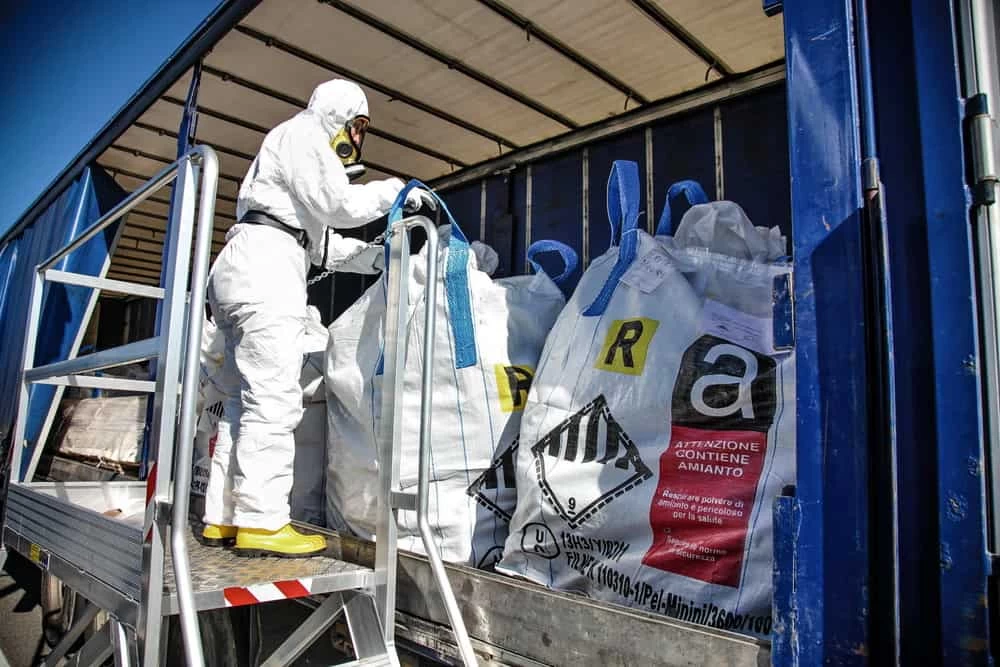
If abatement is needed, we handle the NYC DEP notification and approval process before any work begins. This is a step that’s specific to New York City and one that homeowners often don’t know about until a permit application gets rejected. We set up proper containment sealed work areas, negative air pressure, HEPA-filtered Microtrap air scrubbers running throughout so the rest of your home stays clean while the affected area is addressed. Every barrel of removed material is transported and disposed of by our NYC BIC-registered team, in full compliance with the city’s waste management requirements.
When the removal is complete, we don’t just pack up and leave. Post-removal air clearance testing is the final step, and it’s non-negotiable. That test is what produces the clearance certificate the documented proof that fiber levels are back within safe thresholds. If your project was paused waiting on abatement, that certificate is what gets your contractor back on the job. And if reconstruction is needed after the work is done, we can handle that too under the same contract.
Asbestos abatement in a Hollis home isn’t one-size-fits-all. The specific materials, the scope of the project, and the NYC regulatory requirements all shape what the job looks like. But there are a few things that are consistent across every project we handle here.
Every job includes a thorough inspection and sampling of suspected materials the kind of targeted assessment that accounts for what’s actually common in southeastern Queens homes of this era. We know where asbestos tends to show up in homes built between 1930 and 1960 in Hollis, and we look there first. If lead paint is also present which it frequently is in pre-1978 Hollis homes our USEPA Lead/RRP certification means we can address both hazards without you needing to bring in a second contractor. Full containment setup, licensed removal, compliant disposal, and post-removal air clearance testing are included on every abatement project. The clearance certificate you receive at the end is the documentation that holds up for home sales, permit closures, and insurance claims alike.
For Hollis homeowners whose renovations have been stopped by an asbestos discovery, we also offer post-abatement reconstruction. Once the hazardous material is gone and the air is cleared, we can restore the affected area floors, walls, ceilings, mechanical spaces so you’re not left with an open job site waiting on a separate contractor to show up.
Do I need an ACP-5 form before renovating my Hollis home?
If you’re applying for a renovation permit in New York City which includes Hollis the NYC Department of Buildings will require an ACP-5 asbestos certification form before the permit is issued for any work that could disturb asbestos-containing materials. This is a city-specific requirement that doesn’t apply in Nassau or Suffolk County, and it catches a lot of Hollis homeowners off guard when they’re mid-renovation planning.
The ACP-5 certifies that the property has been inspected by a licensed asbestos inspector and that any asbestos-containing materials have been properly identified and addressed. If the inspection finds materials that need abatement, that work has to be completed and documented before the form can be filed. We handle the inspection, the abatement, and the documentation so you’re not bouncing between multiple contractors trying to get a permit approved.
How do I know if my older Hollis home actually has asbestos?
You can’t tell by looking. Asbestos-containing materials don’t look different from materials that don’t contain asbestos the only way to know is to sample and test. That said, if your Hollis home was built before 1980, there are specific places where asbestos is statistically very likely to be present.
The most common sources in Hollis homes of this era are 9×9 vinyl floor tiles a format that was standard in kitchens, bathrooms, and basements throughout the 1940s and 50s along with the adhesive beneath them. Pipe insulation and boiler wrap in the basement are another high-probability location, especially in homes with older heating systems. Textured ceiling coatings, drywall joint compound, and roof shingles are also common. In Hollis, where the median home was built in 1949 and more than a third of homes predate the 1940s, the odds of encountering at least one of these materials during a renovation are genuinely high. A licensed inspection is the only way to get a clear answer.
What happens if asbestos is disturbed during a renovation before we knew it was there?
This is one of the most common situations we deal with, and the most important thing to do is stop work immediately and clear the area. Don’t try to clean it up yourself, and don’t run fans or HVAC systems that could spread fibers to other parts of the house. The goal is to limit the spread as much as possible until a licensed contractor can assess the situation.
Once you call us, we’ll evaluate what was disturbed, how much material was affected, and what level of remediation is needed. In New York City, even accidental disturbance of asbestos-containing material requires proper abatement and disposal under NYC DEP rules you can’t simply bag it and move on. We’ll handle the notification requirements, contain the affected area, complete the removal, and provide the air clearance testing that confirms the space is safe before anyone returns to work in it. The sooner you call after a discovery like this, the simpler the path forward tends to be.
How much does asbestos abatement typically cost in the Hollis, NY area?
The cost of asbestos abatement in Hollis depends on what’s there, how much of it there is, and what the access conditions look like. Projects in New York City including Hollis tend to run higher than national averages due to regulatory compliance costs, NYC DEP permit requirements, licensed disposal fees, and the cost of post-removal air clearance testing. A straightforward floor tile removal in a single room might come in at the lower end of the range. A more involved project pipe insulation throughout a basement, or multiple materials in a gut renovation can run significantly more.
What we can tell you is what’s included: inspection and sampling, full containment setup, licensed removal, NYC BIC-compliant disposal, and a documented clearance certificate at the end. There are no hidden fees for the regulatory steps that are legally required in New York City those are built into the scope from the start, not added on after the fact.
Can asbestos abatement be done while my family is still living in the house?
It depends on the scope and location of the work. For a contained project say, floor tile removal in a single basement room it’s often possible to isolate the work area well enough that the rest of the house remains occupied. For larger or more invasive projects, or work in high-traffic areas like kitchens or main living spaces, temporary relocation during the active abatement phase is usually the safer and more practical choice.
When we set up containment, we use sealed barriers and negative air pressure with HEPA-filtered air scrubbers to prevent fibers from migrating into the rest of the home. That containment is effective, but it’s also a real physical barrier the affected area is off-limits during the work. We’ll walk you through what the specific project looks like before any work begins so you can make an informed decision about whether your family needs to be out of the house, and for how long. Post-removal air clearance testing is always the final step before the containment comes down and the space is reopened.
Does asbestos abatement affect a home sale in Hollis, NY?
It can in both directions. Undisclosed asbestos in a Hollis home can derail a sale when it shows up in a buyer’s inspection report, especially in a neighborhood where pre-1950 homes are the norm and buyers and their attorneys know to ask about it. On the other hand, a properly completed abatement with documented air clearance testing and a clearance certificate on file is a straightforward answer to that concern it tells the buyer, their attorney, and the title company that the issue was identified and professionally resolved.
In Hollis’s current real estate environment, where longtime homeowners are increasingly considering selling after years of rising home values, pre-sale asbestos assessment is something more sellers are addressing proactively rather than waiting for it to surface during a buyer’s inspection. Getting ahead of it means you control the timeline, you choose the contractor, and you have the documentation ready before negotiations start. We provide the clearance certificate that satisfies real estate transactions not just a verbal confirmation, but a documented record of the completed abatement and the post-removal air test results.