Pre-1980 Homes in Horton Estates Hide This Problem in Plain Sight
If your Horton Estates home was built before 1980, asbestos abatement may be the one thing standing between your renovation and a serious health risk and we’re licensed to handle it the right way.
I needed a professional consultation explanation of procedure for safe removal of Asbestos in my apartment complex. Without having an account yet, I was very impressed with the caring, knowledgeable and generous advice offered by Jessica, and will look forward to doing business in the future. Thank you so much! I feel much more informed about a sometimes scary endeavor. Peace. Nancy Silva Mineola, NY.
Mia Munoz
Used this company to clean up some water flood in my house. They were fast and easy to work with.very professional, Would recommend to anyone!
Nini Valle
Great company, had a flood and they responded quickly and efficiently. Billed my insurance company directly. I highly recommend this company!
joe colapietro, jr
I had pipe freeze in my basement right before a snow storm and they made to within an hour to help start the clean up process. They we by our side throughout the entire process and even helped with the insurance company. They did such a great job with the cleanup, repair, remidiation, I contracted them to perform the repairs and finishes in the basement. They came with enough manpower and material to get the job done. Leo and Jessica were nothing but a pleasure to deal with!!
Cristian Arredondo c
I had some water damage in my home and Green Island was able to take care of my issue quickly and effectively. I am very pleased with the work they did. They responded quickly and were very professional.
Michael M
Outstanding service! From the office to the field crew everyone was friendly, helpful and responsive. I highly recommend Green Island Group.
Most homeowners in Horton Estates aren’t thinking about asbestos until a contractor pulls up a floor tile or scrapes a ceiling and stops cold. Then everything changes. The renovation stalls, the questions start, and suddenly you’re trying to figure out who’s licensed, what the rules are, and whether your family needs to leave the house.
When the work is done correctly, you get more than a clean space. You get a documented, verified record that the hazard has been removed in full compliance with New York State regulations. That matters whether you’re finishing a basement, updating a kitchen in a home that’s been in the family since the ’60s, or getting ready to list with a buyer’s attorney who’s going to ask questions.
Northern Westchester winters are hard on older homes. Freeze-thaw cycles crack pipe insulation over time. A burst pipe in February doesn’t just mean water damage it often means disturbed asbestos-containing materials in the basement mechanical room. When that happens, you need a contractor who can respond quickly, work within your insurance claim, and hand you clearance documentation that holds up. That’s what proper abatement looks like when it’s done right.
Licensed Asbestos Contractor Serving Horton Estates, NY
Every License Verified, Every Project Documented
We hold the NYS Department of Labor Asbestos Handling License the governing credential for abatement work in Westchester County. That’s not a minor detail. It means every person on our crew carries an individual NYS DOL handler or supervisor certification, not just a company card. You can look up our license on the state’s contractor database before you sign anything. We encourage it.
We’ve completed more than 5,000 abatement projects across the New York metro area, including homes throughout Horton Estates and northern Westchester the postwar subdivisions, older properties near Amawalk and Granite Springs, and everything in between. We also hold EPA certification, NYS DEC compliance credentials for waste disposal, and M/WBE certification from the NYS Office of General Services a formal state designation that no competitor currently serving this area mentions or holds.
If you’re in Horton Estates and you’re trying to figure out who to trust with this, the answer starts with verifiable credentials. We have them.
It starts with a free on-site inspection. We come to your Horton Estates home, walk the affected areas, identify which materials may contain asbestos, assess their condition, and give you a written estimate. There’s no charge for this, and no obligation to move forward. You’ll know what you’re dealing with before you spend a dollar.
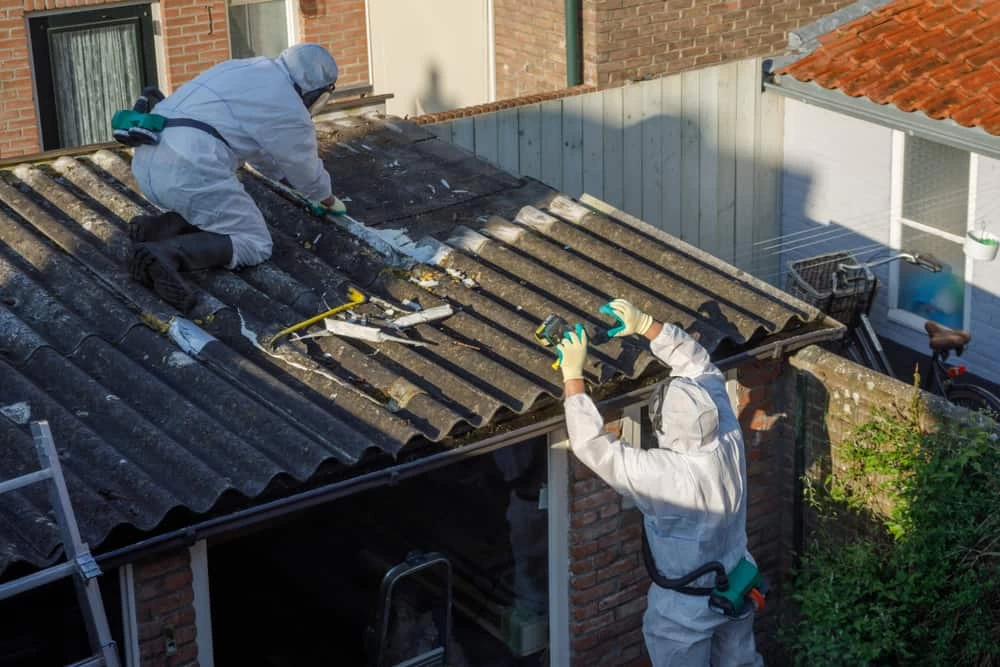
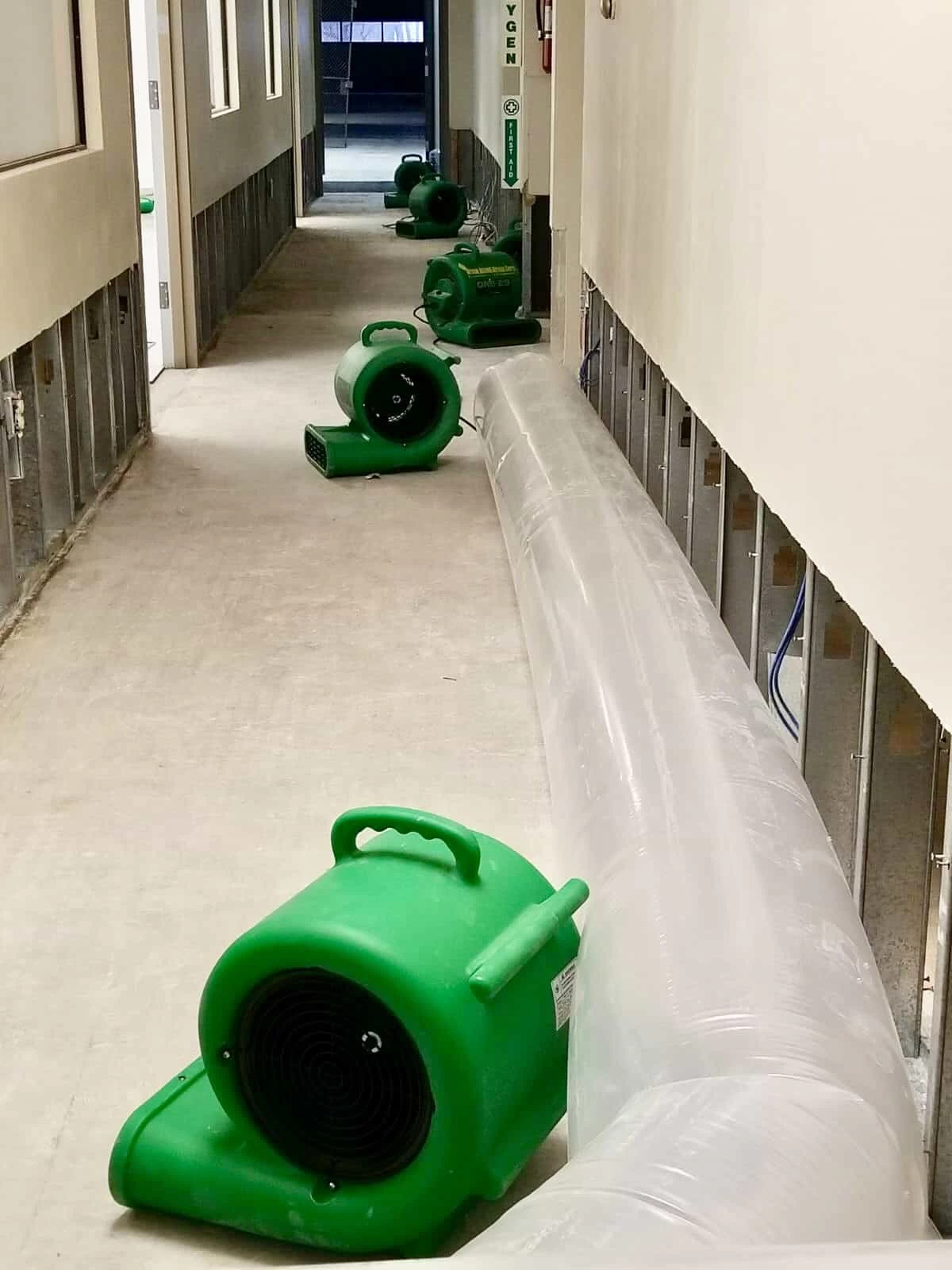
If you decide to proceed, we handle the permitting and compliance documentation required by the Town of Somers Building Department and NYS Industrial Code Rule 56. The work area gets sealed with polyethylene sheeting, and a negative air pressure machine with HEPA filtration is installed so air flows into the containment not out into the rest of your home. A decontamination chamber is set up at the entry point so nothing leaves the work zone on our crew’s clothing or equipment. Your family can remain in unaffected areas of the house during most projects, though we’ll be direct with you if the scope requires otherwise.
Removal is done using wet methods to suppress fiber release. All waste is packaged, labeled, and transported to a licensed disposal facility in full compliance with NYS DEC requirements. When the work is complete, post-abatement air testing is conducted by a third party. If the clearance test passes and it will, if the work was done right you receive formal clearance documentation. That document is your proof: for your renovation contractor, your real estate attorney, your insurance carrier, or anyone else who needs to know the job was done to code.
Asbestos Tile and Ceiling Removal in Horton Estates
Built for the Homes That Actually Exist Here
Horton Estates homes have a specific asbestos profile. If your house was built between 1950 and 1978 which covers most of the residential construction in this part of Westchester there’s a real chance asbestos-containing materials are present in more than one location. The 9×9 vinyl floor tiles in older kitchens and basement rec rooms are one of the most common sources we find. Acoustic spray texture on ceilings what most people call popcorn ceiling is another. Pipe and boiler insulation in basement mechanical rooms, drywall joint compound on interior walls, and duct wrap around older HVAC systems round out the typical profile.
We handle all of it. Asbestos tile removal, asbestos popcorn ceiling removal, pipe insulation abatement, boiler wrap removal we don’t subcontract any of it out, which means one contractor, one chain of custody for all compliance documentation, and one point of contact from inspection through clearance. For homeowners in Horton Estates preparing to renovate or sell in a market where the Somers Central School District drives home values, that documentation matters. A clean environmental record is a real asset when a buyer’s attorney starts asking questions.
We also work directly with insurance carriers and handle billing on your behalf for abatement work that’s part of a covered claim. If a pipe burst or water damage event in your Horton Estates home has put you in that situation, we can step in without adding to your paperwork load.
Does my Horton Estates home actually need an asbestos inspection before renovating?
If your Horton Estates home was built before 1980, the honest answer is yes and in many cases, it’s not optional. Under EPA NESHAP regulations and NYS Industrial Code Rule 56, renovation work that disturbs a certain threshold of suspect materials requires a licensed asbestos survey before work begins. The Town of Somers Building Department requires asbestos compliance documentation as part of the permitting process for renovation and demolition projects, so if you’re pulling a permit and you should be this step is already part of the process.
Beyond the regulatory requirement, there’s a practical reason. The homes in Horton Estates were built during the peak era of residential asbestos use. Floor tiles, ceiling texture, pipe insulation, joint compound these materials were standard. A renovation contractor who opens a wall or pulls up a floor without knowing what’s there puts your family at risk and potentially exposes themselves to serious liability. A pre-renovation inspection from us costs nothing and takes the uncertainty off the table before anyone picks up a tool.
How do I verify that an asbestos contractor is actually licensed to work in Westchester County?
Westchester County falls under New York State Department of Labor jurisdiction for asbestos abatement not NYC DEP, which is a separate licensing system that only applies to the five boroughs. The credential to ask for is the NYS DOL Asbestos Handling License, and it’s publicly searchable on the NYS DOL contractor database by company name or license number. If a contractor can’t give you a license number you can verify, that’s a problem.
Beyond the company-level license, New York State also requires individual handler and supervisor certifications for every worker on an abatement job. That means it’s not enough for the company to be licensed if the crew they send doesn’t hold personal certifications. When you hire us, every person on your project carries an individual NYS DOL certification. Ask any contractor you’re evaluating the same question the answer will tell you a lot about how seriously they take compliance.
What does asbestos abatement actually cost for a home in Horton Estates?
The range is wide because the scope varies significantly depending on what materials are present, how much of it there is, and the condition it’s in. A single room of asbestos floor tile removal in a Horton Estates home might run in the range of a few hundred to a couple thousand dollars. A more involved project ceiling texture removal across multiple rooms, pipe insulation abatement in a basement mechanical room, or a combination of material types can climb from there depending on square footage and access.
The most useful thing you can do before thinking about cost is get a free on-site inspection. We provide written estimates at no charge, so you’ll know the actual scope and price before you commit to anything. What tends to surprise homeowners is how much more expensive it gets when abatement is discovered mid-renovation rather than planned in advance contractor delays, project restarts, and emergency timelines all add cost. Getting ahead of it is almost always the better financial decision.
Do we need to leave our house during asbestos removal in Horton Estates?
For most residential abatement projects, the answer is no but it depends on where the work is being done and how extensive it is. When we set up containment, the work area is fully sealed with polyethylene sheeting and placed under negative air pressure using a HEPA-filtered machine. This means air flows into the containment, not out into the rest of the home. A decontamination chamber at the entry point prevents fibers from traveling on workers’ clothing or equipment. For a basement or single-room project, a family in the upstairs living areas is well-protected by those engineering controls.
That said, if the abatement involves a large portion of the home’s living space say, ceiling texture removal across multiple rooms on the main floor we’ll have a direct conversation with you about what makes sense for your family during that window. We’d rather tell you upfront than have you discover it’s more disruptive than expected. The free inspection is the right time to have that conversation, before any scheduling is locked in.
A pipe burst in my basement and now I'm being told there's asbestos involved what happens next?
This is one of the more common situations we see in northern Westchester during winter months. Freeze-thaw cycles and cold snaps put real stress on older plumbing in Horton Estates, and when a pipe goes in a basement that has 1960s-era mechanical systems, there’s a meaningful chance the surrounding insulation contains asbestos. Once that insulation is disturbed by water or physical impact, it becomes a regulated hazard that has to be addressed by a licensed abatement contractor before any restoration work can proceed.
The good news is that this type of work is typically covered under a homeowner’s insurance policy as part of the water damage claim. We work directly with insurance carriers and handle the billing coordination on your behalf, so you’re not stuck acting as the go-between while also managing a damaged home. The process is: we inspect, document, abate, and provide clearance and your restoration contractor can move forward once the air test clears. Call us as soon as the situation is identified. The faster abatement starts, the faster everything else can move.
Does asbestos abatement affect a home sale in the Horton Estates real estate market?
It can in both directions. An undisclosed asbestos issue in a pre-1980 Horton Estates home can stop a deal entirely or trigger a price negotiation that costs the seller far more than the abatement would have. Buyers’ attorneys and home inspectors in Westchester are increasingly familiar with what to look for, and in a school-district-driven market like Somers where buyers are often educated, research-oriented, and paying close attention to what they’re getting an unresolved environmental issue carries real weight.
On the other side, a home with documented abatement and a formal clearance letter is in a stronger position than one with an open question hanging over it. The clearance documentation we provide after every project confirms that post-abatement air testing was conducted, fiber counts came in below the required threshold, and the work was done in full compliance with NYS Industrial Code Rule 56. That document satisfies buyers’ attorneys, lenders, and home inspectors. For a seller in Horton Estates preparing to list, getting abatement done and documented before the home goes on the market is one of the cleaner ways to protect both the sale price and the timeline.