If your home was built before 1980, there’s a real chance asbestos is somewhere inside it and the last thing you want is to find out mid-renovation. We handle asbestos abatement near Huntington Bay the right way: licensed, documented, and done without cutting corners on a property this valuable.
I needed a professional consultation explanation of procedure for safe removal of Asbestos in my apartment complex. Without having an account yet, I was very impressed with the caring, knowledgeable and generous advice offered by Jessica, and will look forward to doing business in the future. Thank you so much! I feel much more informed about a sometimes scary endeavor. Peace. Nancy Silva Mineola, NY.
Mia Munoz
Used this company to clean up some water flood in my house. They were fast and easy to work with.very professional, Would recommend to anyone!
Nini Valle
Great company, had a flood and they responded quickly and efficiently. Billed my insurance company directly. I highly recommend this company!
joe colapietro, jr
I had pipe freeze in my basement right before a snow storm and they made to within an hour to help start the clean up process. They we by our side throughout the entire process and even helped with the insurance company. They did such a great job with the cleanup, repair, remidiation, I contracted them to perform the repairs and finishes in the basement. They came with enough manpower and material to get the job done. Leo and Jessica were nothing but a pleasure to deal with!!
Cristian Arredondo c
I had some water damage in my home and Green Island was able to take care of my issue quickly and effectively. I am very pleased with the work they did. They responded quickly and were very professional.
Michael M
Outstanding service! From the office to the field crew everyone was friendly, helpful and responsive. I highly recommend Green Island Group.
Huntington Bay homes are worth a lot and that’s exactly why the stakes are high when something like asbestos enters the picture. A waterfront property on Huntington Harbor isn’t just where you live. It’s a financial asset that needs to be protected at every step, including during the remediation process. When abatement is done correctly, with proper containment, certified technicians, and final air clearance testing, you walk away with documentation that holds up in any future real estate transaction. That matters in a market where buyers and their lenders are increasingly requiring clean asbestos records before closing.
The salt air and harbor humidity that come with living along the North Shore aren’t just part of the scenery they accelerate the breakdown of older building materials. Pipe insulation on aging boiler systems, the kind found in basements throughout Huntington Bay, deteriorates faster in damp coastal conditions than it would in an inland home. When that insulation starts to crumble, it doesn’t just become a health concern. It becomes a regulatory issue that needs a licensed contractor, not a handyman with a shop vac. Getting ahead of that is what protects your family and your investment at the same time.
Beyond the immediate health and safety piece, there’s the renovation side of this. A lot of Huntington Bay homeowners are updating rather than moving kitchen remodels, bathroom overhauls, basement finishing. Those projects almost always disturb materials from the mid-century construction era this village was largely built in. Addressing asbestos before your general contractor starts swinging a hammer keeps your project on schedule and keeps everyone on-site protected.
We’re a Long Island company. Not a national brand with a local phone number an actual Long Island operation that knows the difference between a 1960s colonial near Huntington Harbor and a newer build further inland, and knows what materials each one is likely hiding. That local knowledge isn’t a marketing line. It’s what determines how a job gets scoped, what gets tested, and how the project moves through the Town of Huntington’s permitting process without delays.
Every project we take on in Huntington Bay and throughout Suffolk County is handled by NYSDOL-licensed technicians, filed with the proper notifications, and closed out with a full documentation package. That means air clearance results, waste disposal records, and a completion certificate not just a handshake and an invoice. In a village this size, word travels. We work like it.
No Guesswork Here's What the Job Actually Looks Like
It starts with an inspection. Before anything is removed, the materials in question need to be properly identified and tested. In a Huntington Bay home from the 1950s, 60s, or 70s, that typically means looking at floor tiles, pipe insulation, ceiling texture, joint compound, and sometimes roofing or siding materials. We don’t assume we confirm.
Once testing identifies asbestos-containing materials, the project gets filed with the New York State Department of Labor as required by state law. For projects in the Town of Huntington, that also means coordinating with the local building department if the abatement is tied to a renovation permit. We handle that paperwork. You don’t have to chase it down yourself or figure out which office needs what form.
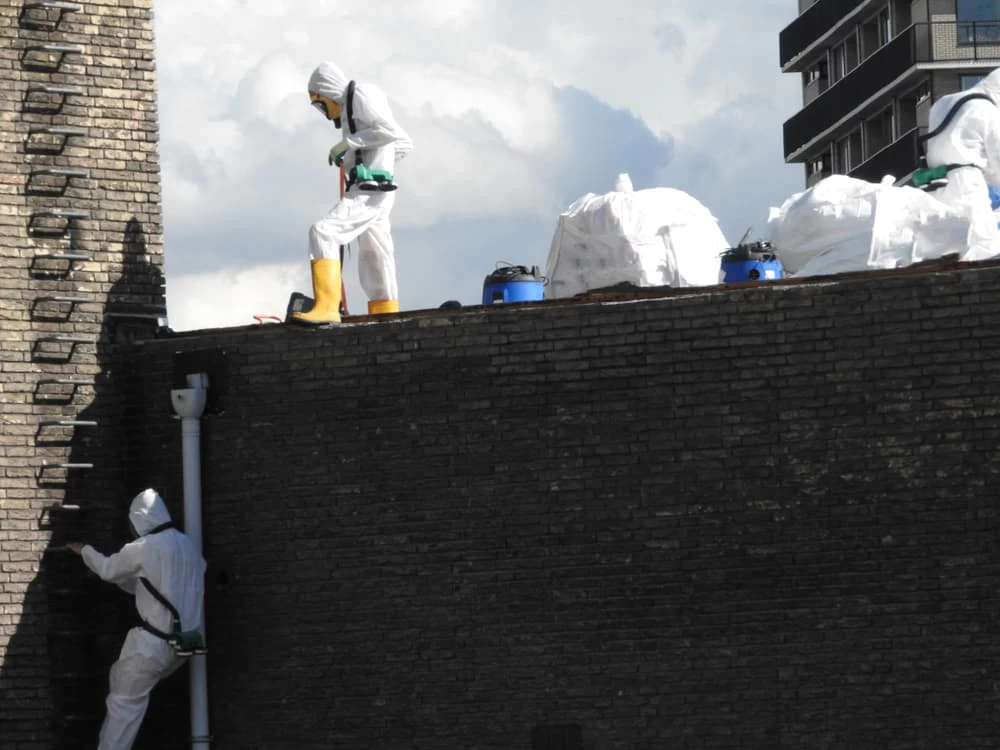
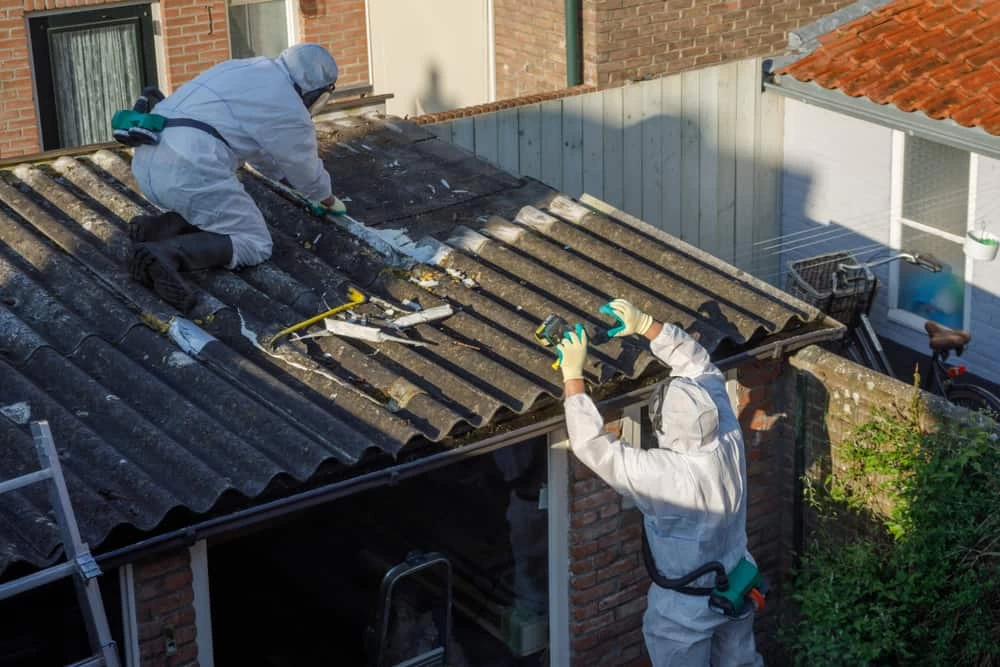
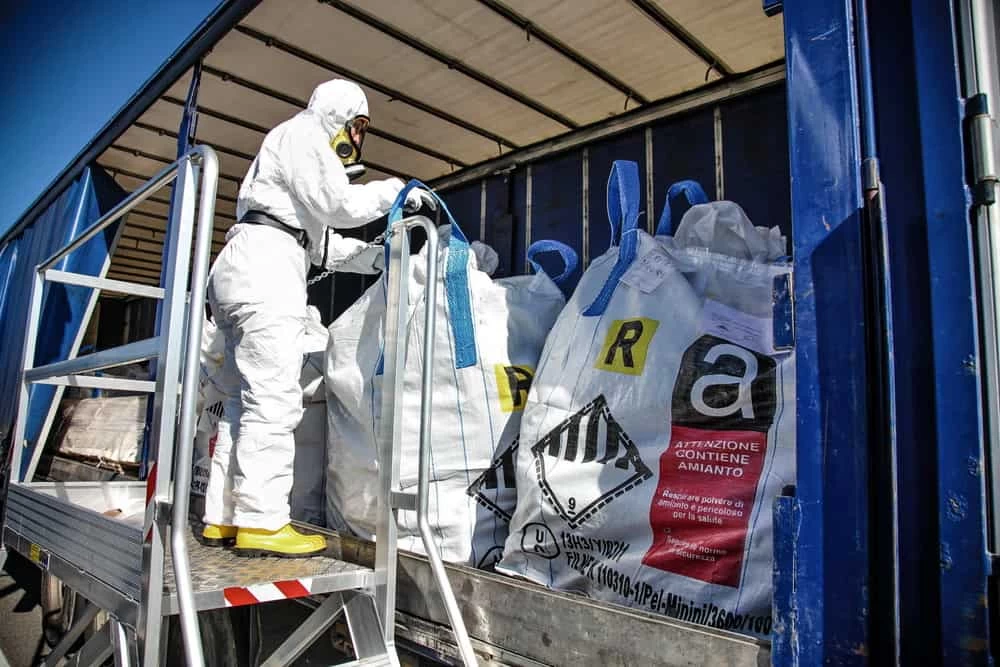
The removal itself happens under full containment negative air pressure, sealed work zones, and certified technicians in proper protective equipment. Nothing leaves the containment area until it’s properly packaged for transport to a licensed disposal facility. When the work is done, an independent certified industrial hygienist conducts final air clearance testing to confirm the space is clean before containment comes down. That test result is part of the documentation package you keep. It’s the proof that the job was done right, and it’s what protects you if questions ever come up down the road.
Asbestos Abatement Services near Huntington Bay, NY
What's Included When We Work in Your Home
Asbestos abatement near Huntington Bay covers more ground than most homeowners expect going in. The most common materials we address in homes throughout this village are 9×9 vinyl floor tiles and the black mastic adhesive beneath them a near-universal feature in mid-century Long Island construction that frequently tests positive for chrysotile asbestos. Acoustic popcorn ceilings from the 1960s and 70s are another frequent find, especially in bedrooms and living spaces that haven’t been renovated since the home was built. Pipe insulation on older steam and hot water heating systems rounds out the most common call types we see in this area.
Every project includes pre-abatement inspection and material testing, full containment setup, licensed removal and regulated disposal, NYSDOL-compliant project notification, and a final air clearance test conducted by a certified industrial hygienist. The documentation package at the end covers all of it and it’s formatted in a way that satisfies buyers, lenders, and title companies if your home goes to market. For Huntington Bay homeowners dealing with a real estate timeline, that matters more than almost anything else about the job.
If your project involves a broader renovation a kitchen gut, a boiler replacement, a basement conversion we coordinate directly with your general contractor so the abatement phase doesn’t become the reason everything else gets pushed back. The goal is to get in, do the work properly, and get out of the way so your project can move forward.
Does asbestos abatement in Huntington Bay require a permit from the town?
It depends on the scope of the project, but in most cases involving a renovation, yes. The Town of Huntington Building Department requires permits for renovation work, and when asbestos abatement is part of that scope, it needs to be properly coordinated with the permitting process. Separately, New York State law requires that any asbestos project disturbing more than 10 linear feet or 10 square feet of material be filed with the NYSDOL before work begins that’s a state requirement that applies regardless of what the town requires.
What this means practically is that there are two layers of paperwork: the state notification and the local permit coordination. We handle both. We know the Town of Huntington’s process, we know which forms go where, and we know how to keep a project moving without getting stuck waiting on approvals. If you’re on a renovation timeline, that familiarity with the local process has real dollar value.
How do I know if my Huntington Bay home actually has asbestos?
You can’t know for certain without testing. Visual inspection alone isn’t reliable asbestos-containing materials often look identical to materials that don’t contain it. What you can do is look at your home’s age and construction era. If your home was built before 1980, there’s a meaningful chance that some combination of floor tiles, ceiling texture, pipe insulation, joint compound, or roofing materials contains asbestos. In Huntington Bay specifically, a large portion of the housing stock falls squarely in that window the village was largely built out during the 1950s through 1970s, the peak decades for asbestos use in residential construction.
The only way to confirm is to have suspect materials sampled and sent to an accredited laboratory for analysis. That’s the first step in any legitimate abatement process. If results come back positive, you’ll have a clear picture of what’s there, where it is, and what level of risk it presents whether it’s intact and manageable or deteriorating and requiring immediate action. Starting with a proper inspection gives you real information to make decisions from, not assumptions.
What happens if asbestos is found during a renovation already in progress?
Work stops. That’s the honest answer, and it’s the right call. If a contractor is mid-demo and encounters material that looks like it could contain asbestos crumbling pipe insulation, old floor tiles under a new layer, textured ceiling material the safest and legally correct move is to stop disturbing it, clear the area, and get a licensed abatement contractor in to test and assess.
This happens more often than people expect on Long Island, particularly in homes from the 1950s through 1970s where renovations were done in layers over the decades. A kitchen that was updated in 1985 might have original 1962 flooring underneath the newer subfloor. The renovation that’s happening today is the one that disturbs it. The good news is that stopping early and handling it properly rather than pushing through keeps your project legally compliant and keeps everyone on-site safe. We can typically respond quickly in these situations and work around your contractor’s schedule to minimize how long the project is on hold.
Is asbestos in floor tiles really dangerous, or is it only a problem if disturbed?
This is one of the most common questions we get, and the honest answer is nuanced. Intact, undisturbed asbestos-containing floor tiles that are in good condition generally don’t pose an immediate airborne fiber risk. The danger comes when those tiles are cut, sanded, scraped, or broken which releases fibers into the air where they can be inhaled. So if you’re living with original 9×9 vinyl tiles and not touching them, the risk profile is different than if you’re planning to tear them out.
The problem is that most people asking this question are asking because they’re about to renovate. And the moment a floor tile gets disturbed even by a flooring installer who doesn’t know what’s underneath you’ve crossed into regulated territory. In Huntington Bay, where a significant share of homes still have original mid-century flooring under newer layers, this comes up constantly during kitchen and bathroom remodels. Testing before any demo work is the straightforward way to know what you’re dealing with before anyone starts pulling things up.
How long does asbestos abatement typically take for a Huntington Bay home?
For most residential projects floor tile removal, popcorn ceiling abatement, or pipe insulation on a single boiler system the actual removal work typically runs one to three days. The timeline that surprises most homeowners is the front end: state notification requirements mean there’s a mandatory waiting period before abatement work can legally begin on certain project types. Planning ahead of your renovation start date matters, and it’s one of the reasons we recommend getting an inspection done early rather than right before demo day.
Post-abatement, the air clearance test needs to be conducted and results need to come back before containment is removed and the space is cleared for re-entry. That’s usually a same-day or next-day turnaround depending on the lab. From start to finish, a typical residential project in Huntington Bay runs about one to two weeks when you factor in the notification period, the removal itself, and the clearance testing. Larger projects involving multiple material types or multiple areas of the home will take longer, and we’ll give you a realistic timeline during the initial assessment not an optimistic one.
Why should I hire a licensed contractor instead of handling this myself or using a general handyman?
New York State law doesn’t leave much room here. Asbestos abatement above the regulatory threshold 10 linear feet or 10 square feet of material must be performed by a contractor holding a valid NYSDOL asbestos abatement license. That’s not a guideline. It’s a legal requirement, and violations carry real penalties. Beyond the legal exposure, unlicensed removal done without proper containment can spread fibers throughout a home rather than eliminating them, turning a localized issue into a much larger one.
For Huntington Bay homeowners specifically, there’s another layer to consider. If you ever sell this home and in a market where properties regularly transact above seven figures, that’s a significant event buyers and their lenders will ask for documentation of any abatement work that was done. A licensed contractor provides that paper trail: the project notification, the clearance test results, the disposal manifests. A handyman provides none of it. The cost difference between doing it right and doing it over or losing a sale because documentation doesn’t exist makes the licensed route the only one that actually makes financial sense here.