Huntington Station's Older Homes Deserve More Than a Guess
Over half the homes in Huntington Station were built during the asbestos era and if yours is one of them, you deserve a straight answer about what’s in it and what to do next.
I needed a professional consultation explanation of procedure for safe removal of Asbestos in my apartment complex. Without having an account yet, I was very impressed with the caring, knowledgeable and generous advice offered by Jessica, and will look forward to doing business in the future. Thank you so much! I feel much more informed about a sometimes scary endeavor. Peace. Nancy Silva Mineola, NY.
Mia Munoz
Used this company to clean up some water flood in my house. They were fast and easy to work with.very professional, Would recommend to anyone!
Nini Valle
Great company, had a flood and they responded quickly and efficiently. Billed my insurance company directly. I highly recommend this company!
joe colapietro, jr
I had pipe freeze in my basement right before a snow storm and they made to within an hour to help start the clean up process. They we by our side throughout the entire process and even helped with the insurance company. They did such a great job with the cleanup, repair, remidiation, I contracted them to perform the repairs and finishes in the basement. They came with enough manpower and material to get the job done. Leo and Jessica were nothing but a pleasure to deal with!!
Cristian Arredondo c
I had some water damage in my home and Green Island was able to take care of my issue quickly and effectively. I am very pleased with the work they did. They responded quickly and were very professional.
Michael M
Outstanding service! From the office to the field crew everyone was friendly, helpful and responsive. I highly recommend Green Island Group.
You stop wondering. That might sound simple, but for most homeowners in Huntington Station, that uncertainty has been sitting in the back of their mind since a contractor stopped mid-job, or a home inspector flagged something in the basement. Once the material is identified, removed, and documented correctly, that question goes away and your project can move forward.
For homes along the Route 110 corridor or in the South Huntington neighborhoods near Walt Whitman High School, the housing stock is largely post-war Cape Cods, ranch homes, split-levels built in the 1940s through the 1960s. That era came with asbestos floor tiles, pipe insulation, textured ceilings, and roofing materials baked right into the construction. The freeze-thaw cycles Long Island gets every winter accelerate the wear on those materials. Cracked tiles, crumbling pipe wrap, and flaking ceiling texture aren’t just cosmetic issues they can become airborne hazards when disturbed.
If you’re selling your home in Huntington Station in a market where the median value has climbed past $578,000, a clean abatement report isn’t just peace of mind it’s leverage. Buyers and their inspectors are looking for exactly this kind of documentation. Getting it done right the first time keeps your closing on schedule and your liability off the table.
Licensed Asbestos Contractor Huntington Station NY
We Know This Housing Stock Because We've Worked In It
We’re a Long Island-based asbestos abatement company serving Huntington Station and the surrounding communities throughout the Town of Huntington and Suffolk County. The 631 area code isn’t a coincidence this is where we work, and the homes here are homes we know.
We’ve handled abatement in the same post-war construction that defines Huntington Station the 9×9 vinyl floor tiles in kitchens and basements, the pipe insulation wrapped around old boilers, the textured ceilings in ranch homes that haven’t been touched since the 1960s. We’re not generalizing. We’re describing what we see regularly in homes just like yours.
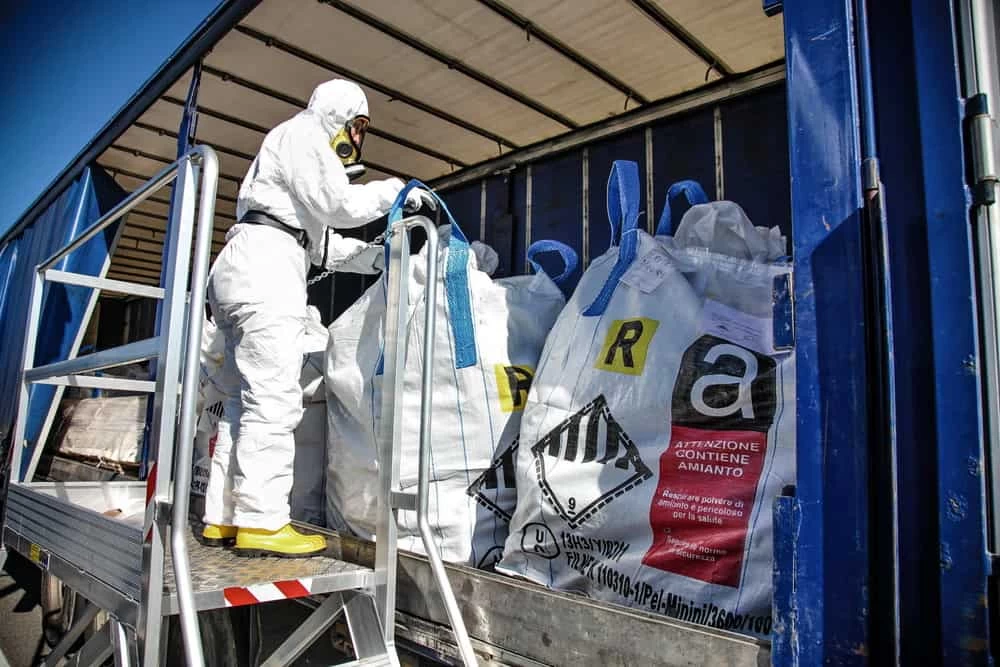
Every project we take on is handled under full NYS DOL licensing and compliance with Industrial Code Rule 56. That means certified technicians, proper containment, documented air clearance, and disposal through approved facilities including the Brookhaven Landfill in Yaphank. You get a paper trail that holds up whether you’re renovating, refinancing, or going to closing.
No Guesswork Here's Exactly What the Process Looks Like
It starts with an inspection. Before anything is touched, we assess the materials in question floor tiles, ceiling texture, pipe insulation, roofing, siding and determine what needs to be tested. If sampling is required, that gets sent to a certified lab. You’ll know what you’re dealing with before any removal work begins.
Once the scope is confirmed, we handle the permitting. In Huntington Station, that means filing with the Town of Huntington’s building department and meeting NYS DOL notification requirements under ICR 56. For projects above the 25-linear-foot or 10-square-foot threshold, third-party air monitoring is required by state law and we coordinate that too. You don’t have to figure out who to call or what forms to file. That’s our job.
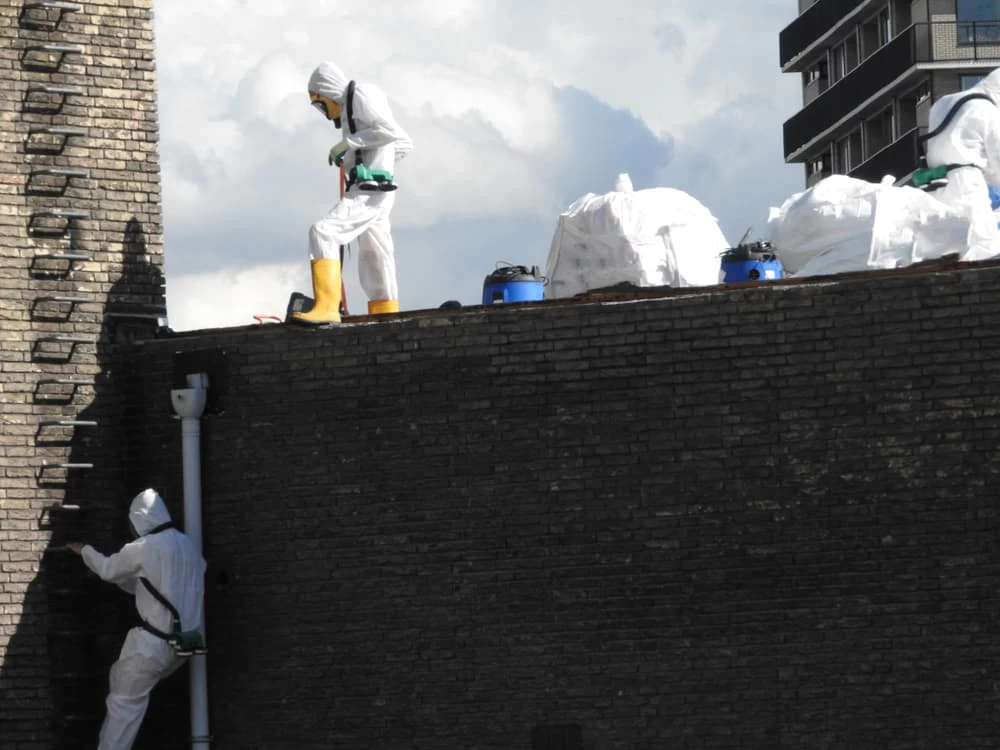
The removal itself is done under full containment sealed work areas, negative air pressure, proper PPE for every technician on site. When the material is out, air clearance testing confirms the space is safe before containment comes down. Everything gets documented: the removal, the disposal manifests, the clearance results. That file goes with you for your records, your contractor, your buyer, or your lender. From first call to final paperwork, the process is designed so you’re not left managing pieces of it on your own.
Built for the Specific Problems Huntington Station Homes Actually Have
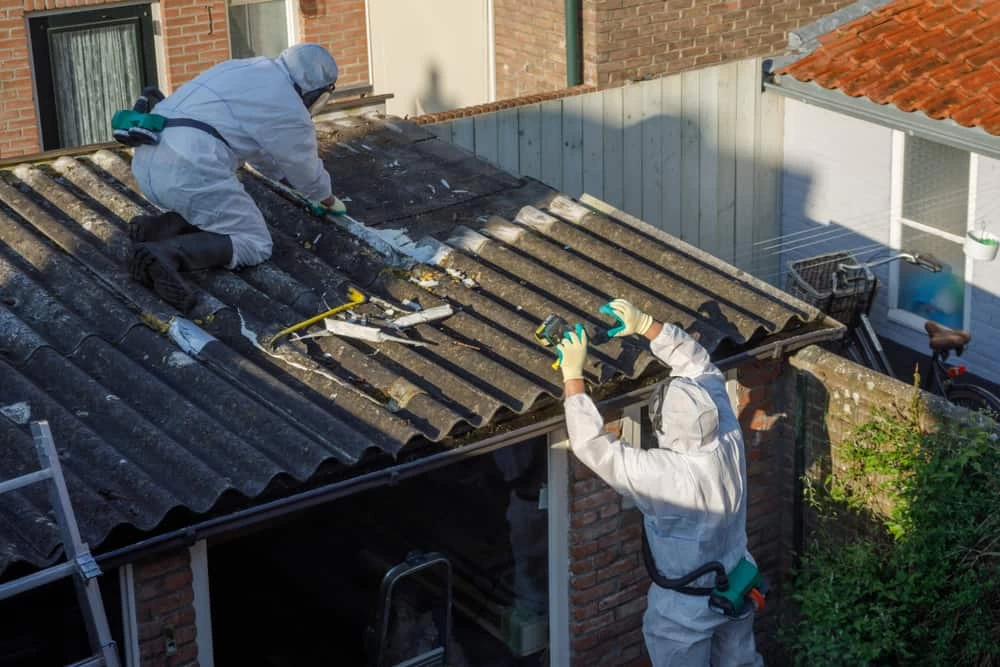
Asbestos doesn’t look the same in every home, and it doesn’t show up in the same places. In Huntington Station’s post-war housing inventory, the most common materials we encounter are 9×9 vinyl asbestos floor tiles and the mastic adhesive beneath them, which often contains asbestos even when the tile itself doesn’t. Popcorn and textured ceilings applied before 1980 are another frequent find in the ranch homes and split-levels throughout the hamlet. Pipe and duct insulation around older boilers and heating systems, asbestos-containing roofing shingles, and joint compound in walls are also part of the picture in homes of this era.
We handle all of it asbestos tile removal, popcorn ceiling removal, pipe insulation abatement, full interior remediation under one roof, with one point of contact. For residential homeowners in Huntington Station preparing for a renovation or a sale, that means no coordinating between multiple vendors. For commercial property owners along the Route 110 corridor navigating the current sewer installation and Downtown Revitalization work, it means a contractor who understands the regulatory requirements for commercial abatement and can move at the pace a construction timeline demands.
Every project includes pre-abatement inspection, containment setup, certified removal, air clearance testing, and full disposal documentation through approved Suffolk County facilities. What you get at the end isn’t just a cleaner space it’s a documented, compliant record that protects you legally and keeps your project moving.
Does my Huntington Station home likely have asbestos if it was built before 1980?
If your home was built before 1980, there’s a meaningful chance it contains asbestos-containing materials somewhere and in Huntington Station, that applies to the majority of the housing stock. Over 58% of homes here were built between the 1940s and the 1960s, which is precisely the era when asbestos was used most extensively in residential construction. Floor tiles, pipe insulation, ceiling texture, roofing shingles, siding, and joint compound were all common ACM applications during that period.
That doesn’t mean every material in your home is hazardous or needs to be removed immediately. Asbestos that is in good condition and left undisturbed is generally not an immediate health risk. The concern arises when those materials are disturbed during a renovation, a heating system replacement, or even normal wear over time. If you’re planning any work that involves cutting, sanding, or demolishing pre-1980 materials, testing before you start isn’t optional it’s the right move, and in many cases it’s legally required.
What does asbestos abatement actually cost in Huntington Station, NY?
Cost depends on what’s being removed, how much of it there is, and where it’s located. A straightforward tile removal in a single room will look very different from a full basement remediation that includes pipe insulation, floor tiles, and mastic adhesive. In the Suffolk County market, residential asbestos abatement projects typically range from a few hundred dollars for a limited scope to several thousand for larger or more complex jobs and commercial work scales from there based on square footage and material type.
What drives cost in Huntington Station specifically is the age and construction style of the local housing stock. Homes from the 1940s through the 1960s often have multiple ACM types layered throughout the structure, which means a project that starts as a tile removal can reveal additional materials once work begins. That’s not a bait-and-switch it’s just the reality of older construction. The right approach is a thorough pre-abatement inspection so the scope is as accurate as possible before any work starts. We provide clear, itemized estimates upfront so you know what you’re committing to before anyone picks up a tool.
Do I need a permit for asbestos removal in the Town of Huntington?
Yes, in most cases. New York State’s Industrial Code Rule 56 governs all asbestos abatement work statewide, and it requires notification and permitting for projects involving more than 25 linear feet or 10 square feet of asbestos-containing material. That threshold is lower than most homeowners expect a single room of floor tiles or a short run of pipe insulation can easily exceed it.
In Huntington Station, you’re working within the Town of Huntington’s jurisdiction, which has its own building department permit requirements on top of the state-level process. Suffolk County also routes permit notifications through the county health department for certain project types. Navigating all three layers state, county, and town is part of what we handle on your behalf. You shouldn’t have to figure out which forms go where and in what order. We know the process for this specific municipality, and we manage it so your project doesn’t stall waiting on paperwork.
Can I stay in my home during asbestos abatement in Huntington Station?
It depends on the scope and location of the work. For smaller, contained projects a single room, a section of flooring, a limited pipe run it’s sometimes possible for occupants to remain in unaffected parts of the home while work is underway. For larger projects that involve multiple areas or central systems like ductwork or a boiler room, temporary relocation is often the safer and more practical choice.
The decision isn’t arbitrary it’s based on the containment setup, the air monitoring results, and the specific materials being removed. Under NYS ICR 56, work areas must be sealed with negative air pressure and proper barriers to prevent fiber migration into occupied spaces. If those containment conditions can be maintained effectively while you’re present, staying may be an option. If there’s any doubt, we’ll tell you plainly. For families in Huntington Station many of whom have kids in the South Huntington or Huntington school districts we take that conversation seriously and give you a straight answer based on the actual project conditions, not a one-size-fits-all policy.
My contractor stopped work and said I might have asbestos what should I do next?
This is one of the most common situations we hear about. A renovation is underway a kitchen gut, a bathroom remodel, a basement finishing project and the contractor stops when they hit floor tiles, textured ceiling material, or insulated pipes that look suspicious. They’re not overreacting. Licensed contractors in New York are not permitted to disturb suspected asbestos-containing materials without proper testing and abatement in place. Stopping work is the right call.
What you do next is get the material tested by a certified inspector before anyone resumes. If the test comes back positive, abatement needs to happen before your contractor can continue. We can step in at this exact point assess what’s there, handle the testing coordination, pull the necessary permits with the Town of Huntington building department, and complete the removal so your renovation can get back on track. The sooner you make the call, the sooner your project timeline gets back on schedule. Sitting on it doesn’t make the material go away it just delays everything else.
How does the Route 110 sewer project affect asbestos abatement for Huntington Station property owners?
The $44 to $66 million sewer installation project along New York Avenue is one of the most significant infrastructure investments Huntington Station has seen in decades, and it’s already creating real implications for property owners along the corridor. As older commercial and mixed-use buildings connect to the new sewer infrastructure or undergo renovation to take advantage of it any work that disturbs pre-1980 building materials triggers asbestos survey and potential abatement requirements under NYS law.
This isn’t a technicality that applies to large developers only. Property owners with buildings along or near Route 110 who are planning renovations, additions, or tenant buildouts as part of this revitalization wave need to have asbestos assessed before construction begins. The same applies to demolition of any portion of a pre-1980 structure. We’re equipped to serve both residential homeowners and commercial property owners navigating this moment with the permitting knowledge, certified crews, and project management to keep your timeline intact while staying fully compliant with state and county requirements.