If your home was built before 1980 — or gutted after Sandy — there’s a real chance asbestos is somewhere in the picture. We handle the testing, the removal, and every piece of paperwork in between.
I needed a professional consultation explanation of procedure for safe removal of Asbestos in my apartment complex. Without having an account yet, I was very impressed with the caring, knowledgeable and generous advice offered by Jessica, and will look forward to doing business in the future. Thank you so much! I feel much more informed about a sometimes scary endeavor. Peace. Nancy Silva Mineola, NY.
Mia Munoz
Used this company to clean up some water flood in my house. They were fast and easy to work with.very professional, Would recommend to anyone!
Nini Valle
Great company, had a flood and they responded quickly and efficiently. Billed my insurance company directly. I highly recommend this company!
joe colapietro, jr
I had pipe freeze in my basement right before a snow storm and they made to within an hour to help start the clean up process. They we by our side throughout the entire process and even helped with the insurance company. They did such a great job with the cleanup, repair, remidiation, I contracted them to perform the repairs and finishes in the basement. They came with enough manpower and material to get the job done. Leo and Jessica were nothing but a pleasure to deal with!!
Cristian Arredondo c
I had some water damage in my home and Green Island was able to take care of my issue quickly and effectively. I am very pleased with the work they did. They responded quickly and were very professional.
Michael M
Outstanding service! From the office to the field crew everyone was friendly, helpful and responsive. I highly recommend Green Island Group.
When asbestos is properly removed and cleared, your renovation can move forward. Your contractor can do their job. Your home can be sold, permitted, or updated without something hanging over the process. That’s the actual outcome — not just a clean report, but a clear path forward that wasn’t there before.
For Inwood homeowners specifically, that clarity matters more than it might in other parts of Nassau County. A lot of the housing stock here was built in an era when asbestos was standard in floor tiles, pipe insulation, and ceiling texture. Many of those homes took on serious water damage during Sandy and were patched, rebuilt, or partially renovated in the years after — sometimes without anyone stopping to test first. If that’s your situation, you’re not alone, and it’s not too late to address it correctly.
The waterfront position along Jamaica Bay also means moisture has been working on these buildings for decades. Chronic humidity and past flooding accelerate the deterioration of older materials, which is exactly when asbestos becomes a health concern rather than just a background fact. Getting a proper inspection isn’t overcautious — it’s the right call for a home in this part of Long Island.
Local Licensing, Real Accountability, No Runaround
We’re a Nassau County-based environmental contractor — not a national brand, not a traveling crew chasing storm work. We hold both the New York State Industrial Code Rule 56 certifications and Nassau County’s EHRP contractor license, which is a separate county-level requirement that a lot of homeowners don’t know to ask about. Both matter. Both are required to legally perform asbestos abatement in Inwood.
We’ve worked throughout Nassau County’s South Shore, including Inwood and the Five Towns corridor, on everything from pre-sale inspections to post-flood gut renovations. We know what these homes look like inside — the mid-century floor tiles, the wrapped pipes in the basement, the textured ceilings that nobody’s touched since the 1970s. That familiarity isn’t marketing. It’s what allows us to do this work accurately and efficiently, without guessing or overcomplicating a process that already stresses most homeowners out enough.
It starts with a certified inspection. A licensed asbestos inspector comes to your property, assesses the materials in question, and takes bulk samples for lab analysis. Under New York State Industrial Code Rule 56, this step is required before any renovation, demolition, or repair work — regardless of when your home was built. That’s a common misconception worth clearing up early: the law doesn’t have a 1974 cutoff. If you’re disturbing building materials, you need a survey first.
Once the lab results are back, we walk you through what was found, where it is, and what the abatement scope looks like. If removal is required, we file the mandatory project notification with the NYS Department of Labor’s Asbestos Control Bureau before any work begins. This is a regulatory requirement, and skipping it — even accidentally — exposes you to significant penalties. We handle that filing as part of the job, not as an add-on.
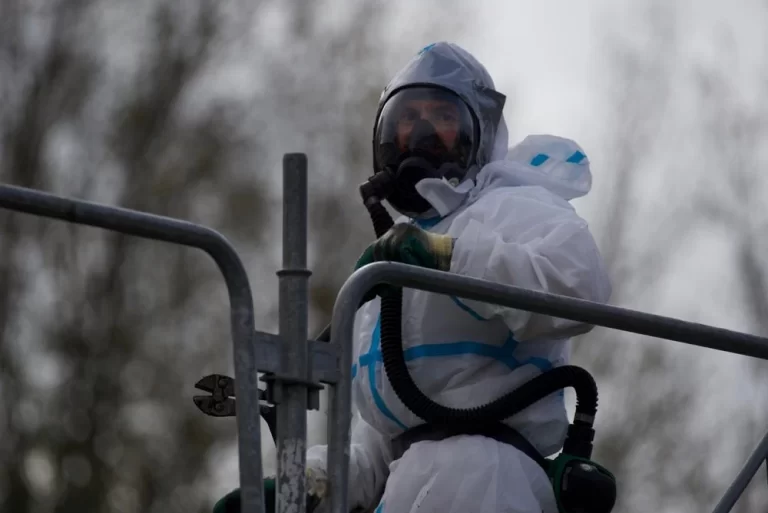
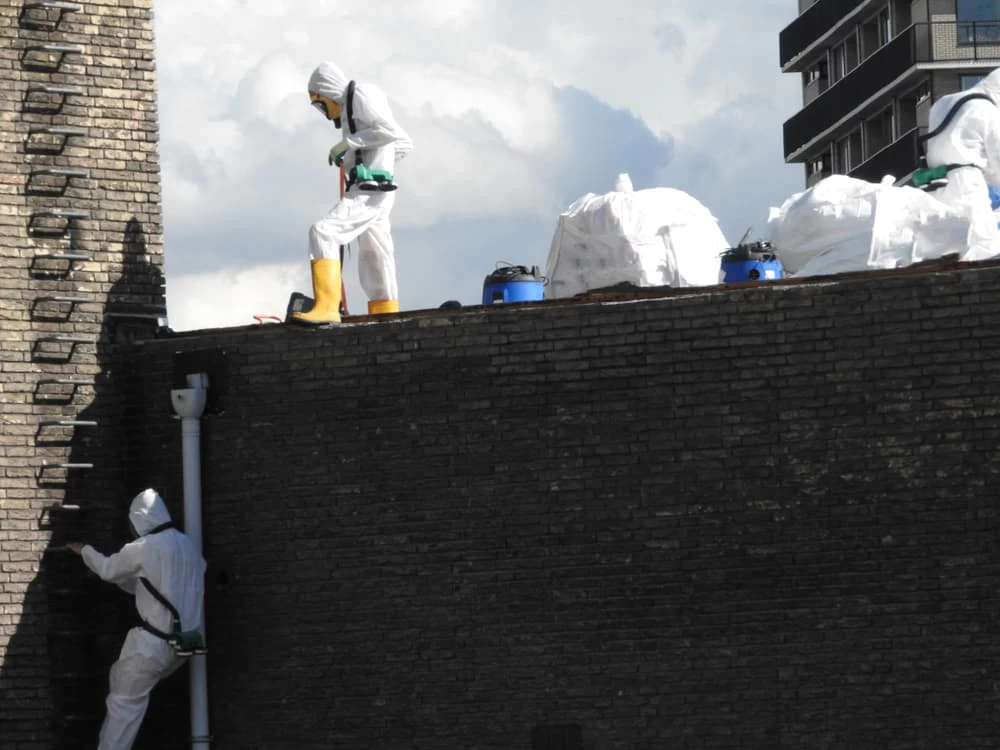
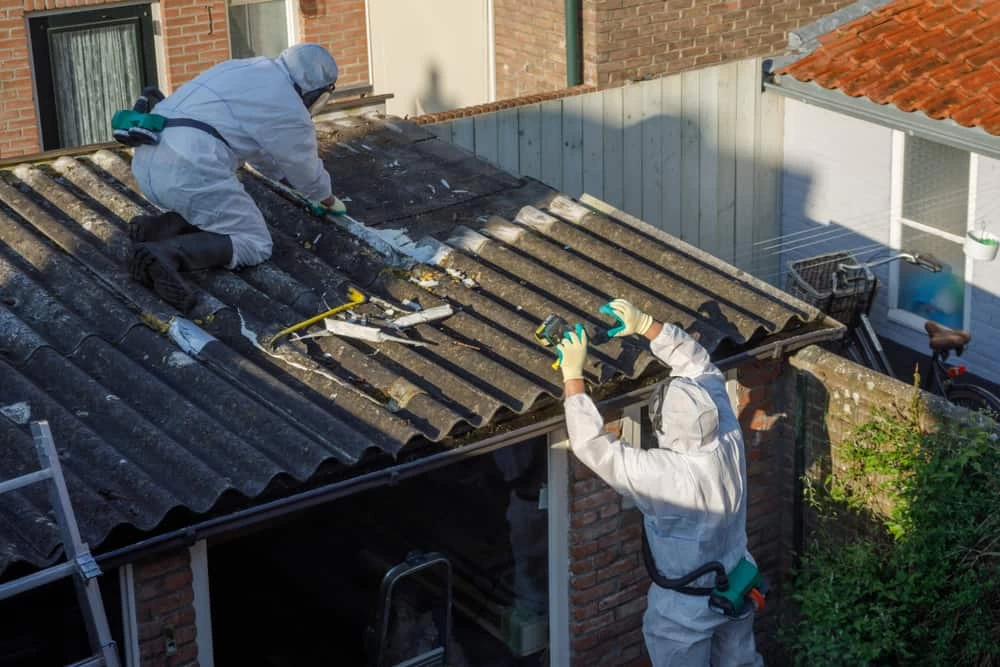
The abatement itself is performed under full containment with HEPA filtration and proper personal protective equipment. When the work is done, post-abatement clearance air testing is conducted to confirm the area is safe. You receive complete documentation — inspection report, project notification, waste disposal manifests, and clearance results — which is exactly what your real estate attorney, lender, or the Town of Hempstead Building Department will need if permits or a transaction are involved.
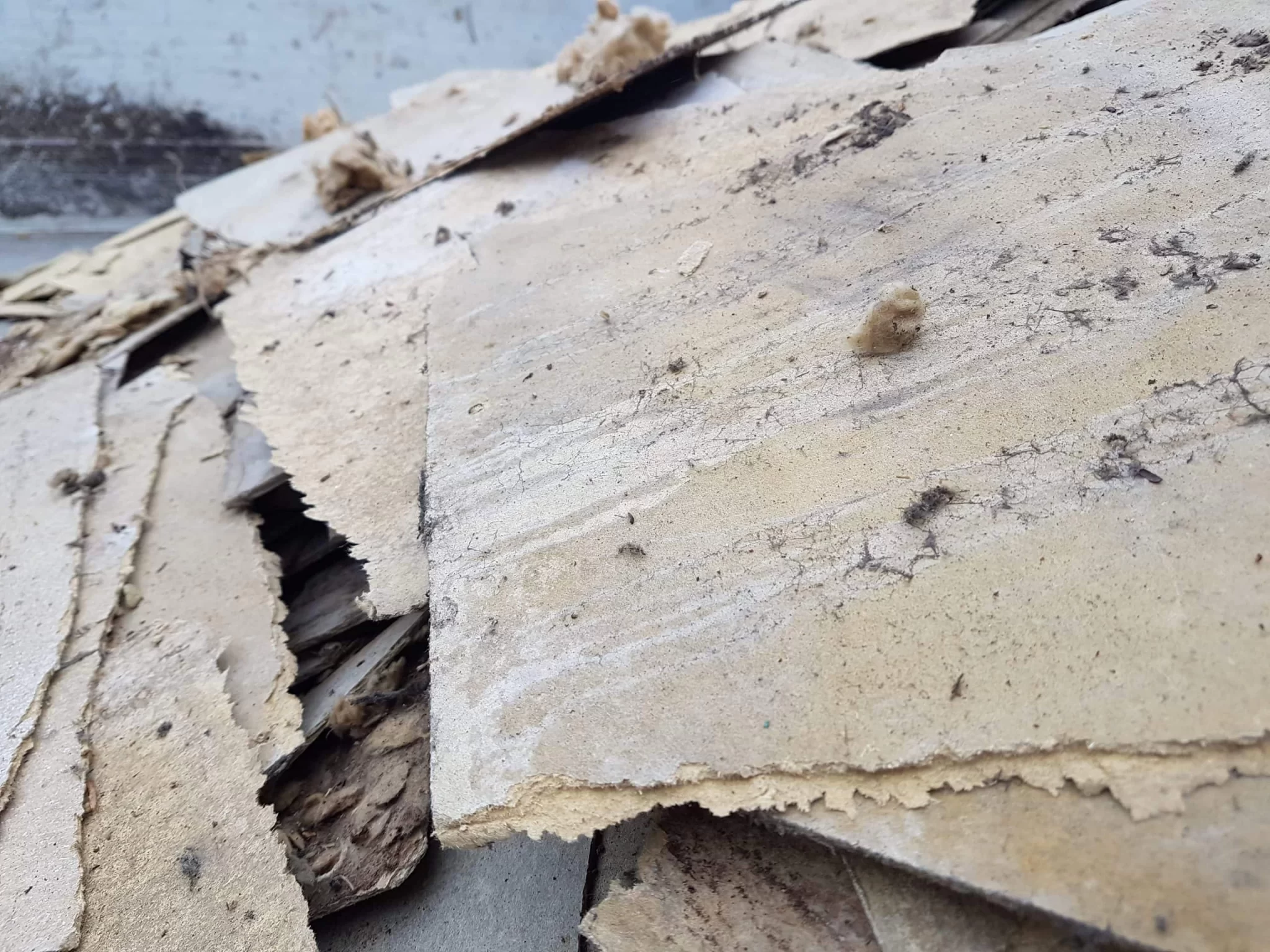
Every project starts with a certified inspection and bulk sampling — not an estimate based on assumptions. In Inwood’s older housing stock, the most common materials we’re assessing include 9×9 vinyl floor tiles and the adhesive mastic beneath them, textured acoustic ceilings applied before 1980, pipe and boiler insulation in basements and utility rooms, joint compound, and roofing materials. These aren’t obscure finds. They show up regularly in homes throughout this part of Nassau County, and knowing where to look is half the job.
Asbestos tile removal and asbestos popcorn ceiling removal are two of the most frequent scopes we handle in this area — often uncovered mid-renovation when a homeowner pulls up flooring or a contractor goes to skim-coat a ceiling. If that’s where you are right now, the right move is to stop work and get a test done before anything else is disturbed. It’s not a delay — it’s what keeps the project legal and your family safe.
For properties near Jamaica Bay or in FEMA flood zones, we also factor in the condition of the materials themselves. Water-damaged asbestos-containing materials can become friable — meaning fibers can release into the air more easily — which changes the abatement approach. Whether you’re dealing with a pre-sale inspection, a renovation scope, or the tail end of a post-Sandy repair, the documentation we provide at the end of the project is complete and built to satisfy whatever the next step requires.
Does every home in Inwood, NY need asbestos testing before renovation?
Under New York State Industrial Code Rule 56, an asbestos survey is required before any renovation, demolition, or repair work that will disturb building materials — and that applies to every building in New York, not just older ones. The common belief that only homes built before 1974 need to be tested isn’t accurate under current state law. If you’re pulling up floors, opening walls, removing ceilings, or doing any kind of structural work, a certified inspection is legally required first.
For Inwood specifically, this matters because a significant portion of the hamlet’s housing stock dates to the mid-20th century — the exact era when asbestos was used in floor tiles, pipe insulation, ceiling texture, and joint compound as a matter of standard practice. Many of these homes also went through partial renovations after Sandy without a formal asbestos survey, which means some of that original material may still be in place and undocumented. If you’re planning any work on a home that hasn’t been inspected, starting with a certified survey is the right first step — legally and practically.
Can I remove asbestos-containing materials myself in New York State?
No. New York State law is clear on this. Asbestos abatement must be performed by a licensed contractor who holds the appropriate state certifications under Industrial Code Rule 56. Beyond the state requirement, Nassau County adds its own layer — contractors must also hold an Environmental Hazard Remediation Permit (EHRP) license issued at the county level, and technicians must carry the EHRT certification. That’s two separate credential requirements, and both apply to any abatement work done in Inwood.
The reason for this isn’t bureaucratic — it’s that disturbing asbestos-containing materials without proper containment, HEPA filtration, and disposal procedures releases fibers into the air that are genuinely dangerous when inhaled. The health risks are serious and long-latency, meaning the consequences don’t show up immediately. Beyond the health concern, unlicensed removal also creates legal and financial exposure: failed clearance tests, stop-work orders, and fines that can run into tens of thousands of dollars. The cost of doing it right is significantly lower than the cost of undoing a DIY attempt.
How do I know if my Inwood home has asbestos floor tiles or popcorn ceilings?
You can’t tell by looking. That’s the short answer. Asbestos fibers are microscopic, and the materials that contain them — floor tiles, ceiling texture, pipe insulation, joint compound — look identical to non-asbestos versions from the same era. The only way to know is bulk sampling and lab analysis conducted by a certified asbestos inspector.
That said, there are patterns worth knowing. The 9×9 inch vinyl floor tile that was standard in homes built from the 1940s through the 1970s has a high rate of asbestos content — and it’s one of the most common materials we find in Inwood’s older housing stock. Textured acoustic ceilings applied before 1980 are another frequent find. If your home was built before 1980 and hasn’t been fully gut-renovated with documented asbestos clearance, it’s reasonable to assume these materials may be present until testing says otherwise. An inspection gives you an actual answer rather than a guess, and it’s the only answer that holds up legally if you’re pulling permits through the Town of Hempstead or preparing for a real estate transaction.
What does asbestos abatement cost for a typical home in Nassau County?
Cost depends on what’s found, where it is, and how much of it needs to be removed. A single-room asbestos tile removal in a modest Inwood home is a different scope than a whole-house survey and multi-material abatement on a larger property. Generally, homeowners in Nassau County should expect inspection and testing to run a few hundred dollars, while abatement scopes can range from around $1,500 for a contained single-material removal to several thousand dollars for larger or more complex projects.
What’s worth understanding is that the cost of professional abatement is almost always lower than the cost of the alternatives — a failed clearance test that halts a renovation, a real estate transaction that falls apart over an undisclosed environmental issue, or a fine from the NYS Department of Labor for unpermitted abatement work. In a community like Inwood, where many homeowners are managing tight budgets and necessary repairs rather than elective upgrades, getting an accurate scope estimate upfront matters. We can give you a clear picture of what your specific situation involves before any work begins.
My contractor found suspect material mid-renovation — what should I do right now?
Stop work in that area immediately. This isn’t an overreaction — it’s the legally correct response under New York State Industrial Code Rule 56, and it protects everyone on the job site. Once a suspect material is identified, continuing to disturb it without testing and abatement creates real health risk and legal exposure for both you and your contractor.
The next step is to have a certified asbestos inspector collect bulk samples from the material and send them to an accredited laboratory. Turnaround on lab results is typically a few business days, sometimes faster if the situation is urgent. If the material tests positive, abatement needs to happen before renovation work resumes. This sequence — stop, test, abate, clear — is the process that keeps the project legal and the people in your home safe. It’s also the sequence that produces the documentation your contractor, your building department, and your insurance company will expect. Calling a licensed abatement contractor as soon as suspect material is found is the fastest way to get your project back on track.
Does Green Island Group handle asbestos abatement for post-Sandy renovations in Inwood?
Yes, and it’s one of the more common situations we encounter in this part of Nassau County. Inwood was among the hardest-hit communities during Hurricane Sandy — the hamlet’s low-lying position along Jamaica Bay made catastrophic flooding nearly unavoidable. In the years that followed, many homes were partially or fully renovated, sometimes under significant time and financial pressure, and not every project included a formal asbestos survey before work began.
If your home went through a Sandy-related renovation and you’re now planning additional work — or if you’re preparing to sell and want to understand what’s actually in the walls and floors — a current inspection gives you an accurate baseline. Water damage also changes the condition of asbestos-containing materials. Materials that were intact before flooding may have become friable afterward, which affects both the health risk and the abatement approach. We’re familiar with the post-Sandy renovation landscape in Inwood and the Five Towns, and we can assess your property’s current condition with that context in mind rather than treating it like a generic inspection job.