Island Park Homes Have History — Some of It Hazardous
If your Island Park home was built before 1980, asbestos abatement isn’t a maybe — it’s likely part of your renovation or sale. We handle it right, from inspection to clearance.
I needed a professional consultation explanation of procedure for safe removal of Asbestos in my apartment complex. Without having an account yet, I was very impressed with the caring, knowledgeable and generous advice offered by Jessica, and will look forward to doing business in the future. Thank you so much! I feel much more informed about a sometimes scary endeavor. Peace. Nancy Silva Mineola, NY.
Mia Munoz
Used this company to clean up some water flood in my house. They were fast and easy to work with.very professional, Would recommend to anyone!
Nini Valle
Great company, had a flood and they responded quickly and efficiently. Billed my insurance company directly. I highly recommend this company!
joe colapietro, jr
I had pipe freeze in my basement right before a snow storm and they made to within an hour to help start the clean up process. They we by our side throughout the entire process and even helped with the insurance company. They did such a great job with the cleanup, repair, remidiation, I contracted them to perform the repairs and finishes in the basement. They came with enough manpower and material to get the job done. Leo and Jessica were nothing but a pleasure to deal with!!
Cristian Arredondo c
I had some water damage in my home and Green Island was able to take care of my issue quickly and effectively. I am very pleased with the work they did. They responded quickly and were very professional.
Michael M
Outstanding service! From the office to the field crew everyone was friendly, helpful and responsive. I highly recommend Green Island Group.
You can finally move forward. Whether you’ve been sitting on a renovation, holding off on listing, or waiting on a contractor who can’t start until asbestos is cleared — that hold lifts the moment the job is done right. No more guessing what’s in your walls, your floor tiles, or that old pipe wrap around the boiler.
Island Park’s housing stock tells the whole story. The median home here was built in 1960, which puts it squarely in the era when asbestos was standard in floor tile adhesive, pipe insulation, ceiling texture, and roofing underlayment. These aren’t rare finds — they’re what’s in most homes on this island. And when you factor in what Sandy did to 95% of the homes here in 2012, a lot of those materials got disturbed, damaged, or exposed in ways that haven’t been properly addressed since.
The coastal environment makes it worse over time. Salt air and the humidity that comes with living surrounded by Reynolds Channel and tidal waterways breaks down building materials faster than in inland Nassau County towns. Pipe insulation that might hold together for decades in a dry Plainview basement can become friable — meaning it releases fibers — much sooner here. Getting it out isn’t just about compliance. It’s about not letting a slow deterioration become a health problem inside your own home.
Licensed Asbestos Abatement Contractor, Nassau County
We Know Island Park's Regulatory Landscape — All of It
New York State’s Industrial Code Rule 56 is already one of the most demanding asbestos frameworks in the country. Nassau County adds its own Environmental Health Review Process on top of that. We operate under both — every license, every notification requirement, every disposal manifest handled correctly so your Island Park project doesn’t stall at the permit desk or fall apart at closing.
We’ve worked throughout Island Park and the South Shore, and we know this community well — the tight streets, the flood history, the homes that have been gutted and rebuilt since Sandy, and the ones that haven’t been touched since the 1960s. That context matters when you’re doing a thorough asbestos inspection, not just a surface-level walkthrough.
Every project we complete comes with full documentation: the survey report, air monitoring results, waste disposal records, and your clearance certificate. That paper trail protects you — whether you’re pulling a building permit at Island Park Village Hall, satisfying a buyer’s attorney, or just making sure the job was done legally and completely.
Asbestos Inspection and Removal Process, Island Park
No Surprises — Here's Exactly What the Process Looks Like
It starts with an inspection. A NYS-certified asbestos inspector comes to your home, identifies any suspected asbestos-containing materials, and takes samples for lab analysis. In an Island Park home from the 1950s or 1960s, that typically means checking floor tiles and the black mastic adhesive underneath them, pipe insulation on your heating system, any spray-applied ceiling texture, joint compound, and roofing materials. The lab results tell us exactly what we’re dealing with — no assumptions.
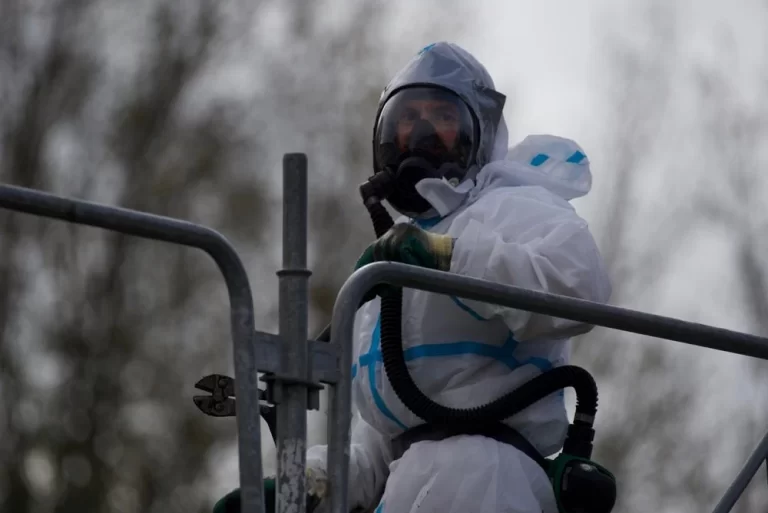
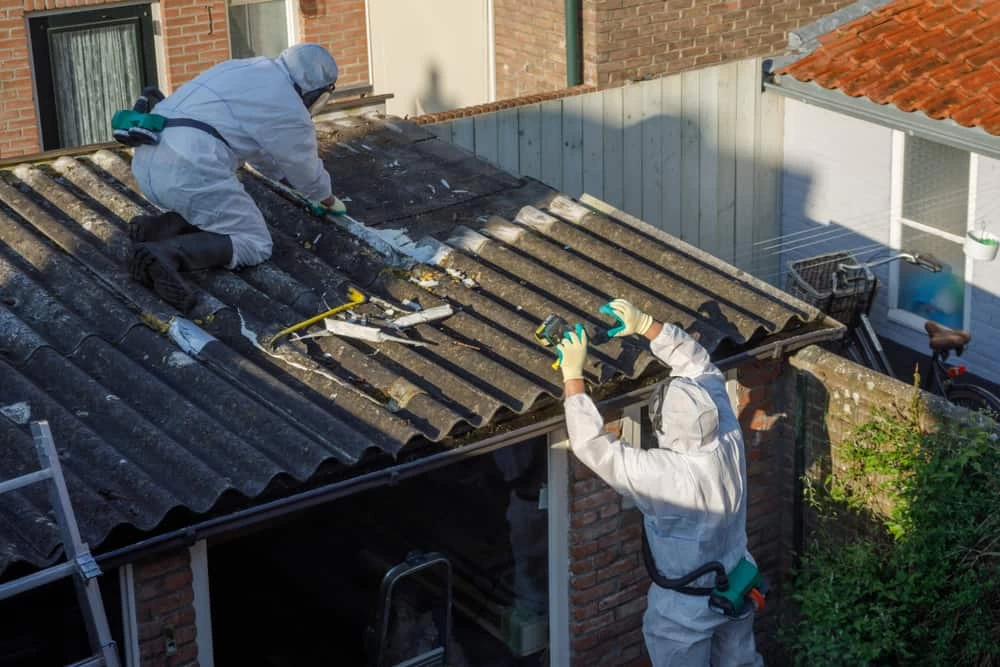
If asbestos is confirmed and the material needs to be removed, we file the required project notification with the New York State Department of Labor before any work begins. This is a legal requirement under ICR 56, and skipping it is how homeowners end up with stop-work orders and failed inspections. We handle that paperwork entirely. Once notification is confirmed, our licensed crew sets up proper containment — negative air pressure, poly barriers, full protective protocol — and removes the material using wet methods to prevent fiber release.
After removal, air clearance testing is conducted by an independent monitor to confirm the space is clean. You get the clearance certificate, the disposal manifests, and the complete project file. For Island Park homeowners navigating a renovation timeline, a real estate closing, or a flood remediation project that can’t move forward until asbestos is cleared, that final paperwork is what unlocks everything else.
Asbestos Remediation Services for Island Park, NY 11558
What's Actually Included When You Hire Us
Asbestos abatement isn’t a single task — it’s a sequence of regulated steps, and every one of them has to be done in the right order. What you get with us is the full sequence: certified inspection, lab analysis, project notification, licensed removal, air monitoring, regulated disposal, and final clearance documentation. Nothing gets handed off to an unlicensed subcontractor, and nothing gets skipped because it’s inconvenient.
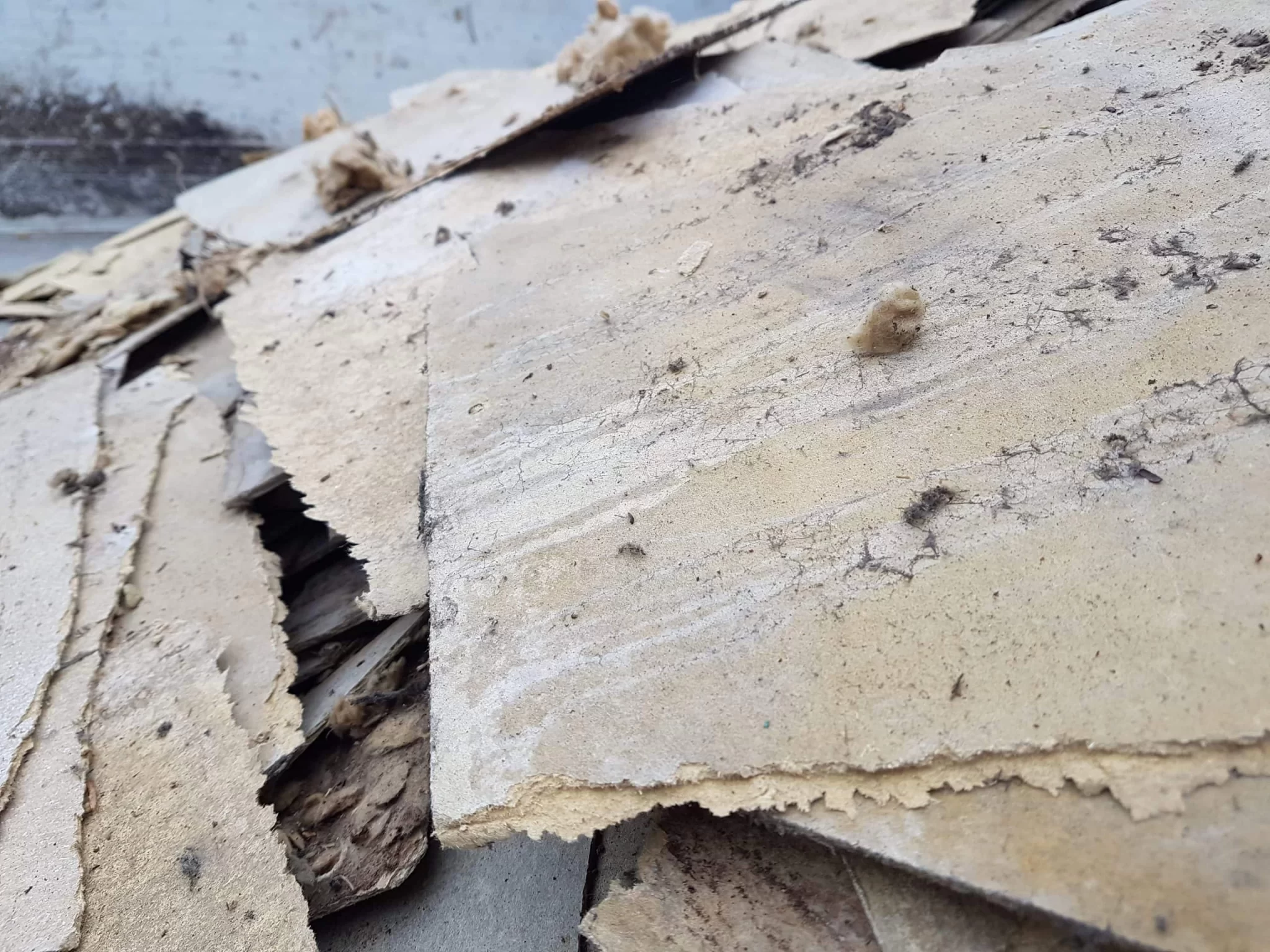
The specific materials we address most often in Island Park homes include the 9×9-inch and 12×12-inch vinyl floor tiles common in mid-century construction — and the black mastic adhesive beneath them, which almost always contains asbestos even when the tile itself doesn’t. Pipe insulation on older steam heating systems, popcorn ceiling texture applied before 1980, and roofing underlayment are also standard finds in this ZIP code. If you’ve been living in your Island Park home for years and none of this has ever been tested, that’s not unusual — and it’s not automatically dangerous. But the moment you start disturbing those materials through renovation, repair, or flood damage, the legal and health picture changes entirely.
We serve all three sections of the Island Park community — the incorporated village, Barnum Island, and Harbor Isle — and we’re familiar with the range of homes here, from the waterfront properties along Reynolds Channel to the more modest post-war ranches and hi-ranches closer to Austin Boulevard and the LIRR station. If you’re not sure whether your home has asbestos, the answer is almost always: get it tested before you start any work.
Does my Island Park home from the 1960s likely have asbestos in it?
Statistically, yes — and that’s not meant to alarm you, it’s just the reality of when Island Park was built. The median construction year here is 1960, which puts most of the housing stock right in the middle of the era when asbestos was used routinely and legally in residential construction. Floor tile and the adhesive underneath, pipe insulation around boilers and steam radiator lines, spray-applied ceiling texture, joint compound, and roofing underlayment all commonly contained asbestos during this period.
That doesn’t mean your home is dangerous to live in right now. Asbestos that’s in good condition and left undisturbed generally doesn’t pose an immediate risk. The problem starts when materials are damaged, deteriorating, or about to be disturbed by renovation work. If you’re planning any project that involves demolition, floor removal, ceiling work, or mechanical system replacement, a certified asbestos inspection before you start isn’t optional under New York State law — it’s required.
What happens if asbestos is found during a home inspection before selling in Island Park?
It depends on the condition of the material and what the buyer’s attorney requires — but in most cases, identified asbestos becomes a negotiating point or a contingency that needs to be resolved before closing. Island Park’s real estate market moves quickly, and deals fall apart when asbestos findings aren’t handled with proper documentation.
The cleanest path is to get the abatement done before it becomes a closing issue. When you have a clearance certificate from us showing the material was properly removed under NYS ICR 56, that documentation satisfies most buyers, attorneys, and lenders without extended back-and-forth. Trying to negotiate around asbestos findings without addressing them tends to cost more time and money than the abatement itself. If you’re preparing to list a home in Island Park, getting an asbestos survey done early gives you control over the timeline rather than reacting to it.
Is asbestos removal required before renovating or doing demo work in New York?
Yes. Under New York State Industrial Code Rule 56, any renovation, remodeling, or demolition work in a building constructed before 1980 must be preceded by a certified asbestos survey. If asbestos-containing materials are identified and will be disturbed by the work, they must be abated by a licensed contractor before construction can begin. This applies whether you’re gutting a kitchen, finishing a basement, replacing a boiler, or tearing out old flooring.
In Island Park specifically, this requirement intersects directly with the ongoing wave of post-Sandy renovations. Many homes that were damaged in 2012 have been partially renovated, elevated, or repaired — but not all of the asbestos-containing materials in those homes were properly addressed at the time. If you’re going back into a home that was worked on after Sandy and doing additional renovation now, a current asbestos survey is still required. The permit process through Island Park Village Hall and Nassau County will not sign off on demolition or major renovation work without documentation of asbestos compliance.
How much does asbestos abatement typically cost in Nassau County?
The cost varies based on what materials are present, how much square footage is involved, and the complexity of the containment setup required. For a straightforward asbestos tile removal in a single room — say, a basement or kitchen floor — you might be looking at $1,500 to $3,000. A larger scope involving pipe insulation, ceiling texture, and multiple areas of a home can run $5,000 to $10,000 or more. Full-structure abatement ahead of a demolition project is priced differently again.
What drives the cost in Nassau County isn’t just labor — it’s the regulatory compliance requirements. Project notification fees, certified air monitoring, and regulated disposal at an approved facility all add up, and they’re not optional. Any contractor quoting you a price that seems significantly below market is likely cutting corners on one or more of those requirements, which creates legal liability for you as the property owner. When you’re already managing Nassau County property taxes and flood insurance costs, the last thing you want is an abatement job that doesn’t hold up to scrutiny when you go to sell or pull a permit.
Can flood damage cause asbestos to become dangerous in my Island Park home?
It can, and this is something Island Park homeowners need to take seriously. Asbestos-containing materials that are in stable condition don’t typically release fibers on their own — but water damage changes that equation. When pipe insulation gets soaked and begins to deteriorate, when floor tiles crack and the mastic adhesive underneath gets wet and starts to break apart, or when a ceiling with asbestos-containing texture absorbs water and begins to sag or crumble, those materials can become friable — meaning they can release asbestos fibers into the air.
With 99% of Island Park properties facing severe flood risk over the next 30 years, this isn’t a hypothetical. Nor’easters, high-tide flooding, and storm surge events regularly cause water intrusion in Island Park homes — not just catastrophic events like Sandy. Any time you’re dealing with water damage that has affected pre-1980 building materials, an asbestos assessment before remediation work begins is both legally required and genuinely important for the safety of anyone working in that space. Water damage restoration cannot legally proceed if asbestos abatement is needed first.
Do I need a separate asbestos contractor, or can my general contractor handle it?
Your general contractor cannot legally perform asbestos abatement in New York State unless they hold a separate asbestos abatement contractor license issued by the NYS Department of Labor under Industrial Code Rule 56. Most general contractors in Nassau County do not hold this license — they’re licensed for construction, not environmental abatement. When a GC tells you they’ll “take care of” the asbestos as part of the renovation, it’s worth asking directly whether they’re licensed under ICR 56 or whether they’re planning to subcontract it.
The distinction matters because if unlicensed work is performed, the liability falls on the property owner — not the contractor. That means failed inspections, potential fines, and real complications when you go to sell or refinance. In Island Park, where so many homes are in active renovation and real estate transactions move quickly, having a dedicated, licensed asbestos abatement contractor handle this piece separately — and produce the documentation to prove it — is the only approach that protects you completely. We work alongside general contractors regularly and can coordinate timing so your renovation stays on track.