If your Jericho home was built before 1980, there’s a real chance asbestos is somewhere in it — and a renovation or home sale will bring that to the surface fast. We handle licensed asbestos abatement in Nassau County so you know exactly what you’re dealing with, and exactly how it gets resolved.
I needed a professional consultation explanation of procedure for safe removal of Asbestos in my apartment complex. Without having an account yet, I was very impressed with the caring, knowledgeable and generous advice offered by Jessica, and will look forward to doing business in the future. Thank you so much! I feel much more informed about a sometimes scary endeavor. Peace. Nancy Silva Mineola, NY.
Mia Munoz
Used this company to clean up some water flood in my house. They were fast and easy to work with.very professional, Would recommend to anyone!
Nini Valle
Great company, had a flood and they responded quickly and efficiently. Billed my insurance company directly. I highly recommend this company!
joe colapietro, jr
I had pipe freeze in my basement right before a snow storm and they made to within an hour to help start the clean up process. They we by our side throughout the entire process and even helped with the insurance company. They did such a great job with the cleanup, repair, remidiation, I contracted them to perform the repairs and finishes in the basement. They came with enough manpower and material to get the job done. Leo and Jessica were nothing but a pleasure to deal with!!
Cristian Arredondo c
I had some water damage in my home and Green Island was able to take care of my issue quickly and effectively. I am very pleased with the work they did. They responded quickly and were very professional.
Michael M
Outstanding service! From the office to the field crew everyone was friendly, helpful and responsive. I highly recommend Green Island Group.
The median construction year for homes in Jericho is 1960. That’s not a guess — it’s a documented fact, and it means the split-levels and Cape Cods throughout West Birchwood, East Birchwood, and Princeton Park were built right in the middle of the era when asbestos was used in nearly everything: floor tiles, ceiling texture, pipe insulation, joint compound, roofing materials. Most of it is still there, undisturbed, until someone decides to renovate a kitchen or finish a basement.
When you’re planning that kind of project, or when a pre-listing inspection flags something before a sale, the question isn’t whether to deal with it — it’s who handles it correctly. Proper asbestos remediation means the work is documented, the air is tested, and you walk away with paperwork that holds up when a buyer’s attorney or the Town of Oyster Bay’s building department asks for it. That documentation protects your home’s value, your transaction timeline, and your family.
In a market where Jericho homes regularly trade above $1 million and a single listing can attract dozens of competing buyers, an unresolved asbestos issue doesn’t just create a health concern — it creates a deal-killer. Getting it handled by a licensed contractor isn’t overcautious. It’s the only move that makes sense when this much is at stake.
We’re a Long Island-based environmental services company with deep roots in Nassau County. Asbestos abatement, removal, and remediation is the core of what we do — not a side service, not an add-on. We work under New York State Industrial Code Rule 56, carry the licensing the state requires, and handle every project with the documentation that real estate transactions and building permits actually demand.
Jericho is part of our established service area. We know the housing stock here — the four-bedroom split-levels off Jericho Turnpike, the older Colonials in the Birchwood neighborhoods, the finished basements and drop ceilings that get opened up during renovations. We’ve seen what’s inside these homes, and we know how to handle it the right way.
You’re not hiring a generalist who occasionally does asbestos work. This is what we do, and we do it correctly the first time.
It starts with an assessment. Before anything is touched, we identify what materials are present, where they are, and whether they’re regulated asbestos-containing materials under ICR 56. If testing confirms asbestos, we file the required notifications with the New York State Department of Labor — that step is mandatory, and skipping it is what gets homeowners and contractors into serious legal trouble.
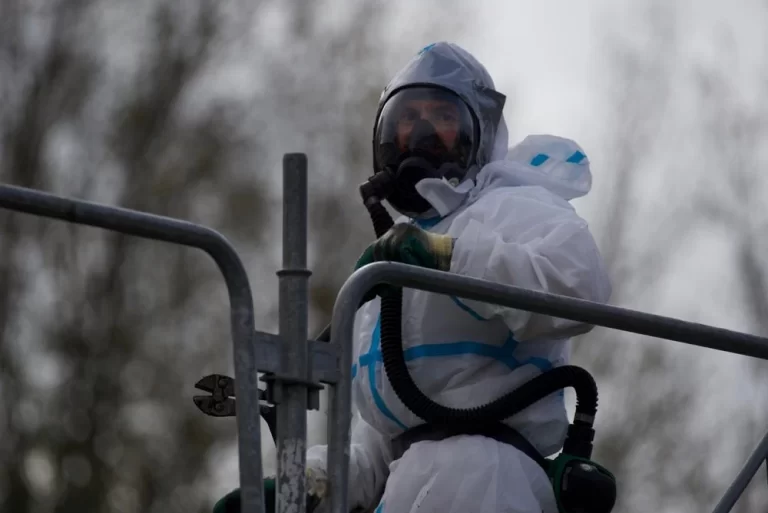
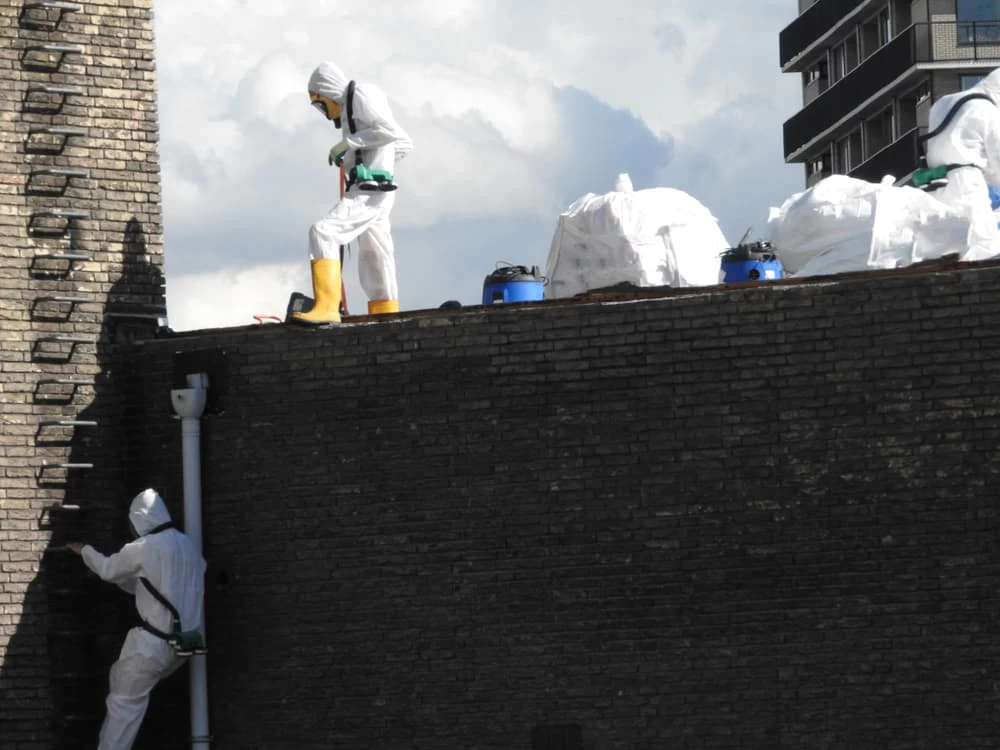
Once notifications are in place, we set up full containment around the work area. That means negative air pressure, proper barriers, and making sure nothing migrates to the rest of your home while the work is being done. In Jericho’s older homes, that’s especially important when the affected material is in a living area, a basement that connects to the main floor, or anywhere near the HVAC system. Removal is performed by our licensed crew, and all waste is disposed of at an approved facility with a documented chain of custody.
After removal, air clearance testing is conducted to confirm the space is clean before containment comes down. You receive the full documentation package — project notifications, air monitoring results, disposal records, and clearance certification. That paperwork is what your contractor, your real estate attorney, and the Town of Oyster Bay’s building department will ask for. We make sure you have it.
The Materials Most Common in Jericho Homes — Handled Right
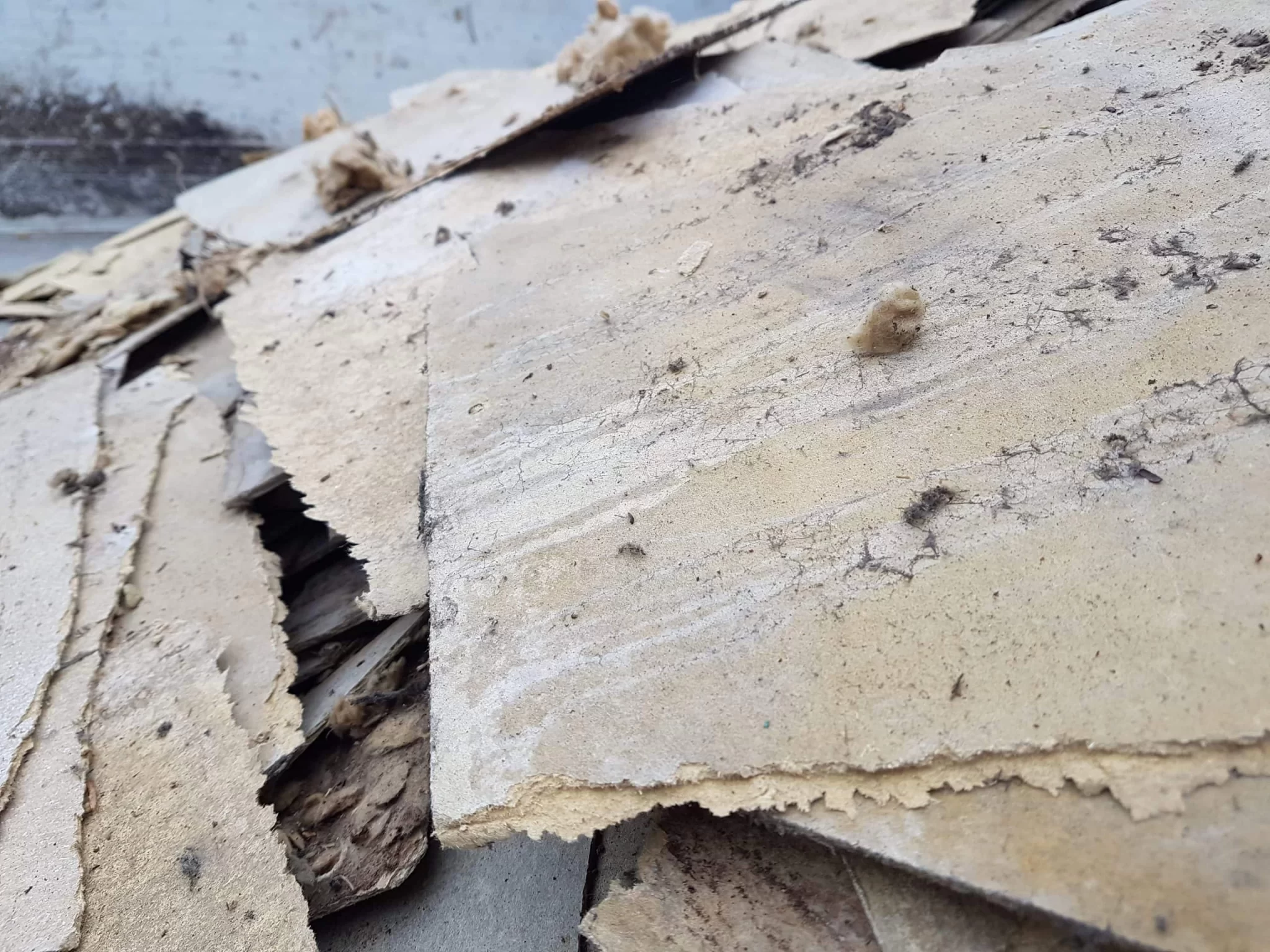
The two most frequently encountered asbestos-containing materials in Jericho’s mid-century housing stock are vinyl floor tiles and acoustic spray ceiling texture. The 9×9 and 12×12 floor tiles found in the kitchens, bathrooms, and basements of homes built between the late 1940s and early 1970s frequently contain chrysotile asbestos — and so does the black mastic adhesive beneath them. Popcorn ceilings applied before 1980 are another common find, particularly in the Colonial Revivals and split-levels throughout the Birchwood neighborhoods and Princeton Park.
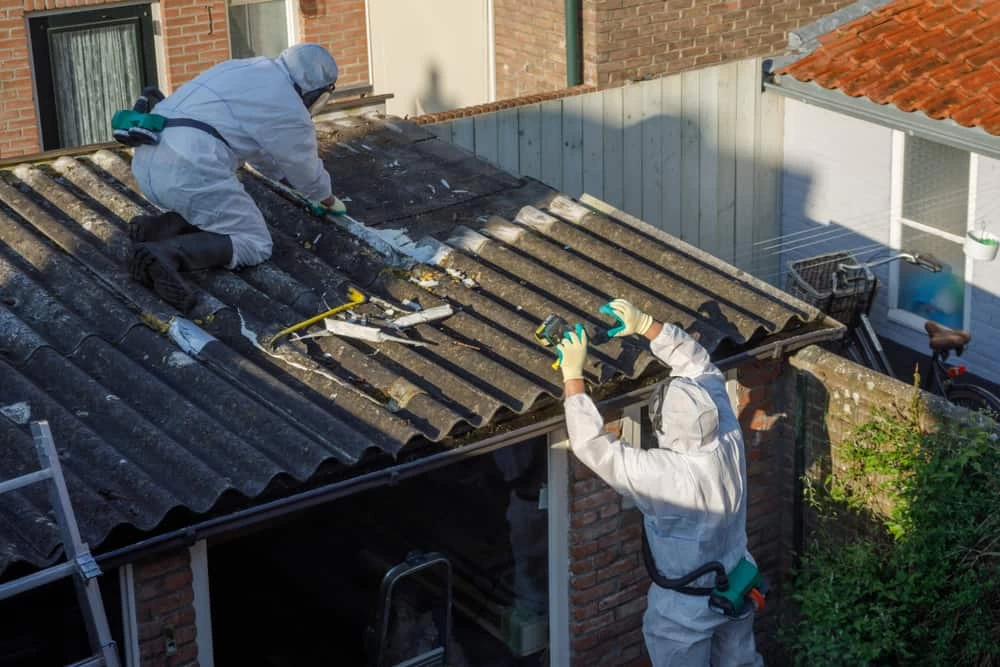
Beyond those two, we also handle pipe and boiler insulation — relevant in Jericho homes with original heating systems that are being replaced or upgraded — as well as roofing shingles, transite siding, and textured wall coatings. If you’re opening up a wall, gutting a room, or replacing flooring in a home built before 1980, there’s a real possibility more than one material type is involved. We assess the full scope before any work begins so nothing gets missed mid-project.
Every asbestos abatement project we complete in Nassau County includes certified sampling, licensed removal or encapsulation, approved disposal, air monitoring throughout the job, and final clearance testing. The result is a complete documentation package that satisfies the Town of Oyster Bay’s permit requirements and gives you a clean record for any future sale or renovation.
How do I know if my Jericho home actually has asbestos in it?
The most reliable indicator is the age of your home. If it was built before 1980 — which describes the vast majority of homes in Jericho, given the hamlet’s median construction year of 1960 — there’s a meaningful probability that asbestos-containing materials are present somewhere in the structure. The most common locations are vinyl floor tiles and the adhesive beneath them, acoustic ceiling texture, pipe and boiler insulation, and certain roofing materials.
You can’t identify asbestos by looking at it. The only way to know for certain is to have a certified sample collected and tested by a laboratory. If you’re planning a renovation that will disturb any of these materials, or if a home inspection has flagged something, that’s the point where testing stops being optional. Disturbing asbestos-containing materials without proper testing and abatement is both a health risk and a legal violation under New York State Industrial Code Rule 56.
Is asbestos removal in Jericho, NY something I can legally do myself?
No. Under New York State Industrial Code Rule 56, asbestos abatement must be performed by a licensed contractor. In Nassau County, attempting to remove or disturb regulated asbestos-containing materials without proper certification is illegal and can result in significant fines or criminal charges. That applies to homeowners attempting DIY removal and to unlicensed contractors hired to do the work.
Beyond the legal issue, there’s a practical one. Improper removal — without containment, negative air pressure, and proper disposal — can spread asbestos fibers throughout the home. Once airborne, those fibers are invisible and can remain suspended in the air for hours. The health consequences of repeated exposure are well documented. The regulatory framework exists for a reason, and compliance isn’t just about avoiding fines — it’s about making sure the job actually protects the people living in the home.
Will asbestos abatement disrupt my family's daily routine at home?
It depends on the scope of the project and where in your Jericho home the work is being done. For a contained area like a basement or a single room, the rest of the home can often remain occupied with proper containment in place. For larger projects — a full floor tile removal across a main living level, or popcorn ceiling abatement in multiple rooms — temporary relocation for the duration of the work is sometimes the safer and more practical choice.
We walk through this with every homeowner before the project starts. The goal is to minimize disruption while making sure the containment setup is actually effective. In Jericho homes where the affected material is near the HVAC system or in a space that connects directly to living areas, we’re more conservative about what we recommend. Families with young children — which describes a significant portion of Jericho households — are especially well-served by getting this question answered clearly before work begins, not during it.
How does asbestos abatement affect a home sale in Jericho's real estate market?
It can affect it significantly — in both directions. An asbestos issue identified during a buyer’s inspection and left unresolved is one of the more reliable ways to lose a deal or face a major price reduction in negotiations. In Jericho’s competitive market, where homes regularly attract multiple offers and buyers have options, giving a buyer a reason to walk is a real cost.
On the other hand, a fully documented abatement — with certified clearance testing, disposal records, and a licensed contractor’s paperwork — removes the issue from the table entirely. Buyers’ attorneys and lenders in Nassau County are accustomed to reviewing this documentation, and a clean record from a licensed contractor carries real weight. Homeowners who handle abatement proactively, before listing, tend to move through the transaction faster and with fewer contingency complications. Given what Jericho homes are worth, the cost of professional abatement is a straightforward investment in protecting the sale.
What's the difference between asbestos encapsulation and full removal?
Encapsulation means the asbestos-containing material is sealed in place rather than physically removed. A specialized coating or barrier is applied over the material to prevent fiber release. It’s a legitimate abatement method under ICR 56 and is sometimes appropriate when the material is in good condition, not being disturbed, and located in an area that won’t be renovated. A basement ceiling with intact pipe insulation that will remain undisturbed is one example where encapsulation might be the right call.
Full removal means the material is physically taken out, properly disposed of at an approved facility, and the space is cleared through air testing. For most renovation projects in Jericho — where the goal is to open up a space, replace flooring, or update a kitchen or bathroom — full removal is typically required because the material is being disturbed regardless. Encapsulation doesn’t work as a long-term solution in a space that’s actively being renovated. We assess which approach is appropriate based on the specific material, its condition, and what you’re planning to do with the space.
How long does an asbestos abatement project typically take in a Jericho home?
For a straightforward, single-area project — removing asbestos floor tiles in one room, or addressing popcorn ceiling texture in a single space — the physical work can often be completed in one to two days. The full timeline, however, includes the required NYS DOL notification period before work can begin, plus the time needed for air clearance testing after removal is complete. Factoring those steps in, a contained residential project in Jericho typically runs five to seven business days from start to final clearance.
Larger or more complex projects — multiple rooms, combined material types, or homes where the scope expands after initial assessment — take longer. The notification and clearance requirements don’t compress regardless of project size, so planning ahead matters. If you’re working within a real estate contract contingency window, which is a common scenario in Jericho’s fast-moving market, the earlier you initiate the process the better. We’re straightforward about timelines from the first conversation so you’re not making decisions based on an optimistic estimate that doesn’t hold up.