Jockey Hill’s housing stock is old and in homes this age, asbestos isn’t a maybe. We provide licensed asbestos abatement in Jockey Hill, NY, so you know exactly what you’re dealing with and exactly how it gets handled.
I needed a professional consultation explanation of procedure for safe removal of Asbestos in my apartment complex. Without having an account yet, I was very impressed with the caring, knowledgeable and generous advice offered by Jessica, and will look forward to doing business in the future. Thank you so much! I feel much more informed about a sometimes scary endeavor. Peace. Nancy Silva Mineola, NY.
Mia Munoz
Used this company to clean up some water flood in my house. They were fast and easy to work with.very professional, Would recommend to anyone!
Nini Valle
Great company, had a flood and they responded quickly and efficiently. Billed my insurance company directly. I highly recommend this company!
joe colapietro, jr
I had pipe freeze in my basement right before a snow storm and they made to within an hour to help start the clean up process. They we by our side throughout the entire process and even helped with the insurance company. They did such a great job with the cleanup, repair, remidiation, I contracted them to perform the repairs and finishes in the basement. They came with enough manpower and material to get the job done. Leo and Jessica were nothing but a pleasure to deal with!!
Cristian Arredondo c
I had some water damage in my home and Green Island was able to take care of my issue quickly and effectively. I am very pleased with the work they did. They responded quickly and were very professional.
Michael M
Outstanding service! From the office to the field crew everyone was friendly, helpful and responsive. I highly recommend Green Island Group.
When asbestos is properly abated not patched over, not ignored you get your home back. Your renovation moves forward. Your inspector signs off. Your family isn’t breathing something invisible that nobody thought to check.
For homes along Jockey Hill Road and the surrounding Sawkill area, this is a real and present issue. A lot of these properties were built during or shortly after the bluestone quarrying era company housing from the 1800s, expanded and renovated through the mid-20th century with materials that routinely contained asbestos. Pipe insulation in the basement, floor tiles under the carpet, textured ceilings from a 1970s update these aren’t hypothetical risks. They’re what we find in homes like yours.
The Catskill Mountain foothills location adds another layer. Freeze-thaw cycles crack older roofing materials. Moisture works its way into basement insulation. An oil furnace that’s been running since 1955 has pipe wrap that no one has touched in decades. When those materials start to deteriorate, or when a renovation disturbs them, the window for safe handling closes fast. Getting ahead of it with a licensed contractor and documented clearance testing is the difference between a clean project and a costly, complicated one.
We hold a NYS Department of Labor Asbestos Handling License the state-required credential that legally authorizes asbestos abatement work in New York. This isn’t a general contractor license or a self-awarded certification. It’s a government-issued credential, and you can verify it yourself through the NYS DOL’s public contractor lookup. We’d encourage you to.
Beyond asbestos, we’re licensed by NYS DOL for mold abatement, certified by the USEPA for lead and RRP work, and IICRC-certified for water and fire damage. We also hold MBE, WBE, MWBE, and SBE designations verified by the state, not self-reported. For homeowners in Jockey Hill dealing with older properties in the Town of Kingston, that full scope matters. When the walls open up in a pre-1920 home near the Sawkill hamlet, it’s rarely just one problem.
We bill insurance directly, handle the NYS DOL project notifications, and work around your schedule. You manage your home. We manage the process.
No Surprises Here's What the Process Actually Looks Like
It starts with an assessment. Before any work begins, the materials in question need to be identified and sampled. In older Jockey Hill homes particularly those with quarrying-era origins or mid-century renovations we know where to look: basement pipe insulation, 9×9 floor tiles and the black mastic adhesive beneath them, joint compound on older drywall, and textured ceiling finishes. Sampling tells us what we’re dealing with so nothing gets missed and nothing gets disturbed unnecessarily.
Once confirmed, we file the required notification with the NYS Department of Labor before work begins. This is a legal requirement under NYS Industrial Code Rule 56, and we handle it on your behalf. You don’t need to navigate the regulatory paperwork while managing a renovation or a real estate timeline. The Albany District Office covers Ulster County, and we know that process well.
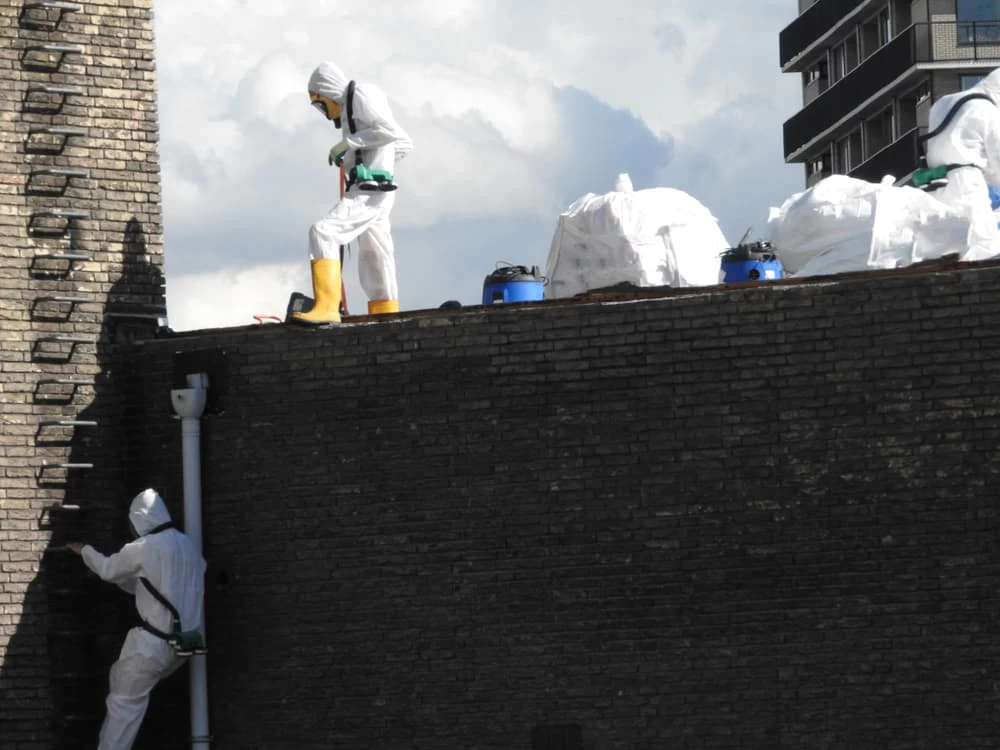
On-site, we establish proper containment negative air pressure, sealed work zones, full protective protocols so the rest of your home stays livable while the affected area is addressed. Most residential projects in Jockey Hill are completed in one to three days. After abatement, air clearance testing is conducted by qualified personnel. You receive written documentation showing fiber counts are below the safe threshold before anyone re-enters the space. That paperwork matters for your peace of mind, for your home inspector, and for any real estate transaction you’re navigating.
Asbestos Tile and Popcorn Ceiling Removal, Jockey Hill
What's Actually Included When We Come to Your Home
Asbestos abatement isn’t one-size-fits-all, and the older the home, the more material types tend to be involved. For Jockey Hill residents, the most common scopes we handle include asbestos tile removal those 9×9 vinyl floor tiles and the adhesive underneath them are among the most frequently encountered ACMs in pre-1960 homes in this area, often hidden under carpeting or hardwood overlays that were installed decades later. Asbestos popcorn ceiling removal is another common request, particularly in homes that received cosmetic updates during the 1960s and 70s. And in homes with older heating systems which describes a lot of properties along Jockey Hill Road pipe and boiler insulation removal is often the primary scope.
Every project includes the NYS DOL project filing, full containment setup, licensed removal by certified handlers, proper waste transport and disposal in compliance with NYSDEC regulations, and post-abatement air clearance testing with written documentation. Nothing is left open-ended.
Because we’re also licensed for mold and certified for lead, we can address what’s found alongside the asbestos without stopping the project and making you find another contractor. For properties in the Town of Kingston where the housing stock is old enough that multiple environmental hazards often coexist that matters. One call, one crew, one documented outcome.
How do I know if my Jockey Hill home actually contains asbestos?
The honest answer is: you don’t know until it’s tested. Asbestos-containing materials look identical to their non-asbestos counterparts there’s no visual indicator, no smell, no way to tell by looking. What you can do is use the age of your home as a starting point. If your Jockey Hill property was built or significantly renovated before 1980, there’s a real probability that some materials contain asbestos. The older the home, the higher that probability.
In the Town of Kingston and the Jockey Hill area specifically, a large portion of the housing stock predates 1960 some of it traces back to the bluestone quarrying era of the 1800s. The materials most commonly found to contain asbestos in homes like these include pipe and boiler insulation, floor tile and the adhesive beneath it, textured ceiling finishes, joint compound, and older roofing and siding materials. The only way to confirm is through professional sampling and laboratory analysis. If you’re planning any renovation, dealing with a home sale, or have noticed deteriorating materials in an older part of your home, that’s the point to get a licensed assessment before anything gets disturbed.
What does asbestos abatement actually cost for a home in Ulster County?
Cost depends on the scope what materials are involved, how much square footage or linear footage is affected, and whether the work is in an accessible area or a confined space like a crawl. For a single-room project in a Jockey Hill home one room of floor tile, a popcorn ceiling, or a section of pipe insulation you’re typically looking at somewhere in the $1,500 to $5,000 range. A larger scope involving multiple materials, a full basement, or a whole-house assessment before a sale can run $10,000 to $30,000 or more.
New York State’s regulatory requirements add real cost compared to states with lighter oversight licensed contractors, certified air monitors, NYS DOL project filings, and proper waste disposal through NYSDEC-compliant transporters and facilities all factor in. That’s not padding; it’s what legal, documented abatement in this state actually requires. The cost of proper abatement is finite and one-time. The cost of a failed home inspection, a buyer walking away from a deal, or a renovation crew stopping work mid-project because something was disturbed incorrectly that’s a much harder number to control.
Does my family have to leave the house during asbestos removal?
It depends on where the work is being done and the scope of the project. For a contained, single-area project one room, one section of basement pipe proper containment protocols allow the rest of the home to remain occupied in most cases. The work area is sealed under negative air pressure, meaning air flows into the containment zone rather than out of it, and HEPA filtration captures airborne fibers before any air is exhausted. Your living spaces on the other side of that containment aren’t being exposed.
For larger scopes full basement abatement, multiple rooms, or work in a central HVAC area temporary relocation during the active work period is often the safer and more practical choice. Most residential asbestos abatement projects in Jockey Hill are completed in one to three days, so even when temporary relocation is needed, it’s a short window. We’ll tell you upfront what the project requires before work begins, and we’ll build the schedule around your situation as much as possible. Nobody wants to displace a family longer than necessary, and we don’t.
Is a permit required for asbestos abatement in the Town of Kingston, NY?
In New York State, asbestos abatement is regulated under NYS Industrial Code Rule 56, and any project involving 10 square feet or more of surface area or 25 linear feet or more of pipe insulation requires a formal notification filed with the NYS Department of Labor before work begins. This applies everywhere in the state, including Jockey Hill and the Town of Kingston.
Because Jockey Hill is a hamlet within the Town of Kingston not a city or village with its own building department there’s no separate local permit layer to navigate. The regulatory process runs directly through the NYS DOL Albany District Office, which covers Ulster County. As part of every project we take on, we handle that filing on your behalf. You don’t need to figure out the paperwork or the process. What you do need is a contractor who’s actually licensed by NYS DOL to do this work because sending an unlicensed contractor into a pre-1980 home to remove asbestos-containing materials isn’t just a regulatory violation, it’s a liability that follows the property. Clearance documentation from a licensed abatement is what protects you in a sale, an inspection, or a future renovation.
What's the difference between asbestos abatement and asbestos encapsulation?
Abatement means the material is physically removed from the building and disposed of properly. Encapsulation means the material is treated or sealed in place so that fibers can’t be released it stays in the building, but it’s stabilized. Both are legitimate approaches depending on the condition and location of the material, but they’re not interchangeable, and the right choice depends on what you’re dealing with.
For Jockey Hill homeowners, the context matters. If you’re renovating gutting a kitchen, finishing a basement, replacing an old furnace encapsulation usually isn’t an option, because the material is going to be disturbed anyway. Abatement is the only path that clears the way for the work to proceed. If the material is in good condition, not being disturbed, and in a location that won’t be affected by renovation or deterioration, encapsulation can be a valid choice. The assessment phase is where that determination gets made. We’ll tell you what we’re looking at, what the options are, and what makes sense for your specific situation not just what’s faster or cheaper to do.
Can a general contractor handle asbestos removal in Jockey Hill, or does it need to be licensed?
It has to be a licensed contractor full stop. New York State law requires anyone performing asbestos abatement to hold a NYS Department of Labor Asbestos Contractor License. A general contractor license doesn’t cover it. A handyman doesn’t cover it. A restoration company without the specific NYS DOL asbestos credential doesn’t cover it. This isn’t a gray area; it’s a clearly defined legal requirement under NYS Industrial Code Rule 56.
In rural areas like Jockey Hill and the broader Town of Kingston, unlicensed operators do exist contractors who will take the job and handle it without the proper credentials, containment protocols, or disposal compliance. The risk to you isn’t just health-related, though that’s real. It’s legal and financial. If an unlicensed removal is discovered during a home sale, a future renovation, or a regulatory inspection, the liability lands on the property owner. Clearance documentation from a licensed abatement is what gives you a clean record something you can show a buyer’s attorney, a home inspector, or an insurance adjuster. Before you hire anyone for asbestos work in Jockey Hill, ask for their NYS DOL Asbestos Contractor License number and verify it through the state’s public lookup. If they can’t give you a number, that’s your answer.