Old Homes Along Route 32 Deserve More Than a Guess
If your Katsbaan home was built before 1980, asbestos abatement isn’t a maybe it’s likely a matter of when, not if. We’re NYS DOL licensed and ready to handle it the right way.
I needed a professional consultation explanation of procedure for safe removal of Asbestos in my apartment complex. Without having an account yet, I was very impressed with the caring, knowledgeable and generous advice offered by Jessica, and will look forward to doing business in the future. Thank you so much! I feel much more informed about a sometimes scary endeavor. Peace. Nancy Silva Mineola, NY.
Mia Munoz
Used this company to clean up some water flood in my house. They were fast and easy to work with.very professional, Would recommend to anyone!
Nini Valle
Great company, had a flood and they responded quickly and efficiently. Billed my insurance company directly. I highly recommend this company!
joe colapietro, jr
I had pipe freeze in my basement right before a snow storm and they made to within an hour to help start the clean up process. They we by our side throughout the entire process and even helped with the insurance company. They did such a great job with the cleanup, repair, remidiation, I contracted them to perform the repairs and finishes in the basement. They came with enough manpower and material to get the job done. Leo and Jessica were nothing but a pleasure to deal with!!
Cristian Arredondo c
I had some water damage in my home and Green Island was able to take care of my issue quickly and effectively. I am very pleased with the work they did. They responded quickly and were very professional.
Michael M
Outstanding service! From the office to the field crew everyone was friendly, helpful and responsive. I highly recommend Green Island Group.
Most homeowners in Katsbaan don’t find out they have an asbestos problem because they went looking for one. They find out mid-renovation when a contractor pulls up a kitchen floor and the black mastic underneath sets off a chain of questions nobody was prepared for. Or a pipe bursts in the basement and suddenly the insulation wrapped around it is the bigger concern. That’s the reality of owning an older home in Katsbaan, where the median construction year is 1938 and more than half the housing stock was built before the 1940s.
When asbestos is properly identified, contained, and removed by our licensed crew, the project you were planning can actually move forward. No permit holds. No contractor standoffs. No lingering question about whether the air in your home is safe for your family. The Saugerties Building Department requires compliance before any renovation on a pre-1974 structure and that covers virtually every home along the Route 32 corridor through Katsbaan. Getting this handled correctly the first time is what keeps your timeline intact.
What you’re left with after a legitimate abatement isn’t just a cleaner structure. It’s documentation air clearance test results that confirm the job was done, records you can hand to a buyer if you’re selling, and the kind of peace of mind that doesn’t come from someone just telling you it’s fine.
We hold the New York State Department of Labor Asbestos Handling License the specific government-issued credential required under Industrial Code Rule 56 before any contractor can legally touch asbestos in this state. This isn’t a general contractor license dressed up with environmental language. It’s the real credential, enforced by the NYS DOL Asbestos Control Bureau, which has direct jurisdiction over Ulster County and the Katsbaan area.
Beyond asbestos, we’re also licensed for mold remediation, lead abatement, and full demolition which matters more than it sounds if you’re dealing with an older farmhouse or pre-war structure in Katsbaan. When you open up a wall and find asbestos-wrapped pipes sitting next to mold-damaged drywall, you don’t want to coordinate two separate contractors on two separate timelines. We handle it, start to finish.
We also work directly with insurance carriers and are available around the clock because emergencies in rural communities like Katsbaan don’t wait for business hours.
No Guesswork Here's What the Process Actually Looks Like
It starts with an inspection. Before any work is quoted or scheduled, our licensed inspector assesses the property and identifies where asbestos-containing materials are present and whether they’re in a condition that poses an active risk. In homes built before 1974, which is essentially the entire Katsbaan housing stock, this inspection is also a legal requirement under NYS Industrial Code Rule 56 before any renovation or demolition permit can be issued through the Saugerties Building Department.
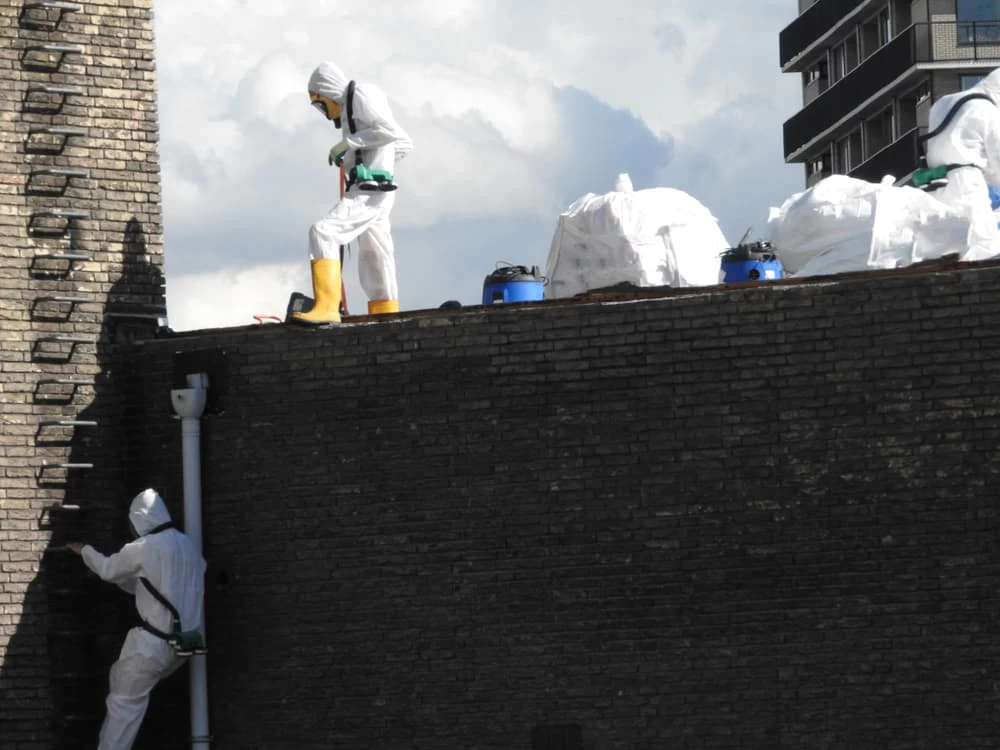
Once the scope is confirmed, our abatement crew establishes full containment plastic sheeting, negative air pressure, HEPA filtration before a single material is disturbed. This isn’t a precaution taken lightly, especially in occupied homes. The goal is to keep the rest of your living space completely unaffected while the work is being done. Materials are removed following NYS-approved protocols, sealed, and transported to a licensed disposal facility as regulated hazardous waste. Every step is documented.
After removal is complete, air clearance testing is conducted by an independent monitor. The results tell you objectively, not just verbally that the air in your home is clean. That report is yours to keep, whether you need it for a renovation permit, a real estate transaction, or simply your own confidence that the job was done right.
Asbestos Tile and Popcorn Ceiling Removal, Katsbaan
The Materials Most Katsbaan Homes Are Still Hiding
Two of the most common asbestos discoveries in Katsbaan-area homes are floor tiles and textured ceilings and both are frequently mishandled by homeowners who don’t realize what they’re dealing with. The 9×9-inch vinyl floor tiles installed in kitchens, bathrooms, and basements throughout the 1940s and 1960s are a known asbestos source, and so is the black mastic adhesive bonded underneath them. Asbestos tile removal done improperly scraping, sanding, or applying heat can release fibers that stay airborne for hours and travel through HVAC systems. Our licensed crews follow NYS-approved containment and removal protocols for both the tile and the mastic, with air clearance testing to confirm completion.
The same applies to popcorn ceiling removal. If your home was built before 1980 and has textured acoustic ceilings, those surfaces must be tested before any disturbance. Sanding or scraping without testing is not only dangerous it can result in significant fines under New York State law. We handle the testing, the abatement, and the clearance documentation.
Beyond tiles and ceilings, our asbestos abatement services also cover pipe insulation, boiler wrap, roofing materials, cement-asbestos siding common on the farmhouses and older residential properties throughout the Katsbaan corridor and vermiculite insulation in attics. If it’s in your home, we can identify and properly remove it.
Do I need an asbestos survey before renovating my Katsbaan home?
Yes and this isn’t optional. Under NYS Industrial Code Rule 56, any renovation, remodeling, or demolition of a building constructed prior to 1974 requires an asbestos survey before work begins. Because the vast majority of homes in Katsbaan predate 1974 many by several decades this requirement applies to nearly every renovation project in the hamlet. The Saugerties Building Department, which handles all permits for Katsbaan as an unincorporated hamlet within the Town of Saugerties, expects compliance with state asbestos regulations before issuing permits for work on older structures.
Skipping the survey doesn’t make the liability go away it just moves it onto you. If asbestos is disturbed without proper abatement, you’re looking at potential fines, project shutdowns, and health consequences that can’t be undone. Getting the survey done upfront is the fastest way to keep your renovation on schedule and your permit process clean.
How much does asbestos removal typically cost in Katsbaan?
Cost depends heavily on the scope what materials are involved, how much square footage is affected, and whether the project is a targeted removal or a full pre-demolition abatement. For a smaller residential project like a single room with floor tiles or a popcorn ceiling, you’re generally looking at $1,500 to $5,000. Mid-size projects involving pipe insulation, boiler wrap, or multiple rooms typically run $5,000 to $15,000. Whole-house or pre-demolition abatement on a larger property can reach $15,000 to $30,000 or more.
For Katsbaan homeowners dealing with older farmhouses or pre-war structures where asbestos can show up in multiple locations simultaneously the inspection phase is especially important. Knowing the full scope upfront prevents cost surprises mid-project. We provide a clear assessment before any work begins, and for projects covered under a homeowner’s insurance claim, we bill the carrier directly so you’re not managing that process on top of everything else.
What types of materials in older homes commonly contain asbestos?
In homes built between the 1930s and 1970s which describes most of the residential stock in Katsbaan asbestos was used in a wide range of building materials. The most common discoveries include pipe insulation and boiler wrap, 9×9-inch vinyl floor tiles and the black mastic adhesive beneath them, textured popcorn ceilings, roofing shingles, cement-asbestos siding (particularly on farmhouses and agricultural structures common to this area), window glazing compounds, and vermiculite insulation in attics.
The tricky part is that asbestos-containing materials don’t always look different from non-asbestos materials. You can’t identify asbestos by sight. The only way to know for certain is laboratory testing of a collected sample which is part of what a licensed inspection covers. In a home as old as many in Katsbaan, it’s not unusual to find asbestos in more than one location, which is exactly why a thorough inspection matters before any renovation work starts.
Is asbestos in my home dangerous if I'm not planning to renovate right now?
It depends on the condition of the material. Asbestos that is intact, undisturbed, and in good condition is generally considered non-friable meaning it’s not releasing fibers into the air, and the immediate risk is low. The danger increases significantly when materials become damaged, deteriorate over time, or are disturbed during construction or renovation work.
This is worth thinking about in the context of Katsbaan’s climate. The Hudson Valley experiences cold, wet winters with significant freeze-thaw cycles, and that kind of repeated temperature stress accelerates the deterioration of older building materials including pipe insulation and roofing. A material that was stable five years ago may not be in the same condition today. If you have known or suspected asbestos in your home and haven’t had it assessed recently, a licensed inspection is a reasonable step not because it’s urgent in every case, but because you’ll want to know its current condition before it becomes an emergency.
Can I stay in my home during asbestos abatement work?
Whether you can remain in the home during abatement depends on the location and scope of the work. For contained, limited projects a single room, a section of basement pipe insulation it’s sometimes possible to stay in unaffected areas of the home while work is underway, provided proper containment is in place. For larger projects involving multiple rooms or whole-house abatement, temporary relocation is typically the safer and more practical choice.
Our crews establish full containment before any materials are disturbed plastic sheeting, negative air pressure, HEPA filtration to prevent any cross-contamination into the rest of the living space. The timeline for most residential projects ranges from one to several days depending on scope. At the end of the project, independent air clearance testing confirms the space is safe before you or your family re-enters. That clearance report is the documented confirmation not just someone’s word that the job is complete.
How do I know the asbestos abatement contractor I hire is actually licensed in New York?
This is one of the most important questions you can ask and a lot of homeowners don’t ask it until after something goes wrong. In New York State, performing asbestos abatement without a NYS Department of Labor Asbestos Handling License is illegal. This is a specific government-issued license, separate from a general contractor license, and it’s required under Industrial Code Rule 56 for any contractor doing asbestos removal, encapsulation, or disturbance work in the state. Ulster County falls under the NYS DOL Asbestos Control Bureau’s enforcement jurisdiction.
You can verify any contractor’s license status through the NYS DOL contractor lookup tool and you should, before signing anything. Ask the contractor directly for their NYS DOL Asbestos license number. A legitimate operator will provide it without hesitation. We hold this license and are fully compliant with Rule 56 requirements, including worker certifications, air monitoring, and the 30-year project record retention required by state law. In a market where some operators use general contractor credentials to imply asbestos authority they don’t legally have, verifying licensure is the single most important step you can take before hiring anyone.