I needed a professional consultation explanation of procedure for safe removal of Asbestos in my apartment complex. Without having an account yet, I was very impressed with the caring, knowledgeable and generous advice offered by Jessica, and will look forward to doing business in the future. Thank you so much! I feel much more informed about a sometimes scary endeavor. Peace. Nancy Silva Mineola, NY.
Mia Munoz
Used this company to clean up some water flood in my house. They were fast and easy to work with.very professional, Would recommend to anyone!
Nini Valle
Great company, had a flood and they responded quickly and efficiently. Billed my insurance company directly. I highly recommend this company!
joe colapietro, jr
I had pipe freeze in my basement right before a snow storm and they made to within an hour to help start the clean up process. They we by our side throughout the entire process and even helped with the insurance company. They did such a great job with the cleanup, repair, remidiation, I contracted them to perform the repairs and finishes in the basement. They came with enough manpower and material to get the job done. Leo and Jessica were nothing but a pleasure to deal with!!
Cristian Arredondo c
I had some water damage in my home and Green Island was able to take care of my issue quickly and effectively. I am very pleased with the work they did. They responded quickly and were very professional.
Michael M
Outstanding service! From the office to the field crew everyone was friendly, helpful and responsive. I highly recommend Green Island Group.
When asbestos is handled properly, your renovation moves forward, your co-op board signs off, and your closing doesn’t get derailed. That’s not a small thing that’s the difference between a project that finishes on time and one that stalls for weeks while you scramble for answers.
Kew Gardens has a median construction year of 1943. That means the floor tiles, pipe insulation, boiler wrap, and ceiling materials in a large portion of homes here were installed during the peak era of asbestos use. It’s not a worst-case scenario it’s just the reality of living in a neighborhood built the way this one was. The Tudor-style co-ops on Lefferts Boulevard, the pre-war apartment buildings near Kew Gardens Road, the older single-family homes tucked near Forest Park these buildings have character, and they also have history inside their walls.
What you get on the other side of a proper abatement is documented proof that the space is safe. Not just a verbal confirmation, but post-removal air clearance testing the actual measurement that tells you the air quality meets the standard required before re-occupancy. Your co-op board needs that paperwork. Your real estate attorney needs it. Your insurance company may need it too. Getting there without shortcuts is what makes the difference.
The Certifications Match the Complexity of the Work
We are a full-service environmental remediation contractor serving all five NYC boroughs, Long Island, and the Hudson Valley. We hold a NYS DOL Asbestos License, NYC DEP certification, NYC General Contractor license, USEPA Lead and RRP certifications, and more than a dozen additional credentials including NYS MBE, WBE, and NYC MWBE status. That’s not a list for the sake of a list. In a city where the NYC DEP has regulated asbestos since 1987 and the DOB won’t issue a permit until asbestos compliance is documented, the credentials behind your contractor matter.
We’ve worked throughout Queens, including the kind of pre-war co-op and apartment buildings that define Kew Gardens. We understand the ACP-5 filing process, the DEP notification requirements, and what your building’s managing agent is going to ask for when the job is done. That familiarity with how NYC actually works is something you can’t fake on a job site.
No Surprises Here's Exactly What the Process Looks Like
It starts with an inspection and testing. A certified asbestos investigator surveys the space, identifies any suspect materials, and collects samples for lab analysis. In Kew Gardens, that typically means looking at original floor tiles, pipe and boiler insulation, ceiling plaster, and roofing materials the places where asbestos was most commonly used in buildings from the 1920s through the 1940s. If ACMs are confirmed, we file the required DEP notification at least seven days before work begins, as NYC regulations require.
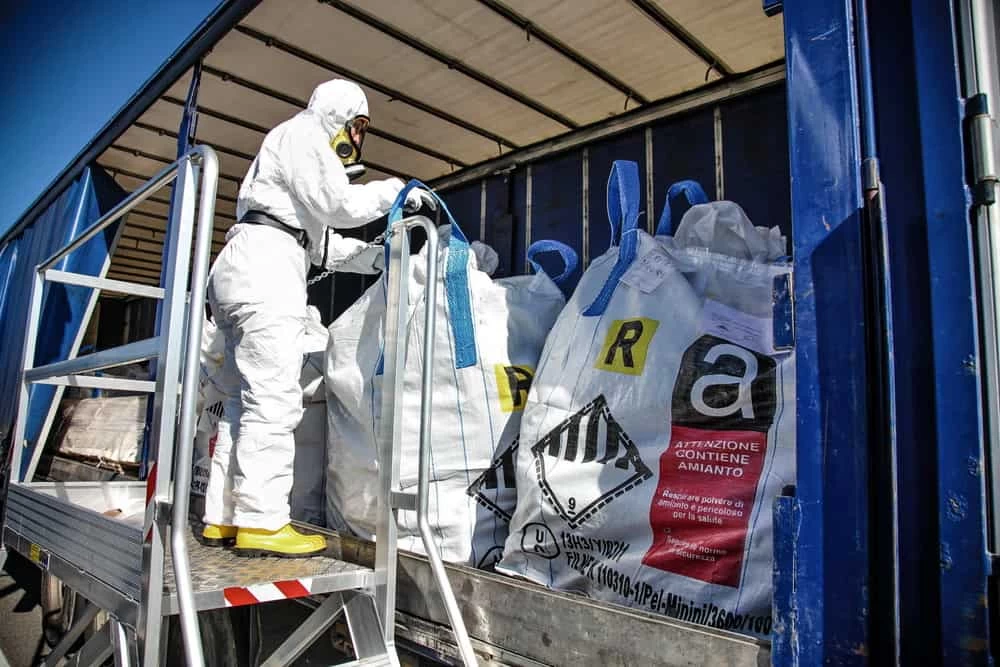
Once the project is authorized, we set up full containment plastic sheeting, negative air pressure, and Microtrap air scrubbers running throughout the abatement. This matters in a dense building where neighboring units share walls and ventilation. The goal is to make sure the work happening in your unit stays in your unit. After removal is complete, we don’t just clean up and leave. We conduct post-removal air quality verification clearance testing by a certified air monitoring technician before the space is cleared for re-occupancy.
When everything passes, you get the documentation: the abatement completion records and the clearance results your co-op board, your DOB permit application, or your real estate attorney will require. If reconstruction is needed after the abatement, we handle that too so you’re not left coordinating a second contractor to finish what we started.
Asbestos abatement in Kew Gardens isn’t a single task it’s a regulated sequence, and every step has to be done in the right order with the right paperwork behind it. We cover the full arc: initial inspection and testing, DEP filing and project authorization, full containment setup, asbestos removal or encapsulation depending on what the assessment calls for, post-abatement air clearance testing, and final documentation.
Because we’re also licensed for lead abatement, mold remediation, water damage restoration, and reconstruction, we’re equipped to handle what often comes with asbestos discoveries in pre-war buildings a pipe that needs replacing after the insulation is removed, mold behind a wall that gets exposed during the process, or water damage that triggered the whole thing in the first place. Kew Gardens’ aging building stock means these issues frequently overlap, and having one contractor who can address all of them under one project saves time and removes the coordination headache.
For property managers and co-op boards overseeing buildings along Queens Boulevard or near the Kew Gardens–Union Turnpike corridor, we’re also familiar with the institutional side of this process building-wide surveys, compliance documentation for DOB permit pulls, and the kind of project management that keeps a multi-unit building running while work is underway.
Do I need an ACP-5 form before renovating my Kew Gardens co-op?
Yes, and this is one of the most common points of confusion for homeowners starting a renovation in Kew Gardens. Because the neighborhood falls within New York City, NYC DEP regulations apply and before the NYC Department of Buildings will issue a permit for renovation or demolition in any pre-1987 building, an asbestos assessment must be completed and documented. That documentation is the ACP-5 form, filed by a DEP-Certified Asbestos Investigator.
Given that the median construction year in Kew Gardens is 1943, nearly every co-op renovation project in the neighborhood triggers this requirement. Your building’s managing agent will likely ask for it before approving the work anyway. The ACP-5 isn’t the end of the process if asbestos-containing materials are found and need to be disturbed, a full abatement project follows, with DEP notification required at least seven days before work begins. Getting ahead of this early in your renovation planning prevents the kind of permit holds that push timelines back by weeks.
How do I know if my older Kew Gardens home actually contains asbestos?
You can’t know for certain just by looking. Asbestos-containing materials don’t look different from non-asbestos materials the only way to confirm is through lab testing of samples collected by a certified asbestos investigator. In a Kew Gardens home built before 1950, the most common locations to find asbestos are floor tiles (especially 9×9 inch vinyl tiles common in mid-century renovations), pipe and boiler insulation, ceiling texture or plaster, roofing materials, and drywall joint compound.
The important thing to understand is that asbestos in stable, undisturbed condition isn’t necessarily an immediate health risk. The risk increases when materials are damaged, deteriorating, or about to be disturbed by renovation work. If you’re planning any work that involves cutting, drilling, sanding, or demolishing original materials in a pre-war Kew Gardens building, a professional assessment before you start is the right call not just for health reasons, but because NYC DEP regulations require it before a DOB permit is issued.
What happens if asbestos is discovered during a renovation already in progress?
Work stops. That’s the short answer, and it’s the right one. If a contractor uncovers suspect materials mid-project deteriorated pipe insulation, crumbling ceiling plaster, old floor tiles under a new layer the responsible move is to halt work in that area, avoid disturbing the material further, and get a certified inspector on site to test it.
In NYC, including Kew Gardens, continuing to disturb suspected asbestos-containing materials without going through the DEP authorization process creates real regulatory exposure for the property owner, not just the contractor. Once testing confirms the presence of asbestos, the project gets filed with DEP, the abatement is scheduled and completed, clearance testing is done, and then the renovation can resume. It adds time, but it’s the only path that keeps you compliant and keeps the space actually safe. We handle emergency calls exactly like this we can mobilize quickly, test, file, and abate so your project gets back on track as fast as the process allows.
Can a pipe freeze or water damage event expose asbestos in a Kew Gardens apartment?
It can, and it happens more often than people expect. Kew Gardens’ pre-war buildings many of them built in the 1920s and 1930s have aging plumbing and heating systems. When a pipe freezes and bursts, or when a boiler line fails, the water damage doesn’t just affect the wall or floor. It often reaches the original pipe insulation, which in buildings of that era was frequently wrapped with asbestos-containing material.
When that insulation gets wet, it can begin to deteriorate and release fibers turning what started as a water damage emergency into a situation that requires both water remediation and asbestos abatement. We handle both, which is one of the reasons clients in this situation call us specifically. We’re available 24/7, we respond to emergency calls, and we can assess the full scope of what’s going on water damage, potential asbestos exposure, and what needs to happen in what order without you having to coordinate multiple contractors in the middle of a stressful situation. We also work directly with insurance companies, which takes one more thing off your plate.
How long does asbestos abatement typically take in a Queens apartment or co-op unit?
The timeline depends on the scope of the project how much material is involved, where it’s located, and what the post-abatement clearance results show. For a focused abatement in a single room or around a specific system like pipe insulation, the physical removal work can often be completed in one to two days. But the full process from DEP notification filing to clearance testing and final documentation takes longer because of the required seven-day advance notice to DEP before work can begin.
For a Kew Gardens co-op renovation that uncovers asbestos in the floor tiles of a kitchen or bathroom, a realistic timeline from discovery to clearance certificate might be two to three weeks when you factor in testing, filing, abatement, and post-removal air testing. If you’re working against a real estate closing date or a renovation schedule, that’s exactly why it helps to have a contractor who knows how to move efficiently through each step without cutting corners on the regulatory side. The sooner you start the process, the more flexibility you have.
Does Green Island Group handle asbestos abatement in commercial buildings in Kew Gardens?
Yes. Kew Gardens isn’t just a residential neighborhood it’s the civic and legal center of Queens County, home to Queens Borough Hall, the Queens County Criminal Court, and a dense corridor of professional and commercial buildings along Queens Boulevard. Commercial and institutional properties in the neighborhood face the same asbestos compliance requirements as residential ones, and in many cases the regulatory scrutiny is higher because of occupancy levels and the complexity of the building systems involved.
We work with property managers, building owners, and institutional clients on commercial abatement projects including building-wide surveys before major renovations, abatement tied to DOB permit applications, and emergency response for commercial properties dealing with unexpected material disturbances. Our NYC General Contractor license, NYC BIC registration, and NYC MWBE certification make us a qualified vendor for institutional and government-adjacent projects in the neighborhood. If you manage a commercial property in Kew Gardens and need to understand your compliance obligations before pulling a permit or starting a renovation, we’re a straightforward call.