I needed a professional consultation explanation of procedure for safe removal of Asbestos in my apartment complex. Without having an account yet, I was very impressed with the caring, knowledgeable and generous advice offered by Jessica, and will look forward to doing business in the future. Thank you so much! I feel much more informed about a sometimes scary endeavor. Peace. Nancy Silva Mineola, NY.
Mia Munoz
Used this company to clean up some water flood in my house. They were fast and easy to work with.very professional, Would recommend to anyone!
Nini Valle
Great company, had a flood and they responded quickly and efficiently. Billed my insurance company directly. I highly recommend this company!
joe colapietro, jr
I had pipe freeze in my basement right before a snow storm and they made to within an hour to help start the clean up process. They we by our side throughout the entire process and even helped with the insurance company. They did such a great job with the cleanup, repair, remidiation, I contracted them to perform the repairs and finishes in the basement. They came with enough manpower and material to get the job done. Leo and Jessica were nothing but a pleasure to deal with!!
Cristian Arredondo c
I had some water damage in my home and Green Island was able to take care of my issue quickly and effectively. I am very pleased with the work they did. They responded quickly and were very professional.
Michael M
Outstanding service! From the office to the field crew everyone was friendly, helpful and responsive. I highly recommend Green Island Group.
Your Kings Park Renovation Moves Forward. Your Family Stays Safe.
Most Kings Park homeowners don’t go looking for asbestos. They find it when a contractor stops mid-job, when a buyer’s attorney flags something during a sale, or when a remodel uncovers old floor tiles and pipe wrap that nobody’s touched in 40 years. That moment is stressful but it doesn’t have to derail everything.
When asbestos abatement is handled correctly, the outcome is simple: you get a clean bill of health, documented clearance, and the ability to move forward. Whether that means your kitchen remodel picks back up next week or your home closes on schedule, the goal is the same no loose ends, no liability, no guesswork.
Kings Park’s housing stock is almost perfectly centered on the era when asbestos was most commonly used. About 68% of homes here were built between the 1950s and 1970s, and the average build year is 1967. That’s not a coincidence it’s a pattern. Cape Cods, ranch homes, split-levels on quiet residential streets they’re beautiful homes, and a lot of them are carrying materials that weren’t considered a problem when they were installed. With median home values now sitting around $670,000, getting this handled the right way protects both your family and your investment.
We’re a licensed asbestos abatement contractor serving Long Island, including Kings Park and the broader Smithtown area. We’re not a national franchise with a local phone number we’re a Long Island operation that already has an established presence in Nassau County and has expanded into Suffolk County because the need is real and the work matters.
We’ve worked in the same mid-century homes that define neighborhoods from the San Remo area to the streets off St. Johnland Road. We know what 1960s construction looks like on the inside where the asbestos-containing floor tiles tend to show up, how pipe insulation ages in Suffolk County basements, and what a popcorn ceiling from 1972 actually requires to remove safely.
Every project we complete is performed under NYS DOL licensing, with certified workers, proper air monitoring, and full clearance documentation. That’s not a selling point it’s the law, and it’s how we operate on every job.
No Surprises Here's What the Process Actually Looks Like
It starts with an inspection. We come to your home, assess the materials in question, and take samples for laboratory analysis. For most Kings Park homes particularly those built before 1974, which fall under NYS Industrial Code Rule 56’s mandatory pre-renovation survey requirement this step isn’t optional. It’s required before any renovation, remodel, or demolition work can legally begin. We walk you through what we’re looking at and why before anything is collected.
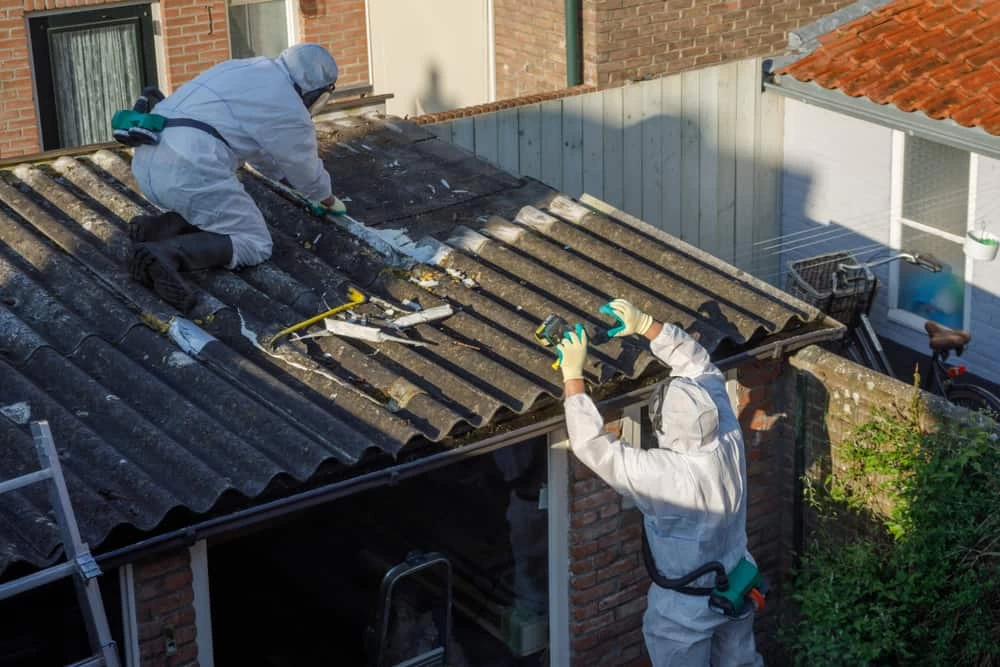
Once lab results confirm the presence of asbestos-containing materials, we build a work plan and submit the required notification to the NYS Department of Labor Asbestos Control Bureau. From there, our certified crew sets up containment negative air pressure, sealed work zones, HEPA filtration and performs the removal using wet methods designed to keep fibers from becoming airborne. Asbestos tile removal, popcorn ceiling abatement, pipe insulation, joint compound each material type has a specific protocol, and we follow all of them.
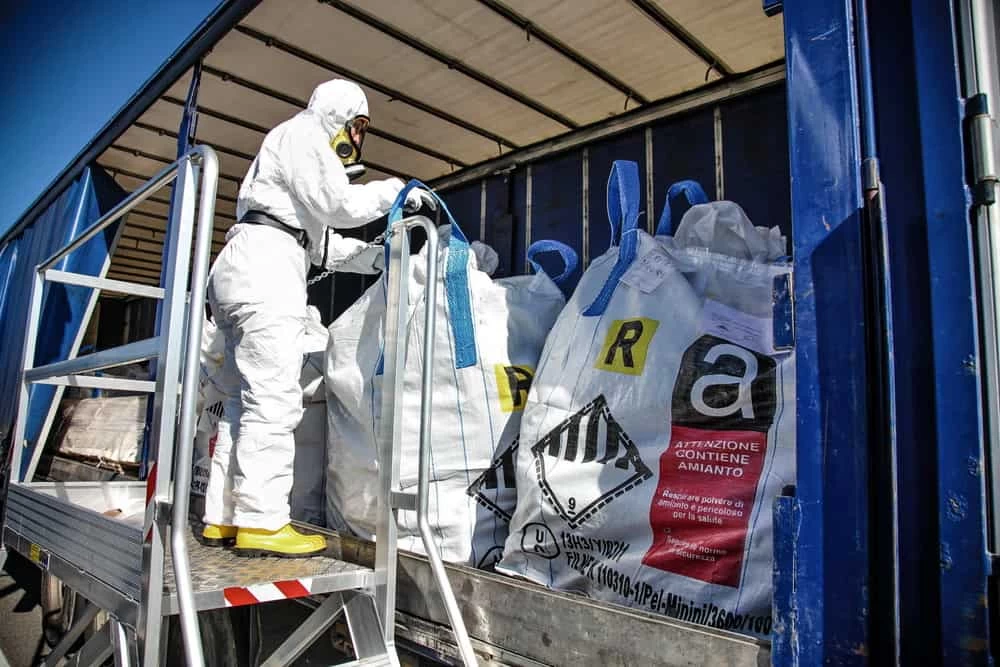
After removal, we conduct final air clearance testing. You receive a complete compliance package: air monitoring results, clearance certification, and disposal documentation. That paperwork is what your contractor, your buyer, or your lender will ask for and it’s what protects you long after the job is done. Under NYS rules, all waste is removed from the site within ten days of project completion, so there’s no lingering material left behind.
Asbestos abatement isn’t just removal it’s the entire chain of work that makes the removal legally valid and genuinely safe. We handle every part of that chain. Initial inspection and material sampling, lab analysis, NYS DOL project notification, full containment setup, licensed removal, air quality monitoring throughout, and final clearance testing. You’re not coordinating between three different vendors it’s one team, start to finish.
The specific materials we handle most often in Kings Park homes include 9″x9″ vinyl floor tiles and the adhesive beneath them a staple of mid-century construction that frequently contains chrysotile asbestos. Acoustic popcorn ceiling texture is another common find in homes built through the late 1970s, and it becomes a serious hazard the moment it’s sanded or scraped. Pipe and duct insulation in basements and crawl spaces, roofing materials, and textured joint compound round out the list of what we typically encounter in this area’s housing stock.
For homeowners in Kings Park preparing to sell, the compliance documentation we provide matters as much as the removal itself. With home values near $670,000 and buyers’ attorneys increasingly requiring asbestos clearance on pre-1980 homes, having a clean, fully documented abatement on record is a real asset at the closing table. We provide everything in writing no gaps, no missing paperwork, nothing that creates problems down the road.
Does my Kings Park home actually need an asbestos inspection before renovating?
If your home was built before 1974, the answer under New York State law is yes an asbestos survey is required before renovation, remodeling, or demolition work begins. This is spelled out in NYS Industrial Code Rule 56, and it applies regardless of the size of the project. A contractor who skips this step is putting both you and themselves at legal risk.
Kings Park’s housing stock makes this especially relevant. With roughly 68% of homes here built between the 1950s and 1970s, the odds that your home contains asbestos-containing materials in at least one location are genuinely high. Floor tiles, pipe insulation, ceiling texture, roofing materials these were standard building products during that era. An inspection doesn’t mean you have a problem. It means you know what you’re dealing with before someone starts swinging a demo hammer.
How much does asbestos removal cost in Kings Park, NY?
Based on completed projects in the Kings Park area, asbestos removal typically runs between $20 and $65 per square foot, with most residential projects falling somewhere between $1,200 and $3,000. That range reflects real local project data not a national average applied to a Long Island zip code.
Where your project lands in that range depends on what materials are involved, how accessible they are, and how much square footage needs to be addressed. A single bathroom floor with old vinyl tiles is a very different scope than a full basement pipe insulation removal or a whole-home popcorn ceiling abatement. The best way to get an accurate number is a real inspection not a phone estimate based on assumptions. We give you a straight answer on cost before any work begins, and we don’t add to it after the fact.
What happens if asbestos is found during a home sale in Kings Park?
It depends on when it’s found and how it’s handled. If asbestos-containing materials are identified during a buyer’s inspection, it typically triggers a negotiation the buyer may request remediation as a condition of sale, ask for a price reduction, or in some cases walk away. With Kings Park home values averaging around $670,000, the financial stakes of a deal falling apart are significant.
The cleaner path is to address it before you list. Sellers who commission a licensed asbestos inspection and complete any necessary abatement ahead of listing can provide full compliance documentation to buyers upfront which removes the uncertainty, keeps deals from stalling, and often justifies the asking price more effectively. We provide the complete paperwork package that attorneys and lenders expect to see: project notifications, air monitoring results, clearance certification, and disposal records.
Is asbestos popcorn ceiling removal something I can do myself in Kings Park?
Technically, New York State’s Industrial Code Rule 56 does include a narrow exception for owner-occupied single-family homes where the owner performs the work themselves. But that exception doesn’t make it a good idea and it comes with real limitations. It doesn’t apply to any rental property, commercial space, or property you’re preparing to sell. It also doesn’t produce the clearance documentation that a buyer, lender, or future contractor will ask for.
More practically: popcorn ceiling texture from the 1960s and 1970s frequently contains chrysotile asbestos, and once you start scraping it, you’re releasing fibers into the air. Without proper containment, negative air pressure, HEPA filtration, and certified disposal, you’re creating an exposure risk for everyone in the home. The cost of licensed asbestos popcorn ceiling removal is a fraction of what you’d spend dealing with the health or legal consequences of doing it wrong. For Kings Park homeowners with families in the house, this is not the place to cut corners.
How long does asbestos abatement take for a typical Kings Park home?
Most residential asbestos abatement projects in Kings Park take anywhere from one to three days for the actual removal work, depending on the scope and materials involved. A single-room floor tile removal is typically faster than a multi-room popcorn ceiling abatement or a basement pipe insulation project. What adds time to the overall timeline is the process surrounding the removal lab results from initial sampling usually take a few days, and the final air clearance testing needs to be completed and documented before the space can be reopened.
From first call to final clearance, most straightforward residential projects are wrapped up within one to two weeks. If you’re working against a renovation schedule or a closing date, let us know upfront we can often sequence the work to minimize disruption to your timeline. Kings Park homeowners who are mid-renovation and waiting on asbestos clearance to proceed should expect their contractor to require the final clearance documentation before returning to the job site, so getting that paperwork in hand quickly matters.
Why is asbestos such a known issue specifically in Kings Park compared to other towns?
A few things converge in Kings Park that make asbestos awareness higher here than in many other communities. The housing stock is the biggest factor with the average home built in 1967 and roughly 68% of homes dating from the 1950s through the 1970s, Kings Park has one of the highest concentrations of mid-century residential construction in Suffolk County. That’s the exact era when asbestos was built into homes as a matter of routine.
But there’s also the Kings Park Psychiatric Center. That massive abandoned campus now partially within Nissequogue River State Park has been publicly identified by New York State Parks officials as containing asbestos in its steam tunnels and remaining buildings. Demolition of those structures has been stalled for years specifically because of the asbestos abatement challenge involved. That’s not a distant environmental story for Kings Park residents it’s visible from the park trails. It’s a real, local reminder that asbestos isn’t abstract, and it’s part of why homeowners here tend to take it seriously when it comes up in their own homes.