Most Lake Katrine homes were built during the 1950s and 60s and that era came with asbestos baked into the walls, floors, and ceilings. We remove it safely, legally, and completely.
I needed a professional consultation explanation of procedure for safe removal of Asbestos in my apartment complex. Without having an account yet, I was very impressed with the caring, knowledgeable and generous advice offered by Jessica, and will look forward to doing business in the future. Thank you so much! I feel much more informed about a sometimes scary endeavor. Peace. Nancy Silva Mineola, NY.
Mia Munoz
Used this company to clean up some water flood in my house. They were fast and easy to work with.very professional, Would recommend to anyone!
Nini Valle
Great company, had a flood and they responded quickly and efficiently. Billed my insurance company directly. I highly recommend this company!
joe colapietro, jr
I had pipe freeze in my basement right before a snow storm and they made to within an hour to help start the clean up process. They we by our side throughout the entire process and even helped with the insurance company. They did such a great job with the cleanup, repair, remidiation, I contracted them to perform the repairs and finishes in the basement. They came with enough manpower and material to get the job done. Leo and Jessica were nothing but a pleasure to deal with!!
Cristian Arredondo c
I had some water damage in my home and Green Island was able to take care of my issue quickly and effectively. I am very pleased with the work they did. They responded quickly and were very professional.
Michael M
Outstanding service! From the office to the field crew everyone was friendly, helpful and responsive. I highly recommend Green Island Group.
Your Lake Katrine Home Is Safe Again Here's What That Means
When asbestos abatement is done right, you stop guessing. You stop wondering whether that old floor tile is a problem, whether the pipe wrap in your basement is crumbling, or whether the popcorn ceiling in the back bedroom is something you should be worried about. The answer is documented, the work is verified, and you have air clearance results in hand that prove the space is safe to occupy.
For Lake Katrine homeowners, that peace of mind carries real weight. The housing stock here was largely built to accommodate the wave of IBM workers who arrived after the Kingston campus opened in 1956. That means a significant portion of homes in this area are sitting on original materials floor tiles, boiler insulation, joint compound, vermiculite in the attic that were installed during the height of asbestos use in residential construction. If you’re renovating, selling, or just finally getting around to replacing that old furnace, there’s a real chance asbestos is part of what you’re dealing with.
Esopus Creek runs along the edge of Lake Katrine, and flood events don’t just damage drywall they disturb older building materials in ways that can release fibers into the air. If your home has taken on water and you have any pre-1980 materials in the affected areas, that’s not a mold-only situation. We handle both, under one roof, with the licenses to back it up.
We hold the NYS Department of Labor Asbestos Handling License the specific, legally required credential for asbestos work in New York State under Industrial Code Rule 56. That’s not a general contractor license with asbestos work folded in. It’s a separate certification that requires dedicated training, documented compliance, and ongoing accountability. You can verify it on the NYS DOL Asbestos Contractors Listing before you ever call us.
Beyond asbestos, our team is IICRC certified for water and fire damage restoration, USEPA Lead and RRP certified, and NYS DOL Mold licensed which matters in Lake Katrine, where older homes near Esopus Creek often present more than one problem at a time. We also hold NYS MBE, WBE, and MWBE certifications government-verified designations, not self-reported claims.
When you’re dealing with a pre-1980 home in the Town of Ulster, you want one contractor who can handle the full picture. That’s what we’re built to do.
It starts with an assessment. Before any work begins, we identify what materials are present, where they are, and whether they’re in a condition that requires abatement. In Lake Katrine’s IBM-era homes, that typically means checking basements for pipe and boiler insulation, looking at original floor tiles and the black mastic beneath them, assessing popcorn ceilings, and evaluating any vermiculite insulation in the attic. If testing is needed to confirm the presence of asbestos, that gets coordinated before any disturbance occurs.
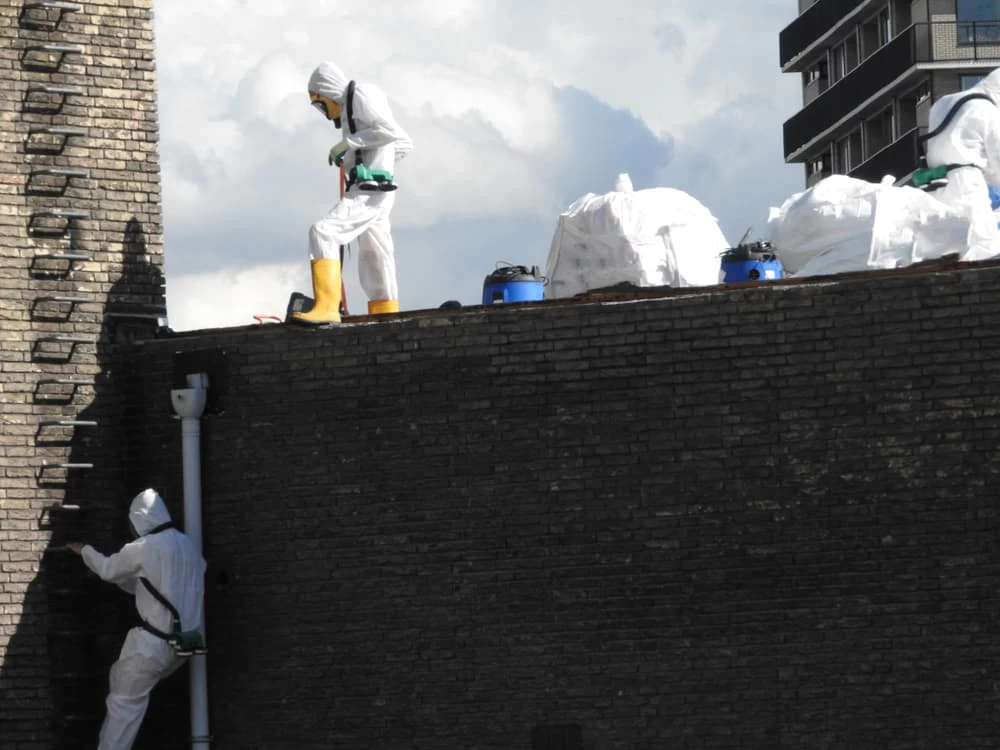
Once the scope is confirmed, we handle the NYS DOL pre-project notification and any permit requirements through the Town of Ulster Building Department. You don’t have to figure out New York State Industrial Code Rule 56 on your own that’s handled. Containment is established to protect the rest of your home, and abatement proceeds under the protocols required by state law: proper PPE, negative air pressure, sealed work zones, and documented waste disposal at an approved facility.
After the work is complete, air monitoring confirms that fiber levels are below the threshold required for safe re-occupancy. You receive that documentation. It’s not a verbal assurance it’s a written record you can keep, share with a real estate attorney, or present to a buyer’s inspector. That’s how the job ends.
Asbestos abatement in Lake Katrine covers the full range of materials common to post-war construction in the Town of Ulster. That means floor tile and mastic removal, pipe and boiler insulation abatement, popcorn and acoustic ceiling removal, joint compound and drywall abatement, vermiculite attic insulation removal, and asbestos cement siding or roofing where present. These aren’t edge cases they’re standard findings in homes built between 1950 and 1980, which describes the majority of Lake Katrine’s residential stock.
Every job includes pre-abatement inspection and material assessment, NYS DOL notification and permit coordination, full containment setup, abatement performed by licensed handlers, regulated waste transport and disposal, and post-abatement air clearance testing with written documentation. If your situation involves water damage alongside asbestos which is a realistic scenario for homes near Esopus Creek we handle mold remediation and water damage restoration in the same project without bringing in a second contractor.
We also bill insurance directly. If your abatement is tied to a covered water damage or flood claim, you’re not left managing paperwork between your insurer and us. That coordination happens on our end. For property owners involved in the iPark 87 redevelopment or any commercial work on the former IBM campus, commercial-scale abatement is part of what we handle as well.
How do I know if my Lake Katrine home actually contains asbestos?
The honest answer is that you can’t know for certain without testing but you can make a very educated guess based on your home’s age and construction type. If your house was built between 1950 and 1980, which covers the majority of Lake Katrine’s residential stock given the IBM-era construction boom, there’s a realistic chance asbestos-containing materials are present somewhere. The most common locations are 9×9 vinyl floor tiles and the black adhesive beneath them, pipe and boiler insulation in the basement, popcorn or acoustic ceiling texture, attic vermiculite insulation, and original joint compound behind drywall.
The only way to confirm it is through sampling and laboratory analysis. A licensed contractor collects small samples from suspected materials and sends them to an accredited lab. Results typically come back within a few days. If asbestos is confirmed and the material is in a damaged or disturbed condition, abatement is required under New York State law before any renovation or demolition work proceeds. If it’s intact and undisturbed, we can advise on whether abatement is necessary now or whether monitoring is appropriate.
What does asbestos abatement actually cost for a typical home in Ulster County?
Cost depends on what materials are present, how much of it there is, and where it’s located. For a smaller, contained project one room of floor tiles or a section of pipe insulation in a basement you’re typically looking at somewhere in the $1,500 to $4,000 range. A mid-size project covering multiple materials or rooms, like a full basement pipe system plus original tile throughout a first floor, usually falls between $3,000 and $10,000. Whole-house abatement ahead of a major renovation or demolition can run $10,000 to $25,000 or more depending on scope.
In Ulster County, pricing reflects the cost of NYS regulatory compliance mandatory air monitoring, licensed personnel, proper waste disposal at an approved facility, and documentation that meets NYS Industrial Code Rule 56 requirements. If you get a quote that seems significantly lower than these ranges, ask the contractor to show you their NYS DOL Asbestos Handling License number. That license is a separate, specific credential not something folded into a general contractor’s license and it’s verifiable on the state’s public contractor listing. Unlicensed work isn’t just legally risky; it’s a health risk to everyone in the home.
Does homeowners insurance cover asbestos removal in New York State?
It depends on what triggered the abatement. Standard homeowners insurance policies in New York generally do not cover asbestos removal as a standalone maintenance or renovation item meaning if you simply discover asbestos during a planned kitchen remodel, that’s typically out of pocket. However, if asbestos-containing materials were disturbed or damaged as a result of a covered event a burst pipe, storm damage, or flooding the abatement tied to that damage event may be covered under your policy’s remediation provisions.
This is particularly relevant for Lake Katrine homeowners near Esopus Creek, where flood events have historically affected properties in the area. If floodwater damages walls, floors, or insulation in a pre-1980 home, and those materials contain asbestos, the abatement required to safely address the damage may fall under your claim. We bill insurance companies directly and handle the documentation your adjuster needs to process the claim. If you’re unsure whether your situation qualifies, the best first step is a call we can help you understand what’s likely covered before any work begins.
Is asbestos abatement required before selling a home in Lake Katrine, NY?
New York State does not have a blanket law requiring asbestos abatement before a home sale, but the practical reality in the Kingston and Ulster County real estate market is that it comes up almost every time a pre-1980 home changes hands. Buyers’ home inspectors routinely flag suspected asbestos-containing materials floor tiles, popcorn ceilings, pipe insulation and buyers frequently request abatement as a condition of closing or negotiate a price reduction to account for it.
Real estate attorneys in the area commonly recommend that sellers of older homes get an asbestos survey done before listing, so there are no surprises during the inspection period. If asbestos is found and disclosed, you have control over how it’s addressed and at what cost. If it surfaces during a buyer’s inspection, you’re negotiating from a weaker position. For Lake Katrine homeowners considering a sale especially given the significant number of long-term residents and estate transitions happening in this community getting ahead of it is almost always the better financial decision. We can provide post-abatement air clearance documentation that you can include in your disclosure package.
How long does asbestos abatement take, and will I need to leave my home?
Timeline depends on the scope of work. A small, contained project one room of floor tile removal or a section of basement pipe insulation can typically be completed in one to two days. A larger project covering multiple areas of a home may take three to five days or longer. We’ll give you a clear timeline before work begins, not after.
Whether you need to vacate depends on where the work is being done and how the containment is set up. In many cases, abatement in a basement or a single room can be isolated well enough that the rest of the home remains accessible. For more extensive work, or when the HVAC system could distribute fibers to unaffected areas, temporary displacement may be recommended. We’ll walk you through exactly what to expect for your specific situation including which areas will be off-limits and for how long before any containment goes up. For older residents or families with children in the Kingston City School District, that kind of clear communication about timing and re-occupancy matters, and it’s part of every job.
Can I just leave asbestos alone if it's not damaged or does it have to be removed?
This is one of the most common and genuinely useful questions to ask, because the answer isn’t always removal. Asbestos-containing materials that are in good condition intact, not crumbling, not being disturbed are generally not releasing fibers into the air. In those cases, the standard guidance under New York State regulations is to leave them alone and monitor them over time rather than disturb them unnecessarily. Disturbing intact asbestos during an unnecessary removal can actually create more risk than leaving it in place.
Where removal becomes necessary is when the material is damaged or deteriorating, when it’s going to be disturbed by renovation or demolition work, or when it’s in a location that makes future disturbance likely. In Lake Katrine’s older homes, the most common scenario that forces the decision is a planned renovation pulling up original floors, opening walls, replacing a boiler where the work can’t proceed without disturbing the material. At that point, abatement before the renovation is required under NYS Industrial Code Rule 56 for any disturbance of 10 square feet or 25 linear feet or more. We can assess the condition of your specific materials and give you a straight answer on whether removal is the right call now or whether monitoring makes more sense for your situation.