Lake Purdy Homes Were Built in Layers So Was the Risk
If your Lake Purdy home was built or expanded between the 1930s and 1970s, there’s a real chance asbestos is somewhere inside it. We provide licensed asbestos abatement with the state credentials, documentation, and process to protect your home and your investment.
I needed a professional consultation explanation of procedure for safe removal of Asbestos in my apartment complex. Without having an account yet, I was very impressed with the caring, knowledgeable and generous advice offered by Jessica, and will look forward to doing business in the future. Thank you so much! I feel much more informed about a sometimes scary endeavor. Peace. Nancy Silva Mineola, NY.
Mia Munoz
Used this company to clean up some water flood in my house. They were fast and easy to work with.very professional, Would recommend to anyone!
Nini Valle
Great company, had a flood and they responded quickly and efficiently. Billed my insurance company directly. I highly recommend this company!
joe colapietro, jr
I had pipe freeze in my basement right before a snow storm and they made to within an hour to help start the clean up process. They we by our side throughout the entire process and even helped with the insurance company. They did such a great job with the cleanup, repair, remidiation, I contracted them to perform the repairs and finishes in the basement. They came with enough manpower and material to get the job done. Leo and Jessica were nothing but a pleasure to deal with!!
Cristian Arredondo c
I had some water damage in my home and Green Island was able to take care of my issue quickly and effectively. I am very pleased with the work they did. They responded quickly and were very professional.
Michael M
Outstanding service! From the office to the field crew everyone was friendly, helpful and responsive. I highly recommend Green Island Group.
Most Lake Purdy homeowners don’t find out they have asbestos until a contractor stops mid-demo, a home inspector flags something, or they pull up old flooring and realize the tiles don’t look right. At that point, the renovation stalls, the closing gets complicated, and suddenly you’re trying to figure out who to call and whether they’re actually qualified to do this legally in New York State.
When abatement is handled correctly licensed crew, proper containment, state-compliant disposal, and post-clearance air testing you get your project back on track. You get documentation that satisfies a buyer’s attorney, a lender, or a home inspector without back-and-forth. And you get the confirmation that the air in your home tested clean before anyone moved back in.
Lake Purdy’s housing stock makes this more relevant than most people expect. The community started as seasonal bungalows in the late 1920s and was progressively winterized and expanded over the next four decades. That means a lot of homes here weren’t built once they were built in stages. A 1930s structure with a 1950s addition and a 1960s kitchen renovation can carry asbestos-containing materials from multiple eras, often in the same wall or floor. Lakeside conditions add another layer moisture from the water table, seasonal flooding, and freeze-thaw cycles in northern Westchester winters can degrade older materials and make previously stable asbestos friable. Getting a full picture of what’s in your Lake Purdy home, and removing it properly, isn’t overcautious. It’s just what responsible ownership looks like here.
Licensed Asbestos Contractor Serving Lake Purdy, NY
Every License Verified. Every Project Documented.
We hold the NYS Department of Labor Asbestos Handling License the credential required by New York State’s Industrial Code Rule 56 to legally perform asbestos abatement anywhere in the state. That license is a public record. You can look it up before you sign anything. We also carry EPA certification, NYS DEC compliance for disposal, and an M/WBE certification from the New York State Office of General Services a government-issued designation that required formal review, not a self-applied label.
With more than 5,000 completed abatement projects across the New York metro area, we’ve worked extensively throughout Westchester County including Lake Purdy and surrounding communities in northern Westchester that share the same construction history, the same housing vintage, and the same regulatory environment. We know what a 1950s lake community home looks like on the inside. We’ve seen the layered construction, the pipe insulation in the crawlspace, the 9×9 floor tiles under three layers of vinyl. None of it is new to us, and none of it will slow us down on your project.
No Guesswork Here's Exactly What the Process Looks Like
It starts with a free on-site inspection. We come to your Lake Purdy home, walk the property, and assess the materials in question whether that’s floor tile in a basement, pipe insulation on an old boiler, acoustic ceiling texture in a bedroom, or something a renovation contractor flagged mid-project. If samples need to go to a lab, we handle that. You’ll know what you’re dealing with before any abatement work begins.
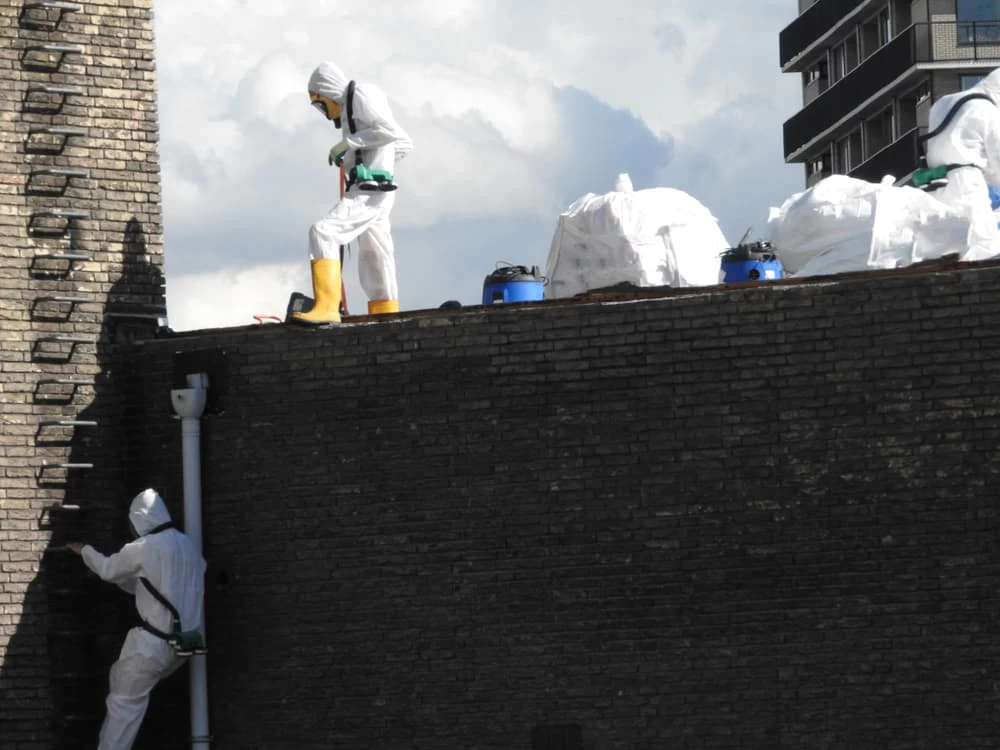
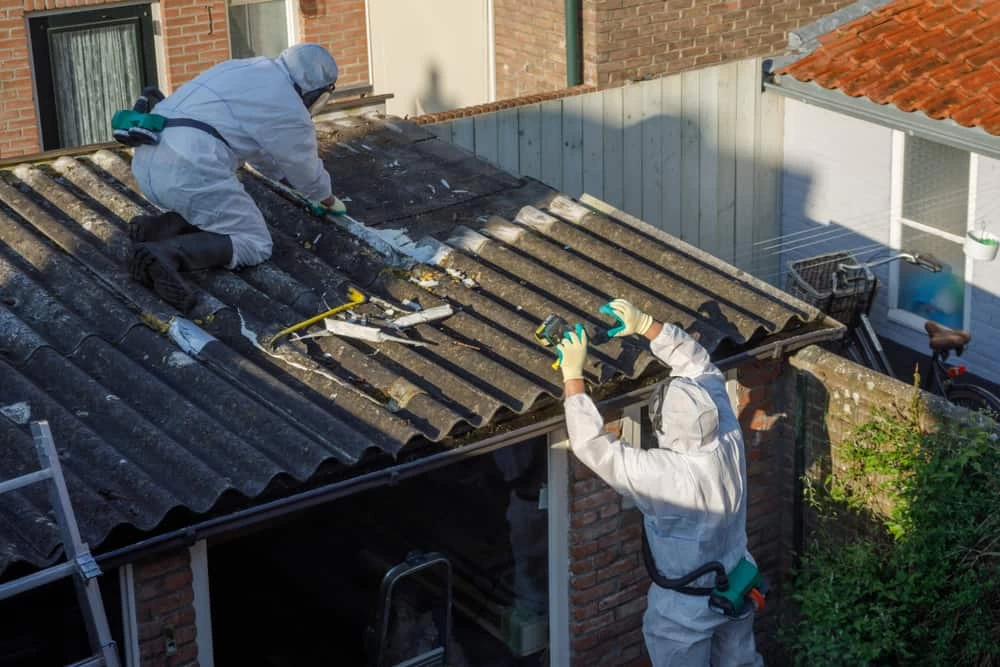
Once we have a confirmed scope, we handle all required NYS DOL notifications and permitting. In New York, abatement projects above certain thresholds require state notification before work starts that’s not optional, and it’s not something a homeowner should be managing on their own. We take care of it. Then our crew sets up containment negative air pressure, sealed work areas, HEPA filtration and removes the materials according to the specific protocols that apply to each type. Floor tile removal has different requirements than pipe insulation removal, and we follow the right process for each.
After the physical work is done, post-abatement air clearance testing is conducted before the containment comes down. This is not a formality it’s the step that produces the documentation you’ll need for a real estate transaction, an insurance claim, or simply your own records. Every project ends with a clearance certificate that confirms the air in your home tested within safe limits. That document is yours, and it travels with the property.
Asbestos Tile and Popcorn Ceiling Removal in Lake Purdy
The Materials Most Common in Lake Purdy and What We Do With Them
The asbestos-containing materials we most commonly find in Lake Purdy homes fall into a few consistent categories. Vinyl asbestos floor tile particularly the 9×9 format that was standard in postwar residential construction shows up frequently in homes that were winterized or expanded in the 1940s and 1950s. Acoustic ceiling texture, commonly called popcorn ceiling, was applied widely through the 1960s and 1970s and is one of the most common triggers for abatement in homes that are being updated or prepared for sale. Pipe insulation on older heating systems, duct wrap, and joint compound from mid-century additions round out the list of materials we regularly assess and remove in this area.
For homes near the lake, water intrusion events deserve specific attention. A basement that’s taken on water whether from the elevated water table typical of lakeside properties, a nor’easter, or a pipe freeze during a northern Westchester winter can disturb floor tiles and degrade pipe insulation that was previously stable. If you’re dealing with water damage in an older Lake Purdy home, asbestos assessment should happen before restoration work begins, not after. We handle both, which means you’re not coordinating two separate contractors for the same event.
All waste is removed and disposed of at an NYS DEC-approved facility with a complete chain-of-custody manifest. Every project includes post-abatement air clearance documentation as a standard deliverable not an add-on. If your homeowners’ insurance is involved, we bill directly, so you’re not stuck in the middle managing paperwork between your insurer and our team.
How do I know if my Lake Purdy home actually contains asbestos?
The honest answer is that you can’t know for certain without testing. Visual inspection alone isn’t reliable asbestos-containing materials often look identical to non-asbestos versions of the same product. The only way to confirm is to have a sample collected and sent to an accredited laboratory for analysis.
That said, if your Lake Purdy home was built or substantially renovated before 1980, the probability is meaningful. Lake Purdy’s housing stock is particularly layered many homes here started as seasonal bungalows in the late 1920s and were expanded and updated over several decades. That construction history puts a lot of properties in the range where multiple types of asbestos-containing materials could be present simultaneously. Floor tiles, pipe insulation, ceiling texture, joint compound, and duct wrap are the most common materials we assess in homes of this vintage. A free on-site inspection is the right first step it gives you a professional read on what you’re dealing with before you commit to anything.
Does asbestos abatement in New York require a licensed contractor, or can anyone do it?
New York State requires a licensed contractor for any asbestos abatement work. This is governed by Industrial Code Rule 56 12 NYCRR Part 56 which applies statewide, including all properties in the Town of Somers and the Town of North Salem where Lake Purdy is located. The contractor must hold a valid NYS Department of Labor Asbestos Handling License, and every individual worker on the job must carry their own personal asbestos handler certification.
This isn’t a technicality you can work around. Hiring an unlicensed contractor or attempting DIY removal creates real legal exposure, voids most homeowners’ insurance coverage for the event, and leaves you with no documentation if the issue surfaces during a future sale. Beyond the legal side, improper removal can spread fibers throughout a home rather than containing them, which makes the problem significantly worse. When you hire us, you can verify our NYS DOL license number independently before signing anything. That’s not something every contractor will offer.
What happens if more asbestos is found once the work has already started?
It happens more often than people expect, particularly in homes with layered construction histories like many in Lake Purdy. You open a wall to remove pipe insulation and find floor tile underneath that also tests positive. Or the ceiling texture comes down and there’s additional material in the substrate. These discoveries aren’t failures they’re just what older homes sometimes hold.
When additional material is identified mid-project, we stop, assess, and document what was found before proceeding. Any expansion of scope gets communicated to you clearly what was found, where, what it means for the project timeline, and what it will cost to address. Nothing moves forward without your sign-off. We also handle the updated NYS DOL notification requirements if the scope change crosses a reporting threshold, so you’re not left managing a regulatory step you didn’t know existed. The goal is to get everything addressed in a single project rather than leaving something behind that becomes a problem later.
How long does asbestos abatement typically take for a home in Lake Purdy?
Timeline depends on the scope specifically, how many material types are involved, how large the affected areas are, and whether the project requires NYS DOL pre-notification, which applies to larger abatement jobs and adds a mandatory waiting period before work can begin.
For a focused project removing floor tile in a basement, or addressing pipe insulation on a boiler the physical work can often be completed in one to two days. Larger projects involving multiple material types across several rooms, or whole-home assessments with significant ACM inventories, typically run three to five days or more. Post-abatement air clearance testing adds time as well the containment stays up until the air samples come back clean, which generally takes 24 to 48 hours after the physical removal is complete. If you’re working against a real estate closing deadline or a renovation schedule, let us know upfront. We’ll give you an honest timeline based on your specific scope, not an optimistic number that falls apart once the work starts.
Will my homeowners' insurance cover asbestos abatement if it was triggered by water damage?
It depends on your policy and the specific circumstances, but water-damage-triggered abatement is one of the scenarios where coverage is most commonly available. If a covered water event a burst pipe during a northern Westchester freeze, storm-related flooding, or a sudden leak disturbed asbestos-containing materials in your home, many standard homeowners’ policies will cover the abatement as part of the overall remediation claim.
The key is documentation. Your insurer will want a clear record of what was found, where, how it was disturbed, and what was done to address it. That’s exactly what our post-abatement clearance package provides a complete chain-of-custody record from initial assessment through final air clearance. We also bill insurance carriers directly, which means you’re not fronting the cost and waiting for reimbursement while also managing a remediation project. If you’re dealing with a water damage situation in a Lake Purdy home and you’re not sure whether asbestos is involved, the right move is assessment before any restoration work begins not after.
Is asbestos abatement required before selling a home in Lake Purdy, NY?
New York State doesn’t have a law that mandates abatement before a home sale, but that’s not the full picture. What matters practically is what shows up during the buyer’s inspection and how their attorney and lender respond to it. In Westchester County’s real estate market particularly in communities like Lake Purdy where buyers are often relocating from New York City and are represented by experienced real estate attorneys an asbestos disclosure without accompanying remediation documentation can stall or kill a deal.
If a pre-1980 home in Lake Purdy has known asbestos-containing materials that haven’t been addressed, a buyer’s attorney may require abatement as a closing condition, or the buyer may simply walk. Having a completed abatement project with post-clearance air documentation already in hand when you list removes that contingency entirely. It also signals to buyers that the home has been maintained responsibly which carries real weight in a community where long-term property values and neighborhood standards matter. If you’re preparing to sell, getting the abatement done before listing is almost always the cleaner path.