Leptondale Farmhouses Built Before 1980 Need More Than a Guess
If your home was built before 1980 or sits on land that held structures long before that asbestos abatement isn’t a maybe. We handle it legally, completely, and with the documentation that actually closes the loop.
I needed a professional consultation explanation of procedure for safe removal of Asbestos in my apartment complex. Without having an account yet, I was very impressed with the caring, knowledgeable and generous advice offered by Jessica, and will look forward to doing business in the future. Thank you so much! I feel much more informed about a sometimes scary endeavor. Peace. Nancy Silva Mineola, NY.
Mia Munoz
Used this company to clean up some water flood in my house. They were fast and easy to work with.very professional, Would recommend to anyone!
Nini Valle
Great company, had a flood and they responded quickly and efficiently. Billed my insurance company directly. I highly recommend this company!
joe colapietro, jr
I had pipe freeze in my basement right before a snow storm and they made to within an hour to help start the clean up process. They we by our side throughout the entire process and even helped with the insurance company. They did such a great job with the cleanup, repair, remidiation, I contracted them to perform the repairs and finishes in the basement. They came with enough manpower and material to get the job done. Leo and Jessica were nothing but a pleasure to deal with!!
Cristian Arredondo c
I had some water damage in my home and Green Island was able to take care of my issue quickly and effectively. I am very pleased with the work they did. They responded quickly and were very professional.
Michael M
Outstanding service! From the office to the field crew everyone was friendly, helpful and responsive. I highly recommend Green Island Group.
When asbestos is handled correctly, your renovation moves forward. Your real estate transaction doesn’t stall. Your family isn’t living in a holding pattern while you figure out who to call next. That’s the actual outcome not a certificate on a wall, but a project that keeps moving and a home you can actually use again.
Leptondale’s housing stock is different from most of Orange County. You’ve got properties along North Plank Road and the rural stretch near Route 300 that carry genuine age farmhouses, outbuildings, and structures that have been added onto over generations. Those homes often have asbestos in places people don’t expect: pipe insulation wrapped around old boilers, 9×9 floor tiles buried under three layers of later flooring, roofing felt that’s been frozen and thawed enough times to start breaking down. When those materials go from stable to friable, the risk is real and the legal obligation to address it is immediate.
The freeze-thaw cycles in this part of Orange County are hard on old buildings. Repeated frost damage cracks insulation, delaminates roofing materials, and compromises the exact surfaces where asbestos-containing materials are most likely to be present. Getting ahead of that or responding to it correctly when it happens is what protects both your family and the long-term value of the property.
We’ve been operating for over 12 years as an independently owned environmental remediation contractor. No franchise. No call center routing your job to whoever’s available. We hold the NYS Department of Labor Asbestos Contractor License required to legally perform abatement under 12 NYCRR Part 56 the regulation that governs every asbestos project in New York State, including every property in the Town of Newburgh and the surrounding Orange County area where Leptondale is located.
Beyond residential work, we’ve performed abatement for NYS Office of General Services, the Dormitory Authority of the State of New York, and NYS Office of Mental Health agencies that vet their contractors thoroughly before a single worker sets foot in a public building. That same standard applies to every project, whether it’s a historic farmhouse off Route 300 or a newer home on former farmland in Leptondale.
We also hold dual M/WBE certification from both New York State and New York City a designation that requires financial documentation, operational review, and ongoing compliance. That’s not a badge. It’s accountability with paperwork behind it.
No Surprises Here's Exactly What the Process Looks Like
It starts with a professional assessment. Before anything is touched, the materials in question are identified and sampled. If asbestos-containing materials are confirmed, you get a written scope of work and a clear estimate line by line, no vague totals before the project begins. In Orange County, abatement work falls under NYS DOL jurisdiction and 12 NYCRR Part 56, which means your contractor must be licensed, your workers must be individually certified, and the project must follow containment and disposal protocols that are not optional.
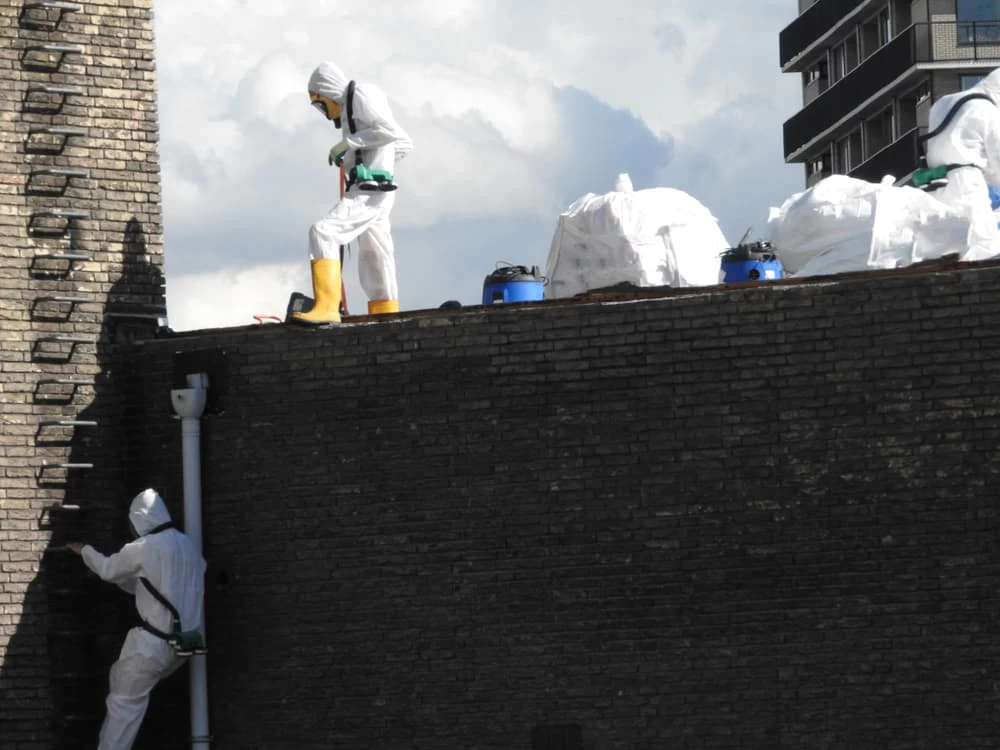
Once work begins, the affected area is isolated with negative air pressure containment to prevent fiber migration into the rest of your home. Materials are removed, packaged, and transported to a licensed disposal facility. This isn’t a process that gets rushed because a crew has another job across town proper containment and removal takes the time it takes, and cutting corners here is where unlicensed operators create problems that we then have to fix.
After removal is complete, an independent licensed industrial hygienist conducts air monitoring. This is not done by us it’s done by a neutral third party whose only job is to confirm the space is clear. When it passes, you receive a written clearance certificate. That document is what your contractor needs to resume work, what your lender needs to close, and what any future buyer’s attorney will ask for. It’s the finish line, and every project we complete ends there.
Asbestos Removal and Abatement Services, Leptondale NY
Every Material Type, Handled Under One Roof
Asbestos shows up differently depending on when and how a home was built. In Leptondale’s older properties particularly those with agricultural roots or mid-century construction the most common locations are pipe and boiler insulation, vinyl floor tiles, popcorn ceiling texture, roofing felt, joint compound, and exterior cement shingles. Asbestos popcorn ceiling removal is one of the most frequently requested services in homes from the 1950s through the late 1970s, and it’s also one of the most commonly mishandled by unqualified contractors who don’t understand the containment requirements.
Asbestos tile removal is another area where experience matters. Those original 9×9 tiles and the adhesive beneath them often called “black mastic” frequently contain asbestos, and disturbing them without proper containment creates an exposure risk that doesn’t go away on its own. We handle the full scope: testing, containment, removal, transport, disposal, and post-abatement clearance. You’re not coordinating three separate vendors or waiting on a subcontractor to show up.
For homeowners dealing with more than one issue at once which is common in older rural properties where water intrusion, mold, and asbestos often coexist our multi-discipline capability means the full remediation scope gets handled by one team with one point of contact. And if the cost of an unplanned abatement is disrupting your renovation budget, we offer 0% APR financing up to $200,000 for qualifying projects.
Does my older Leptondale home actually need asbestos testing before renovation?
If your home was built before 1980, testing before any renovation is not just a good idea in many cases, it’s legally required. New York State’s 12 NYCRR Part 56 mandates asbestos surveys before demolition and certain renovation activities, and Orange County building permits for renovation work require compliance with these regulations as a condition of issuance. If you try to pull a permit for a kitchen gut or a bathroom remodel in the Town of Newburgh and there are potential asbestos-containing materials involved, you’ll be directed to address the asbestos before or during the permitted work.
In Leptondale specifically, the housing stock adds another layer of complexity. Properties along North Plank Road and the rural northwest corner of the Town of Newburgh often have structures or remnants of structures from multiple eras. A farmhouse that was updated in the 1960s may have original pipe insulation from the 1920s and floor tiles from the 1950s all coexisting in the same basement. Testing tells you exactly what you’re dealing with before your contractor opens a wall and inadvertently creates an exposure event that stops the entire project.
Can I legally remove asbestos myself in New York State?
No. New York State law requires that asbestos abatement be performed by a contractor holding a valid NYS Department of Labor Asbestos Contractor License, and that individual workers hold NYS Asbestos Handler Certification. This applies to residential properties, not just commercial buildings. There is no homeowner exemption for meaningful quantities of asbestos-containing materials in New York.
The consequences of doing it yourself or hiring an unlicensed operator go beyond the immediate health risk. Without a licensed contractor completing the work, you cannot obtain a post-abatement clearance certificate from an independent industrial hygienist. That certificate is what future buyers, lenders, and real estate attorneys will require. If you sell your home in Leptondale and a buyer’s inspector or attorney discovers that asbestos was removed without proper documentation, it can unwind a transaction or expose you to legal liability. The short-term savings of an unlicensed removal create a long-term problem that’s significantly more expensive to fix than doing it right the first time.
How long does asbestos abatement take for a typical Orange County home?
The timeline depends on the scope how many locations are affected, what types of materials are involved, and the size of the areas being remediated. A focused single-room project, like asbestos tile removal in a basement or popcorn ceiling removal in a bedroom, can often be completed in one to three days. A larger project involving multiple material types across several areas of an older Leptondale home which is more common in the area’s historic farmhouses than in newer construction may take a week or more.
What most homeowners don’t account for is the time between abatement completion and clearance. After the physical removal is done, an independent industrial hygienist must conduct air monitoring before the space can be legally reoccupied. That testing and the resulting clearance certificate typically add one to two days to the overall timeline. If you’re working against a renovation schedule or a real estate closing date, it’s worth building that window into your planning from the start rather than being caught off guard at the finish line.
What does asbestos abatement cost in Leptondale, NY?
Cost varies based on the type of material, the quantity, the number of locations, and the access conditions in your home. A single-room asbestos tile removal or popcorn ceiling project in a straightforward space might run in the range of $1,500 to $4,000. Larger scopes pipe insulation removal throughout a basement, multiple room remediation, or projects in older structures with complex access can range from $5,000 to $20,000 or more depending on what’s involved.
What drives cost up in Leptondale’s older housing stock is the layered nature of the problem. A farmhouse that has been renovated multiple times may have asbestos in the original pipe insulation, in a layer of floor tile that was covered by later flooring, and in roofing materials all at once. Each of those locations requires its own containment setup, its own removal process, and its own disposal. Getting a written estimate that breaks down the scope by location and material type is the only way to understand what you’re actually paying for. We provide that before any work begins, and for projects where the cost creates a budget disruption, 0% APR financing up to $200,000 is available for qualifying customers.
Do I have to leave my home during asbestos removal in New York?
In most cases, yes at least for the areas being remediated and often for the duration of the project. NYS DOL regulations require negative air pressure containment during abatement, which means the work area is sealed and under controlled airflow to prevent fiber migration into the rest of the home. Depending on the location of the work and the layout of your home, it may be possible for occupants to remain in unaffected areas, but this is a project-specific determination that should be made by the licensed contractor based on the actual scope and site conditions.
For families with young children and Leptondale is a family-oriented community built around Leptondale Elementary School and the surrounding neighborhood the question of displacement is understandably a top concern. We address this directly during the project assessment, giving you a clear picture of what the containment footprint looks like, how long the work will take, and when independent air monitoring will confirm the space is safe for reoccupancy. You shouldn’t be guessing about any of that, and a licensed contractor shouldn’t leave you guessing.
How do I know the asbestos abatement was actually done correctly in my Leptondale home?
The only way to know with certainty is the post-abatement clearance certificate issued by an independent licensed industrial hygienist someone who has no financial stake in the outcome of the project and whose only job is to verify that airborne fiber levels are within safe limits after the work is complete. This is not a document that the abatement contractor issues about their own work. It comes from a neutral third party who conducts air sampling after the containment is removed and the area is cleaned.
In New York State, this clearance process is required under 12 NYCRR Part 56, not optional. Any contractor who tells you clearance testing isn’t necessary, or who offers to skip it to save time, is not operating within the law. Every project we complete ends with this step independent air monitoring, written results, and a clearance certificate that you keep as a permanent record of the work. That document protects you in a future sale, satisfies lender requirements in a current transaction, and gives you something concrete to point to when someone asks whether the job was done right.