Levittown Homes Were Built With It — Here's How to Handle It Safely
Every original Levittown home was constructed between 1947 and 1951 with asbestos baked right into the design. If you’re renovating, selling, or just finally dealing with it, we handle asbestos abatement the right way — licensed, documented, and done.
I needed a professional consultation explanation of procedure for safe removal of Asbestos in my apartment complex. Without having an account yet, I was very impressed with the caring, knowledgeable and generous advice offered by Jessica, and will look forward to doing business in the future. Thank you so much! I feel much more informed about a sometimes scary endeavor. Peace. Nancy Silva Mineola, NY.
Mia Munoz
Used this company to clean up some water flood in my house. They were fast and easy to work with.very professional, Would recommend to anyone!
Nini Valle
Great company, had a flood and they responded quickly and efficiently. Billed my insurance company directly. I highly recommend this company!
joe colapietro, jr
I had pipe freeze in my basement right before a snow storm and they made to within an hour to help start the clean up process. They we by our side throughout the entire process and even helped with the insurance company. They did such a great job with the cleanup, repair, remidiation, I contracted them to perform the repairs and finishes in the basement. They came with enough manpower and material to get the job done. Leo and Jessica were nothing but a pleasure to deal with!!
Cristian Arredondo c
I had some water damage in my home and Green Island was able to take care of my issue quickly and effectively. I am very pleased with the work they did. They responded quickly and were very professional.
Michael M
Outstanding service! From the office to the field crew everyone was friendly, helpful and responsive. I highly recommend Green Island Group.
You can move forward with your renovation. That’s the most immediate thing. Whether you’re finishing a basement on Wantagh Avenue or finally replacing that original kitchen floor near Jerusalem Avenue, the project can’t safely start until the asbestos is properly handled. Once it is, your contractor can work, your timeline can move, and you’re not sitting on a liability.
For homeowners selling in Levittown’s active market — where homes are moving in under 35 days at prices pushing $779,000 — an asbestos issue flagged during inspection doesn’t have to kill the deal. It just needs to be resolved fast, with the right documentation in hand. Clearance air sampling results and a proper waste disposal manifest are what buyers, attorneys, and lenders actually need to see. That’s what a compliant abatement produces.
There’s also the longer-term piece. Asbestos-related illnesses — mesothelioma, asbestosis, lung cancer — can take 15 to 40 years to show up after exposure. The original Levitt homes were built with asbestos cement siding, asbestos roofing, and asbestos-containing floor tiles as standard materials. If you’re living in one of those homes in Levittown and you’re about to disturb any of that during a renovation, getting it professionally abated now is the decision that protects your family for the long run.
We Know Levittown's Houses — Not Just Long Island in General
We’ve worked throughout Nassau County long enough to know that Levittown isn’t just another zip code on the map. It’s 17,447 homes built in a four-year window with the same materials, the same construction methods, and the same asbestos risks baked in from day one. When we show up to a Levittown home, we already have a strong sense of what we’re walking into — because we’ve been in dozens of them.
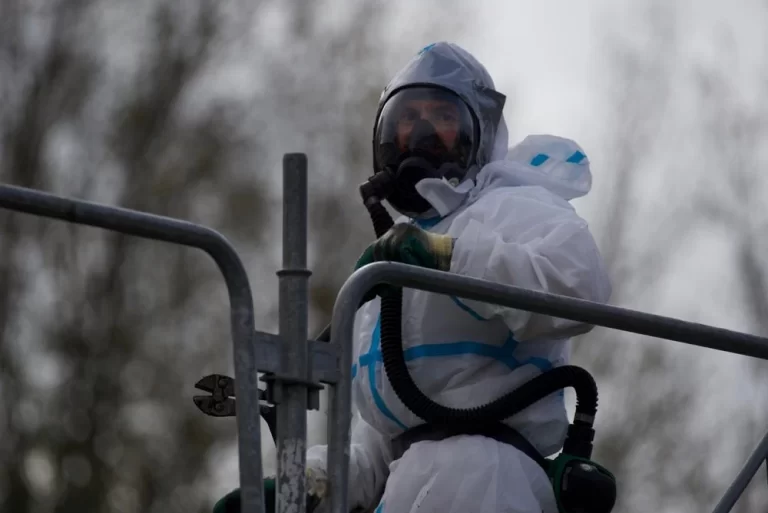
We hold both New York State Industrial Code Rule 56 licensing and Nassau County’s EHRP contractor credentials — the county-level certification that many state-licensed contractors don’t carry. Our technicians are EHRT certified. Every project we perform includes air monitoring, full containment, and complete disposal documentation. Nothing gets cut short because the paperwork is inconvenient.
If your home sits in the Levittown Union Free School District zone or anywhere along the Hempstead Turnpike corridor, you’re in our service area and we know the housing stock well. We don’t treat your home like a generic job — we treat it like what it is: a postwar Cape Cod with a specific history and specific materials that require a specific approach.
No Guesswork — Here's Exactly What the Process Looks Like
It starts with an assessment. We come to your home, evaluate the materials in question, and take samples if needed. Those samples go to an accredited lab. You get real results — not a guess, not a visual estimate — before any abatement work is planned or priced.
Once we know what we’re dealing with, we design the scope of work and handle the required notifications under NYS Industrial Code Rule 56. Because Levittown falls under the Town of Hempstead’s jurisdiction — not a local village building department — permits and compliance go through that channel, and we’re familiar with how that process moves. Before any work begins, the area is fully contained with negative air pressure and HEPA filtration to keep fibers from migrating into the rest of your home.
The abatement itself follows strict protocol — no shortcuts, no workarounds. After the material is removed, the work area is cleaned thoroughly and clearance air sampling is conducted by a third party. You receive the results in writing. Waste is packaged, labeled, and transported to an approved disposal facility with a manifest you can keep on file. When the job is done, you have documentation that holds up — for your contractor, your real estate attorney, or anyone else who needs to see it.
Asbestos Tile and Popcorn Ceiling Removal Levittown
The Materials Levittown Homes Actually Have — and What We Do About Them
The most common call we get from Levittown homeowners involves floor tiles. The original 9-by-9 inch vinyl tiles installed in virtually every Levitt home — in kitchens, bathrooms, and finished basements — frequently contain chrysotile asbestos. So does the black mastic adhesive underneath them. We remove both: the tiles and the adhesive, under full containment, with air monitoring throughout. If you’ve got original flooring that hasn’t been touched since the late 1940s, there’s a strong chance this applies to you.
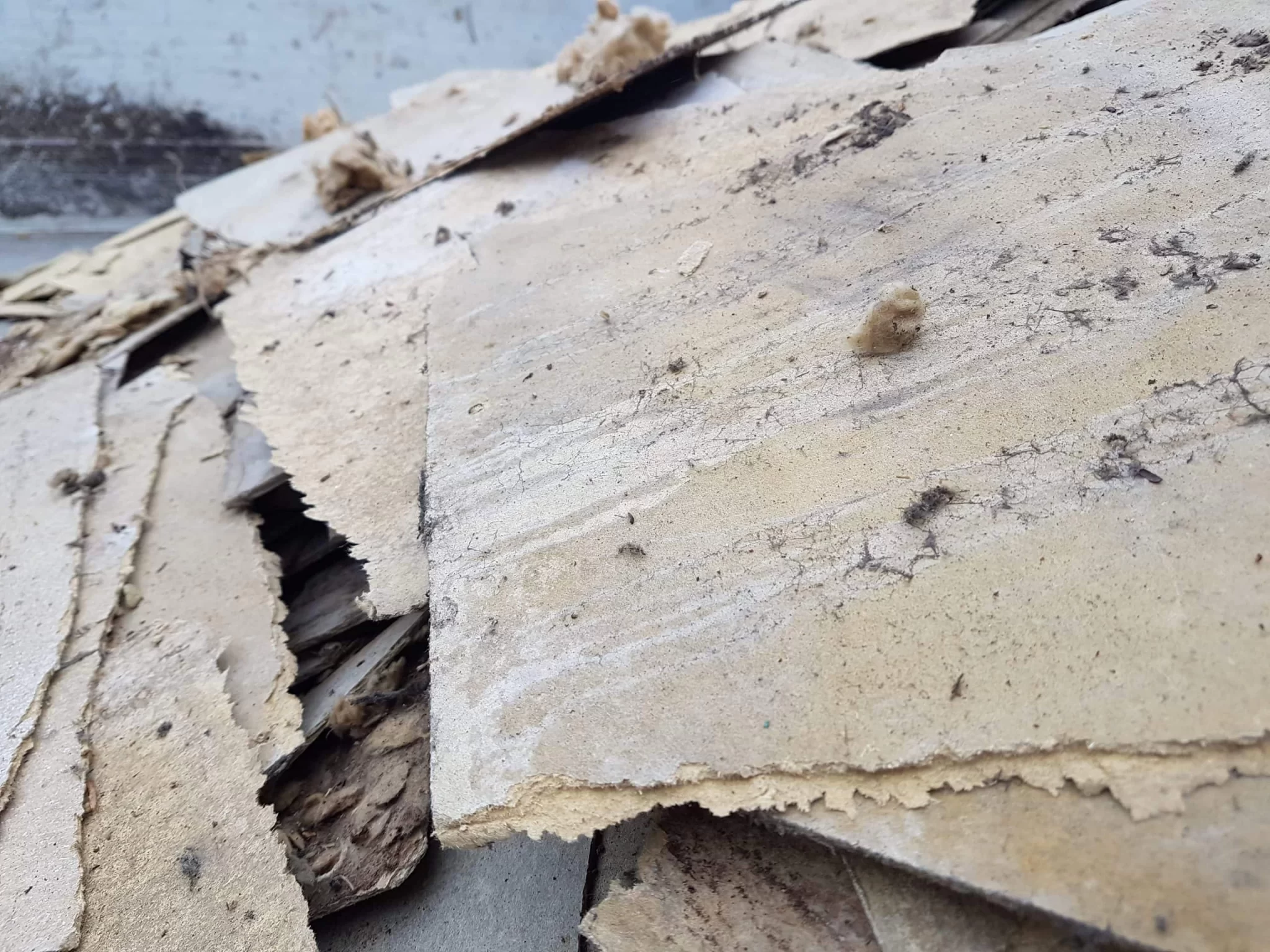
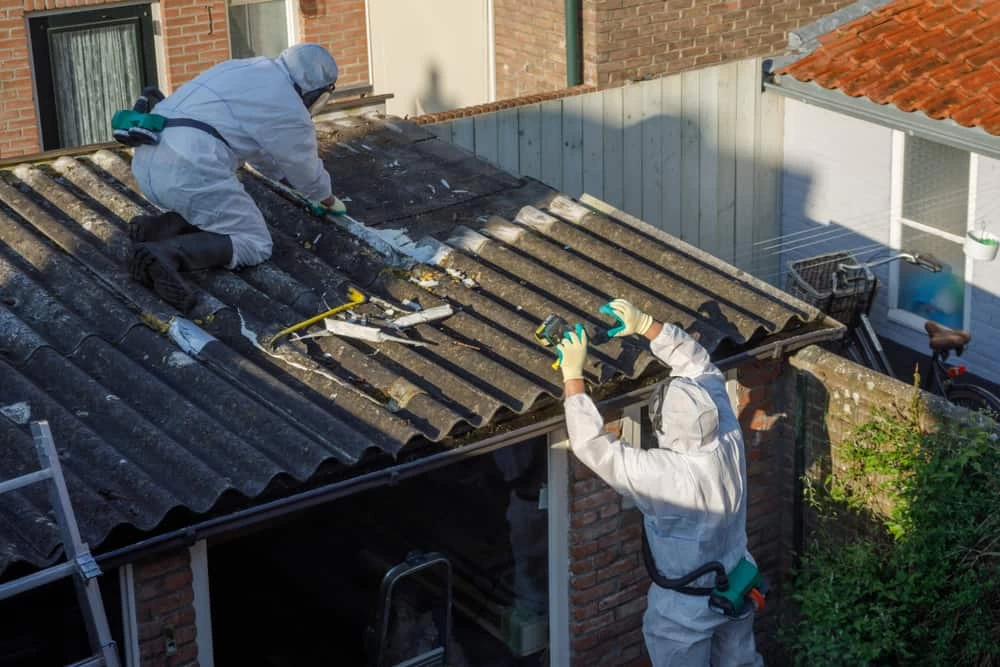
Asbestos cement siding is another common situation in Levittown. Many homes here have had vinyl siding installed over the original asbestos panels — which means the original material is still there, just hidden. When exterior work requires removing those layers, that’s a licensed abatement job, not something a general siding crew should be handling. We also handle pipe and boiler insulation in basements, joint compound in walls from 1960s and 70s basement conversions, and popcorn ceiling removal for homes where textured ceilings were added during that same renovation era.
Every scope of work we perform in Levittown includes pre-abatement background air sampling, full containment setup, certified abatement, post-abatement clearance sampling, and legal waste disposal with documentation. Nassau County’s EHRP licensing requirement applies to every one of these jobs — and we carry it. If you’re not sure what you have or what you need, we’ll tell you straight.
Does my Levittown home built in the 1940s definitely contain asbestos?
Not every material in every home will test positive, but the odds are significant. Levittown’s original homes were explicitly constructed with asbestos cement siding and asbestos-containing roofing as designed building materials — this isn’t speculation, it’s documented in the original construction records. On top of that, the 9-by-9 inch floor tiles and black mastic adhesive used throughout these homes during the 1947 to 1951 build period are among the most common asbestos-containing materials found in postwar Long Island housing.
The only way to know for certain is to have samples collected and sent to an accredited laboratory. A visual inspection alone is not enough — asbestos cannot be identified by sight. If you’re planning any renovation work in Levittown, NYS Industrial Code Rule 56 legally requires a survey before you start on any building constructed before 1974, which covers every original Levittown home. Getting tested before you touch anything is both the safe and the legally correct move.
Is asbestos abatement in Levittown, NY required before I renovate my home?
Under New York State Industrial Code Rule 56, yes — an asbestos survey is legally required before any renovation, demolition, remodeling, or repair work on a building where construction started before 1974. Since every original Levittown home was built between 1947 and 1951, that requirement applies across the board. This isn’t a recommendation — it’s state law, and skipping it exposes you to real liability if something goes wrong during the project.
Beyond the state requirement, Nassau County adds its own layer of regulation. Contractors performing abatement work in Levittown must hold an EHRP license at the county level, and technicians must be EHRT certified. If you hire a contractor who holds only a state license without the Nassau County credentials, the work may not be compliant with local requirements. Before you sign anything with an abatement contractor, ask specifically about their EHRP status — it’s a quick question that tells you a lot about who you’re dealing with.
What does asbestos abatement actually cost for a typical Levittown house?
Cost depends heavily on what you have and how much of it needs to be removed. A single room of asbestos floor tile removal — tiles plus mastic adhesive — in a Levittown basement or kitchen typically runs in the range of $1,500 to $3,500 depending on square footage and accessibility. Larger scopes like full asbestos siding removal or whole-house pipe insulation abatement can run significantly higher, sometimes into the $8,000 to $15,000 range or beyond depending on the extent of the material.
What drives cost up in any abatement job is the containment and air monitoring requirement — these aren’t optional line items, they’re mandated under Rule 56. Any quote that comes in dramatically lower than the range above is worth scrutinizing closely, because cutting corners on containment or skipping clearance air sampling isn’t a discount — it’s a compliance failure. The documentation you receive at the end of a properly performed abatement job is part of what you’re paying for, and in Levittown’s real estate market, that paperwork has real value.
Can I just leave the asbestos alone if it's not disturbed or damaged?
In some cases, yes — asbestos-containing materials that are in good condition and are not being disturbed are generally considered lower risk than materials that are friable, meaning they’re crumbling or deteriorating and capable of releasing fibers. The EPA and NYS DOL both acknowledge that intact, non-friable ACMs may not require immediate removal if they’re being left alone. This is sometimes called “encapsulation” or “operations and maintenance” — managing the material in place rather than removing it.
That said, there are important limits to this approach. If you’re renovating — which is the situation most Levittown homeowners are in when they call us — you can’t leave asbestos materials in place if the work is going to disturb them. Levittown’s humid summers can accelerate the deterioration of older building materials over time, potentially turning previously stable ACMs into a more active concern. If you’re not sure whether your materials are in good enough condition to leave alone, get them assessed by a licensed inspector. The answer might be “leave it” — but you want that answer in writing from someone qualified to give it.
How long does the asbestos abatement process take from start to finish?
For a straightforward scope — say, a single room of floor tile removal in a Levittown home — the abatement work itself often takes one to two days. But the full timeline from initial assessment to final clearance documentation is typically longer. Lab results from the sampling phase usually come back within three to five business days for standard turnaround, though rush processing is available if you’re working against a real estate deadline or a contractor’s schedule.
After abatement is complete, clearance air sampling results need to come back clean before the area can be released for regular use or for your renovation contractor to re-enter. That adds another day or two depending on the lab. For larger scopes — full siding removal, multiple rooms, basement and ceiling work combined — the project timeline extends accordingly. If you’re working with a real estate transaction timeline, let us know upfront. Levittown homes move fast in this market, and we’ve structured our scheduling to accommodate situations where time is a real constraint.
Why should I hire a Nassau County EHRP-licensed contractor instead of just any state-licensed company?
New York State licensing under Industrial Code Rule 56 is the baseline — every legitimate asbestos contractor in the state should have it. But Nassau County goes further by requiring contractors to hold an EHRP license and technicians to hold an EHRT certification specifically for environmental hazard remediation work performed within the county. These are separate credentials, and not every state-licensed contractor operating on Long Island has taken the steps to obtain them.
For Levittown homeowners, this matters for a few reasons. First, work performed by a contractor without proper Nassau County credentials may not satisfy local compliance requirements, which creates potential exposure for you as the property owner. Second, if you’re selling your home and the buyer’s attorney or lender requests documentation of the abatement, the contractor’s credentials will be scrutinized. A gap in licensing at the county level can complicate or delay a closing. Levittown’s housing market moves too fast and home values are too high to take that risk. Asking a contractor for their EHRP number before signing a contract takes 30 seconds and tells you exactly what you’re working with.