Old Homes Along the Wallkill Don't Keep Secrets Forever
If your Libertyville property was built before 1980, there’s a real chance asbestos is somewhere inside it. We’re NYS DOL licensed to remove it legally, document it completely, and get your renovation or your sale back on track.
I needed a professional consultation explanation of procedure for safe removal of Asbestos in my apartment complex. Without having an account yet, I was very impressed with the caring, knowledgeable and generous advice offered by Jessica, and will look forward to doing business in the future. Thank you so much! I feel much more informed about a sometimes scary endeavor. Peace. Nancy Silva Mineola, NY.
Mia Munoz
Used this company to clean up some water flood in my house. They were fast and easy to work with.very professional, Would recommend to anyone!
Nini Valle
Great company, had a flood and they responded quickly and efficiently. Billed my insurance company directly. I highly recommend this company!
joe colapietro, jr
I had pipe freeze in my basement right before a snow storm and they made to within an hour to help start the clean up process. They we by our side throughout the entire process and even helped with the insurance company. They did such a great job with the cleanup, repair, remidiation, I contracted them to perform the repairs and finishes in the basement. They came with enough manpower and material to get the job done. Leo and Jessica were nothing but a pleasure to deal with!!
Cristian Arredondo c
I had some water damage in my home and Green Island was able to take care of my issue quickly and effectively. I am very pleased with the work they did. They responded quickly and were very professional.
Michael M
Outstanding service! From the office to the field crew everyone was friendly, helpful and responsive. I highly recommend Green Island Group.
The renovation gets moving again. The real estate attorney stops sending emails. You stop wondering whether the floor tiles in that 1960s addition are safe to walk on. That’s the practical reality of getting this handled correctly and it matters more here than most people realize.
Libertyville’s housing stock is some of the oldest in Ulster County. Properties along Libertyville Road have been continuously occupied and renovated for generations, which means mid-century materials floor tiles, pipe insulation, popcorn ceilings, roofing felt on outbuildings got layered into structures that started life as 18th and 19th-century farmhouses. That kind of building history doesn’t show up on a home inspection report. It shows up when your contractor pulls up the subfloor.
The Wallkill River running along Libertyville’s eastern edge adds another layer to this. Seasonal flooding can disturb materials in basements and crawl spaces that nobody’s touched in decades. When water damage and asbestos intersect, you need a contractor who handles both not two separate companies trying to coordinate around each other. We carry IICRC certification for water damage alongside our NYS DOL asbestos license, so if flooding brings this to the surface, one call covers it.
Licensed Asbestos Contractor Serving Libertyville, NY
The License Is Real. So Is the Paperwork.
We hold the NYS DOL Asbestos Handling License required by New York State law to legally perform asbestos abatement. That’s not a general contractor license with asbestos listed on the side it’s the specific credential that Industrial Code Rule 56 requires before any licensed abatement work can begin. In a rural market like Libertyville, where unlicensed operators regularly solicit this kind of work from homeowners who don’t know the difference, that distinction matters.
We have an established service presence throughout Ulster County, with documented work across the region and a dedicated focus on the kinds of properties that define Libertyville historic farmhouses, converted agricultural structures, multi-acre rural estates, and older residential properties near the Ulster County Fairgrounds corridor on Libertyville Road. Every project comes with permit handling, post-abatement air clearance monitoring, and the written documentation that NYS law requires to be kept for 30 years.
It starts with a site assessment. Before any work begins, the affected materials are identified and tested. If your property was built before 1974 which covers the vast majority of homes in and around Libertyville New York State requires an asbestos survey before renovation, demolition, or significant repair work can legally proceed. We manage that process and file the required project notification with the NYS DOL Asbestos Control Bureau on your behalf, so you’re not navigating state paperwork while trying to keep a renovation on schedule.
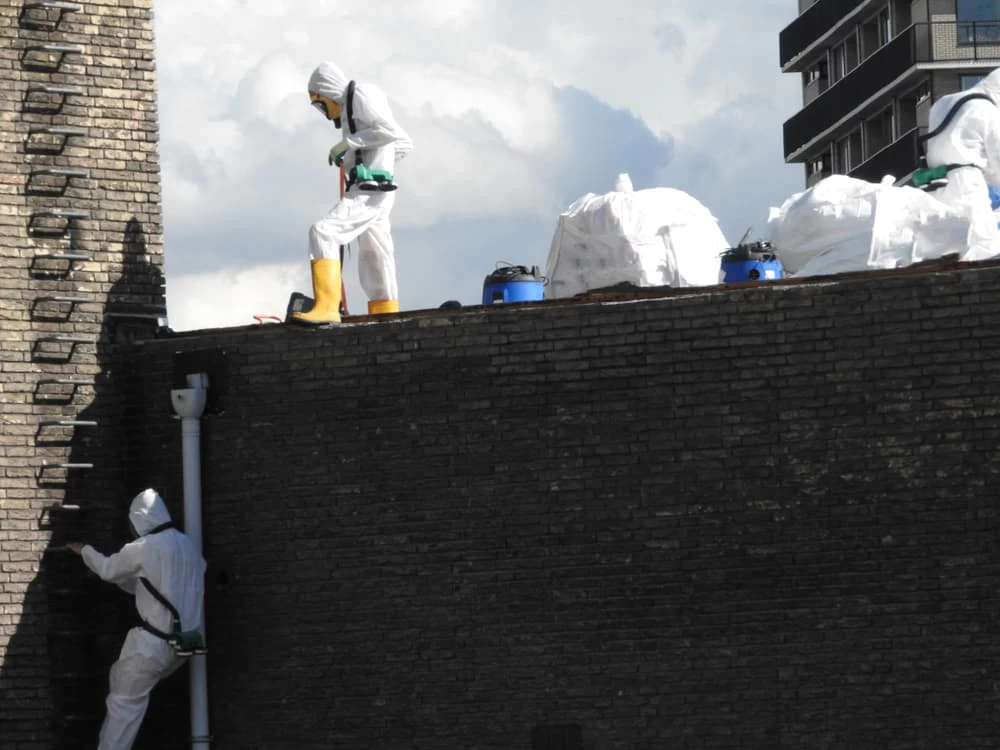
Once the scope is confirmed, the work area is contained using negative air pressure and sealed barriers. Asbestos-containing materials are removed by NYS-certified workers, bagged, and transported to a licensed disposal facility every step documented to state standards. This isn’t a process that gets rushed to meet a contractor’s timeline. Containment is taken seriously, especially in older Libertyville properties where asbestos may be present in multiple material types across different areas of the structure.
After removal, post-abatement air clearance monitoring is conducted. You receive written results confirming that fiber levels meet NYS standards. That documentation is what your renovation contractor, real estate attorney, or insurance carrier will ask for and it’s included as a standard part of every project, not an add-on.
Libertyville properties don’t fit a single mold. A farmhouse on six acres with a converted barn, a river-view home that’s been renovated three times, a rural estate near the Shawangunk foothills each one has its own construction history and its own risk profile. We handle the full range of materials commonly found in this area: 9×9 and 12×12 vinyl floor tiles and the black mastic adhesive beneath them, pipe insulation on boilers and heating systems in older basements, popcorn ceiling texture applied during 1960s and 1970s renovations, asbestos-cement siding and roofing shingles on agricultural outbuildings, and vermiculite insulation in attic spaces.
Asbestos tile removal and popcorn ceiling removal are two of the most common requests from Libertyville homeowners mid-renovation often discovered after demo has already started. If that’s where you are right now, the first step is stopping work in the affected area and calling for an assessment. Continuing to disturb suspect materials without licensed abatement in place creates legal exposure for the property owner under NYS Industrial Code Rule 56.
For properties going through pre-sale remediation, the documentation package we provide permit records, air monitoring results, disposal manifests is exactly what buyers’ attorneys and home inspectors will request. At the price points active on Libertyville Road right now, having that paperwork clean and complete isn’t optional. It’s the difference between a smooth closing and a deal that falls apart over a contingency.
Do I need an asbestos survey before renovating my Libertyville home?
If your home was built before 1974, yes New York State Industrial Code Rule 56 requires an asbestos survey before any renovation, demolition, or significant repair work begins. This applies to the vast majority of properties in Libertyville, where the housing stock spans generations of construction and renovation. It’s not a suggestion or a best practice. It’s a legal requirement, and skipping it exposes you as the property owner to fines and potential liability if asbestos is disturbed without proper abatement in place.
The survey identifies which materials contain asbestos and in what quantities. Once that’s confirmed, if the scope of disturbance meets or exceeds the threshold under Code Rule 56 generally 10 square feet of surface material or 25 linear feet of pipe insulation licensed abatement is required before renovation work can continue. We handle both the survey coordination and the abatement, so you’re not managing two separate contractors to get to the same finish line.
How much does asbestos removal typically cost in Ulster County, NY?
Residential asbestos removal in New York State generally runs anywhere from $1,500 to $10,000 or more depending on the scope what materials are involved, how many areas of the property are affected, and how complex the containment setup needs to be. A single-room floor tile removal is a very different project from a whole-house assessment on a multi-generation Libertyville farmhouse with pipe insulation in the basement, popcorn ceilings in the additions, and asbestos-cement roofing on an outbuilding.
Post-abatement air clearance monitoring is a separate but required cost under NYS law it’s not something a licensed contractor can skip, and you should be skeptical of any quote that doesn’t include it. The written clearance documentation you receive at the end is also what your insurance carrier, real estate attorney, or buyer’s inspector will ask for if this project is tied to a property transaction. Getting a proper scope assessment upfront is the only way to get an accurate number and we provide that assessment before any commitment is required.
What happens if I already started renovating and found something that might be asbestos?
Stop work in that area immediately. Don’t sand it, break it apart further, or try to remove it yourself. Disturbing asbestos-containing materials without proper containment and licensed abatement releases fibers into the air and once that happens, you’ve created a more complex and more expensive problem than the one you started with. This is one of the most common scenarios we respond to, and it’s completely manageable as long as work stops promptly.
The next step is getting a licensed contractor on-site to assess the material and confirm whether it actually contains asbestos. If it does, a project notification needs to be filed with the NYS DOL Asbestos Control Bureau before abatement begins we handle that filing on your behalf. Your renovation contractor can return to work in that area once abatement is complete and post-clearance air monitoring confirms the space is clean. The timeline from discovery to clearance depends on scope, but for most residential situations in Libertyville, it’s a matter of days, not weeks.
Is asbestos abatement required before selling a home in Libertyville, NY?
There’s no blanket state law requiring asbestos remediation before a home sale, but that’s not the whole picture. New York State requires sellers to disclose known material defects, and a known asbestos condition in a pre-1980 home is exactly the kind of defect that triggers that obligation. In the current Hudson Valley real estate market where properties on Libertyville Road are actively listed above $800,000 buyers and their attorneys are doing thorough due diligence, and an undisclosed or unresolved asbestos issue can kill a deal at closing or come back as a legal problem afterward.
Many sellers in Libertyville choose to remediate proactively before listing, for exactly that reason. It removes the contingency from the buyer’s side, speeds up the closing process, and often supports a stronger sale price. We provide the full documentation package permit records, clearance results, disposal manifests that satisfies buyer attorneys and title companies. If you’re preparing to list a property in this area and have questions about what’s actually required versus what’s advisable, that’s a conversation worth having before you go to market.
Can flooding from the Wallkill River create an asbestos hazard in my home?
It can, and this is a scenario specific to properties in and around Libertyville that most general asbestos information doesn’t address. When water intrudes into a basement or crawl space in an older home, it can disturb vinyl floor tiles and the adhesive beneath them, deteriorate pipe insulation on heating systems, and compromise wall materials any of which may contain asbestos in a pre-1980 structure. Once those materials are wet, damaged, and disturbed, they can release fibers in a way that intact, undisturbed materials typically do not.
The challenge is that water damage and asbestos abatement require two different sets of credentials, and most contractors only carry one. We hold both IICRC certification for water damage restoration and the NYS DOL Asbestos Handling License which means we can assess and address both hazards in a single mobilization rather than requiring you to coordinate between separate contractors during an already stressful situation. If you’ve had water intrusion in an older Libertyville property and you’re not sure what’s been disturbed, getting a combined assessment is the right first move.
How do I verify that an asbestos contractor is actually licensed to work in New York State?
The NYS Department of Labor maintains a public database of licensed asbestos contractors that anyone can search online. You’re looking for a current Asbestos Handling Contractor License not a general contractor license, not a home improvement license, and not a certification from a private training organization. Those credentials have their place, but none of them legally authorize asbestos abatement work in New York State. Only the NYS DOL Asbestos Handling License does that.
This matters in Libertyville specifically because rural and semi-rural communities across Ulster County see unlicensed operators soliciting asbestos work from homeowners who assume any licensed contractor can legally do it. They can’t. If an unlicensed contractor removes asbestos from your property and something goes wrong or if a buyer’s inspector or the DOL audits the project the liability falls on you as the property owner, not just the contractor. Our NYS DOL Asbestos Handling License is current and verifiable through the state’s public contractor listing. Ask any contractor you’re considering for their license number, then look it up before you sign anything.