Old Homes in the Rondout Valley Hide More Than History
If your home was built before 1980, asbestos is a real possibility and in Liebhardt, that describes most of the housing stock. We hold the NYS DOL license required to handle it the right way.
I needed a professional consultation explanation of procedure for safe removal of Asbestos in my apartment complex. Without having an account yet, I was very impressed with the caring, knowledgeable and generous advice offered by Jessica, and will look forward to doing business in the future. Thank you so much! I feel much more informed about a sometimes scary endeavor. Peace. Nancy Silva Mineola, NY.
Mia Munoz
Used this company to clean up some water flood in my house. They were fast and easy to work with.very professional, Would recommend to anyone!
Nini Valle
Great company, had a flood and they responded quickly and efficiently. Billed my insurance company directly. I highly recommend this company!
joe colapietro, jr
I had pipe freeze in my basement right before a snow storm and they made to within an hour to help start the clean up process. They we by our side throughout the entire process and even helped with the insurance company. They did such a great job with the cleanup, repair, remidiation, I contracted them to perform the repairs and finishes in the basement. They came with enough manpower and material to get the job done. Leo and Jessica were nothing but a pleasure to deal with!!
Cristian Arredondo c
I had some water damage in my home and Green Island was able to take care of my issue quickly and effectively. I am very pleased with the work they did. They responded quickly and were very professional.
Michael M
Outstanding service! From the office to the field crew everyone was friendly, helpful and responsive. I highly recommend Green Island Group.
A Safe, Documented Property Ready for Whatever Comes Next
When asbestos abatement is done right, you’re not just removing a material you’re removing the uncertainty that’s been sitting over your renovation, your sale, or your daily life. You get a property with documented air clearance, proper disposal records, and no lingering question marks. That matters whether you’re pulling a permit at the Town of Rochester building department in Accord or preparing to close on a sale.
In Liebhardt specifically, the freeze-thaw cycles that come with sitting at 620 feet in the Catskill foothills accelerate the deterioration of older building materials. Pipe insulation cracks. Floor tile adhesive loosens. Cement board siding delaminates. When those materials contain asbestos, weathering doesn’t just mean cosmetic damage it means fibers that are closer to becoming airborne. Catching and addressing that before a renovation or a hard winter does more damage is the difference between a controlled project and an emergency.
The Town of Rochester has the largest concentration of continuously inhabited old-stone houses in New York State. Some date back to the 17th century. Even the more modest farmhouses and mid-century ranches scattered through Liebhardt were built in an era when asbestos was standard. The outcome of working with a licensed abatement contractor isn’t just compliance it’s the confidence that the problem is actually gone, confirmed by post-abatement air monitoring, not just assumed.
The License Most Contractors Around Here Don't Carry
We hold the NYS Department of Labor Asbestos Handling License the specific, state-issued credential legally required to perform asbestos abatement work in New York. It’s not a general contractor license. It’s not an OSHA card. It’s the one credential that separates a contractor who can legally do this work from one who can’t, and in a rural market like the Rondout Valley, that distinction gets overlooked more often than it should.
We already serve the Kerhonkson area the nearest principal community to Liebhardt on the same USGS map so this isn’t a situation where you’re hoping someone will make the drive out on Route 209. We know the building types in this area, the permit process through the Town of Rochester, and the specific ways that Catskill Mountain climate affects older materials. Beyond asbestos, we’re also USEPA Lead certified and IICRC certified for water and fire damage, which matters in older homes where these hazards rarely travel alone. And yes, we bill insurance directly when the situation calls for it.
No Surprises Here's Exactly What the Process Looks Like
It starts with an asbestos survey. Under NYS Industrial Code Rule 56, any renovation or demolition of a structure built before 1974 requires a survey before work begins and in Liebhardt, that applies to nearly every older home in the area. The survey identifies where asbestos-containing materials are present, what condition they’re in, and what level of abatement is required. This documentation is also what the Town of Rochester building department needs before a permit moves forward.
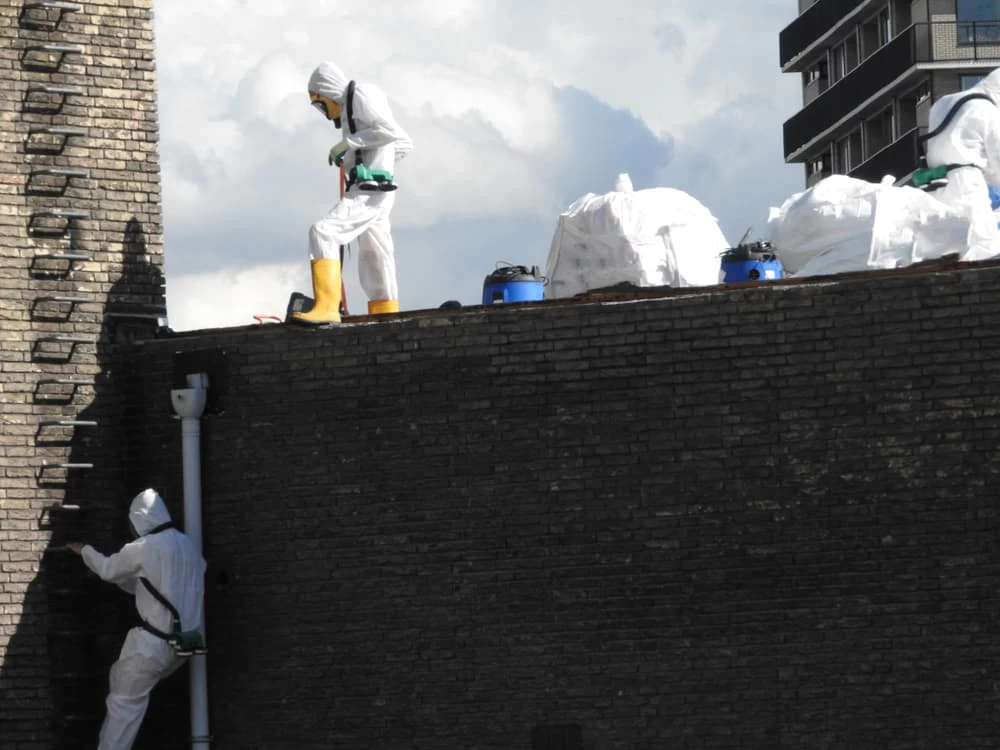
Once the scope is confirmed, we handle the NYSDOL project notification and filing that’s our responsibility, not yours. On the job itself, the work area is fully contained and isolated before anything is disturbed. Our workers are certified, the process follows NYS ICR 56 protocols, and all removed material is packaged and transported to a licensed disposal facility with a documented waste manifest.
After removal, post-abatement air monitoring is conducted to confirm fiber levels meet clearance standards. You receive the air clearance certificate, the disposal records, and the full project documentation. Those records need to be kept for 30 years under state law, and we make sure you have everything you need. If your situation involves water damage alongside asbestos which happens more than you’d think in older Catskill-area homes after a hard winter we can handle both under the same project.
Asbestos abatement isn’t one-size-fits-all, and the scope of a project in Liebhardt depends heavily on the age and type of structure you’re dealing with. In the Town of Rochester, that could mean a 19th-century stone farmhouse with original pipe insulation wrapped around a coal-converted oil boiler, a mid-century ranch with 9×9 floor tiles and black mastic adhesive, a popcorn ceiling in a 1960s addition, or vermiculite in an attic that hasn’t been touched in decades. Each of those materials has a different abatement process, and we assess all of them.
What’s included in every project we handle: the pre-abatement survey coordination, NYS ICR 56 filing and project notification, full containment setup, certified removal by NYS DOL licensed workers, licensed waste transport and disposal with documentation, post-abatement air monitoring, and the final clearance certificate. If lead paint is also present common in the older homes throughout Ulster County our USEPA Lead and RRP certifications mean we can address that in the same project without you needing a second contractor.
For Liebhardt homeowners dealing with a water-damaged older home, storm damage, or a renovation that uncovered more than expected, our IICRC-certified restoration capability runs alongside the abatement work. One call, one contractor, one set of documentation. If any portion of the work is covered under your homeowners insurance, we handle the billing coordination directly.
Does my Liebhardt home actually need an asbestos survey before I renovate?
If your home was built before 1974, yes it’s required under NYS Industrial Code Rule 56, not optional. The law applies to any renovation, remodeling, demolition, or repair work on structures where construction commenced before that year. In Liebhardt and the broader Town of Rochester, that covers the overwhelming majority of the housing stock. When you go to pull a building permit through the Town of Rochester’s building department in Accord, the survey documentation is part of what they need before the permit moves forward.
The survey itself involves a certified asbestos investigator identifying suspect materials, collecting samples, and determining what if anything requires abatement before your renovation proceeds. It’s not a long process, but skipping it or working with a contractor who doesn’t require it puts you in legal and health risk territory. If asbestos is found and needs to be removed, that work has to be done by a contractor holding the NYS DOL Asbestos Handling License before any other trades start disturbing those materials.
How much does asbestos removal typically cost in Ulster County, NY?
The honest range for asbestos abatement in New York State runs from around $1,500 for a small, contained scope like a section of pipe insulation or a limited area of floor tile up to $15,000 or more for larger projects involving multiple material types, full room abatement, or structural elements in an older home. Projects in historic or multi-story stone structures, which are common in the Town of Rochester, can run higher depending on access and scope.
What drives cost is the type and quantity of material, the condition it’s in, and how complex the containment setup needs to be. A friable material one that’s already crumbling or damaged typically requires more intensive protocols than intact material. In Liebhardt’s climate, freeze-thaw deterioration means materials are more likely to be in poor condition than they might be in a milder area, which can affect project scope. The best way to get an accurate number is a proper survey first, not a phone estimate. We’ll tell you what you’re actually dealing with before we quote anything.
What materials in older Catskills-area homes most commonly contain asbestos?
In the pre-1980 homes that make up most of Liebhardt’s housing stock, the most common locations are pipe and boiler insulation especially in older farmhouses that ran on coal-converted oil heat systems and 9×9 inch vinyl floor tiles along with the black mastic adhesive underneath them. Those tiles were standard in mid-century construction and are found in kitchens, bathrooms, and basements throughout the Rondout Valley area. The adhesive is often more problematic than the tile itself because it tends to be in worse condition.
Other materials to be aware of: textured popcorn ceilings applied before the late 1970s, drywall joint compound from the same era, cement board siding, window glazing putty, and vermiculite attic insulation. Vermiculite is particularly worth noting in the Catskills area a significant portion of the vermiculite sold in the U.S. through the 1980s came from a mine in Libby, Montana that was contaminated with asbestos, and it was widely used as attic insulation in this region. If you have loose, gray-brown granular material in your attic, have it tested before anyone goes up there to do work.
Can I stay in my home during asbestos abatement in Liebhardt, NY?
It depends on the scope and location of the work. For smaller, well-contained projects like a section of pipe insulation in a basement or a limited floor tile removal in a single room it’s sometimes possible to remain in the home if the work area is fully isolated and the rest of the living space is unaffected. For larger projects, or anything involving materials in occupied living areas, temporary relocation is typically the safer and more practical choice.
Under NYS ICR 56, the work area must be fully contained and under negative air pressure during abatement. That means sealed off from the rest of the structure with HEPA filtration running. The area stays sealed until post-abatement air monitoring confirms clearance. We’ll tell you upfront what the specific project requires there’s no blanket answer that applies to every home. In a rural area like Liebhardt where some homeowners are dealing with whole-house renovations of older farmhouses, the scope can be significant enough that planning for relocation during the abatement phase just makes the whole project run smoother.
What happens if a contractor disturbs asbestos without a NYS DOL license?
It’s illegal under New York State law, and the consequences fall on both the contractor and potentially the property owner. Under NYS Industrial Code Rule 56, any asbestos disturbance above the de minimis threshold 10 square feet of material or 25 linear feet of pipe insulation must be performed by a contractor holding the NYS DOL Asbestos Handling License. A general contractor license does not satisfy this requirement. Neither does an OSHA card or a certification from a weekend training course.
In a rural market like the Town of Rochester, unlicensed contractors performing renovation work that disturbs asbestos-containing materials is a real and documented pattern not a hypothetical. When it happens, the property owner can face liability for the resulting exposure, the work may need to be redone by a licensed contractor at additional cost, and the project documentation required for permits and real estate transactions simply doesn’t exist. If you’re hiring someone for renovation work in Liebhardt and they haven’t mentioned an asbestos survey requirement or can’t produce a NYS DOL license number, that’s worth asking about directly before any work starts.
Does asbestos abatement affect a home sale in the Town of Rochester area?
It can work in your favor if it’s handled proactively. In the current Catskills and Hudson Valley real estate market where buyers from outside the area are purchasing older homes in Kerhonkson, Accord, and the surrounding hamlets with the intent to renovate asbestos disclosure is a real part of the transaction. A buyer’s inspector who identifies suspect materials, or a buyer’s attorney who flags undisclosed asbestos, can delay or derail a closing. Having documented abatement already completed, with a clean air clearance certificate on file, removes that uncertainty before it becomes a negotiating problem.
For sellers in Liebhardt dealing with older homes, the math is usually straightforward: abating known materials before listing costs less than a price reduction, a delayed closing, or a deal that falls apart. The documentation we provide air clearance certificate, waste disposal manifests, project notification records is exactly what a buyer’s attorney or lender needs to confirm the issue is resolved. Those records are also required to be maintained for 30 years under NYS law, so they travel with the property and protect the next owner as well.