Long Beach’s older housing stock — most of it built before asbestos was ever a concern — still holds the stuff in floors, ceilings, pipes, and walls. We remove it safely, legally, and completely.
I needed a professional consultation explanation of procedure for safe removal of Asbestos in my apartment complex. Without having an account yet, I was very impressed with the caring, knowledgeable and generous advice offered by Jessica, and will look forward to doing business in the future. Thank you so much! I feel much more informed about a sometimes scary endeavor. Peace. Nancy Silva Mineola, NY.
Mia Munoz
Used this company to clean up some water flood in my house. They were fast and easy to work with.very professional, Would recommend to anyone!
Nini Valle
Great company, had a flood and they responded quickly and efficiently. Billed my insurance company directly. I highly recommend this company!
joe colapietro, jr
I had pipe freeze in my basement right before a snow storm and they made to within an hour to help start the clean up process. They we by our side throughout the entire process and even helped with the insurance company. They did such a great job with the cleanup, repair, remidiation, I contracted them to perform the repairs and finishes in the basement. They came with enough manpower and material to get the job done. Leo and Jessica were nothing but a pleasure to deal with!!
Cristian Arredondo c
I had some water damage in my home and Green Island was able to take care of my issue quickly and effectively. I am very pleased with the work they did. They responded quickly and were very professional.
Michael M
Outstanding service! From the office to the field crew everyone was friendly, helpful and responsive. I highly recommend Green Island Group.
Your Long Beach Renovation Moves Forward Without the Risk
When you’re opening up a Long Beach home — whether it’s a West End bungalow that took on water during Sandy or a mid-century co-op on the President Streets — what’s behind the walls matters. Asbestos doesn’t announce itself. It hides in floor tile adhesive, joint compound, pipe wrap, and popcorn ceilings, and the only way to know for certain is to test before anything gets disturbed.
The coastal humidity here accelerates the deterioration of older building materials faster than you’d see in an inland Nassau County town. Asbestos-containing materials that might stay intact for years in a drier environment can become brittle and friable in Long Beach’s salt air — which means fibers can release more easily, and the stakes of disturbing them without proper containment are higher.
Once abatement is done correctly, you get something simple but important: a clear path forward. Your contractor can proceed, your permit inspection can close out, and if you’re selling, your buyer’s attorney has the documentation they need. No delays, no liability hanging over the project, no guessing.
We’re a licensed asbestos abatement contractor serving Nassau and Suffolk counties. We’re not a national chain dispatching a crew from three counties away — we’re a Long Island company that knows this region, knows the South Shore, and understands what working on a barrier island actually involves.
Long Beach isn’t like the rest of Nassau County. It has its own city building department, its own permitting process, and a housing stock that spans nearly a century of construction — much of it squarely in the asbestos era. We’ve worked in these conditions. We know the difference between a Town of Hempstead permit and a Long Beach City permit, and we handle that coordination so you don’t have to figure it out mid-project.
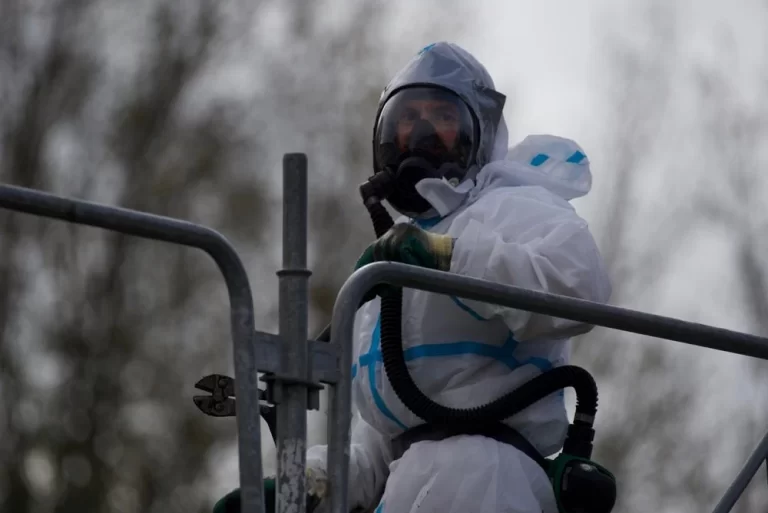
Every project we take on is staffed by New York State DOL-certified workers under a fully licensed ICR 56 contractor. That’s not a talking point — it’s the legal requirement, and it’s what protects you as the property owner when the work is done.
It starts with an inspection. Before anything is removed or disturbed, we assess the property and collect bulk samples from suspected materials — floor tiles, ceiling texture, pipe insulation, duct wrap, joint compound. Those samples go to an accredited laboratory. You get real results, not assumptions.
If asbestos is confirmed, we design the abatement scope and file the required notification with the New York State Department of Labor — which must happen at least 10 days before work begins on qualifying projects. For work in Long Beach specifically, we also coordinate with the Long Beach City Building Department, since permits and inspections here run through the city’s own offices, not a town or county agency. That distinction matters, and skipping it creates problems at final inspection.
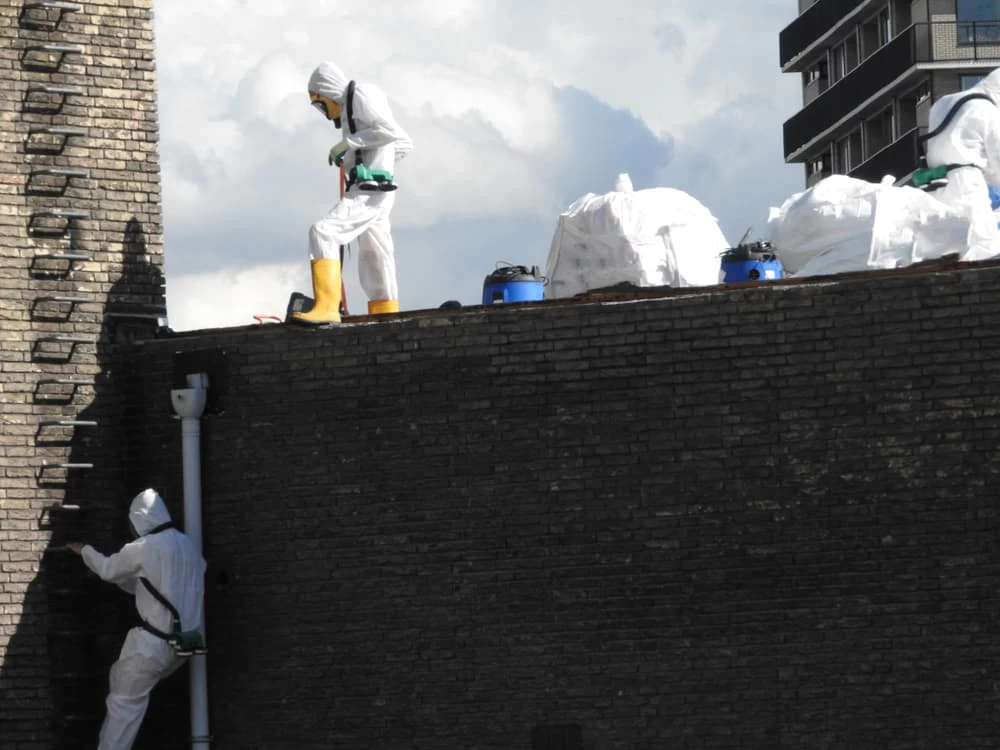
During abatement, the work area is fully contained with negative air pressure and HEPA filtration to prevent fiber migration to the rest of the building. Our certified handlers remove the material, and all waste is packaged and disposed of in compliance with NYS DEC requirements. After the work is complete, a post-abatement clearance air test is conducted — this is independent verification that the space is safe. You receive the full documentation package: lab results, clearance report, and compliance records. That’s what closes out a permit, satisfies a buyer’s attorney, and gives you a clean paper trail.
What's Actually Covered in a Long Beach Abatement Job
Long Beach homes from the 1940s through the 1970s tend to show up with asbestos in predictable places — and a few that catch homeowners off guard. The 9-by-9 inch floor tiles in kitchens, bathrooms, and basements are the most common find. Virtually all tile in that size from that era contains asbestos, along with the black mastic adhesive underneath. Popcorn ceilings in apartments and condos built in the 1960s and 1970s frequently test positive for chrysotile. Pipe insulation in boiler rooms and mechanical spaces — especially in the Channel Park-era buildings and older multi-family stock along the canals — is another consistent source.
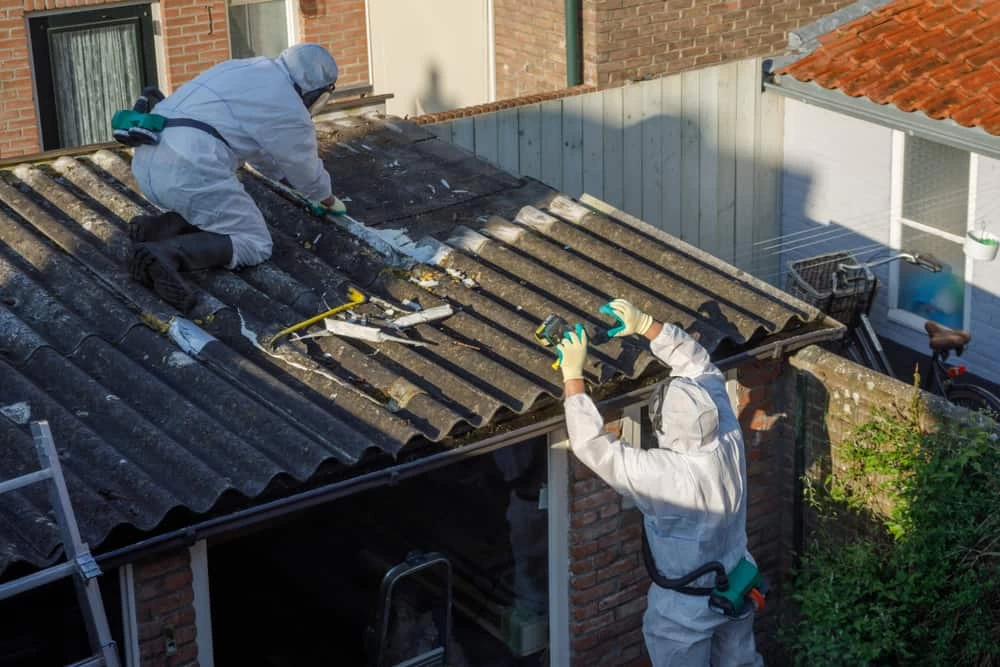
We handle the full scope: asbestos tile removal, popcorn ceiling removal, pipe and duct insulation, joint compound, roofing materials, and textured wall coatings. For multi-family buildings and co-ops, we also manage tenant communication logistics and phased scheduling to minimize disruption to occupied units.
Every job includes the inspection, lab analysis, NYS DOL notification where required, full containment setup, certified abatement work, post-clearance air testing, and a complete compliance documentation package. If your project is tied to a renovation permit, an insurance claim, or a real estate transaction, that documentation is what moves everything forward. We don’t hand you a receipt and walk away — you get the full paper trail that actually matters.
Do Long Beach homes commonly have asbestos, and where is it usually found?
Yes — and it’s not unusual or alarming, it’s just a product of when most of Long Beach was built. The city’s housing stock spans from pre-World War II bungalows in the West End all the way through 1970s condominiums and co-ops, and virtually every decade in that range overlaps with the period when asbestos was a standard building material. It wasn’t a corner-cutting measure — it was the industry norm.
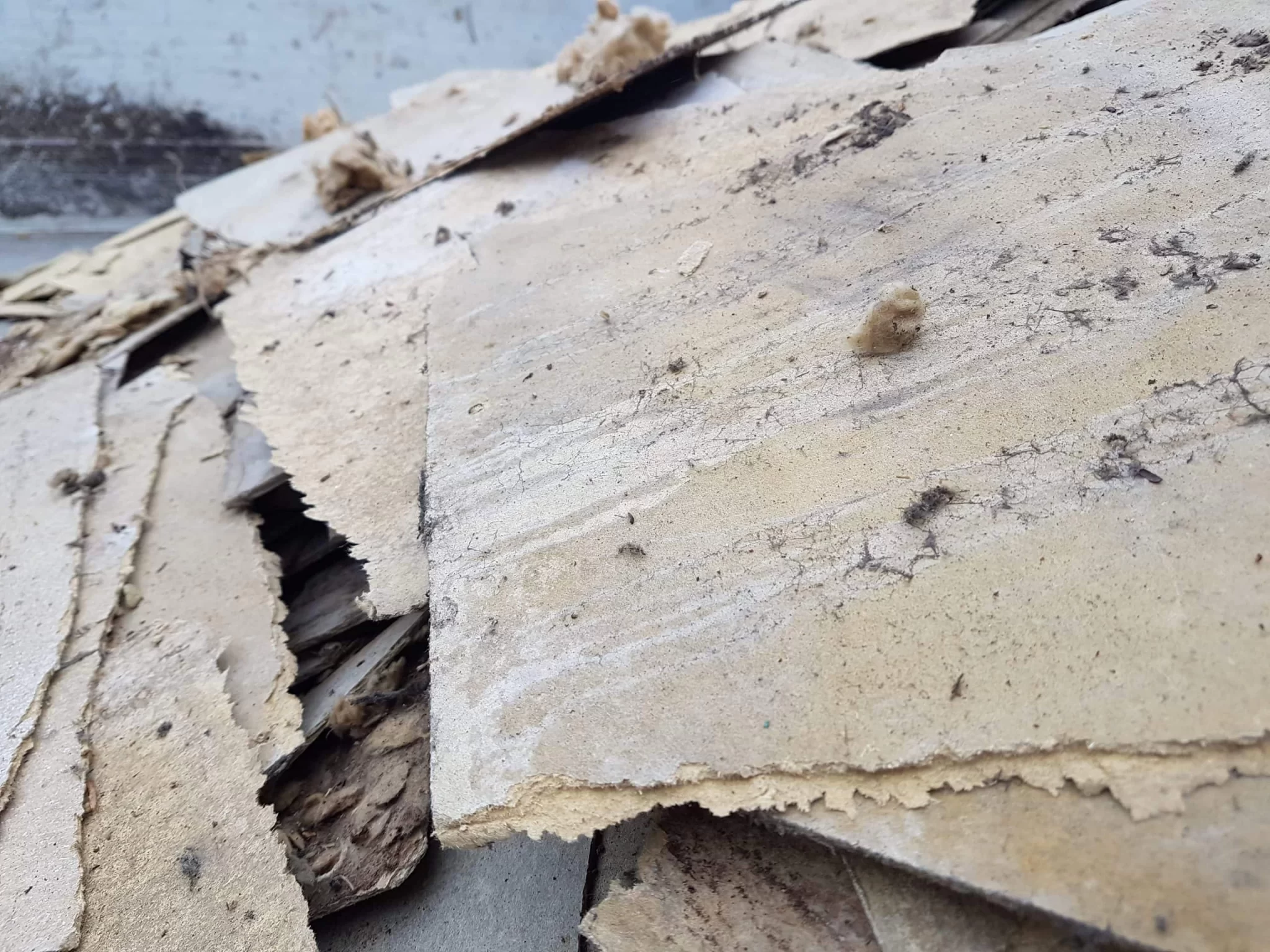
The most common locations in Long Beach homes are 9-by-9 inch vinyl floor tiles and the black adhesive mastic beneath them, popcorn or textured ceilings, pipe and boiler insulation in older mechanical rooms, and premixed joint compound used in drywall finishing through the mid-1970s. Roofing shingles and exterior siding on older homes can also contain asbestos. If your home was built before 1980 and hasn’t been fully renovated since, there’s a reasonable chance at least one of these materials is present somewhere in the building.
Do I need a permit for asbestos removal in Long Beach, NY?
It depends on the scope of the project, but in most cases involving renovation or demolition work, yes — there are regulatory requirements that apply. New York State’s Industrial Code Rule 56 requires that asbestos abatement contractors be licensed and that workers be certified. For projects above certain threshold quantities, the contractor must also file a formal notification with the NYS Department of Labor at least 10 days before work begins.
What makes Long Beach distinct from most Nassau County towns is that it operates as its own city with its own building department. Permits and inspections for renovation work here go through Long Beach City Hall — not the Town of Hempstead. That means the coordination process is different, and a contractor who isn’t familiar with Long Beach’s specific permitting setup can create delays or compliance gaps that affect your final inspection. We handle that coordination as part of every project.
What happens if asbestos is disturbed during a renovation without testing first?
If asbestos-containing material is disturbed without proper containment — sanding it, cutting through it, scraping it, or demolishing around it — the fibers become airborne and can spread through the building. You can’t see them, smell them, or feel them. They settle on surfaces, get pulled into HVAC systems, and can remain in the air for hours. That’s the core health risk, and it’s why the regulatory framework around asbestos abatement exists in the first place.
From a practical standpoint, disturbing asbestos without proper protocols in New York State can also create legal and financial exposure. If a contractor discovers ACM mid-project and work has to stop for emergency remediation, you’re looking at project delays, additional costs, and potential issues with your building permit. In Long Beach, where many renovation projects are already tied to insurance claims or post-Sandy rebuild timelines, an unexpected stop-work situation compounds quickly. Testing before demolition or renovation work starts is the step that prevents all of that.
How long does asbestos abatement take in a typical Long Beach home?
It varies based on what’s being removed and where, but for a single-family home in Long Beach, a straightforward abatement project — floor tile removal in a kitchen or basement, or popcorn ceiling removal in a few rooms — typically takes one to three days of active abatement work. The full timeline from initial inspection to final clearance documentation is longer, because the NYS DOL notification requirement adds a minimum 10-day window before work can begin on qualifying projects, and lab turnaround for bulk samples usually adds a few business days at the front end.
For larger projects — multi-room gut renovations, full basement abatements in flood-damaged homes, or work in multi-family buildings — the timeline extends accordingly. If you’re working against a real estate closing date or a contractor’s schedule, the earlier you start the inspection and testing process, the more flexibility you have. We can walk you through realistic timelines based on your specific property during the initial assessment.
Is asbestos abatement required before selling a home in Long Beach, NY?
New York State does not have a blanket legal requirement that asbestos must be removed before a home is sold. However, in practice, it comes up regularly in Long Beach real estate transactions — particularly given the age of the housing stock and the median sale prices now pushing toward and above $779,000. Buyers’ attorneys, home inspectors, and lenders are increasingly flagging asbestos risk in pre-1980 homes, and buyers often request either remediation or a price adjustment as a condition of closing.
If a home inspection identifies suspected asbestos-containing materials, having a professional assessment and — where confirmed — a completed abatement with clearance documentation can be the difference between a clean closing and a deal that falls apart or gets renegotiated. Sellers who get ahead of it before listing tend to have more control over the outcome. If you’re planning to list a Long Beach property, it’s worth knowing what’s there before your buyer’s inspector finds it first.
Why does coastal humidity in Long Beach matter for asbestos risk?
Long Beach sits on a barrier island between the Atlantic Ocean and Reynolds Channel, and the persistent salt air and moisture that come with that geography do something specific to older building materials — they accelerate deterioration. Asbestos-containing materials that might stay intact and non-friable for decades in a drier inland environment can break down faster here. When ACM becomes friable — meaning it can be crumbled or reduced to powder by hand pressure — it’s significantly more likely to release fibers with any disturbance, even routine maintenance work.
This is especially relevant in homes that experienced flooding during Superstorm Sandy or subsequent nor’easters. Water intrusion that soaks into floor assemblies, wall cavities, or mechanical rooms can compromise the binders that hold asbestos materials together, accelerating that deterioration process. A material that looked stable before a flood event may not be in the same condition after. If your Long Beach home has gone through any significant water damage and hasn’t had an asbestos assessment since, that’s a reasonable reason to have it looked at before any renovation work begins.