If your home was built before 1980 and you’re about to renovate, there’s a real chance asbestos is somewhere in the mix — and in Lynbrook, that’s not a maybe. It’s a conversation worth having before work starts.
I needed a professional consultation explanation of procedure for safe removal of Asbestos in my apartment complex. Without having an account yet, I was very impressed with the caring, knowledgeable and generous advice offered by Jessica, and will look forward to doing business in the future. Thank you so much! I feel much more informed about a sometimes scary endeavor. Peace. Nancy Silva Mineola, NY.
Mia Munoz
Used this company to clean up some water flood in my house. They were fast and easy to work with.very professional, Would recommend to anyone!
Nini Valle
Great company, had a flood and they responded quickly and efficiently. Billed my insurance company directly. I highly recommend this company!
joe colapietro, jr
I had pipe freeze in my basement right before a snow storm and they made to within an hour to help start the clean up process. They we by our side throughout the entire process and even helped with the insurance company. They did such a great job with the cleanup, repair, remidiation, I contracted them to perform the repairs and finishes in the basement. They came with enough manpower and material to get the job done. Leo and Jessica were nothing but a pleasure to deal with!!
Cristian Arredondo c
I had some water damage in my home and Green Island was able to take care of my issue quickly and effectively. I am very pleased with the work they did. They responded quickly and were very professional.
Michael M
Outstanding service! From the office to the field crew everyone was friendly, helpful and responsive. I highly recommend Green Island Group.
Most Lynbrook homeowners don’t go looking for asbestos — they find it mid-project, or an inspector flags it, and suddenly the renovation they planned is on hold. Getting it handled properly means your contractor can get back to work, your timeline stays intact, and you’re not sitting on a liability inside a home worth close to $700,000.
Lynbrook’s housing stock tells the whole story. The village exploded in the 1920s — fastest-growing in Nassau County at the time — and most of that original construction is still standing. Add in the post-war Cape Cods and ranches built through the 1960s, and you’ve got a village where the majority of homes were built during the exact era when asbestos was standard in floor tile, pipe insulation, ceiling texture, and joint compound. That’s just the reality of owning a home here.
The South Shore climate doesn’t help either. High humidity in summer, salt air off the coast, and freeze-thaw cycles every winter — all of that accelerates wear on older building materials. Pipe insulation that was sealed tight in 1955 may not be anymore. When asbestos-containing materials become brittle and start breaking apart, the risk goes up. Proper abatement stops that process, clears the air — literally — and gives you documentation that the job was done right.
Nassau County Compliance Isn't Optional — We Know That
We’re a Nassau County-based asbestos abatement contractor, and that distinction matters more than it might sound. Nassau County requires its own Environmental Hazard Remediation Program license — separate from the New York State Industrial Code Rule 56 license — and every technician on a job needs an EHRT credential to legally perform abatement work here. Many contractors hold the state license and stop there. We don’t.
We’ve worked throughout the South Shore corridor — Lynbrook, East Rockaway, Malverne, Valley Stream, Hewlett — and we know the building stock, the permit process, and what the Village of Lynbrook’s Building Department expects when a renovation involves pre-1974 construction. You don’t have to figure out the regulatory layers. That’s our job.
It starts with an inspection and material sampling. If you’re renovating a kitchen, finishing a basement, replacing a boiler, or tearing out a popcorn ceiling in a home built before 1980, we identify what materials need to be tested and send samples to a certified lab. You get a clear answer — not a guess — before anyone touches anything.
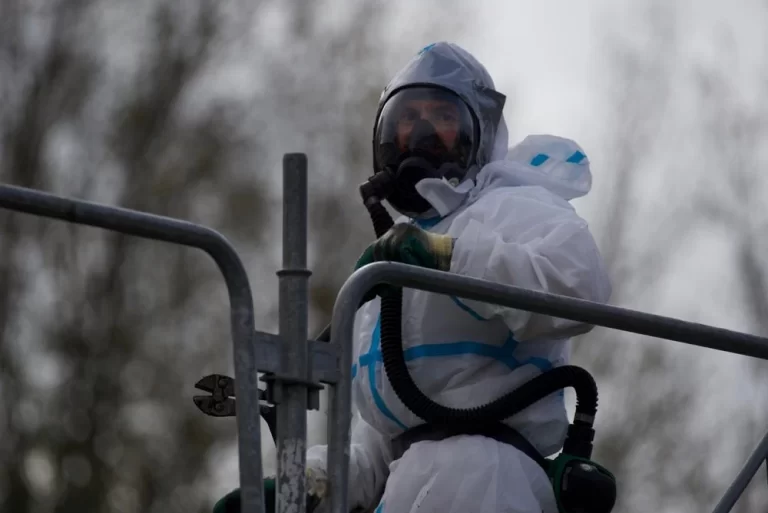
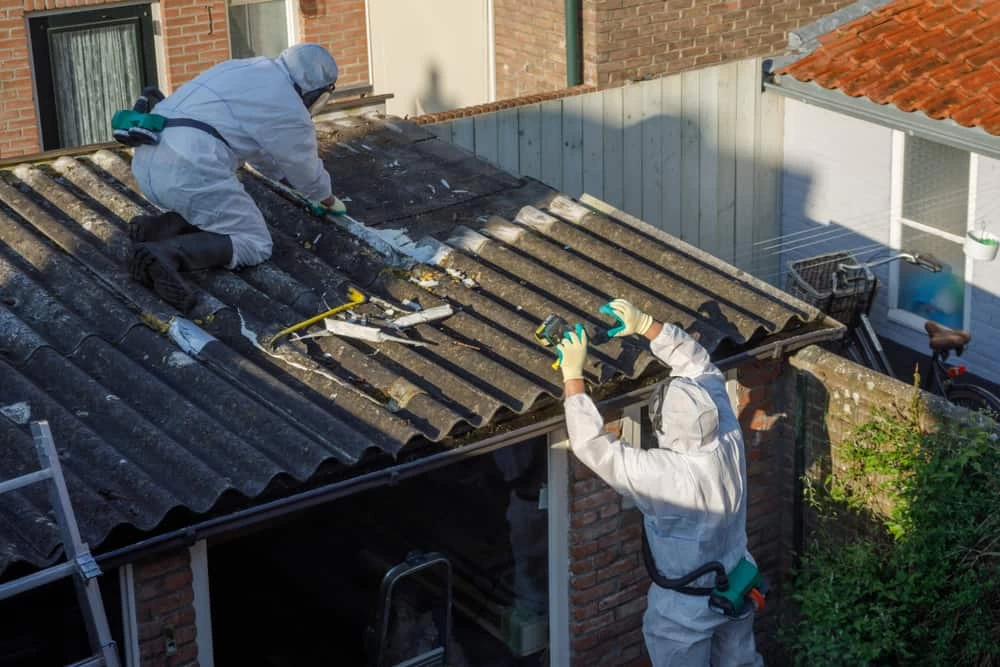
If asbestos is confirmed, we set up full containment before removal begins. That means negative air pressure, HEPA filtration, and physical barriers that keep fibers out of the rest of your home. In Lynbrook, where a lot of these jobs happen in occupied homes with families still living there, that containment step isn’t optional — it’s the whole point. Work happens, the rest of your house stays clean, and your family isn’t displaced for days on end.
Once removal is complete, we run post-abatement air monitoring to confirm that fiber levels are within safe limits. That clearance report is what your general contractor needs to resume work, what your real estate attorney may need for a closing, and what you keep on file as proof the job was done properly. All waste leaves the property in compliance with NYS DEC regulations — fully documented, fully legal, nothing left behind.
The Materials Most Common in Lynbrook Homes — Handled Right
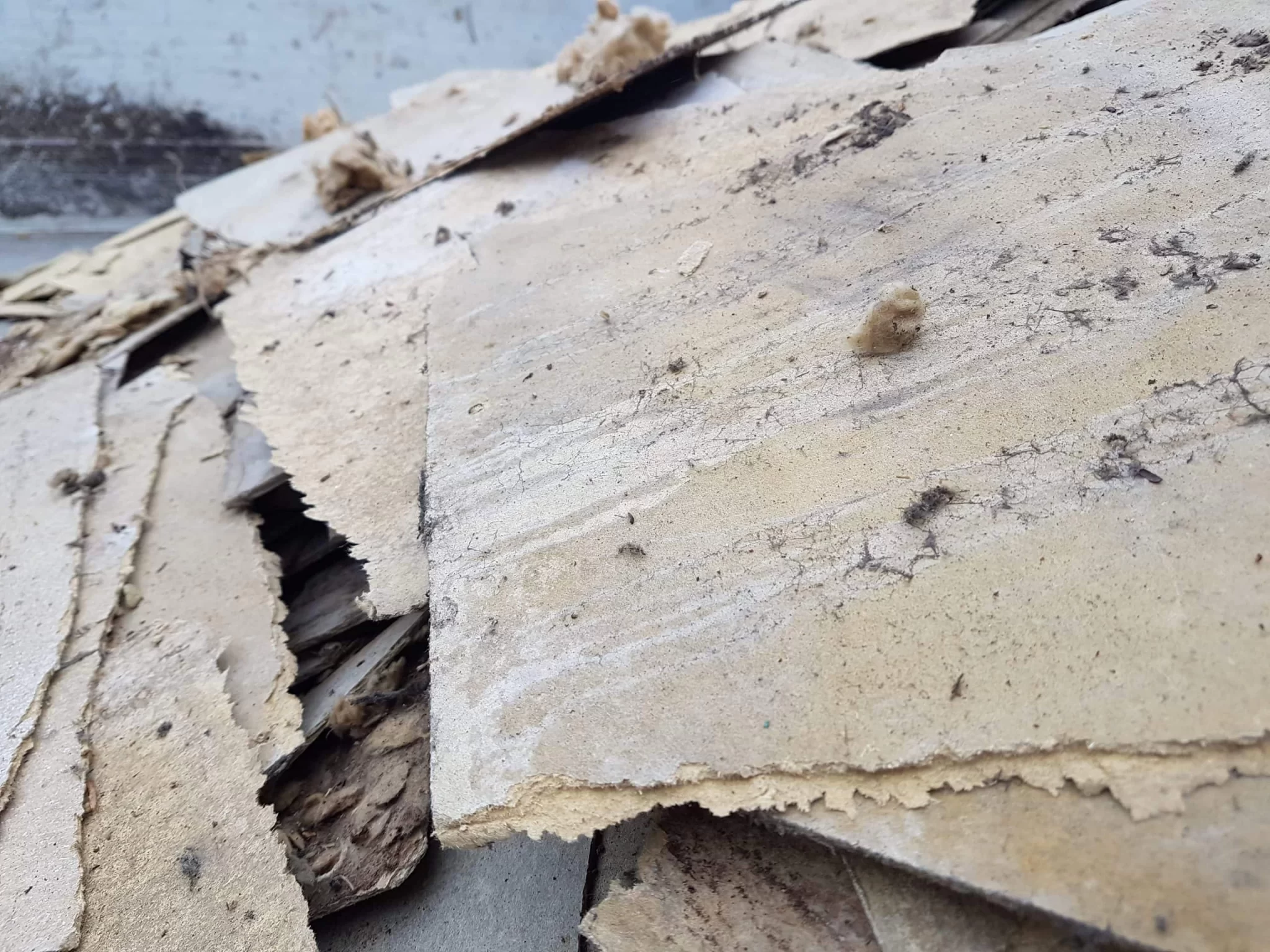
Two of the most common asbestos abatement jobs in Lynbrook involve floor tile and popcorn ceilings — and both show up constantly in the village’s pre-war and post-war housing stock. The 9-by-9 vinyl asbestos tiles that were standard in kitchens, bathrooms, and basements from the 1930s through the 1970s are often hiding under newer flooring. Once a gut renovation pulls up the top layer, there they are. We handle asbestos tile removal in Lynbrook with proper containment, careful extraction to avoid breaking the tiles unnecessarily, and full documentation — not just a shop vac and a dumpster.
Popcorn ceiling removal is the other one we see constantly in the mid-century ranches and Cape Cods off Merrick Road and throughout the village. Spray-applied textured ceilings were used everywhere through the late 1970s, and a large percentage contain chrysotile asbestos. The ceiling looks fine — no visible damage, no crumbling — but the moment someone scrapes it without testing first, those fibers go airborne. That’s when the problem becomes a health issue, not just a renovation inconvenience.
Beyond tile and ceilings, we also handle pipe and boiler insulation (extremely common in Lynbrook’s older basements), joint compound, roofing materials, and duct wrap. Every job includes the inspection, the abatement, and the post-clearance documentation your contractor and building department need to keep the project moving.
Does my Lynbrook home actually need an asbestos inspection before renovating?
If your home was built before 1974, New York State Industrial Code Rule 56 requires an asbestos survey before any demolition, remodeling, or renovation work begins. That applies to residential properties — not just commercial buildings. Lynbrook’s housing stock is heavily weighted toward pre-war and post-war construction, which means the overwhelming majority of homes in the village fall into this category. The requirement isn’t based on whether you think asbestos is present. It’s based on when the building was constructed.
Practically speaking, this matters even more in Lynbrook because the Village’s own Building Department actively enforces code compliance for renovation and construction projects. If your general contractor pulls a permit and the building predates 1974, an asbestos survey is part of the process — not something you can skip. Getting the inspection done upfront keeps your project on schedule and protects you from a stop-work order down the road.
How much does asbestos removal typically cost in Nassau County?
Cost depends on what materials are involved, how much square footage needs to be addressed, and the complexity of the containment setup. A single-room floor tile removal in a Lynbrook home is a very different job than a full basement with pipe insulation, boiler wrap, and floor tile combined. Most residential asbestos abatement projects in Nassau County fall somewhere between a few hundred dollars for a limited scope and several thousand for more involved work.
What drives cost up in this market is the dual-layer licensing requirement. Nassau County’s EHRP regulations add compliance overhead that contractors have to account for — and that’s actually a filter. If you’re getting a quote that seems unusually low, it’s worth asking whether the contractor holds both the state ICR 56 license and the Nassau County EHRP license. Unlicensed work in Lynbrook exposes you to fines and liability, and it doesn’t produce the clearance documentation your contractor or real estate attorney will need.
What happens if asbestos is found during a renovation already in progress?
Work stops. That’s the short answer — and it’s the right call. If a contractor uncovers a material they suspect contains asbestos mid-project, New York State law requires that work in the affected area cease until the material is tested and, if confirmed, properly abated by a licensed contractor. Continuing to disturb the material puts everyone on the job site at risk and creates serious legal exposure for the homeowner.
In Lynbrook, where the real estate market moves fast and renovation timelines are tight, this is one of the more stressful situations homeowners face. The good news is that we can often get on-site quickly, test the material, and — if abatement is needed — complete the work in a matter of days. The post-abatement clearance report is what gets your general contractor back on the job legally. The sooner you make the call, the sooner the project gets back on track.
Is asbestos in popcorn ceilings really that common in Lynbrook, NY?
Yes — more common than most homeowners expect. Spray-applied textured ceilings, commonly called popcorn ceilings, were used extensively in residential construction from the 1950s through the late 1970s. Chrysotile asbestos was a standard ingredient in the spray mix during that entire period. Given that a large share of Lynbrook’s ranch and Cape Cod homes were built and finished during exactly that window, popcorn ceilings with asbestos content are genuinely widespread in this village.
The tricky part is that the ceiling can look completely intact — no staining, no visible damage, no crumbling — and still contain asbestos. The risk isn’t from the ceiling sitting there undisturbed. The risk is the moment someone scrapes it. Sanding, scraping, or any mechanical disturbance of an asbestos-containing ceiling releases fibers into the air. Testing before any removal work begins is the only way to know what you’re dealing with. If asbestos is confirmed, we handle removal under proper containment — the required path forward.
Can I remove asbestos myself in New York State?
For most projects, no. New York State Industrial Code Rule 56 requires that asbestos abatement work above certain thresholds be performed by a licensed contractor with certified technicians. Homeowners are permitted to perform limited work on their own single-family residence under specific conditions, but those exceptions are narrow and come with their own requirements around disposal and notification. The moment the scope exceeds those limits — or involves a multi-unit building — the work must be done by a licensed professional.
In Nassau County specifically, the EHRP licensing layer adds another reason to be careful. Even if a project technically falls within the DIY exception under state law, improper disposal of asbestos-containing waste is a separate violation under both state and county regulations. Asbestos waste must be properly packaged, labeled, transported by a licensed hauler, and disposed of at a permitted facility. The fines for improper disposal in New York are significant. For most Lynbrook homeowners, the risk-to-reward calculation on DIY asbestos work doesn’t add up.
How long does asbestos abatement take for a typical Lynbrook home project?
For a focused residential job — a single room of floor tile, a section of pipe insulation, or a popcorn ceiling in one or two rooms — abatement typically takes one to three days from setup through post-clearance air monitoring. Larger or more complex projects, like a full basement with multiple material types or a whole-house remediation ahead of a major renovation, can run longer depending on scope and containment requirements.
The timeline that matters most to most Lynbrook homeowners is the gap between when work stops and when the general contractor can legally resume. That window is largely determined by how quickly we can mobilize, complete the work, and produce the air clearance documentation. In a market where homes sell in days and renovation schedules are tight, that responsiveness is the real variable. Choosing a contractor who knows Nassau County’s process — and can move efficiently within it — is what keeps your project from sitting idle longer than it has to.