If your Lyonsville home was built before 1980, asbestos abatement isn’t a maybe it’s a real possibility you need to get ahead of before the demo crew shows up.
I needed a professional consultation explanation of procedure for safe removal of Asbestos in my apartment complex. Without having an account yet, I was very impressed with the caring, knowledgeable and generous advice offered by Jessica, and will look forward to doing business in the future. Thank you so much! I feel much more informed about a sometimes scary endeavor. Peace. Nancy Silva Mineola, NY.
Mia Munoz
Used this company to clean up some water flood in my house. They were fast and easy to work with.very professional, Would recommend to anyone!
Nini Valle
Great company, had a flood and they responded quickly and efficiently. Billed my insurance company directly. I highly recommend this company!
joe colapietro, jr
I had pipe freeze in my basement right before a snow storm and they made to within an hour to help start the clean up process. They we by our side throughout the entire process and even helped with the insurance company. They did such a great job with the cleanup, repair, remidiation, I contracted them to perform the repairs and finishes in the basement. They came with enough manpower and material to get the job done. Leo and Jessica were nothing but a pleasure to deal with!!
Cristian Arredondo c
I had some water damage in my home and Green Island was able to take care of my issue quickly and effectively. I am very pleased with the work they did. They responded quickly and were very professional.
Michael M
Outstanding service! From the office to the field crew everyone was friendly, helpful and responsive. I highly recommend Green Island Group.
The homes around Lyonsville and the broader Marbletown corridor are genuinely old. We’re talking Dutch stone farmhouses, mid-century additions, boiler systems that haven’t been touched since the Eisenhower administration. That’s not a knock on the area it’s part of what makes it worth living in. But it also means that when you start pulling up floors, opening walls, or replacing that ancient furnace in the basement, the odds of running into asbestos-containing materials are real. And in New York State, that’s not something you can just deal with yourself or hand off to a general contractor.
Once we complete licensed asbestos remediation correctly contained, removed, and cleared by air monitoring you’re not just checking a regulatory box. You’re removing a genuine health risk from the place where your family eats, sleeps, and spends most of their time. That matters more in a rural hamlet like Lyonsville, where homes are older, renovation projects tend to be more extensive, and the building stock hasn’t been touched in decades.
For homeowners in Lyonsville, Kripplebush, and Stone Ridge who are mid-renovation or preparing to sell, documented abatement also means your transaction doesn’t get derailed. Buyers ask about it. Inspectors flag it. Having a completed project with clearance air monitoring results and a proper waste disposal record isn’t a bonus it’s what keeps the deal alive.
We hold the NYS Department of Labor Asbestos Handling License the specific credential required by New York State Industrial Code Rule 56 to legally perform asbestos abatement. Not a general contractor license. Not a handyman certification. The actual license that the state requires before anyone touches asbestos in a residential or commercial building. Every worker on every project is individually NYS DOL certified, and every project is documented with the full paper trail the law requires.
We serve Lyonsville as part of a wider footprint across Ulster County and the Hudson Valley which means we know the building stock out here. We’ve worked on properties near Pine Bush Road, in the Stone Ridge area, and throughout the older farmhouse corridors of Marbletown. We understand what these homes are made of, where asbestos tends to hide in structures like these, and what it takes to do this work right in a rural setting where your options are more limited than they’d be in a city.
Beyond asbestos, we also handle mold remediation, water damage, fire damage, and demolition all under the same licensed roof. If asbestos turns out to be the first problem, not the only one, you don’t have to start over finding someone else.
No Surprises Here's Exactly What the Process Looks Like
It starts with an assessment. Before anything is removed, the materials in question need to be tested and confirmed. If you’ve already had a third-party inspector identify asbestos, we can work from that report. If you haven’t, we can walk you through what that step looks like before abatement begins. For older homes in the Marbletown area especially anything with original floor tiles, pipe insulation around a boiler, or a popcorn ceiling that’s never been touched that initial survey often turns up more than people expect.
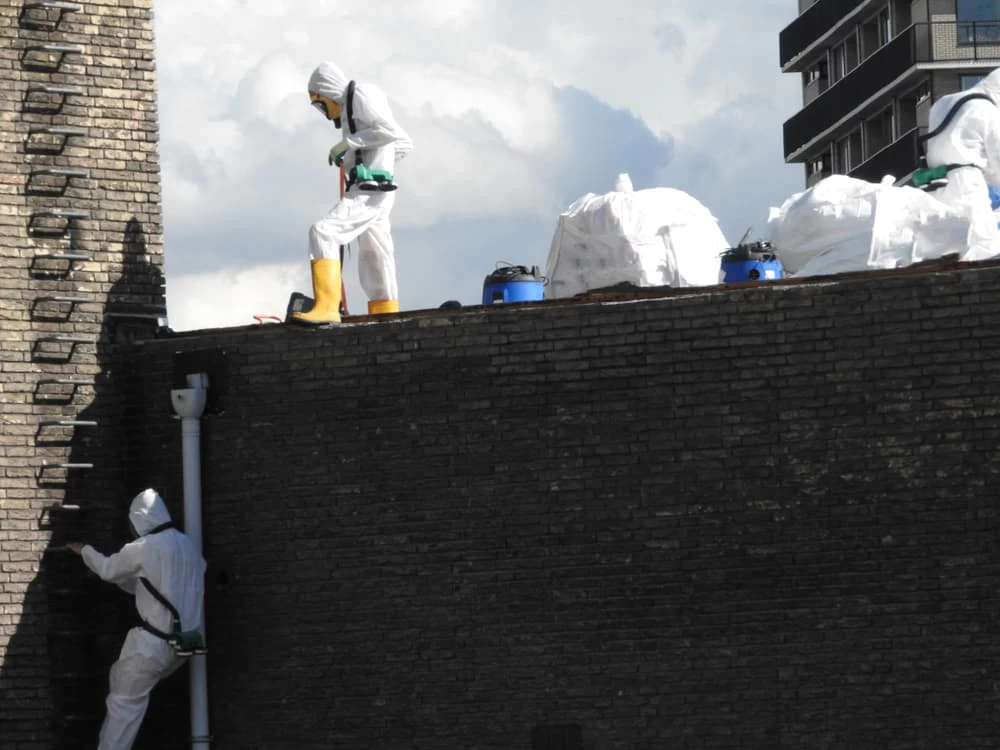
Once the scope is confirmed, we handle the NYS DOL project notification to the Asbestos Control Bureau’s Albany District Office, which covers Ulster County. That’s a required step for any project above 10 square feet or 25 linear feet, and it’s paperwork most homeowners have never dealt with before. We take care of it. During the actual removal, the work area is fully contained, negative air pressure is established, and all materials are removed and packaged according to state requirements. Our workers are suited up, certified, and following the protocol not cutting corners because the job is in a rural area where nobody’s watching.
After removal, we conduct clearance air monitoring to confirm the space is clean. You get the results. You keep the documentation. That record travels with the property for 30 years under NYS law which means it protects you, and it protects whoever owns the home after you.
What's Covered From First Call to Clearance Results
Asbestos shows up in a lot of places in older homes, and the ones people miss are usually the ones that cause problems. In pre-1980 homes throughout Lyonsville and the Kripplebush area, the most common locations are the 9×9 vinyl floor tiles and the black mastic adhesive underneath them, pipe and boiler insulation in basements and utility rooms, joint compound on walls and ceilings, popcorn or textured ceiling coatings, and roofing or cement siding materials on the exterior. If your home was built or significantly renovated before 1980, more than one of these likely applies.
We handle asbestos tile removal, pipe insulation removal, popcorn ceiling removal, full-room abatement, and whole-house projects depending on what the survey turns up. Every project includes proper containment setup, licensed removal, compliant waste disposal with documented manifests, and post-abatement clearance air monitoring the step that actually confirms the job is done. That documentation package is what you hand to a buyer, a building inspector, or your own records file.
For Ulster County properties that are part of a real estate transaction, we understand the timeline pressure. If a buyer’s inspection has flagged asbestos and you need a fast turnaround, call us directly. We also work with insurance carriers for situations where asbestos disturbance is connected to a covered event storm damage, water damage, or a structural issue and we bill them directly so you’re not managing that paperwork on top of everything else.
Does my Lyonsville home actually need asbestos testing before I start renovating?
In New York State, if your home was built before 1980 and you’re planning any renovation that involves disturbing walls, floors, ceilings, or mechanical systems, you should have an asbestos survey done before work begins. This isn’t just a precaution it’s tied to a legal requirement. Under NYS Industrial Code Rule 56, if asbestos-containing materials are disturbed at or above 10 square feet or 25 linear feet, the work must be performed by a licensed abatement contractor with advance notification to the state.
For homes in Lyonsville and the Marbletown area, this matters more than it might in a newer suburb. The building stock here is genuinely old. Many properties in this corridor have layers of renovation from different decades original materials covered by 1960s updates, covered again by 1980s work. A survey before demo tells you what you’re actually dealing with, so you don’t find out mid-project when your contractor has already disturbed something.
What does asbestos abatement actually cost for a home in Ulster County?
The honest answer is that it depends heavily on what the survey finds and how much material needs to be removed. A single room with asbestos floor tiles and mastic might run in the range of $1,500 to $3,500. A more involved project multiple rooms, pipe insulation throughout a basement, or a popcorn ceiling in a larger space can move into the $5,000 to $15,000 range. Whole-house abatement on an older Marbletown farmhouse with multiple ACM types can exceed that.
What drives cost in New York specifically is the regulatory structure. NYS Industrial Code Rule 56 requires licensed contractors, certified workers, formal project notification, air monitoring, and documented waste disposal. Those aren’t optional add-ons they’re built into every legitimate project. If someone quotes you a number that seems too low to cover all of that, ask them directly about their NYS DOL license. The cost of doing it wrong failed re-inspection, regulatory penalties, or a real estate deal falling apart is always higher than doing it right the first time.
How do I know if the contractor I'm hiring is actually licensed for asbestos work in New York?
The NYS Department of Labor maintains a public list of licensed asbestos contractors. You can look up any company by name and verify their current license status before signing anything. The credential you’re looking for is the NYS DOL Asbestos Handling License issued specifically by the state’s Asbestos Control Bureau. A general contractor license, a home improvement license, or an OSHA certification does not qualify someone to legally perform asbestos abatement in New York.
This is worth verifying because unlicensed operators do exist, particularly in rural areas of Ulster County where oversight is less visible than in a city. If a contractor can’t give you their NYS DOL license number or gets vague when you ask, that’s your answer. Our license is verifiable through the state’s public registry. We encourage every homeowner to check it not just ours, but anyone’s they’re considering for this work.
What happens if asbestos is found during a renovation already in progress?
Stop work in that area immediately. Don’t try to seal it, cover it back up, or continue around it. Once asbestos-containing material has been disturbed, the priority is limiting further disturbance and getting a licensed contractor on-site to assess the situation. Depending on the extent of the disturbance, emergency containment may be needed before a full abatement scope can be determined.
This scenario comes up more often than people expect in the Marbletown area, where older homes change hands and new owners start renovation work without a prior asbestos survey. A homeowner who bought a pre-1980 farmhouse near Lyonsville, started pulling up old flooring, and found black mastic adhesive underneath is in exactly this situation. The good news is that a mid-project discovery doesn’t have to derail everything permanently it just means the abatement step needs to happen before that phase of renovation continues. We handle urgent project timelines and can typically assess and scope a mid-renovation discovery quickly.
Are there asbestos risks specific to older stone houses common in the Marbletown area?
The original stone structure of a Colonial-era home isn’t typically the source of asbestos stone construction predates asbestos use significantly. The risk comes from everything that was added to those homes during the 20th century. Pipe insulation wrapped around boilers and heating systems installed in the 1940s through 1970s is one of the most common asbestos locations in older rural homes. Floor coverings, joint compound, and ceiling materials added during mid-century renovations are others.
In the Kripplebush Historic District and surrounding areas near Lyonsville, many homes have had multiple renovation phases layered over an original structure. Each of those layers is a potential source of ACMs depending on when the work was done. If your home has a boiler or furnace that hasn’t been updated in decades, or if you’re planning to open up walls or floors in a section of the house that was last touched before 1980, those are the areas to prioritize for testing before any work begins.
Does asbestos abatement need to happen before a home sale in Lyonsville, NY?
Not always required by law, but practically speaking, it often becomes necessary. In New York State, sellers are required to disclose known hazards including known asbestos-containing materials. If a buyer’s home inspection flags suspected ACMs, or if the buyer’s lender requires abatement as a condition of financing, the deal doesn’t move forward until it’s handled. In the active real estate market around Stone Ridge and Marbletown, where buyers are often purchasing older properties and doing significant due diligence, asbestos comes up regularly.
The smarter move for sellers in Lyonsville is to address it proactively before listing, rather than waiting for it to surface mid-transaction under deadline pressure. A completed abatement with clearance air monitoring results and a documented waste disposal record is something you can hand to a buyer’s agent and move on. It removes a negotiating chip from the buyer’s side and signals that the property has been maintained responsibly which matters in a market where buyers are already skeptical about the condition of older homes.