If your building went up before 1987 and most in Madison Square did asbestos abatement isn’t optional. We handle the removal, the NYC DEP paperwork, and everything in between.
I needed a professional consultation explanation of procedure for safe removal of Asbestos in my apartment complex. Without having an account yet, I was very impressed with the caring, knowledgeable and generous advice offered by Jessica, and will look forward to doing business in the future. Thank you so much! I feel much more informed about a sometimes scary endeavor. Peace. Nancy Silva Mineola, NY.
Mia Munoz
Used this company to clean up some water flood in my house. They were fast and easy to work with.very professional, Would recommend to anyone!
Nini Valle
Great company, had a flood and they responded quickly and efficiently. Billed my insurance company directly. I highly recommend this company!
joe colapietro, jr
I had pipe freeze in my basement right before a snow storm and they made to within an hour to help start the clean up process. They we by our side throughout the entire process and even helped with the insurance company. They did such a great job with the cleanup, repair, remidiation, I contracted them to perform the repairs and finishes in the basement. They came with enough manpower and material to get the job done. Leo and Jessica were nothing but a pleasure to deal with!!
Cristian Arredondo c
I had some water damage in my home and Green Island was able to take care of my issue quickly and effectively. I am very pleased with the work they did. They responded quickly and were very professional.
Michael M
Outstanding service! From the office to the field crew everyone was friendly, helpful and responsive. I highly recommend Green Island Group.
Madison Square sits inside one of Manhattan’s most architecturally dense corridors. The Flatiron Building. The Met Life Tower. Hundreds of pre-war loft conversions and co-op buildings lining the side streets between 23rd and 26th. These buildings are beautiful and they were built in an era when asbestos was considered a feature, not a hazard. It shows up in pipe insulation, floor tiles, ceiling materials, joint compound, and fireproofing on structural steel. If you’re opening walls, replacing floors, or touching anything mechanical in a pre-1960 building in Madison Square, there’s a real chance you’ll encounter it.
The bigger issue isn’t the asbestos itself it’s what happens when you don’t handle it correctly. In New York City, the Department of Buildings won’t issue a renovation permit for any pre-1987 structure without an ACP-5 certification or ACP-7 notification on file. That means your contractor has to stop. Your timeline shifts. And if the wrong people touched the wrong materials before anyone called, you’re now dealing with a liability situation on top of a renovation delay. Getting ahead of this before demo starts, before permits are pulled is how you keep a project on schedule in Madison Square.
When asbestos is identified, handled properly, and cleared by post-abatement air testing, you get your space back. You get your permits. You move forward.
We’re a full-service environmental remediation company serving Manhattan and all five boroughs. Asbestos abatement is one piece of a broader operation that also handles water damage, mold, demolition, and fire damage all under one contractor, one license, one point of contact. In a neighborhood like Madison Square, where a single burst steam pipe in a pre-war building can expose asbestos insulation and trigger mold growth within 72 hours, that kind of coverage matters.
Every project we execute is in full compliance with the NYC Department of Environmental Protection’s Asbestos Control Program, NYS Department of Labor Part 56 licensing, EPA NESHAP regulations, and OSHA standards. These aren’t credentials listed for appearance they’re what legally allows the work to happen in Manhattan. The documentation you receive after a project is the same documentation the DOB needs to release your permit and move your job forward.
Customers consistently describe our team as responsive, knowledgeable, and clear people who explain what’s happening without making it more complicated than it needs to be.
It starts with an assessment. A DEP-Certified Asbestos Investigator surveys the space and identifies any asbestos-containing materials present. In Madison Square’s pre-war building stock the kind that dominates the Flatiron and NoMad corridors that survey often turns up materials in multiple locations simultaneously. Floor tiles, pipe insulation, ceiling materials, and joint compound can all test positive in the same unit. The assessment gives you a clear picture of what’s there before anyone makes a move.
From there, the ACP-5 or ACP-7 filing goes to NYC DEP. If abatement is required, the mandatory 10-business-day notification window begins. This is a fixed regulatory requirement there’s no shortcut around it so building it into your renovation timeline from the start is the move. Contractors and co-op boards in Madison Square who try to sequence this after permits are pulled end up waiting. The ones who call first don’t.
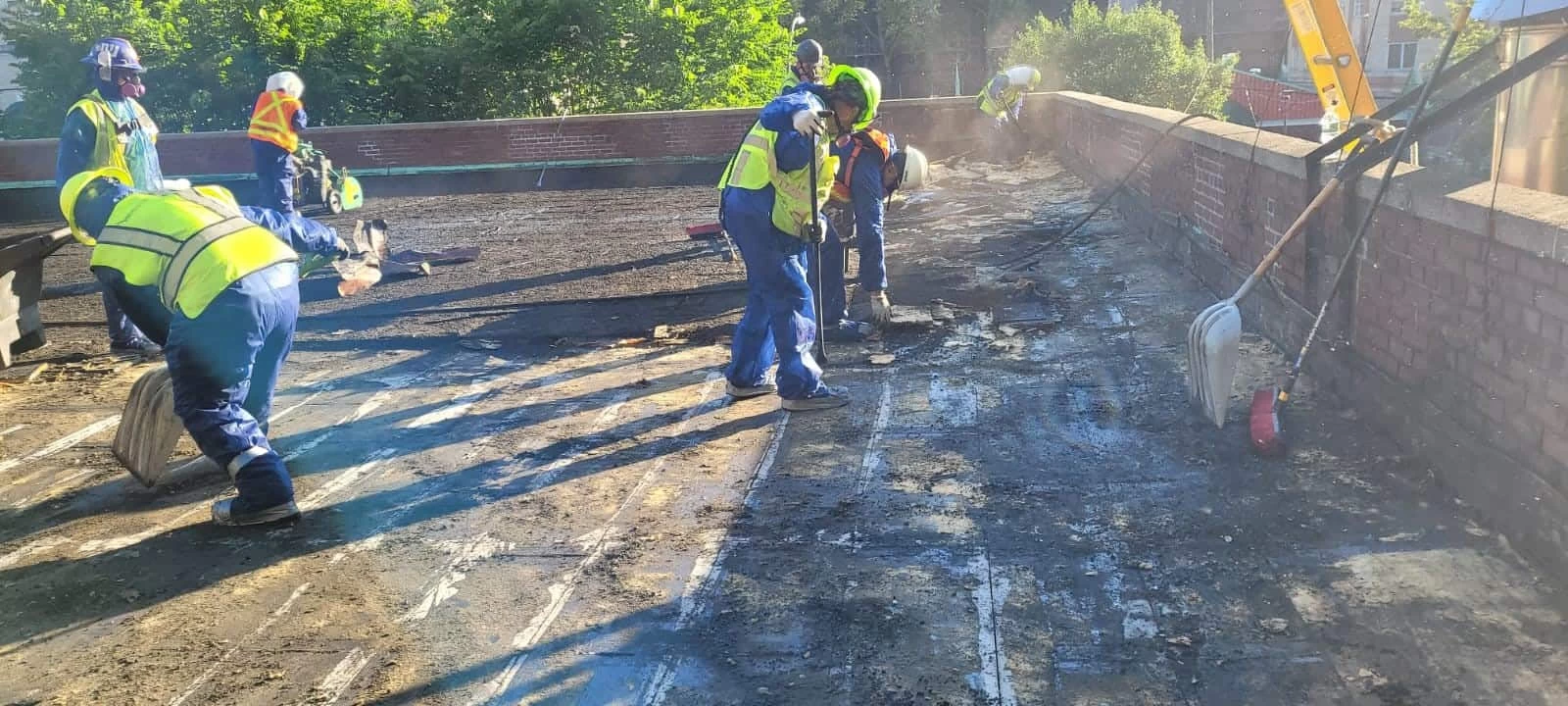
Once the notification window clears, the abatement work begins. The space is contained, materials are removed by licensed technicians, and everything is disposed of according to EPA and DEP standards. Post-abatement air clearance testing follows independent measurement confirming the space is safe to reoccupy. That clearance report is what your building management, your co-op board, and the DOB are looking for. You get it in writing.
Asbestos shows up differently depending on when and how a building was constructed. In Madison Square’s pre-war residential lofts and converted commercial buildings, the most common finds are vinyl asbestos floor tiles the 9-inch and 12-inch squares that were standard in mid-century construction along with pipe insulation on steam and hot water heating systems, spray-applied fireproofing on structural steel, and textured ceiling materials including popcorn ceilings applied before the late 1970s. In buildings undergoing office-to-residential conversion, like the projects currently active in the Flatiron and NoMad sub-areas, all of these materials may be present across multiple floors simultaneously.
We handle the full range: asbestos tile removal, popcorn ceiling removal, pipe insulation abatement, drywall joint compound, roofing materials, and ductwork insulation. Every project includes the pre-abatement survey, the DEP filings, the physical removal by certified technicians, proper disposal, and post-abatement air clearance testing with documentation. Nothing is handed off or subcontracted out the same team manages the process from the first call to the final clearance report.
For situations where asbestos is discovered alongside water damage a burst pipe in a pre-war building, storm damage to a roof or ceiling the remediation doesn’t stop at asbestos. We handle water extraction, drying, and mold prevention under the same roof. One call, one contractor, one timeline.
Does my Madison Square co-op require an asbestos test before renovation work?
In most cases, yes and it’s not just the co-op board asking. New York City law requires an asbestos assessment before any renovation or demolition work that disturbs building materials in a structure built or substantially altered before April 1, 1987. The NYC Department of Buildings will not issue a permit for that work without an ACP-5 certification on file, signed by a DEP-Certified Asbestos Investigator. Most co-op boards in Madison Square and the surrounding Flatiron area are fully aware of this requirement and will ask for documentation before approving any alteration agreement.
The practical implication is that the asbestos survey needs to happen before you pull permits not after. If your contractor starts work and discovers suspicious materials mid-project, they’re legally required to stop. Getting the survey done upfront eliminates that risk entirely and keeps your renovation on the timeline you planned.
How long does the asbestos abatement process take from start to finish in NYC?
The timeline depends on the scope of the project, but the most significant fixed variable is the NYC DEP’s mandatory 10-business-day notification window. Once an ACP-7 is filed with the DEP, abatement work cannot begin until that window has passed. This is a regulatory requirement with no exceptions, and it applies to every asbestos abatement project in Manhattan including smaller residential jobs in pre-war co-op and condo units throughout Madison Square.
For a straightforward single-room abatement in a Madison Square apartment, the physical removal work itself can often be completed in one to two days. Larger projects multi-floor commercial conversions, full gut renovations of pre-war loft buildings take longer depending on the volume and variety of materials involved. Post-abatement air clearance testing adds a final step before the space is cleared for reoccupancy. When you account for the notification window, a realistic minimum timeline from first call to final clearance is typically two to three weeks for a standard residential project.
What types of materials in pre-war Manhattan buildings most commonly contain asbestos?
The building stock in and around Madison Square most of it constructed between the 1880s and the 1960s used asbestos extensively across a wide range of applications. The most common finds in pre-war Manhattan apartments and commercial buildings are vinyl floor tiles, particularly the 9-inch and 12-inch squares that were standard through the mid-20th century. Pipe insulation on steam and hot water heating systems is another frequent location, especially in buildings that still use original radiator infrastructure.
Beyond those two, asbestos also appears in spray-applied fireproofing on structural steel beams common in commercial buildings converted to residential use textured ceiling finishes including popcorn ceilings applied before the late 1970s, drywall joint compound, roofing materials, and ductwork insulation. In a single pre-war loft undergoing a gut renovation, it’s not unusual to find asbestos-containing materials in three or four of these locations simultaneously. A comprehensive pre-renovation survey identifies all of them before any demo work begins.
What happens if a contractor discovers asbestos mid-renovation in my Manhattan apartment?
They’re required to stop work immediately. Under New York City regulations, any contractor who encounters suspected asbestos-containing materials during a renovation must halt the job until a licensed assessment is completed and, if necessary, abatement is performed and cleared. There’s no workaround continuing work after a discovery exposes the contractor, the building owner, and the property manager to significant fines and liability.
For Madison Square property owners, this scenario is more common than most people expect. Pre-war buildings in the Flatiron and NoMad corridors were not built with asbestos disclosure in mind, and the materials are often hidden inside walls, under floors, or wrapped around pipes that haven’t been touched in decades. The fastest way through this situation is to have a licensed abatement contractor on-site quickly assess what’s there, file the required DEP notifications, complete the removal, and get the clearance documentation the DOB needs to let your contractor back in. We operate 24 hours a day, seven days a week, specifically because mid-project discoveries don’t wait for business hours.
Is asbestos abatement covered by homeowner's or building insurance in NYC?
It depends on how the asbestos was disturbed and what triggered the need for abatement. Insurance coverage for asbestos removal in New York City is most commonly available when the abatement is directly connected to a covered event a burst pipe, water damage, storm damage, or another sudden incident that disturbs asbestos-containing materials. In those situations, the asbestos abatement may be included as part of a broader property damage claim, particularly when the remediation is handled by a contractor who bills insurance carriers directly and documents the work correctly.
Planned pre-renovation abatement the kind required before a kitchen gut or bathroom remodel is generally not covered under standard property insurance policies. That said, if your renovation was triggered by water damage or another insurable event, the line between covered and uncovered work can blur, and it’s worth having the conversation with your carrier before assuming it’s out of pocket. We have a documented track record of working directly with insurance carriers on combined water damage and asbestos remediation claims, which can simplify an otherwise complicated process significantly.
How much does asbestos abatement typically cost for a Manhattan apartment or building?
Costs in the NYC market are higher than in most other parts of New York, and they’ve increased further in 2025 and 2026 due to updated NYS DOL licensing requirements, higher disposal fees, and mandatory post-abatement air clearance testing. For a standard single-room residential project in a Madison Square co-op or condo a bathroom, kitchen, or single floor area you’re typically looking at a range of $2,200 to $6,500 depending on the materials involved, the volume, and the accessibility of the space.
Larger projects multi-floor commercial conversions, full building renovations, or jobs involving multiple material types simultaneously run significantly higher and are scoped individually. The Flatiron and NoMad areas are currently seeing a high volume of office-to-residential conversion projects, and those jobs routinely involve asbestos in multiple locations across multiple floors. Any estimate you receive should include the DEP filings, the physical abatement work, proper disposal, and post-abatement air clearance testing with documentation. If a quote doesn’t include all of those components, ask specifically what’s missing because each one is required to legally complete the job and get your permits released.