Most homes in Mahopac were built in the 1960s right in the middle of the asbestos era. If yours is one of them, asbestos abatement isn’t a maybe. It’s a conversation worth having before your next renovation, sale, or repair.
I needed a professional consultation explanation of procedure for safe removal of Asbestos in my apartment complex. Without having an account yet, I was very impressed with the caring, knowledgeable and generous advice offered by Jessica, and will look forward to doing business in the future. Thank you so much! I feel much more informed about a sometimes scary endeavor. Peace. Nancy Silva Mineola, NY.
Mia Munoz
Used this company to clean up some water flood in my house. They were fast and easy to work with.very professional, Would recommend to anyone!
Nini Valle
Great company, had a flood and they responded quickly and efficiently. Billed my insurance company directly. I highly recommend this company!
joe colapietro, jr
I had pipe freeze in my basement right before a snow storm and they made to within an hour to help start the clean up process. They we by our side throughout the entire process and even helped with the insurance company. They did such a great job with the cleanup, repair, remidiation, I contracted them to perform the repairs and finishes in the basement. They came with enough manpower and material to get the job done. Leo and Jessica were nothing but a pleasure to deal with!!
Cristian Arredondo c
I had some water damage in my home and Green Island was able to take care of my issue quickly and effectively. I am very pleased with the work they did. They responded quickly and were very professional.
Michael M
Outstanding service! From the office to the field crew everyone was friendly, helpful and responsive. I highly recommend Green Island Group.
When asbestos is properly removed and cleared, you stop carrying the risk of it. That means no more wondering whether the floor tiles in your 1967 raised ranch are releasing fibers every time someone walks across them. No more holding off on a bathroom renovation because you’re not sure what’s behind the walls. The job gets done, the documentation gets handed to you, and you move forward.
For Mahopac homeowners, that clarity matters more than it might in a newer community. The median construction year here is 1966 and the vast majority of the housing stock in neighborhoods like McLaughlin Acres, Maple Hill Estates, and Lake Secor was built during the decades when asbestos was used in everything from pipe insulation to popcorn ceilings to vinyl floor tile adhesives. That’s just the reality of what was standard practice in residential construction at the time.
There’s also the lakefront factor. Homes near Lake Mahopac, Lake Secor, and Kirk Lake deal with higher humidity and moisture year-round. Moisture accelerates the breakdown of older building materials including the ones that contain asbestos. If those materials become friable, they release fibers. That’s when a manageable situation becomes an urgent one. Getting ahead of it is always the better call.
We’ve been doing environmental remediation work across New York State for over 12 years. That includes asbestos abatement, lead abatement, mold remediation, water and fire damage restoration, and HVAC cleaning all under one license, one team, and one point of contact. For homeowners in Putnam County dealing with an older home that has more than one issue going on, that matters.
We hold a NYS Department of Labor Asbestos License, which is the state-mandated credential required under Industrial Code Rule 56 the law that governs all abatement work in Mahopac and across Putnam County. That license is publicly verifiable. You can look it up. Beyond licensing, we’ve performed abatement work for the NYS Office of General Services, DASNY, and county government agencies clients that require rigorous pre-qualification before a contractor ever sets foot on a job site.
Our 4.7-star rating across verified reviews reflects something real: customers who were nervous going in and felt informed and taken care of coming out. That’s the standard we hold ourselves to, whether the job is in a lakefront home off Route 6 or a split-level in the hills above Carmel.
No Surprises Here's Exactly What the Job Looks Like
It starts with an inspection. A licensed inspector assesses the materials in question whether that’s pipe insulation in a basement, 9×9 floor tiles in a kitchen, popcorn ceilings in a bedroom, or attic insulation that may contain vermiculite. Samples are collected and sent to an accredited lab. Once the results confirm what you’re dealing with, the scope of work is defined clearly before anything else happens.
From there, we handle the permit applications. In Mahopac, abatement work falls under NYS Industrial Code Rule 56 and is overseen by the Albany District Office of the NYS DOL Asbestos Control Bureau, which has jurisdiction over Putnam County. The permitting process isn’t something you should be navigating on your own while a project sits on hold it gets handled as part of our service. The work area is then contained using negative air pressure enclosures, wet removal methods are applied, and decontamination protocols are followed throughout. Nothing gets cut short because it’s inconvenient.
When removal is complete, an independent licensed air monitoring contractor conducts post-abatement clearance testing. This is required by law before the space can be reoccupied and it’s also the documentation you’ll want on file for insurance purposes and for any future real estate transaction in a market where Mahopac homes are moving fast and buyers are paying close attention.
Asbestos abatement isn’t one-size-fits-all, and the scope depends on what materials are present, where they are, and what condition they’re in. In Mahopac’s older housing stock, the most common materials that come up are vinyl floor tiles and the black mastic adhesive beneath them, pipe and boiler insulation in basement mechanical rooms, textured and popcorn ceilings applied through the late 1970s, and attic insulation particularly vermiculite, which may contain asbestos and was widely used in homes of this era.
We handle the full scope: inspection coordination, permit filing with the NYS DOL, contained removal using wet methods and negative air pressure, proper waste transport to an approved disposal facility under NYSDEC regulations, and independent post-clearance air testing. Every step is documented. You receive a complete file when the job is done not just a verbal confirmation that everything looks fine.
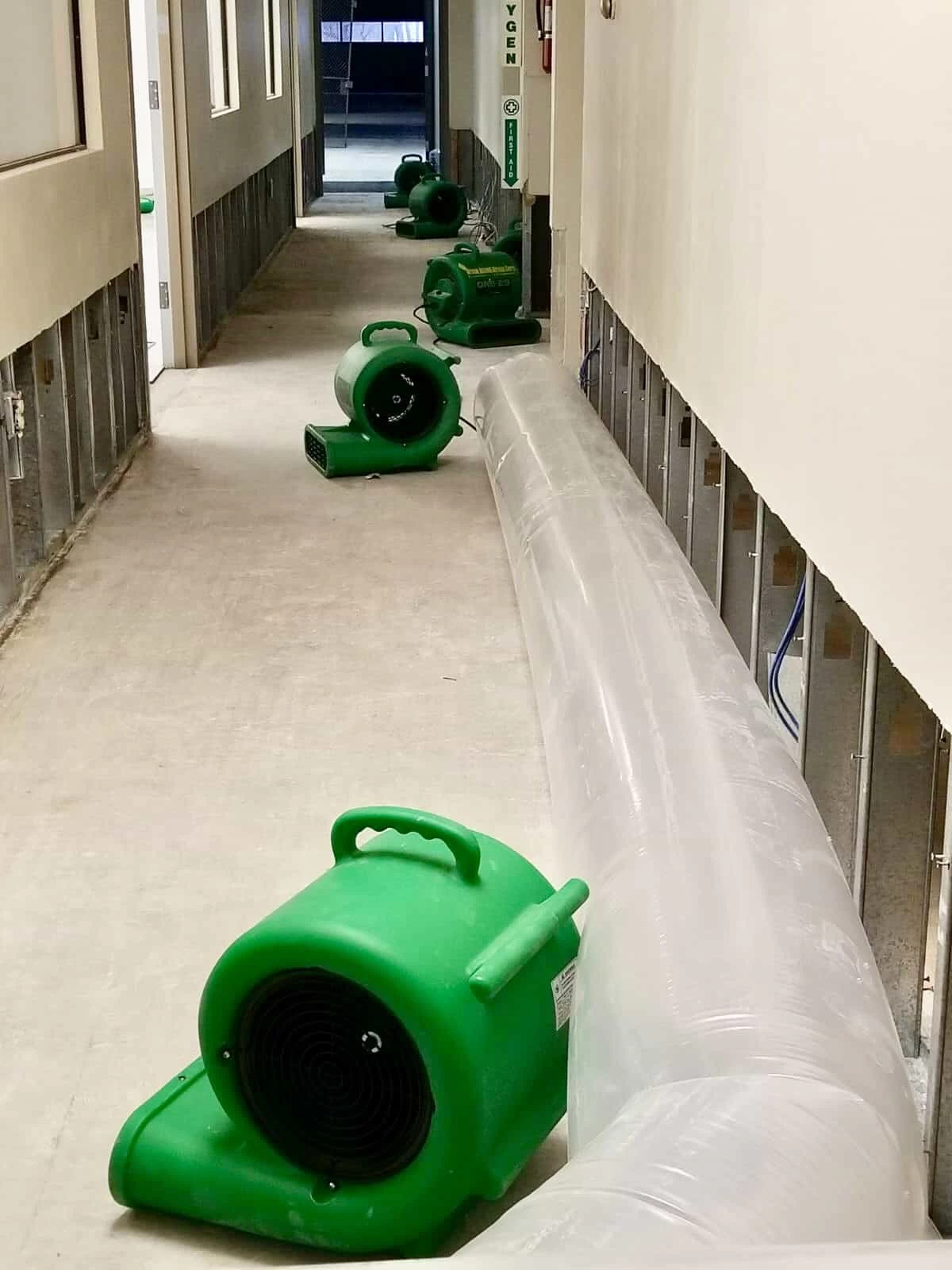
For Mahopac homeowners dealing with a water damage event alongside an asbestos concern which happens more often than you’d think in lake-adjacent homes after a storm or a pipe failure our IICRC Water and Fire Damage Certification means both issues can be addressed without coordinating two separate contractors. The asbestos abatement and the water remediation get handled by the same licensed team, under the same roof, with one clear line of accountability from start to finish.
How do I know if my Mahopac home actually has asbestos in it?
The honest answer is: you can’t know for certain without testing. Visual inspection alone doesn’t tell you whether a material contains asbestos it has to be sampled and sent to an accredited lab. That said, if your home was built between the 1940s and the late 1970s, the probability is high enough that testing is worth doing before any renovation work that would disturb existing materials.
In Mahopac, where the median construction year is 1966, this applies to a significant portion of the housing stock. The materials most commonly found to contain asbestos in homes of that era include vinyl floor tiles and the adhesive beneath them, pipe and boiler insulation, popcorn or textured acoustic ceilings, and attic insulation. If your home has any of these and you’re planning to renovate, demo, or even just do significant repairs, a pre-project inspection is the right first step not optional, and not something to skip to save time.
What does asbestos abatement actually cost for a typical older home?
Cost ranges widely depending on the scope what materials are present, how much of them there are, and where they’re located in the home. For a single contained area like a basement mechanical room or a section of flooring, you might be looking at $500 to $1,500. A larger scope involving multiple materials or areas popcorn ceilings throughout a floor, pipe insulation across a full basement, or floor tiles in several rooms can run from $2,000 to $6,000 or more.
What drives cost up isn’t just square footage. It’s access, containment complexity, and disposal requirements. Homes near Lake Mahopac that have basement crawl spaces or older mechanical systems in tight quarters take more time to work in safely. The permit and clearance testing costs are also part of the total picture and they’re non-negotiable under NYS Industrial Code Rule 56. Any quote that doesn’t account for those items is an incomplete quote. We provide transparent pricing that covers the full scope so there are no surprises at the end of the job.
Do I need a permit for asbestos removal in Mahopac, NY?
Yes for regulated asbestos abatement work, permits and notifications are required under New York State Industrial Code Rule 56. This applies to the contractor, not the homeowner directly, but it affects your project timeline and who you hire. Only a licensed NYS DOL asbestos contractor can legally perform regulated abatement and file the required notifications with the Asbestos Control Bureau.
Putnam County falls under the Albany District Office of the NYS DOL Asbestos Control Bureau, which oversees compliance for abatement projects in this region. If a contractor is working in your Mahopac home without the proper license and without filing the required notifications, the work is not legally compliant and you could face issues if that comes up during a future sale or inspection. We handle all permit applications and regulatory filings as part of our service, so you’re not left to figure out that process on your own while your renovation sits on hold.
Can I stay in my home during asbestos abatement, or do we need to leave?
It depends on the scope and location of the work. For a contained area like a single room, basement, or attic, it’s sometimes possible to remain in the home if the work area is properly sealed and negative air pressure is maintained throughout. For larger projects involving multiple areas or the main living spaces, temporary displacement is typically the safer and more practical choice.
This is a real consideration for Mahopac residents, where over 14% of the workforce works from home well above the national average. If your home is also your office, any disruption to your living space is a disruption to your workday. We coordinate scheduling and containment with that in mind. The goal is to work efficiently, minimize the footprint of disruption, and get the space cleared and documented as quickly as the job allows. Post-abatement clearance testing confirms the area is safe before anyone reoccupies it that’s not optional, and it’s also the assurance you need to actually feel comfortable returning to the space.
Does asbestos abatement need to happen before I renovate or sell my Mahopac home?
For renovation work that disturbs materials in a pre-1980 structure, yes an asbestos assessment is required before demolition or significant renovation work begins. This isn’t just a best practice; it’s part of the regulatory framework that governs construction and renovation in New York State. Disturbing asbestos-containing materials without proper abatement is a violation of Industrial Code Rule 56 and creates real health exposure for anyone in the space.
For home sales, it’s not always legally required before listing but in Mahopac’s competitive real estate market, where homes are going pending in under 30 days and buyers are paying close attention to inspection results, unresolved asbestos findings can become a significant negotiating issue or a deal-stopper. Sellers who complete abatement before listing remove that variable entirely. They can provide clearance documentation to buyers upfront, protect their asking price, and avoid last-minute delays at closing. Given that detached homes in Mahopac are averaging close to $618,000, the cost of abatement is a small fraction of what’s at stake in a transaction.
What happens if water damage and asbestos are both present in the same area?
This situation comes up more often than most homeowners expect especially in Mahopac, where lake-adjacent and lakefront homes deal with elevated moisture year-round, and where Hudson Valley storms can push water into basements and crawl spaces quickly. When water intrudes into a space that contains older building materials, it can accelerate the deterioration of those materials and cause previously stable asbestos-containing products to become friable, meaning they can release fibers into the air.
When that happens, you’re dealing with two separate but overlapping hazards that need to be addressed in the right sequence and by properly licensed contractors. Water damage remediation cannot safely proceed in a space with disturbed asbestos-containing materials until the asbestos is abated first. Hiring two separate contractors to coordinate that handoff creates gaps, delays, and accountability problems. We hold both a NYS DOL Asbestos License and an IICRC Water and Fire Damage Certification, which means both scopes of work can be handled by our team under a single project plan no gap between the abatement crew and the remediation crew, and no finger-pointing if something comes up mid-job.