Nearly half of all homes in Malverne were built before 1939. If you’re renovating, selling, or just finally dealing with something a contractor flagged — asbestos abatement in Malverne, NY starts with a team that already knows what’s inside walls like yours.
I needed a professional consultation explanation of procedure for safe removal of Asbestos in my apartment complex. Without having an account yet, I was very impressed with the caring, knowledgeable and generous advice offered by Jessica, and will look forward to doing business in the future. Thank you so much! I feel much more informed about a sometimes scary endeavor. Peace. Nancy Silva Mineola, NY.
Mia Munoz
Used this company to clean up some water flood in my house. They were fast and easy to work with.very professional, Would recommend to anyone!
Nini Valle
Great company, had a flood and they responded quickly and efficiently. Billed my insurance company directly. I highly recommend this company!
joe colapietro, jr
I had pipe freeze in my basement right before a snow storm and they made to within an hour to help start the clean up process. They we by our side throughout the entire process and even helped with the insurance company. They did such a great job with the cleanup, repair, remidiation, I contracted them to perform the repairs and finishes in the basement. They came with enough manpower and material to get the job done. Leo and Jessica were nothing but a pleasure to deal with!!
Cristian Arredondo c
I had some water damage in my home and Green Island was able to take care of my issue quickly and effectively. I am very pleased with the work they did. They responded quickly and were very professional.
Michael M
Outstanding service! From the office to the field crew everyone was friendly, helpful and responsive. I highly recommend Green Island Group.
When asbestos is handled correctly, you stop carrying the risk. No more wondering whether that floor tile is safe to disturb, no more stalling on a kitchen renovation, no more holding your breath during a home inspection. The work gets done, documented, and closed out — and you move on.
For Malverne homeowners specifically, that documentation matters more than people realize. With median home values pushing $800,000 and a real estate market that moves fast, buyers’ attorneys and inspectors are asking questions. A properly completed asbestos abatement — with waste manifests, project notifications, and a full closeout package — protects your asking price and keeps your transaction on track.
There’s also a physical reality to homes built in the pre-WWII era on Long Island’s South Shore. The coastal humidity here accelerates the breakdown of older building materials. Pipe insulation, boiler wrap, floor tile adhesive — these don’t stay inert forever. When they start to deteriorate, the risk becomes active. Getting ahead of it isn’t overcautious. It’s just the right call for a home this age.
We’re a Nassau County-based environmental contractor focused on asbestos abatement, remediation, and the compliance work that goes with it. Our team holds the required NYS Department of Labor licensing and operates in full compliance with Nassau County’s EHRP and EHRT requirements — the specific credentials that govern this type of work in Malverne and throughout the Town of Hempstead.
We’re not a national brand routing calls through a call center. We’re a local team that works regularly in South Shore communities — Malverne, Lynbrook, Rockville Centre, West Hempstead — and we understand the building types, the local inspectors, and the regulatory environment that applies here.
When you call, you’re talking to people who already know what a pre-1939 Cape Cod or colonial in this area is likely to contain. That saves time, reduces surprises, and means the scope of your project gets assessed accurately from the start.
Here's Exactly What Happens When You Call Green Island Group
The first thing to understand is that New York State law requires the assessment and the actual removal to be performed by two separate licensed entities. We cannot legally do both on the same project. So before we begin any abatement work, you’ll need a licensed, independent asbestos inspector to test and confirm what’s present. If you haven’t done that yet, we can point you in the right direction.
Once the inspection report is in hand and asbestos-containing materials are confirmed, we handle everything from that point forward. That means filing the required project notifications with the NYS Asbestos Control Bureau, setting up proper containment with negative air pressure systems, and removing the material according to NYS Industrial Code Rule 56 — the state’s governing standard for all asbestos work. For homes in Malverne, that often means working around occupied living spaces and coordinating carefully so the rest of your renovation or sale timeline doesn’t get derailed.
When the work is complete, you receive a full closeout package — waste manifests, disposal certificates, and all regulatory filings. That paperwork is what protects you when a buyer’s attorney asks questions or a building inspector follows up. It’s not a formality. In Nassau County’s active market, it’s what makes the difference between a clean transaction and a delayed one.
The Materials We Find in Malverne Homes — And How We Handle Them
The most common asbestos-containing materials in Malverne’s pre-WWII housing stock follow a predictable pattern. The 9×9 inch vinyl asbestos floor tile — and the black mastic adhesive underneath it — shows up constantly in kitchens, bathrooms, and basements of homes built between the 1920s and 1960s. It’s often hidden under a layer of newer flooring, discovered only when a renovation starts. Asbestos popcorn ceiling removal is another frequent request, particularly in homes that were updated during the mid-century era when textured ceiling finishes were standard. Pipe insulation and boiler wrap are also common in homes with original heating systems — and in a village where nearly half the housing stock predates 1939, that’s a large portion of the market.
We handle all of these material types. Each job is scoped based on the inspection report, contained properly to prevent fiber migration into living spaces, and removed in compliance with NYS and Nassau County requirements. Waste is packaged, transported by a NYS DEC-registered hauler, and disposed of at a certified facility — not dropped at a general construction site. You receive documentation for every step.
If your project involves a combination of material types — say, floor tile removal alongside pipe insulation in a basement — we handle that as a single coordinated scope, not multiple disconnected jobs. For Malverne homeowners managing a renovation timeline or a pending home sale, that coordination matters.
Does my Malverne home actually have asbestos if it was built before 1940?
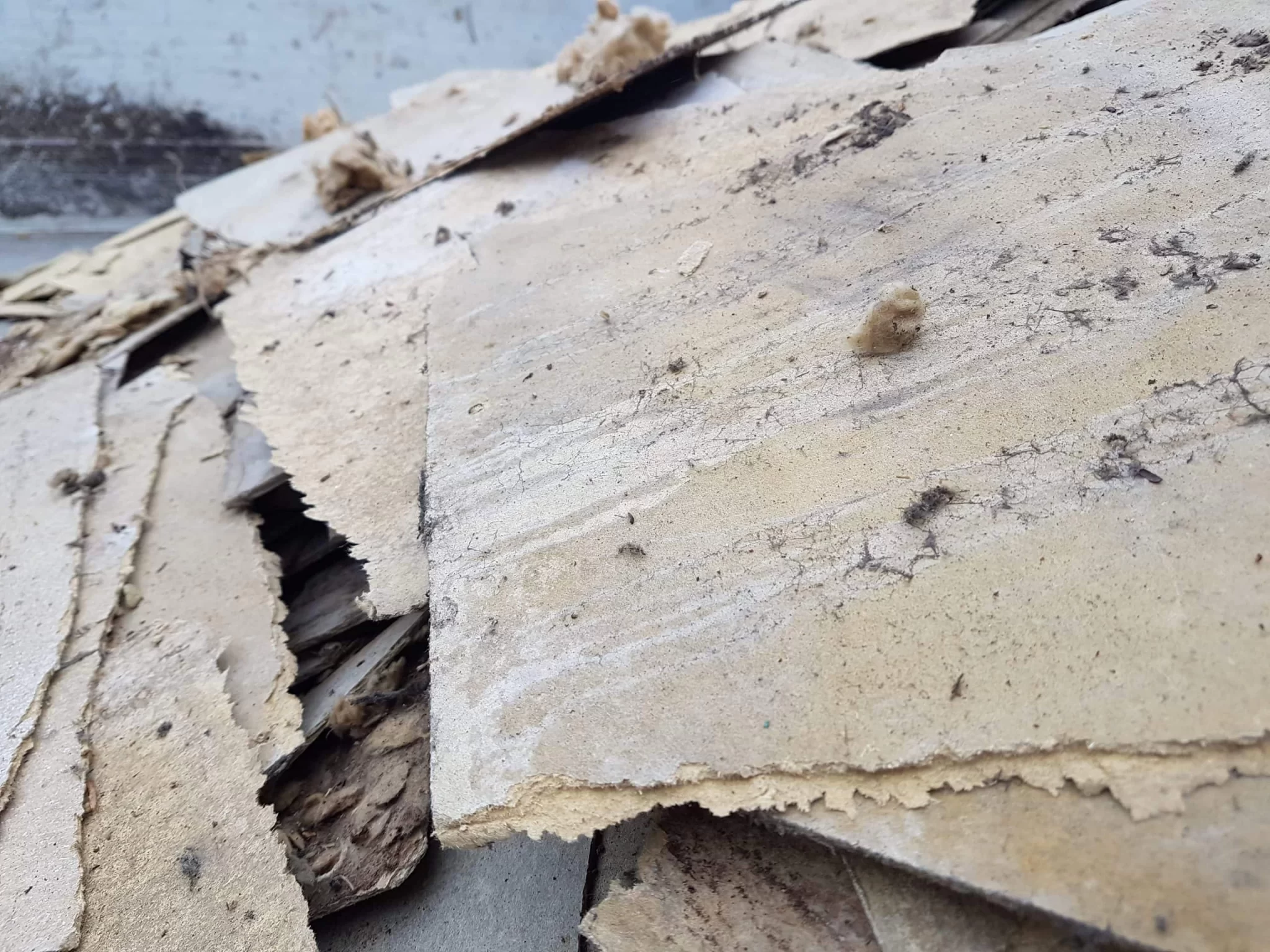
Not every pre-1940 home in Malverne contains asbestos, but the odds are high enough that you shouldn’t assume otherwise — especially before any renovation work begins. Asbestos was used extensively in building materials throughout the 1920s, 30s, and 40s: floor tile and the adhesive beneath it, pipe and boiler insulation, plaster additives, roofing shingles, and textured ceiling finishes. In a village where 46% of homes predate 1939, these materials are the norm, not the exception.
The only way to know for certain is a test by a licensed asbestos inspector — not a visual inspection, and not a guess based on what the material looks like. If you’re planning a kitchen renovation, pulling up old flooring, replacing a boiler, or doing anything that disturbs original building materials, getting tested first is the right move. It’s not expensive relative to the cost of disturbing asbestos without knowing it’s there, and it’s required before permitted renovation work on pre-1980 buildings in New York State.
What's the difference between asbestos abatement and just removing the material yourself?
In New York State, removing asbestos-containing materials without a license is illegal above certain thresholds — and Nassau County enforces this. It’s not a gray area. Beyond the legal issue, the practical risk is significant: asbestos fibers are invisible, odorless, and don’t cause immediate symptoms. The diseases they cause — mesothelioma, asbestosis, lung cancer — can take decades to develop, which is exactly why people underestimate the exposure risk in the moment.
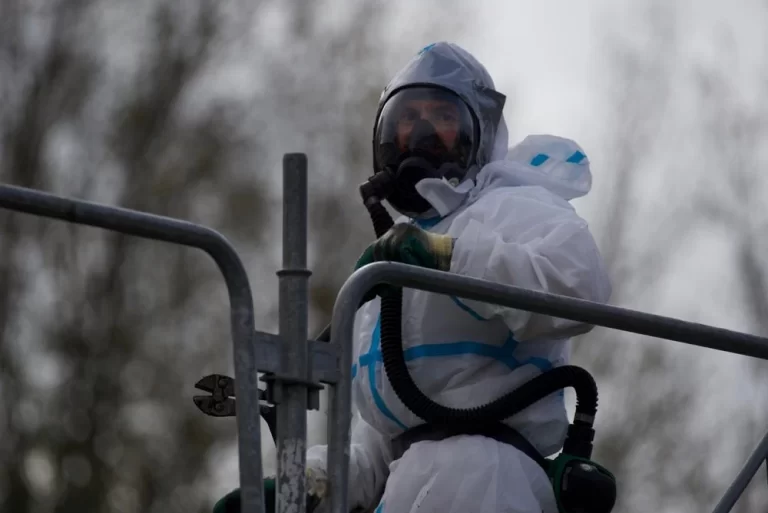
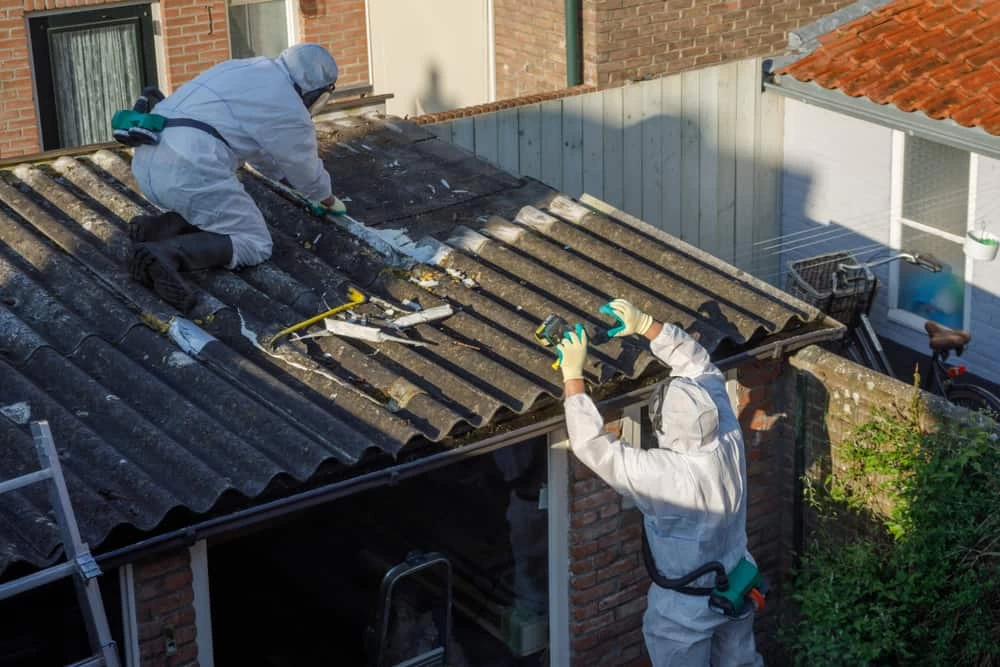
Licensed abatement means the work area is properly contained with negative air pressure systems, workers are using the right protective equipment, and the removed material is packaged and transported according to NYS DEC requirements. When the job is done, the air is tested to confirm the space is clear before containment comes down. None of that happens with a DIY removal. For a home worth close to $800,000 in Malverne’s market, the cost of doing this correctly is a small fraction of the liability you’d be taking on by cutting corners.
How long does asbestos abatement typically take in a residential home?
It depends on the scope — specifically, how many materials are involved, where they’re located, and how much square footage needs to be addressed. A straightforward floor tile removal in a single room can often be completed in one to two days. A more involved project — pipe insulation throughout a basement, combined with tile removal and popcorn ceiling abatement — could run three to five days or longer.
For Malverne homeowners managing a renovation schedule or a real estate closing deadline, the timeline question is important to ask upfront. We scope each project based on the inspection report and give you a realistic timeline before work begins — not an estimate that shifts once the crew is on-site. The regulatory filing with the NYS Asbestos Control Bureau also requires advance notice before work starts, so the earlier you get the inspection done and the abatement contractor engaged, the more flexibility you have on your overall project timeline.
Can asbestos abatement be done while my family is still living in the house?
In many cases, yes — but it depends on the location of the work and the containment setup. When asbestos-containing materials are isolated to a specific area, like a basement, a single bathroom, or a utility room, proper containment with negative air pressure can effectively separate the work zone from the rest of the living space. Families often remain in the home during this type of project, particularly in Malverne where most residents are owner-occupants and relocating temporarily isn’t always practical.
That said, there are situations where temporary displacement is the safer and more practical choice — particularly when work is happening in a central living area, or when the scope is large enough that containment barriers would significantly disrupt daily life. This is a conversation worth having during the scoping phase, not after work begins. We walk through the specific layout of your home and give you an honest assessment of what makes sense, rather than a blanket answer that doesn’t account for how your house is actually set up.
Does asbestos abatement need to be completed before I can list my Malverne home for sale?
There’s no universal legal requirement that forces a seller to complete abatement before listing — but in practice, Malverne’s real estate market makes it a smart move in most cases. Buyers’ home inspectors regularly flag suspected asbestos-containing materials in pre-WWII homes, and when that happens mid-transaction, it creates delays, renegotiation, and sometimes deals that fall apart entirely. Sellers who have already completed abatement — and have the documentation to prove it — are in a much stronger position.
The documentation piece is what makes the difference. A completed abatement with a proper closeout package, waste manifests, and regulatory filings on record is a clean answer to a buyer’s question. It removes the uncertainty from the transaction. Given that Malverne home values have been appreciating at over 11% year-over-year, protecting your sale price and timeline by handling this before you list is a straightforward calculation for most homeowners.
How much does asbestos abatement cost for a typical home in Malverne, NY?
Costs vary based on the type of material, the quantity, and the complexity of the removal — but for a single-room floor tile removal in a Malverne home, you’re generally looking at a range starting around $1,500 to $3,000. A more involved scope — basement pipe insulation, multiple rooms of tile, or popcorn ceiling removal across a larger area — can run $5,000 to $10,000 or more depending on the specifics.
What’s worth understanding is what’s included in a compliant abatement cost versus what gets left out when someone quotes you a suspiciously low number. Proper containment, negative air pressure equipment, NYS DEC-registered waste hauling, certified disposal, regulatory filings, and the closeout documentation package are all part of a legitimate abatement job in Nassau County. If a quote doesn’t account for all of that, it’s not a complete comparison. For a home in Malverne’s price range, the difference between a properly documented abatement and one that cuts corners shows up later — in a buyer’s due diligence, in an insurance claim, or in a building department inquiry.