Mamaroneck Homes Have History Some of It Hazardous
If your Mamaroneck home was built before 1980, asbestos is likely somewhere inside it. We find it, remove it legally, and give you the documentation that protects your family and your property.
I needed a professional consultation explanation of procedure for safe removal of Asbestos in my apartment complex. Without having an account yet, I was very impressed with the caring, knowledgeable and generous advice offered by Jessica, and will look forward to doing business in the future. Thank you so much! I feel much more informed about a sometimes scary endeavor. Peace. Nancy Silva Mineola, NY.
Mia Munoz
Used this company to clean up some water flood in my house. They were fast and easy to work with.very professional, Would recommend to anyone!
Nini Valle
Great company, had a flood and they responded quickly and efficiently. Billed my insurance company directly. I highly recommend this company!
joe colapietro, jr
I had pipe freeze in my basement right before a snow storm and they made to within an hour to help start the clean up process. They we by our side throughout the entire process and even helped with the insurance company. They did such a great job with the cleanup, repair, remidiation, I contracted them to perform the repairs and finishes in the basement. They came with enough manpower and material to get the job done. Leo and Jessica were nothing but a pleasure to deal with!!
Cristian Arredondo c
I had some water damage in my home and Green Island was able to take care of my issue quickly and effectively. I am very pleased with the work they did. They responded quickly and were very professional.
Michael M
Outstanding service! From the office to the field crew everyone was friendly, helpful and responsive. I highly recommend Green Island Group.
You stop guessing. That’s the first thing. When you’ve got a renovation project lined up a kitchen gut, a basement finishing, a floor replacement the last thing you want is to get three days in and have a contractor stop everything because someone found suspect material. Getting ahead of it means your project stays on schedule and nobody’s scrambling.
For Mamaroneck homeowners specifically, there’s a layer to this that most towns don’t deal with the same way. The flooding here is real. The Mamaroneck River, the Sheldrake River, the low-lying streets in the Flats when water gets into a basement of a home built in the 1940s or 1950s, it doesn’t just damage drywall. It can disturb pipe insulation, boiler wrap, and floor tile that’s been sitting undisturbed for decades. That disturbance is when asbestos becomes a health risk. Knowing your home has been properly assessed and cleared means you’re not unknowingly exposing your family during cleanup.
And if you’re selling in a market where homes regularly trade above $700,000 having documented clearance from a licensed abatement contractor is not a small thing. It removes one of the most common deal-killing surprises that shows up in buyer inspections. You hand over the paperwork, the question is answered, and the transaction moves forward.
We’ve completed more than 5,000 abatement projects across the New York metro area. That’s not a marketing number it means we’ve worked in pre-war co-ops, 1880s colonials, postwar ranches, and flood-damaged basements throughout Mamaroneck and Westchester County. We’ve seen what these buildings actually look like from the inside, and we know what to look for.
We hold the full stack of licenses required to legally perform asbestos abatement in New York State NYS Department of Labor Asbestos Handling License, EPA certification, and NYS DEC compliance for disposal. We also carry M/WBE certification from the NYS Office of General Services, which is a state-issued designation, not a self-applied label. Every credential is a public record you can verify.
We serve the entire Town of Mamaroneck the Village, Larchmont, Rye Neck, Shore Acres, the unincorporated areas and we work directly with insurance carriers, which matters a great deal in a community that knows what a serious flood event looks like.
From First Call to Clearance Here's the Honest Walkthrough
It starts with a free on-site inspection. We come to your property, assess the materials in question, and give you a straight answer about what’s there and what needs to happen. No charge, no commitment required to get that information.
If abatement is needed, we handle the project notification requirements under NYS Industrial Code Rule 56 and EPA NESHAP regulations the state and federal rules that govern how asbestos work gets done in Westchester County. That includes proper containment setup, negative air pressure, and certified worker protocols throughout the job. You don’t have to manage any of that paperwork. We do.
Once the work is complete, we conduct post-abatement air clearance testing. This is the step that confirms the fiber levels in your space meet the regulatory standard for safe re-occupancy. You get formal clearance documentation at the end a physical record of what was removed, how it was handled, and what the air testing confirmed. For homeowners in Mamaroneck preparing to sell, renovate, or simply close out a flood remediation project, that document is the finish line. Asbestos waste is transported and disposed of at an approved facility with a signed chain-of-custody manifest, which is required under NYS DEC regulations and something we handle as a standard part of every job.
Every Material Type, Every Neighborhood, One Licensed Team
Asbestos shows up differently depending on when and how a home was built. In Mamaroneck’s oldest neighborhoods Shore Acres, Orienta, and the Old Rye Neck streets along Barry and Melbourne Avenues you’re more likely to find it in boiler insulation and pipe wrap, materials that predate the postwar era entirely. In the Rye Neck and Heights neighborhoods developed through the 1920s and 1930s, duct insulation and plaster compounds are common. In the postwar and mid-century homes scattered through the unincorporated town and Larchmont, asbestos floor tile, acoustic popcorn ceiling texture, and joint compound are the usual suspects.
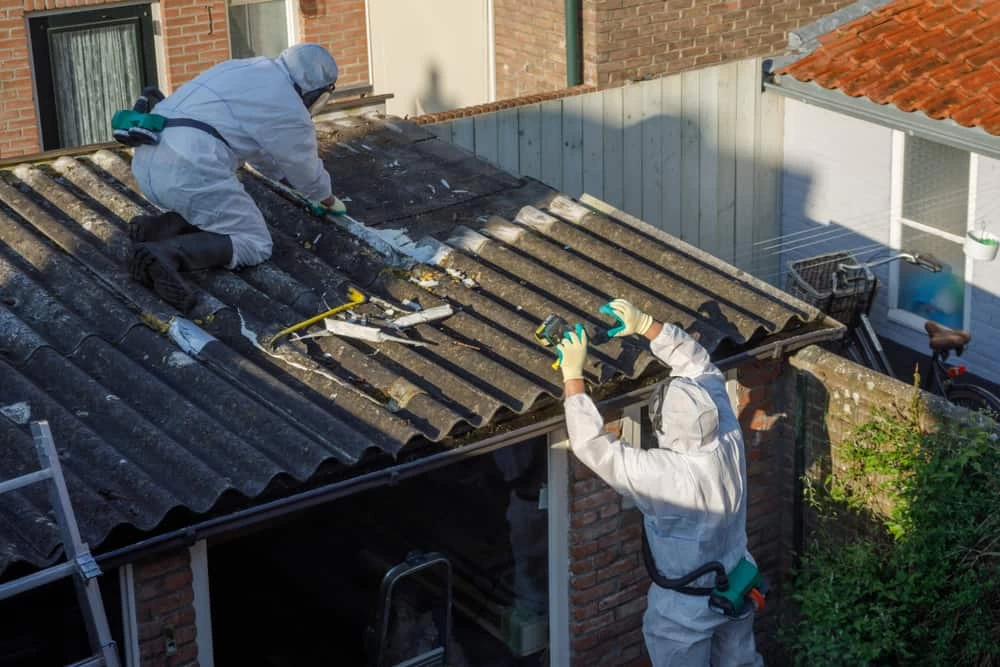
We handle all of it. Asbestos tile removal, popcorn ceiling removal, pipe and duct insulation, boiler wrap, roofing materials, joint compound whatever the inspection turns up, we’re equipped to address it. We also work in multi-unit settings, including the pre-war co-op buildings in the village like The Alden House and Mamaroneck Gardens, where abatement has to be coordinated carefully in occupied buildings.
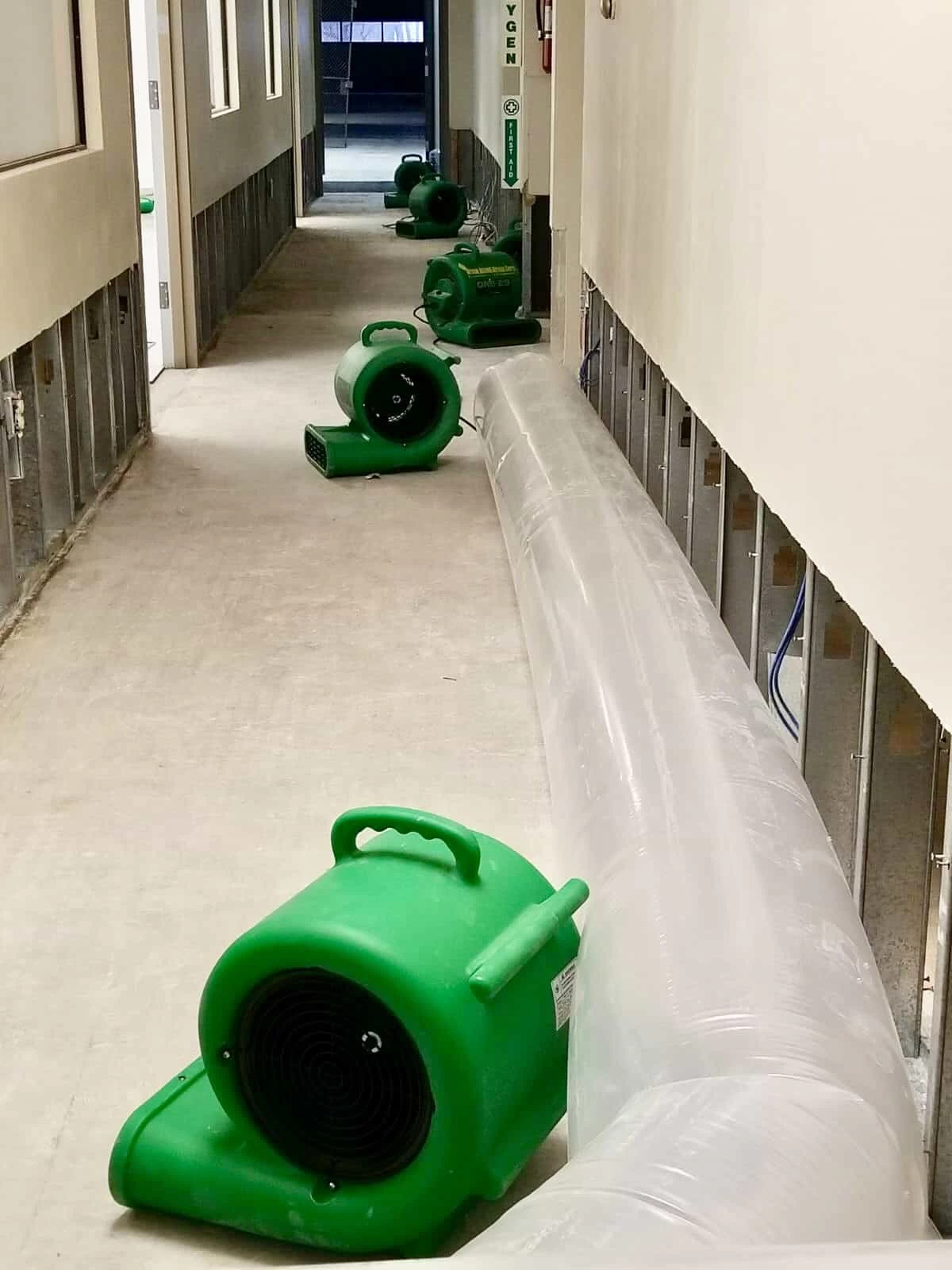
For flood-related projects, we can sequence asbestos assessment and abatement ahead of water damage restoration so the remediation contractor can work safely. We bill insurance carriers directly, which removes the back-and-forth from your plate when you’re already managing a claim. Every project ends with clearance documentation not as an optional add-on, but as a standard deliverable, because the job isn’t finished until the air test confirms it.
Does flooding in Mamaroneck actually create an asbestos risk in older homes?
It can, and it’s more common than most people realize. When floodwaters enter a pre-1980 home in Mamaroneck particularly in low-lying areas near the Mamaroneck River, the Sheldrake River, or in the Washingtonville neighborhood they can disturb asbestos-containing materials that have been stable for years. Pipe insulation, boiler wrap, and older floor tile don’t pose a significant health risk when they’re intact and undisturbed. But once water gets in and those materials are saturated, shifted, or physically disturbed during cleanup, the risk changes.
Before any water damage restoration work begins in a Mamaroneck home with suspect materials, an asbestos assessment should happen first. If abatement is needed, it needs to be completed before restoration crews start tearing out walls or pulling up flooring. Skipping that step doesn’t just create a health risk it can also create a regulatory problem and complicate your insurance claim. We work directly with insurance carriers and can coordinate the sequencing so nothing gets done out of order.
How do I know if my Mamaroneck home actually contains asbestos?
The only way to know for certain is to have suspect materials tested by a licensed professional. Visual identification is not reliable asbestos-containing materials often look identical to non-asbestos versions of the same product. If your home was built before 1980, the realistic answer is that there’s a reasonable chance at least one material in the structure contains asbestos, whether that’s floor tile, ceiling texture, duct insulation, or something else.
The free inspection we offer is designed to answer this question without requiring you to commit to anything. We come out, assess the materials, and tell you what we’re looking at. If testing is warranted, we explain what that involves and what the results mean. If nothing comes back positive, you have documentation to that effect. Either way, you leave the conversation with a clear answer instead of a lingering question which is especially relevant if you’re planning a renovation or preparing to list the property in Mamaroneck’s competitive real estate market.
What are the legal requirements for asbestos abatement in Westchester County?
Asbestos abatement in Westchester County is governed by New York State Industrial Code Rule 56, administered through the NYS Department of Labor. This regulation sets the standards for contractor licensing, worker certification, containment procedures, air monitoring, and waste disposal. Any contractor performing abatement work in New York State is required to hold a specific NYS DOL Asbestos Handling License and every individual worker on the job must hold their own certification.
For larger renovation or demolition projects, EPA NESHAP regulations also apply, requiring advance notification to the NYS Department of Environmental Conservation before work begins. Asbestos waste must be double-bagged, properly labeled, and transported to an approved disposal facility with a signed chain-of-custody manifest. These aren’t optional steps they’re legal requirements with real consequences for non-compliance. When you hire a contractor, ask for their specific NYS DOL license number and verify it. Our credentials are public record and we provide them on request.
Can asbestos issues affect a home sale in Mamaroneck's real estate market?
Yes, and in a meaningful way. When a buyer’s inspector identifies suspect materials in a Mamaroneck home, it typically triggers one of three outcomes: the buyer requests abatement before closing, the price gets renegotiated to account for the cost, or the deal falls apart. In a market where median property values sit above $700,000, none of those outcomes are small.
Sellers who address asbestos proactively before the listing goes live remove the issue from the transaction entirely. You go into the inspection with clearance documentation already in hand, and the question never becomes a negotiating point. The cost of abatement is almost always proportionally modest relative to the value of the property, and the documentation you receive at the end has real value in the transaction. It’s also transferable if a future buyer ever asks about asbestos history, you have a paper trail that answers the question completely.
How long does asbestos abatement typically take for a residential project?
It depends on the scope specifically, how many materials are involved, where they’re located, and how much square footage needs to be addressed. A straightforward floor tile removal in a single room can often be completed in one to two days. A larger project involving pipe insulation, ceiling texture, and multiple areas of a home will take longer, sometimes several days to a week.
The step that most homeowners don’t factor in is the post-abatement air clearance testing, which needs to happen after the physical work is done and before the space is cleared for re-occupancy or for the next contractor to come in. That testing takes time to process. If you’re working on a renovation timeline or a real estate closing deadline, it’s worth building that window into your schedule. We give you a realistic project timeline during the inspection phase so there are no surprises and for flood-related projects where timing is urgent, we communicate directly with your restoration contractor to keep everything coordinated.
Is asbestos abatement covered by homeowners insurance in New York?
It depends on the circumstances. Asbestos abatement that’s part of a covered water damage or flood event which is a scenario Mamaroneck homeowners face more often than most is frequently covered, at least in part, when the abatement is necessary to complete the restoration work. The key is documentation: the insurance carrier needs to see that the abatement was required as a direct result of the covered event, performed by a licensed contractor, and completed in compliance with state regulations.
Elective abatement meaning you’re removing asbestos as part of a planned renovation rather than in response to a covered loss is typically not covered under a standard homeowners policy. That said, coverage language varies significantly between policies, and it’s always worth a direct conversation with your carrier before assuming one way or the other. We bill insurance carriers directly and handle the documentation required to support a claim, which takes that administrative weight off your plate at a time when you likely have enough to manage already.