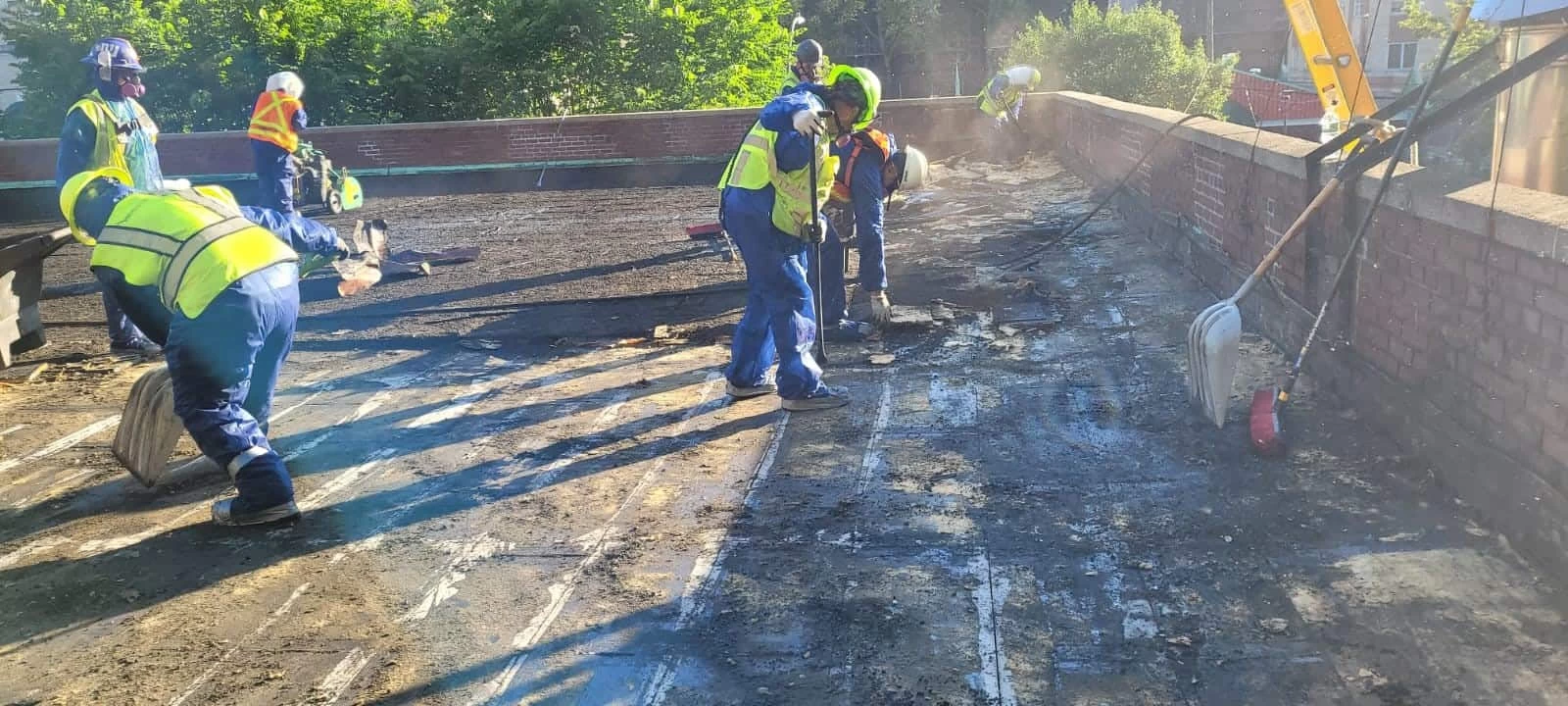
When Your Pre-War Building Hides More Than Character
Asbestos abatement in Manhattan means navigating ACP-5 filings, DEP permits, and co-op board requirements before a single tile comes up. We handle all of it.
I needed a professional consultation explanation of procedure for safe removal of Asbestos in my apartment complex. Without having an account yet, I was very impressed with the caring, knowledgeable and generous advice offered by Jessica, and will look forward to doing business in the future. Thank you so much! I feel much more informed about a sometimes scary endeavor. Peace. Nancy Silva Mineola, NY.
Mia Munoz
Used this company to clean up some water flood in my house. They were fast and easy to work with.very professional, Would recommend to anyone!
Nini Valle
Great company, had a flood and they responded quickly and efficiently. Billed my insurance company directly. I highly recommend this company!
joe colapietro, jr
I had pipe freeze in my basement right before a snow storm and they made to within an hour to help start the clean up process. They we by our side throughout the entire process and even helped with the insurance company. They did such a great job with the cleanup, repair, remidiation, I contracted them to perform the repairs and finishes in the basement. They came with enough manpower and material to get the job done. Leo and Jessica were nothing but a pleasure to deal with!!
Cristian Arredondo c
I had some water damage in my home and Green Island was able to take care of my issue quickly and effectively. I am very pleased with the work they did. They responded quickly and were very professional.
Michael M
Outstanding service! From the office to the field crew everyone was friendly, helpful and responsive. I highly recommend Green Island Group.
Manhattan’s building stock is some of the oldest and most layered in the country. Pre-war co-ops on the Upper West Side, post-war rentals in Kips Bay, converted lofts in Tribeca they all share one thing: materials that were standard in their day and are a serious liability now. When those materials get disturbed during renovation, the law doesn’t give you a grace period. Work stops, and it stays stopped until a licensed abatement contractor clears the site.
What you get on the other side of that process is more than a clean space. You get the ACP-5 or ACP-7 filing the NYC Department of Buildings requires before your permit moves forward. You get post-abatement air clearance testing results your co-op board or building management will ask for. You get documentation that holds up because in this city, paperwork is part of the job, not an afterthought.
And if your asbestos discovery is connected to something else a burst steam pipe, water intrusion, mold we handle all of it under one invoice. No juggling three separate contractors while your renovation timeline bleeds money. One call, one team, one resolved problem.
We Know What Manhattan's Compliance Environment Actually Requires
We’re a full-service environmental remediation company serving all five boroughs, with deep expertise across every Manhattan neighborhood from Washington Heights and Hamilton Heights down through Harlem, the Upper East Side, Midtown, Chelsea, and into Tribeca and Lower Manhattan. This isn’t a market we’re new to. The regulatory environment here NYC DEP certification requirements, ARTS electronic filing, DOB permit coordination, independent air monitoring is something our certified technicians work within on every project.
What sets us apart isn’t a tagline. It’s the fact that when your contractor stops work on a Friday afternoon because they’ve found suspicious pipe insulation in your pre-war apartment, we answer the phone and can be there the same day. We bill insurance carriers directly when coverage applies, and we produce every form and completion certificate the city requires so you’re not chasing paperwork while also managing a renovation and a co-op board. We’re available 24 hours a day, 365 days a year, and our track record of verified customer reviews reflects exactly that.
No Guesswork Here's Exactly What the NYC Process Looks Like
It starts with a free inspection. A certified professional comes to your apartment, commercial space, or building and assesses the materials in question. If testing is needed, samples are collected and sent to an accredited lab. This step isn’t optional in New York City it’s the foundation of the entire compliance process, and it determines whether your project requires an ACP-5 or an ACP-7 filing with the NYC Department of Environmental Protection.
If abatement is required, we set up full containment around the affected area before any work begins. Negative air pressure systems, HEPA filtration, and sealed barriers keep the rest of your space and your neighbors’ spaces protected throughout the process. In a dense Manhattan building where shared ventilation and common areas are part of daily life, this isn’t a detail we skip. We coordinate with building management on access windows, freight elevator scheduling, and any building-specific contractor requirements your co-op or condo board has in place.
Once the physical work is complete, independent air clearance testing confirms that fiber levels meet safe reoccupancy standards. We then file the ACP-21 completion form with the DEP, which is what the Department of Buildings needs before your renovation permit can be signed off. From first call to final clearance, you know where things stand at every step.
Every Material, Every Building Type, Every NYC Requirement
The asbestos abatement work we perform in Manhattan covers the full range of materials found in the borough’s housing and commercial stock. That includes 9×9 vinyl floor tiles one of the most common ACM discoveries in post-war Manhattan apartments, particularly in kitchens and bathrooms in buildings constructed between the 1950s and 1970s. It includes pipe insulation on steam heating systems, which are standard in pre-war buildings across the Upper West Side, Harlem, and the Upper East Side and frequently contain asbestos that gets disturbed when pipes fail or systems are upgraded. It includes popcorn ceilings, floor tile adhesive, boiler room insulation, and sprayed fireproofing on structural steel in older Midtown and Lower Manhattan commercial buildings.
Beyond the physical removal, what you’re really getting is full regulatory compliance from start to finish. That means a DEP-certified asbestos investigator conducting the initial assessment, proper ACP-5 or ACP-7 filing before work begins, and an ACP-21 completion form issued after post-abatement air clearance testing confirms the space is safe. Every step is required by New York City Local Law 76/85 for buildings constructed before April 1, 1987 which covers the vast majority of Manhattan’s residential and commercial building stock.
If your project involves water damage, mold, or demolition alongside asbestos, we handle those under the same scope of work. One contractor, one process, one invoice.
Do I need an ACP-5 or ACP-7 before renovating my Manhattan apartment?
If your building was constructed before April 1, 1987 which includes the overwhelming majority of Manhattan’s co-ops, condominiums, and rental buildings you are required under NYC Local Law 76/85 to have a DEP-certified asbestos investigator assess the affected areas before renovation work begins. That investigator determines whether your project qualifies for an ACP-5 or requires a full ACP-7 filing.
The ACP-5 applies when the scope of work doesn’t constitute an Asbestos Project as defined by the DEP essentially when materials are either confirmed asbestos-free or fall below certain quantity thresholds. The ACP-7 is required when abatement work is necessary, and it must be submitted through the city’s ARTS electronic filing system at least one week before work starts. The Department of Buildings will not issue your renovation permit until the appropriate form has been filed and verified. Skipping this step doesn’t just create a compliance problem it can stop your project entirely and expose you to fines as the property owner.
How much does asbestos removal cost in Manhattan, NY?
Asbestos removal costs in Manhattan vary based on the scope of the work, the type and quantity of material involved, and the access and logistics specific to your building. For a single-room residential project say, vinyl floor tile removal in a pre-war Upper East Side apartment you’re typically looking at somewhere in the range of $2,200 to $6,500 all-in, which includes testing, containment, removal, disposal, and post-abatement air clearance testing.
Larger or more complex projects gut renovations in Tribeca lofts, boiler room abatement in a Washington Heights multi-family building, or commercial office spaces in Midtown run significantly higher, often into the $15,000 to $30,000+ range depending on square footage and material type. It’s also worth knowing that NYC/Long Island abatement costs increased roughly 8 to 12 percent in 2025 and 2026 due to updated NYS DOL licensing requirements, higher disposal fees, and mandatory post-abatement air monitoring. The best way to get an accurate number for your specific situation is a free on-site inspection that’s where we can actually assess what you’re dealing with and give you a real estimate.
Can I stay in my apartment during asbestos abatement in a New York City building?
In most cases, you’ll need to vacate the specific area being abated and depending on the scope of work and your building’s layout, that may mean leaving the apartment entirely during the active abatement phase. This is particularly relevant in Manhattan’s older pre-war buildings, where shared ventilation systems and close-quarter floor plans mean that containment needs to be especially thorough to protect adjacent units.
During abatement, the work area is sealed with negative air pressure systems and HEPA filtration to prevent fiber migration. In a co-op or condo building, this also means your neighbors are protected something building management will want documented. Once physical removal is complete, the space cannot be reoccupied until post-abatement air clearance testing confirms that airborne fiber levels are within safe limits. That testing is conducted by an independent air monitoring firm, and the results are what the NYC DEP uses to issue the ACP-21 completion form. Reoccupancy happens after clearance is confirmed not before.
What are the most common places asbestos is found in Manhattan apartments?
The most frequent discoveries in Manhattan residential buildings fall into a few consistent categories. Nine-by-nine inch vinyl floor tiles particularly in kitchens and bathrooms of post-war buildings constructed in the 1950s through 1970s are one of the most recognizable indicators. The tile itself may or may not contain asbestos, but the adhesive beneath it frequently does, and that’s what gets disturbed when floors are pulled up during renovation.
Pipe insulation on steam heating systems is another major source, especially in pre-war buildings across the Upper West Side, Harlem, and the Upper East Side. These buildings were built with steam radiators as the primary heat source, and the insulation wrapping those pipes often contains asbestos. When pipes age, leak, or get replaced as part of an NYC Local Law 97 mechanical upgrade, that insulation can become friable and requires professional abatement. Popcorn ceilings in mid-century apartments, boiler room insulation, and floor tile adhesive in estate-condition units are also common. If your building was constructed before 1987 and you’re planning any renovation that opens walls, floors, or ceilings, a professional assessment before work begins is the right first step.
How long does asbestos abatement take for a Manhattan apartment renovation?
The timeline depends on the scope of work, but for a typical single-room residential project in Manhattan, you’re generally looking at two to five days from the start of abatement through post-clearance testing. That includes setup and containment, the physical removal work, and the independent air monitoring that has to happen before the space is cleared for reoccupancy.
What adds time in Manhattan specifically is the front-end compliance process. The ACP-7 notification has to be filed with the NYC DEP at least one week before abatement work can begin, and the DEP-certified asbestos investigator assessment needs to happen before that. If you’re also waiting on DOB permit clearance or co-op board approval for the broader renovation, those timelines run in parallel and can affect when abatement can actually start. For larger commercial projects office floors in Midtown, building system upgrades in older Lower Manhattan buildings timelines extend accordingly. The earlier you bring in a licensed contractor to assess the situation, the more control you have over your overall renovation schedule.
Does Green Island Group handle asbestos abatement in Manhattan co-op and condo buildings?
Yes, and co-op and condo buildings in Manhattan come with a specific set of requirements that not every contractor is equipped to navigate. Beyond the standard NYC DEP compliance process, working in a co-op or condo typically means coordinating with building management on contractor access windows, freight elevator scheduling, noise restrictions, and any building-specific rules about how abatement work is conducted in occupied multi-unit buildings.
We work directly with building management and produce all the documentation that co-op and condo boards typically require containment plans, air monitoring results, and the ACP-21 completion form issued by the DEP after post-abatement clearance testing. We understand that in a Manhattan co-op, the board’s approval and the building super’s cooperation are part of the job, not obstacles to it. If your asbestos discovery is also connected to a water damage event or building system failure a burst steam pipe is a common scenario in the borough’s older pre-war buildings we handle the full scope of remediation under one invoice, so you’re not managing multiple contractors while also managing your building’s requirements.