I needed a professional consultation explanation of procedure for safe removal of Asbestos in my apartment complex. Without having an account yet, I was very impressed with the caring, knowledgeable and generous advice offered by Jessica, and will look forward to doing business in the future. Thank you so much! I feel much more informed about a sometimes scary endeavor. Peace. Nancy Silva Mineola, NY.
Mia Munoz
Used this company to clean up some water flood in my house. They were fast and easy to work with.very professional, Would recommend to anyone!
Nini Valle
Great company, had a flood and they responded quickly and efficiently. Billed my insurance company directly. I highly recommend this company!
joe colapietro, jr
I had pipe freeze in my basement right before a snow storm and they made to within an hour to help start the clean up process. They we by our side throughout the entire process and even helped with the insurance company. They did such a great job with the cleanup, repair, remidiation, I contracted them to perform the repairs and finishes in the basement. They came with enough manpower and material to get the job done. Leo and Jessica were nothing but a pleasure to deal with!!
Cristian Arredondo c
I had some water damage in my home and Green Island was able to take care of my issue quickly and effectively. I am very pleased with the work they did. They responded quickly and were very professional.
Michael M
Outstanding service! From the office to the field crew everyone was friendly, helpful and responsive. I highly recommend Green Island Group.
When asbestos is handled correctly, your renovation moves forward without a health risk hanging over it. No disturbed fibers, no regulatory flags, no contractor stopping mid-job because something suspicious turned up in the floor tiles. You get a cleared, documented property — and the peace of mind that comes with knowing the work was done right the first time.
In Manorhaven, that matters more than in most places. A significant portion of the village’s housing stock — the bungalows, Cape Cods, and two- and three-family buildings along Manorhaven Boulevard and the surrounding streets — was built during the 1950s, ’60s, and ’70s. That’s the era when asbestos was standard in floor tiles, pipe insulation, joint compound, and textured ceilings. If your home was built before 1980, the odds that at least one of those materials is present are high.
The coastal location adds another layer. Salt air, humidity, and storm exposure off Manhasset Bay can break down building materials over time. Something that was stable a few years ago can become friable after water intrusion or storm damage — which is exactly when asbestos fibers become a real hazard. Getting ahead of that risk, especially before a renovation or demo, is the only move that makes sense.
Nassau County Credentials, Not a Landing Page from Rochester
We’re a Nassau County–based environmental services company. That means when you call, you’re talking to a team that works in Manorhaven and the surrounding area every day — not a company generating leads from three states away and dispatching whoever’s available.
That distinction matters in Manorhaven specifically. Nassau County requires asbestos contractors to hold an Environmental Hazard Remediation Permit (EHRP) license and all field technicians to carry EHRT certification. These are county-level credentials that sit on top of New York State’s ICR 56 requirements — and not every contractor operating in the 11050 ZIP code actually holds them. We do.
We’ve worked throughout the greater Port Washington area, including Manorhaven’s mix of older waterfront homes, multi-unit rental buildings, and properties going through renovation or resale. We know the building stock, we know the Village’s permit requirements, and we know what the documentation needs to look like when you hand it to the Building Department.
No Surprises — Here's What the Process Actually Looks Like
It starts with a certified asbestos inspection. We come out, assess the property, and take bulk samples from any suspect materials — floor tiles, ceiling texture, pipe insulation, roofing, joint compound, whatever applies to your specific project. Those samples go to a licensed laboratory for analysis. If asbestos is confirmed, we map every location per New York State Industrial Code Rule 56, which is exactly what the Village of Manorhaven’s own building permit application requires before a demolition permit is issued.
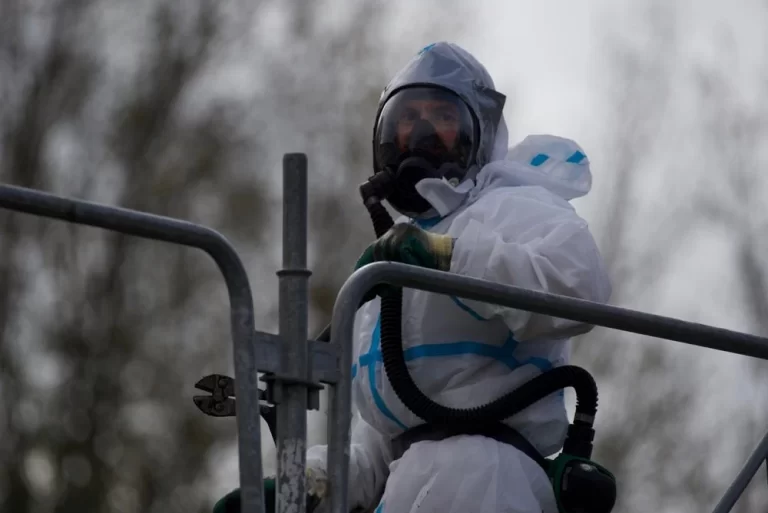
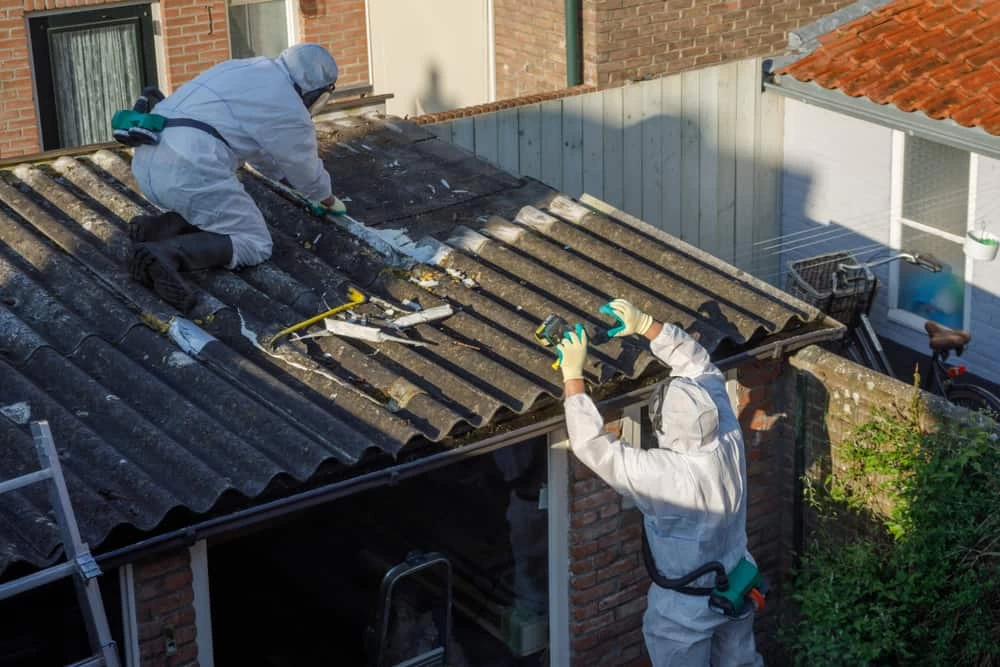
From there, the abatement work begins. We set up full containment, run HEPA filtration to keep fibers from spreading, and remove the materials using wet methods that minimize fiber release. Everything gets bagged, labeled, and transported to a licensed disposal facility — nothing gets left behind or handled casually. This isn’t a process you want cut short.
Once the work is complete, we conduct post-abatement air clearance testing to confirm the space is clean. You get the full documentation package — inspection report, lab results, abatement records, and clearance test — ready to submit to the Village Building Department or your contractor. One company handles the entire chain, so nothing falls through the cracks between the inspector, the crew, and the clearance lab.
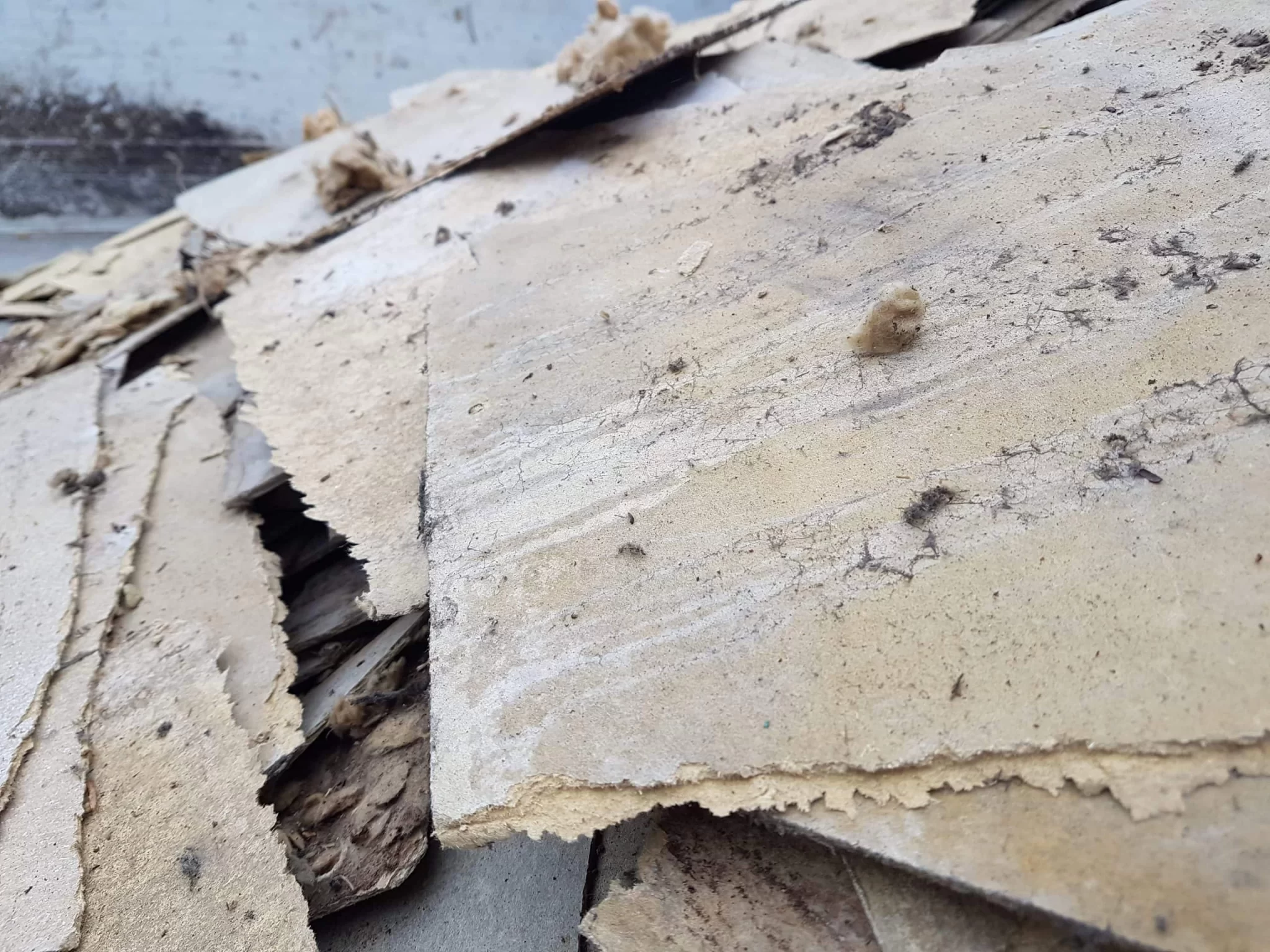
Asbestos doesn’t show up in just one place. In Manorhaven’s older housing stock, it turns up in 9×9 and 12×12 vinyl floor tiles — the kind found in thousands of kitchens and basements built in the ’50s and ’60s. It shows up in popcorn and textured ceilings applied before 1978, in the pipe insulation running through older multi-unit buildings, in roofing shingles, siding, and the joint compound behind your walls. We handle all of it.
Asbestos tile removal is one of the most common requests we get from Manorhaven homeowners and landlords updating older units. The tiles themselves aren’t always the only issue — the adhesive beneath them can also contain asbestos, and disturbing it without proper containment is a regulatory violation under ICR 56. Asbestos popcorn ceiling removal follows a similar process: wet application to suppress fibers, full containment, HEPA filtration, and clearance testing before any painting or finishing work begins.
For landlords managing rental buildings in Manorhaven — where more than half the housing is renter-occupied — we also handle the compliance documentation that protects you from liability when renovating between tenants. Whether it’s a single-family bungalow near Manorhaven Beach Park or a four-unit building a few blocks from the waterfront, the scope of work gets handled completely, with the paperwork to back it up.
Does Manorhaven require an asbestos inspection before pulling a demolition permit?
Yes — and this is one of the most important things to know before starting any demo project in Manorhaven. The Village of Manorhaven’s own building permit application explicitly requires an inspection by a licensed asbestos abatement company before a demolition permit is issued. The application asks directly whether asbestos has been found at the site, and it requires that suspect materials be sent to a laboratory for analysis. If asbestos is confirmed, all locations must be mapped per New York State Industrial Code Rule 56 — specifically 12 NYCRR § 56-1.9.
This isn’t a gray area or something that gets enforced inconsistently. It’s written into the Village’s own permit form. If you’re planning a kitchen gut, a bathroom demo, or any structural work on a pre-1980 home in Manorhaven, the asbestos inspection needs to happen before the permit is issued — not after the contractor has already started. We prepare the required documentation and can coordinate directly with the Village Building Department so your project doesn’t stall at the permit stage.
How do I know if my Manorhaven home actually has asbestos in it?
The honest answer is that you can’t know without testing. Asbestos-containing materials don’t look different from non-asbestos materials — a 9×9 vinyl floor tile from 1965 looks exactly like one that doesn’t contain asbestos. The only way to confirm it is bulk sampling followed by laboratory analysis.
That said, there are strong indicators based on your home’s age and construction type. If your Manorhaven home was built before 1980, there’s a meaningful chance that at least one material contains asbestos — floor tiles, popcorn or textured ceilings, pipe insulation, roofing shingles, or joint compound. The village’s housing stock skews heavily toward that era, particularly the bungalows, Cape Cods, and two-family homes that make up most of the neighborhood. If you’re planning any renovation that involves disturbing those materials, getting a certified inspection first is the only responsible move — and under New York State ICR 56, it’s required before abatement work begins anyway.
What happens if a contractor accidentally disturbs asbestos during a renovation?
This is more common than most homeowners realize, and it’s one of the main reasons a pre-renovation asbestos survey matters. If a contractor disturbs asbestos-containing material without proper containment — say, they start sanding a textured ceiling or ripping up old floor tiles — fibers can become airborne and spread through the living space. At that point, the project has to stop, the area needs to be assessed, and depending on the extent of the disturbance, professional remediation may be required before anyone re-enters.
Under New York State ICR 56, any renovation or demolition that could disturb asbestos-containing materials requires a prior inspection. If that step was skipped and disturbance occurs, the liability falls on whoever authorized the work. In Manorhaven, where the Village’s own permit process requires an inspection before demo permits are issued, skipping the survey isn’t just a health risk — it’s a compliance failure that can delay your project significantly and create legal exposure. Getting the inspection done before work starts is always the faster, cheaper path.
How long does asbestos abatement take for a typical Manorhaven home?
It depends on the scope, but for a typical single-family home in Manorhaven — a bungalow or Cape Cod with asbestos floor tiles in one or two rooms, or a popcorn ceiling in a living space — the abatement work itself usually takes one to three days. Add the time for laboratory analysis of bulk samples (typically two to five business days for standard turnaround, faster with rush processing) and post-abatement air clearance testing, and the full process from inspection to cleared documentation is generally one to two weeks.
For larger projects — multi-unit buildings, full gut renovations, or properties with asbestos in multiple material types — the timeline extends accordingly. If you’re working against a permit deadline or a contractor’s schedule, it’s worth calling early. The inspection and sampling can often be scheduled quickly, and getting the lab results back before your contractor is ready to start means you don’t lose any time on the project timeline. We work with homeowners and landlords throughout the Port Washington area and understand the urgency that comes with renovation timelines.
I'm a landlord with rental units in Manorhaven — what are my obligations around asbestos?
As a landlord in New York State, your asbestos obligations depend on what you’re doing with the property. If you’re planning renovations — updating a kitchen, replacing flooring, remodeling a bathroom, or doing any work that could disturb building materials in a pre-1980 unit — New York State ICR 56 requires a certified asbestos inspection before that work begins. This applies whether you’re doing the work yourself or hiring a contractor.
In Manorhaven specifically, where more than half the housing is renter-occupied and a large portion of the rental stock was built in the 1960s and ’70s, this comes up regularly. Landlords renovating between tenants, upgrading units to increase rental value, or addressing maintenance issues in older buildings all face this requirement. Beyond the state mandate, there’s also the practical liability question: if a tenant or future tenant can demonstrate that asbestos was disturbed during a renovation without proper abatement, the exposure is significant. We handle the full compliance process for landlords — inspection, abatement, clearance testing, and documentation — so you have a clean paper trail and a properly remediated property.
Why does asbestos abatement cost what it does — and is it negotiable?
Asbestos abatement costs what it does because the process is genuinely regulated and labor-intensive. In New York State, every contractor performing abatement must be licensed under ICR 56. In Nassau County, there’s an additional layer — the Environmental Hazard Remediation Permit (EHRP) license for the company and EHRT certification for every technician on the job. The containment setup, HEPA filtration equipment, personal protective gear, laboratory analysis, licensed disposal, and post-abatement air clearance testing all carry real costs. When you see a quote that seems significantly lower than others, it’s worth asking which of those steps are actually included.
For a typical Manorhaven home — a single room or two with asbestos floor tiles or a popcorn ceiling — abatement costs generally range from a few hundred dollars for a small, contained scope to several thousand for larger or more complex jobs involving multiple material types. Multi-unit buildings or full gut renovations run higher. What’s not negotiable is the regulatory framework — the inspection, the lab analysis, the containment, and the clearance test are all required. What we can do is give you a clear, itemized scope so you know exactly what you’re paying for and why.