Massapequa's Older Homes Deserve More Than a Guess
Most homes in Massapequa were built in the 1950s — right in the middle of peak asbestos use. If you’re renovating, selling, or just found something suspicious, we handle asbestos abatement the right way, start to finish.
I needed a professional consultation explanation of procedure for safe removal of Asbestos in my apartment complex. Without having an account yet, I was very impressed with the caring, knowledgeable and generous advice offered by Jessica, and will look forward to doing business in the future. Thank you so much! I feel much more informed about a sometimes scary endeavor. Peace. Nancy Silva Mineola, NY.
Mia Munoz
Used this company to clean up some water flood in my house. They were fast and easy to work with.very professional, Would recommend to anyone!
Nini Valle
Great company, had a flood and they responded quickly and efficiently. Billed my insurance company directly. I highly recommend this company!
joe colapietro, jr
I had pipe freeze in my basement right before a snow storm and they made to within an hour to help start the clean up process. They we by our side throughout the entire process and even helped with the insurance company. They did such a great job with the cleanup, repair, remidiation, I contracted them to perform the repairs and finishes in the basement. They came with enough manpower and material to get the job done. Leo and Jessica were nothing but a pleasure to deal with!!
Cristian Arredondo c
I had some water damage in my home and Green Island was able to take care of my issue quickly and effectively. I am very pleased with the work they did. They responded quickly and were very professional.
Michael M
Outstanding service! From the office to the field crew everyone was friendly, helpful and responsive. I highly recommend Green Island Group.
When asbestos is properly removed and cleared, you’re not just checking a box — you’re protecting everyone in the house. That matters a lot in Massapequa, where families have lived in the same homes for decades and kids are in and out of basements, kitchens, and finished lower levels that were built with materials we now know are hazardous.
The homes south of Merrick Road took a serious hit from Hurricane Sandy in 2012. A lot of those properties were gutted and rebuilt fast, under emergency conditions, without the kind of asbestos survey that should have happened first. If your Massapequa home was in that flood zone and you’ve since done additional work — or you’re planning to — there’s a real chance something was disturbed and never properly addressed. Getting clarity on that isn’t an overreaction. It’s the responsible move.
For homeowners preparing to sell, proper abatement documentation can be the difference between a clean closing and a deal that falls apart at inspection. With median home values sitting around $790,000 in Massapequa right now, that’s not a risk worth taking. A licensed abatement and clearance report gives buyers confidence and protects the value you’ve built.
We’re a locally owned, Nassau County–based environmental remediation company. We’re not a national franchise routing calls through a 1-800 number. We’re a team with roots on Long Island, and we’ve been working in Massapequa and surrounding South Shore communities — including East Massapequa, North Massapequa, and Massapequa Park — long enough to know exactly what we’re walking into when we step inside a 1950s Cape Cod or a Biltmore Shores waterfront property.
We’ve completed over 5,000 restoration projects across New York State, and we hold all required licensing under New York State’s Industrial Code Rule 56. That means every project we handle — from a single floor tile test to a full pre-renovation abatement — is done by our certified professionals who know the regulations, handle all the paperwork, and leave you with documentation you can actually use.
It starts with an assessment. Before anything is touched, we identify what materials are present, where they are, and whether they pose a risk. In Massapequa’s post-war homes, that typically means checking 9×9 vinyl floor tiles and their adhesive backing, pipe and boiler insulation in the basement, popcorn ceilings, and joint compound — all common in homes built between 1945 and 1975. If samples need to go to a lab, we handle that too.
Once we know what we’re dealing with, we put together a clear scope of work. In Nassau County, certain renovation and demolition projects legally require a pre-abatement survey under New York State’s Industrial Code Rule 56 — and we handle all required notifications to the NYS Department of Labor before work begins. You don’t need to navigate that yourself.
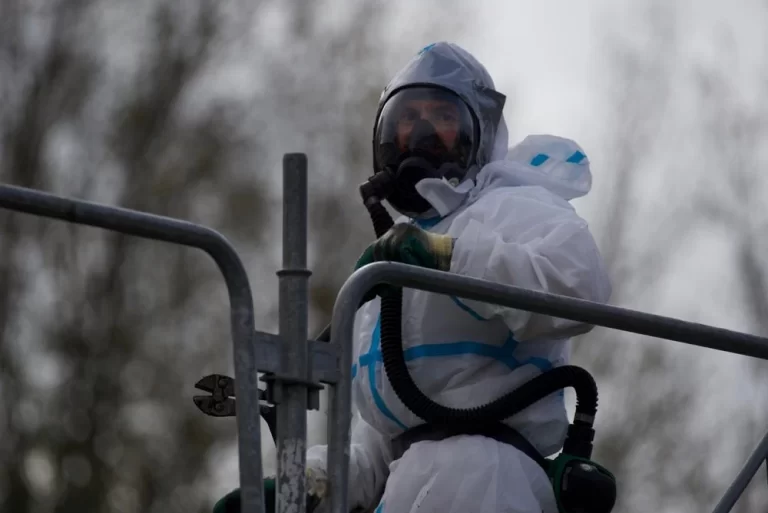
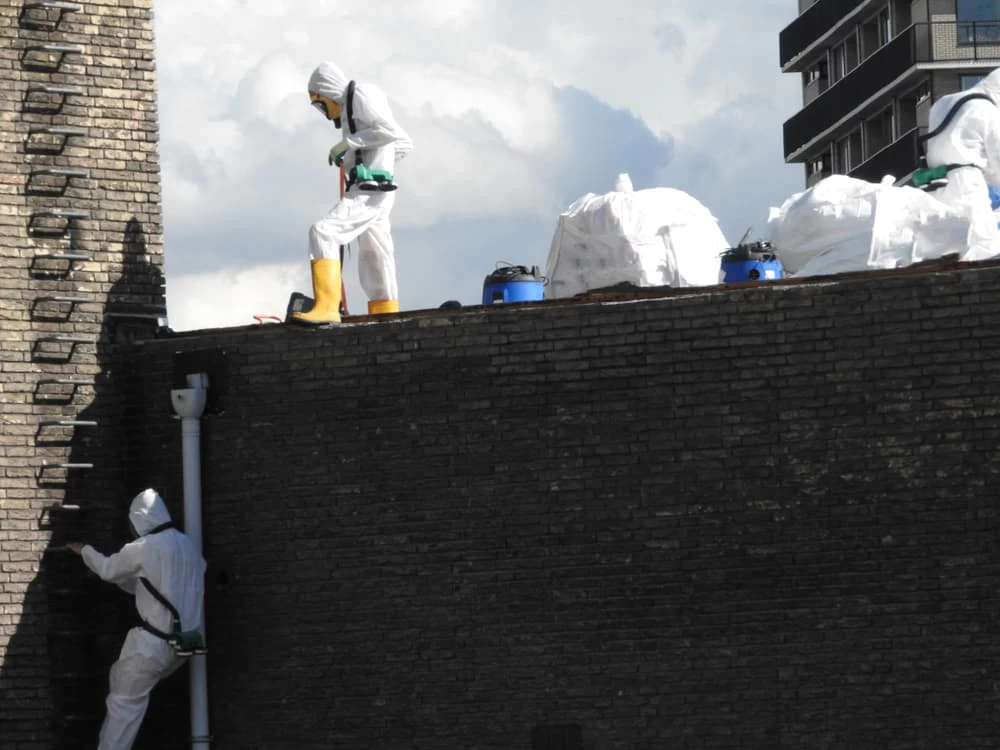
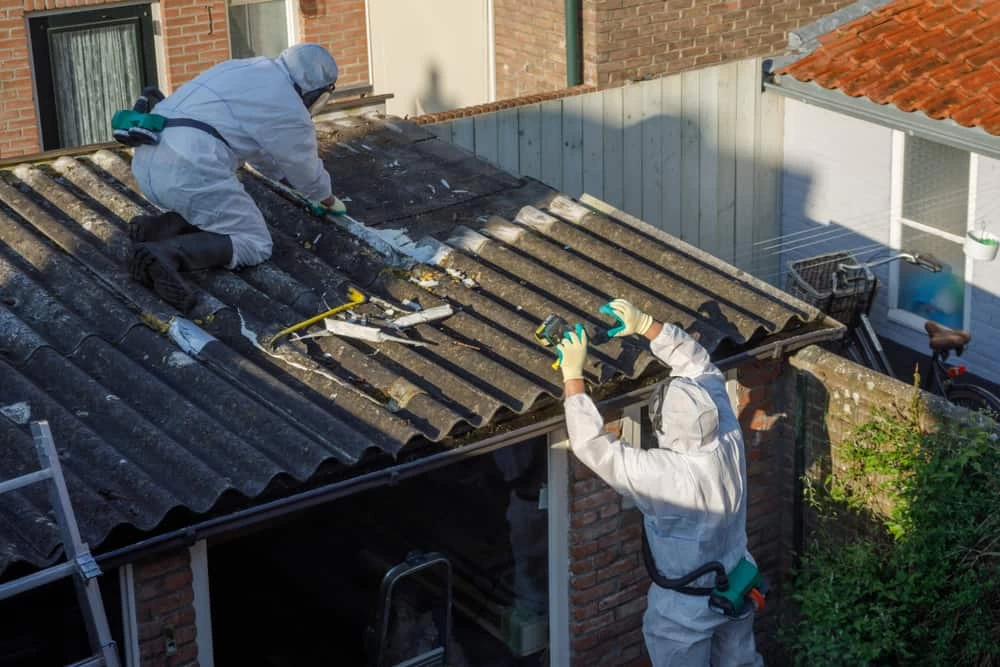
The actual removal is done under strict containment — negative air pressure, HEPA filtration, full protective protocols. When the work is complete, we conduct post-abatement air clearance testing to confirm the space is clean. You get written documentation at the end: clearance results, disposal records, and everything your contractor, real estate agent, or insurance adjuster might need to move forward.
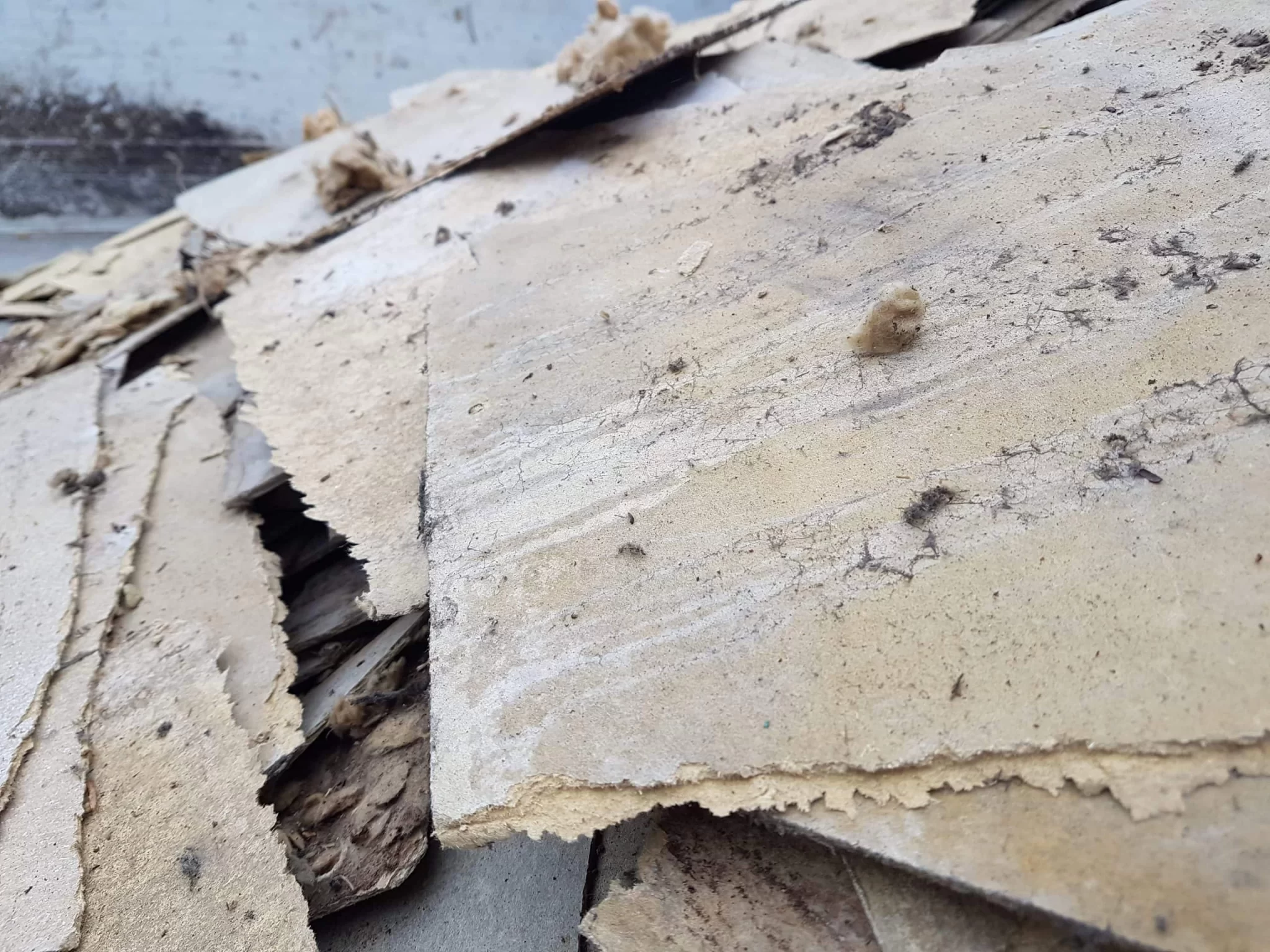
Asbestos doesn’t just show up in one place. In Massapequa’s 1950s and 1960s housing stock, it can be in the floor, the ceiling, the walls, the mechanical room, and even the exterior. The 9×9 vinyl floor tiles found in almost every post-war kitchen and basement in this area are one of the most common sources — and the adhesive underneath them often contains asbestos too, which makes DIY removal genuinely risky. Popcorn ceilings applied before 1978 are another frequent trigger, especially for homeowners doing cosmetic updates before listing.
We also handle pipe insulation and boiler wrap — a major concern in homes with older steam heating systems, which were standard in Nassau County construction through the mid-20th century. For properties in Biltmore Shores, where some homes date back to the 1920s and have been renovated across multiple decades, we assess for ACMs from different construction eras layered into the same building. That’s a level of complexity that requires real experience, not a one-size-fits-all checklist.
Every project we complete includes a full written assessment, proper NYS DOL project notification, licensed removal, certified disposal at approved facilities, post-abatement air clearance testing, and final documentation. Whether you’re renovating a bathroom, finishing a basement, or preparing your home for sale, you’ll have everything you need to move forward with confidence.
Do I need an asbestos test before renovating my Massapequa home?
In most cases, yes — and in many situations it’s not just recommended, it’s legally required. New York State’s Industrial Code Rule 56 mandates that buildings constructed with asbestos-containing materials undergo a proper survey before renovation, rehabilitation, or demolition work begins. Since the vast majority of Massapequa’s housing stock was built between the late 1940s and early 1970s — the peak era for asbestos use in residential construction — this applies to most homes in the area.
This isn’t just about compliance. If your contractor opens a wall, pulls up floor tiles, or scrapes a ceiling without knowing what’s there first, you could have an exposure event on your hands with no documentation and real legal exposure. A pre-renovation asbestos survey is the step that protects your family, your contractor, and your project timeline. It also keeps you from having to stop work mid-renovation, which is a much more expensive and stressful situation than testing upfront.
How much does asbestos removal cost in Massapequa, NY?
Cost depends on what materials are present, how much of it there is, and where it’s located. A straightforward asbestos tile removal in a single room is going to look very different from a full pre-renovation abatement of a basement, mechanical room, and ceiling in a 1,800-square-foot Cape Cod. Most residential abatement projects in Massapequa fall somewhere in the range of a few hundred dollars for a limited scope to several thousand for a more involved job — and larger whole-home projects can go higher.
What’s worth keeping in mind is that Massapequa’s median home value is around $790,000 right now. The cost of proper abatement is a small fraction of what’s at stake — whether that’s a sale that could fall apart at inspection, a renovation that gets shut down mid-project, or a health issue down the road. We give you a clear, written estimate before any work starts so you know exactly what you’re paying for.
What are the most common places asbestos is found in Massapequa houses?
The most common places we find asbestos in Massapequa’s post-war homes are 9×9 vinyl floor tiles and their adhesive backing, pipe and boiler insulation in the basement or utility room, popcorn and acoustic ceiling finishes, and joint compound in walls and ceilings. These materials were standard in residential construction from the late 1940s through the mid-1970s — which is exactly when most of Massapequa was built.
Homes in Biltmore Shores deserve a specific mention here. Because many of those properties date back to the 1920s and have been updated multiple times over the decades, you can have asbestos-containing materials from different construction eras present in the same building. That layered history requires a more thorough assessment than a newer home would. If your home is in that neighborhood or was built before 1940, we’d approach the inspection with that complexity in mind from the start.
Is asbestos removal required before selling a house in Nassau County?
There’s no blanket law in Nassau County that requires asbestos removal as a condition of every home sale. But that doesn’t mean it’s irrelevant to your transaction. If a buyer’s inspector identifies suspected asbestos-containing materials — and in a 1950s Massapequa home, that’s a realistic outcome — it can trigger negotiation, price reductions, or a deal falling apart entirely. Buyers in today’s market are informed, and their attorneys are thorough.
The smarter move for most Massapequa sellers is to get an asbestos survey done before listing. If nothing of concern turns up, you have documentation that removes a potential objection. If something does need to be addressed, you handle it on your timeline and your terms rather than under pressure from a buyer’s inspector with a closing date looming. Given where home values are right now, that kind of control over your sale is worth the upfront cost of a professional assessment.
Can I remove asbestos floor tiles myself in my Massapequa home?
Legally and practically, no — and it’s worth understanding why before you consider it. New York State requires that asbestos abatement be performed by licensed contractors under Industrial Code Rule 56. Homeowners who remove asbestos-containing materials themselves — or hire an unlicensed handyman to do it — are exposed to significant legal and financial liability, including fines that can reach tens of thousands of dollars. Beyond the legal risk, improper removal of floor tiles and their adhesive backing can release fibers into the air in a way that’s difficult to contain and clean up without professional equipment.
The 9×9 floor tiles common in Massapequa’s post-war homes are frequently cited as one of the most mishandled asbestos materials in residential settings precisely because they look harmless and the removal seems straightforward. The tiles themselves and the black mastic adhesive underneath both need to be tested and, if positive, removed under proper containment with HEPA filtration and certified disposal. It’s not a weekend project — it’s a regulated abatement procedure.
My Massapequa home was renovated after Hurricane Sandy — should I still be concerned about asbestos?
Yes, and this is a question we hear more than you might expect. When Sandy hit in October 2012, hundreds of homes in Massapequa — particularly south of Merrick Road — were flooded and had to be gutted and rebuilt quickly. A lot of that work happened under emergency conditions, with contractors moving fast to get families back into their homes. In that environment, pre-renovation asbestos surveys weren’t always the first priority, and some of that work may not have followed proper abatement protocols.
If your home was in the flood zone and was gutted, had walls opened, floors replaced, or mechanical systems touched in the years after Sandy, there’s a real possibility that asbestos-containing materials were disturbed without a proper clearance process. That doesn’t mean there’s an active hazard right now — but it does mean a current assessment is worth having, especially if you’re planning additional work or preparing to sell. We can evaluate your home’s current condition and renovation history and give you a straight answer about whether anything needs to be addressed.