Gold Coast Estates Deserve More Than a Generic Crew
Matinecock homes were built in an era when asbestos was everywhere — and proper asbestos removal here means knowing exactly where to look, what to handle, and how to stay fully compliant with Nassau County’s layered regulations.
I needed a professional consultation explanation of procedure for safe removal of Asbestos in my apartment complex. Without having an account yet, I was very impressed with the caring, knowledgeable and generous advice offered by Jessica, and will look forward to doing business in the future. Thank you so much! I feel much more informed about a sometimes scary endeavor. Peace. Nancy Silva Mineola, NY.
Mia Munoz
Used this company to clean up some water flood in my house. They were fast and easy to work with.very professional, Would recommend to anyone!
Nini Valle
Great company, had a flood and they responded quickly and efficiently. Billed my insurance company directly. I highly recommend this company!
joe colapietro, jr
I had pipe freeze in my basement right before a snow storm and they made to within an hour to help start the clean up process. They we by our side throughout the entire process and even helped with the insurance company. They did such a great job with the cleanup, repair, remidiation, I contracted them to perform the repairs and finishes in the basement. They came with enough manpower and material to get the job done. Leo and Jessica were nothing but a pleasure to deal with!!
Cristian Arredondo c
I had some water damage in my home and Green Island was able to take care of my issue quickly and effectively. I am very pleased with the work they did. They responded quickly and were very professional.
Michael M
Outstanding service! From the office to the field crew everyone was friendly, helpful and responsive. I highly recommend Green Island Group.
When asbestos-containing materials are properly identified, removed, and documented, your renovation moves forward without stops, your property value stays protected, and you’re not carrying a liability into your next real estate transaction. That’s the real outcome — not just a clean space, but a clean record.
Matinecock’s housing stock is predominantly pre-war and mid-century estate construction — the kind built between the 1920s and 1950s when asbestos was standard in pipe insulation, boiler wrap, floor tiles, plaster compounds, and roofing materials. These aren’t small suburban homes with one or two suspect areas. They’re large, complex properties where asbestos can show up in multiple locations, sometimes in materials that look perfectly fine on the surface but have been quietly deteriorating for decades.
The proximity to Long Island Sound adds another layer to this. The coastal humidity that rolls through Matinecock and the North Shore accelerates the breakdown of older building materials — especially pipe insulation in basements and utility areas that cycle through temperature extremes every winter. What was once stable and non-friable can become a real hazard over time. Getting ahead of that, before a renovation or a sale triggers the discovery, is what gives you control over the situation instead of reacting to it.
We’re a Long Island-based environmental services company with a real track record across Nassau County’s North Shore communities — including Matinecock and the surrounding estate-character villages like Mill Neck, Upper Brookville, and Lattingtown. We’re not a national franchise running generic landing pages for zip codes we’ve never worked in. We show up knowing what to expect in Matinecock’s unique real estate environment.
What sets us apart in a place like Matinecock isn’t just the certification — it’s the regulatory fluency. Asbestos abatement here requires compliance at three levels: New York State’s Industrial Code Rule 56, Nassau County’s Environmental Hazard Remediation Program (EHRP), and the Village of Matinecock’s own building permit process. A lot of contractors hold state licensing and stop there. That gap creates real problems for homeowners.
We hold both the state certifications and the Nassau County EHRP contractor license. We coordinate with the Village Office on your behalf. You don’t have to figure out which permits apply or which inspections are required before and after work — that’s our job, and we’ve done it enough times in Matinecock and the surrounding North Shore to know how it works.
It starts with a certified asbestos inspection. Before anything is removed, our certified asbestos inspector surveys your property and identifies every suspect material — not just the obvious pipe insulation or floor tiles, but the plaster compounds, roofing materials, ceiling finishes, and any other area where asbestos-containing materials were commonly used in homes built during Matinecock’s Gold Coast construction era. That survey is documented and becomes the foundation for everything that follows.
From there, we handle the permitting. Because Matinecock is an incorporated village with its own building department at P.O. Box 706 in Locust Valley, the permit process runs through the village office — not just Nassau County’s general system. We notify the New York State Department of Labor’s Asbestos Control Bureau as required, coordinate with the village, and make sure every regulatory box is checked before a single material is touched. If you’re planning a kitchen overhaul, a boiler replacement, or any structural work on a pre-1980 home in Matinecock, that survey and permit process has to happen first — no exceptions under state law.
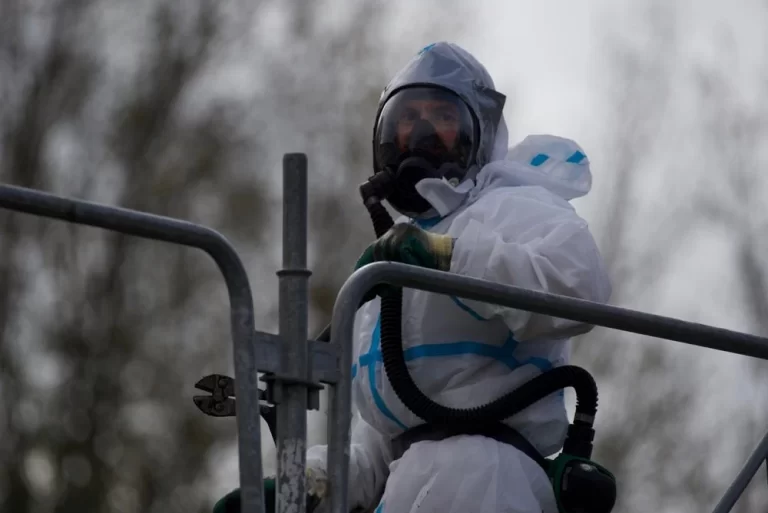
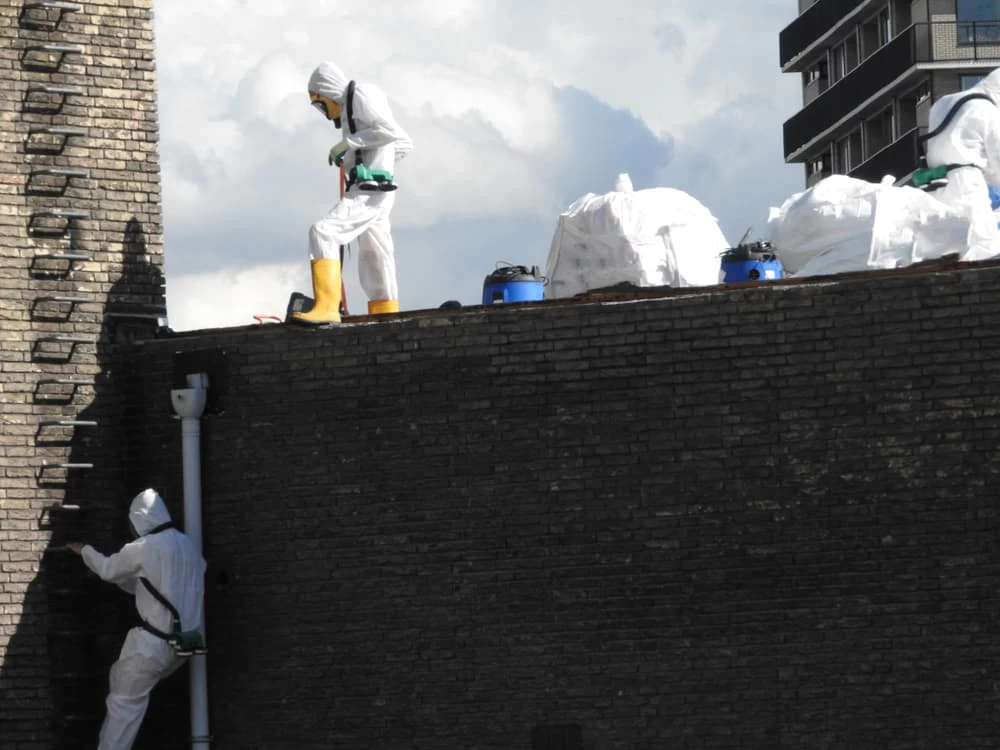
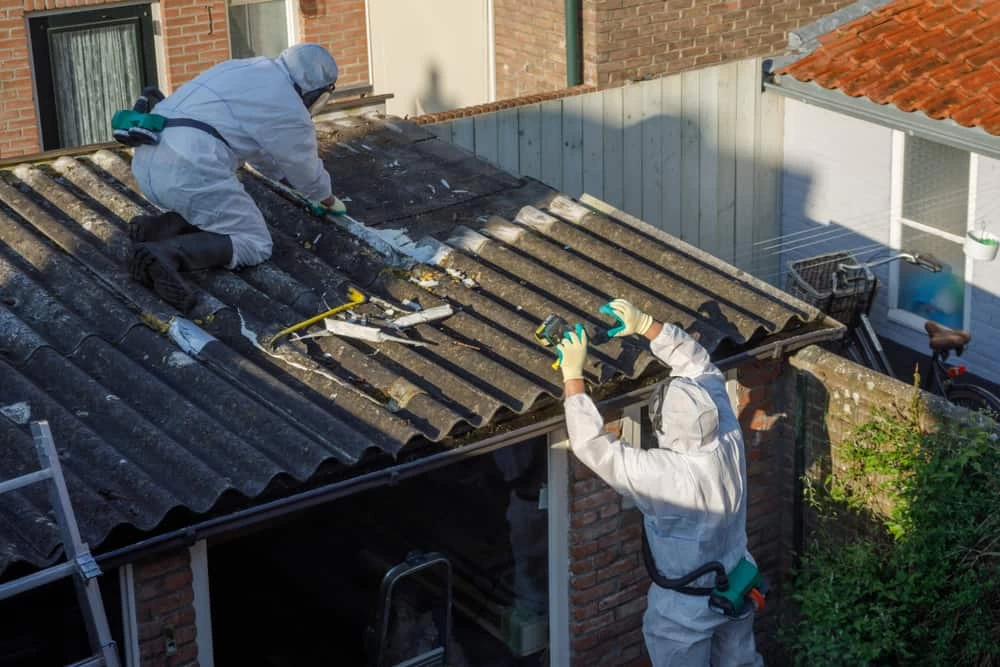
The abatement itself is done under full containment protocols. We isolate work areas, remove materials without disturbing adjacent living spaces, and dispose of all waste in compliance with NYS and EPA requirements. When the work is complete, post-clearance air monitoring confirms the space is safe. You receive complete documentation of the entire process — the kind of paper trail that protects you at the closing table and satisfies any future buyer’s due diligence.
Asbestos doesn’t announce itself. In a Matinecock estate built in the 1930s or 1940s, you might have it in the gray wrap around your steam pipes, the insulation blanketing your boiler, the floor tiles in your original kitchen or utility room, the popcorn ceiling finish in rooms that were updated in the 1960s or 1970s, or the plaster compound behind walls you’re planning to open. Our certified inspectors look at all of it — not just the areas your contractor flagged, but every location where asbestos-containing materials were routinely used in homes of this era and construction type.
Asbestos tile removal and asbestos popcorn ceiling removal are among the most common scopes we handle in North Shore estate renovations. Both require containment, proper removal technique, and compliant disposal — none of which is optional under ICR 56. We also handle pipe insulation removal, boiler insulation abatement, and full pre-renovation surveys for homeowners who need a clean clearance before their general contractor can begin work.
Beyond asbestos, we also provide lead removal and related environmental services — which matters for Matinecock homeowners managing large-scale renovations where multiple hazardous materials may be present in the same project. One team, one point of contact, and complete documentation from the first inspection through final clearance. For properties worth what Matinecock estates are worth, that level of coordination isn’t a luxury — it’s just the right way to do it.
Does my Matinecock home need an asbestos survey before renovation work begins?
If your home was built before 1980 — which covers the vast majority of Matinecock’s estate properties — New York State law requires a certified asbestos inspection before any renovation or demolition work that could disturb suspect materials. This isn’t optional, and it’s not something your general contractor can skip over. The survey has to be completed and documented before permits are issued and before work begins.
In practical terms, this means that if you’re planning a kitchen renovation, a boiler replacement, a basement finishing project, or any structural modification to an older Matinecock estate, the asbestos survey is your first step — not an afterthought. The Village of Matinecock’s building department processes permits for construction work within the village, and compliance with state asbestos requirements is part of that process. Getting the survey done early avoids delays and keeps your project on schedule.
What are the most common places asbestos is found in older Matinecock estate homes?
In homes built during Matinecock’s Gold Coast construction era — roughly the 1910s through the 1950s — asbestos was used in a wide range of materials. The most common locations are pipe insulation around steam heating systems (which were standard in large Matinecock estate homes), boiler insulation, floor tiles in kitchens and utility rooms, plaster and joint compound in walls and ceilings, roofing shingles, and exterior siding materials.
Homes that were updated in the 1960s and 1970s often have a second layer of exposure — sprayed popcorn ceiling finishes and vinyl floor tiles from that era also frequently contained asbestos. A thorough survey looks at all of these locations, not just the ones that are visually deteriorating. Many asbestos-containing materials look perfectly intact but still pose a risk when disturbed during renovation work.
How does Nassau County's EHRP requirement affect which contractor I can hire?
Nassau County requires asbestos abatement contractors to hold an Environmental Hazard Remediation Program (EHRP) license, and technicians performing the work must hold an EHRT certification. These are Nassau County-specific credentials that exist on top of New York State’s licensing requirements under Industrial Code Rule 56. Hiring a contractor who only holds state certification — but not the county-level EHRP license — puts you in a non-compliant position, even if the work itself is technically competent.
This matters more than most homeowners realize. If a contractor performs abatement in Matinecock without the proper Nassau County credentials, it can void your permits, expose you to regulatory fines, and create documentation gaps that surface during a future property sale. When you’re vetting contractors, ask specifically about EHRP licensing — not just state certification. It’s a short question that tells you a lot about whether a contractor actually knows how to operate in Nassau County.
How long does asbestos abatement typically take for a large Matinecock estate property?
The timeline depends on the scope of what’s found during the initial survey. A focused abatement project — say, pipe insulation removal in a basement or asbestos tile removal in a single room — can often be completed in one to three days. A more comprehensive project covering multiple material types across a large Matinecock estate, which is common given the scale of the homes and the age of the construction, may take a week or more.
What adds time to any project is the regulatory process, not just the physical work. The NYS Department of Labor’s Asbestos Control Bureau must be notified before work begins, and that notification has a required lead time. Post-clearance air monitoring is conducted after removal is complete, and results need to be confirmed before the space is released. If you’re working against a renovation timeline or a real estate closing date, the earlier you schedule the survey and get the process started, the more flexibility you have.
Is asbestos abatement required before selling a home in Matinecock, NY?
There’s no automatic legal requirement to abate asbestos before listing a home in New York State, but the practical reality in Matinecock’s high-value real estate market is that it almost always comes up. Buyers purchasing estates in the $2 million to $10 million range routinely request asbestos surveys as part of their due diligence, and identified hazards frequently become negotiating points — or deal-breakers — if they haven’t been addressed.
Having a completed abatement with full documentation gives you a cleaner transaction. It removes a known liability, gives buyers confidence in the property’s condition, and eliminates the back-and-forth that comes when a buyer’s inspector flags suspect materials. For sellers of Matinecock estates, proactive abatement before listing is increasingly the approach that protects both the sale price and the timeline. It’s a straightforward way to take one significant variable off the table before negotiations begin.
What should I do if I find damaged insulation or suspect materials in my home right now?
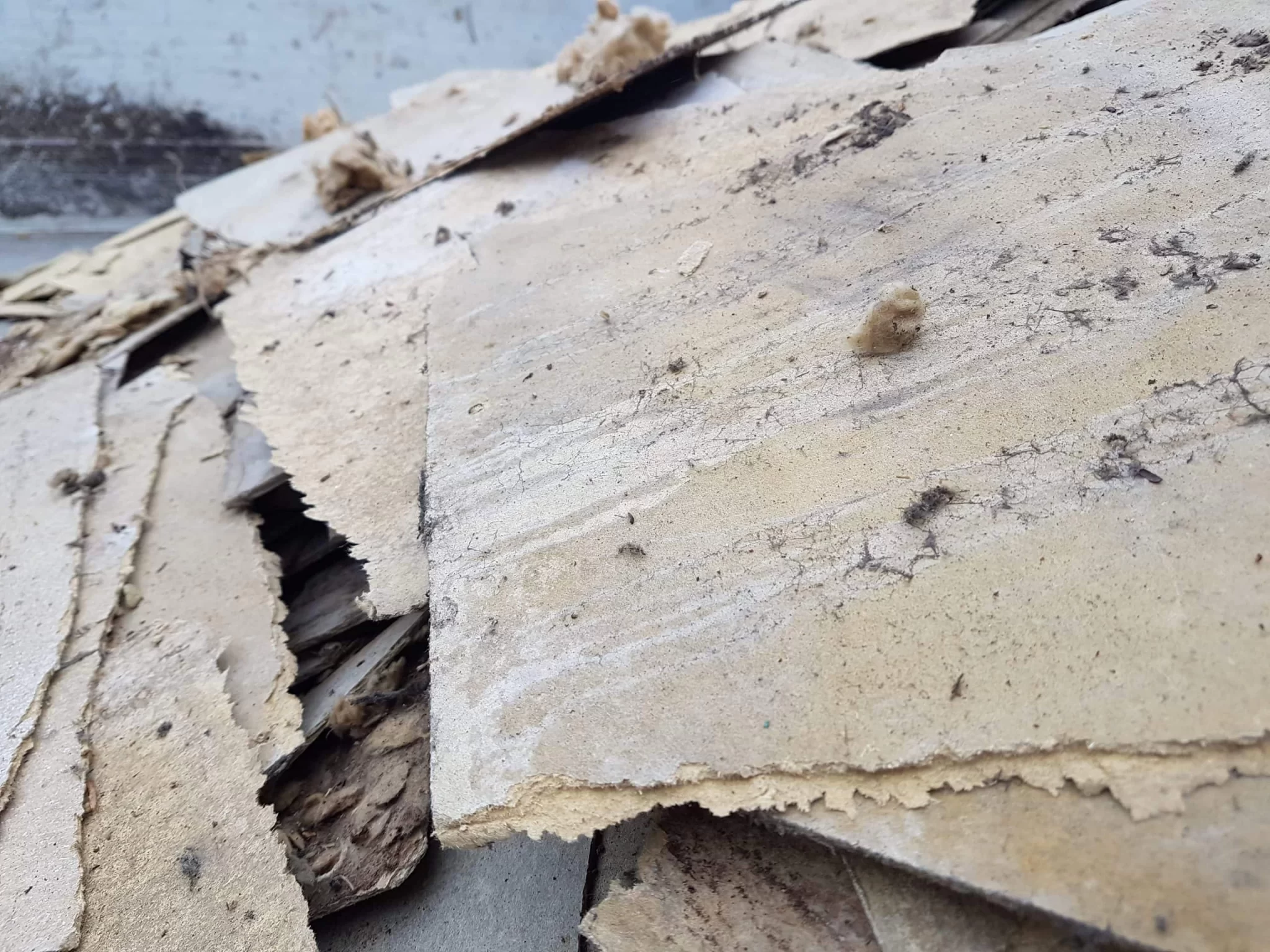
Don’t disturb it. That’s the most important thing. If you find insulation that’s crumbling, floor tiles that are cracked and lifting, or ceiling material that’s flaking, leave it alone and keep the area clear until a certified inspector can assess it. Asbestos fibers become a health risk when they’re airborne — and the act of trying to clean up or remove suspect material yourself is exactly what releases them.
Call us for a certified asbestos inspection to assess the material before anyone else — including your general contractor — touches it. In Matinecock, where many homes have original steam heating systems with pipe insulation that has been in place for 70 or 80 years, deteriorating insulation in basements and utility areas is one of the more common scenarios we encounter. The Long Island Sound’s coastal humidity accelerates that breakdown over time. An inspection will tell you whether the material is stable enough to leave in place or needs to be abated — and either way, you’ll have a documented answer that protects you going forward.