Old Dutchess County Homes Hide More Than Character
If your McIntyre property was built before 1980, there’s a real chance asbestos is somewhere inside it and the only way to know for sure is to have it tested by someone who’s licensed to say so.
I needed a professional consultation explanation of procedure for safe removal of Asbestos in my apartment complex. Without having an account yet, I was very impressed with the caring, knowledgeable and generous advice offered by Jessica, and will look forward to doing business in the future. Thank you so much! I feel much more informed about a sometimes scary endeavor. Peace. Nancy Silva Mineola, NY.
Mia Munoz
Used this company to clean up some water flood in my house. They were fast and easy to work with.very professional, Would recommend to anyone!
Nini Valle
Great company, had a flood and they responded quickly and efficiently. Billed my insurance company directly. I highly recommend this company!
joe colapietro, jr
I had pipe freeze in my basement right before a snow storm and they made to within an hour to help start the clean up process. They we by our side throughout the entire process and even helped with the insurance company. They did such a great job with the cleanup, repair, remidiation, I contracted them to perform the repairs and finishes in the basement. They came with enough manpower and material to get the job done. Leo and Jessica were nothing but a pleasure to deal with!!
Cristian Arredondo c
I had some water damage in my home and Green Island was able to take care of my issue quickly and effectively. I am very pleased with the work they did. They responded quickly and were very professional.
Michael M
Outstanding service! From the office to the field crew everyone was friendly, helpful and responsive. I highly recommend Green Island Group.
The moment asbestos is professionally removed and cleared, the weight of it lifts. You’re not pausing your renovation. You’re not avoiding a room. You’re not wondering whether the air in your basement is safe for your kids. That uncertainty disappears and it’s replaced by a written clearance report that says, in plain language, the space is safe to reoccupy.
For McIntyre homeowners, that matters more than it might in a newer suburb. The housing stock here is old genuinely old. Properties in the Town of Stanford trace back to the mid-1700s, and many of the homes in and around McIntyre were built or heavily renovated during the decades when asbestos was standard in everything from boiler insulation to floor tiles to ceiling texture. These aren’t hypothetical risks. They’re the materials that were put into these homes by the people who built them, because that was what you used.
When you bring in a licensed contractor who knows how to work within NYS DOL Code Rule 56 the state law that governs every asbestos project in Dutchess County you get more than removal. You get documentation, legal compliance, and a property that’s ready for whatever comes next, whether that’s finishing a renovation, putting the house on the market, or simply living in it without that lingering question in the back of your mind.
We’ve been handling asbestos abatement, mold remediation, and environmental restoration across Dutchess County for over 12 years. More than 5,000 completed projects across New York State. We’re fully licensed under NYS DOL Code Rule 56, MWBE certified, and approved as a state contractor not because it looks good on paper, but because those credentials are the legal baseline for doing this work correctly in New York.
Our team serving McIntyre and the broader Stanford area knows what’s inside these properties. Steam boiler systems wrapped in deteriorating insulation. Nine-by-nine vinyl floor tiles under decades of linoleum. Popcorn ceilings in finished basements that were sprayed on during the 1960s and never touched since. This isn’t guesswork it’s pattern recognition built from years of working in exactly this type of housing stock, in exactly this part of Dutchess County.
We also bill insurance directly, which matters when an asbestos discovery is tied to water damage or a storm event. One call, one point of contact, handled start to finish.
It starts with an inspection. Before anything is touched, the suspected materials are assessed and sampled. Samples go to an accredited laboratory, and the results tell you exactly what you’re dealing with not an estimate, not a guess. If asbestos-containing materials are confirmed, the project moves into planning: scope of work, containment strategy, timeline, and all required notifications under NYS DOL Code Rule 56, which is the state regulation enforced by the Albany district office covering Dutchess County.
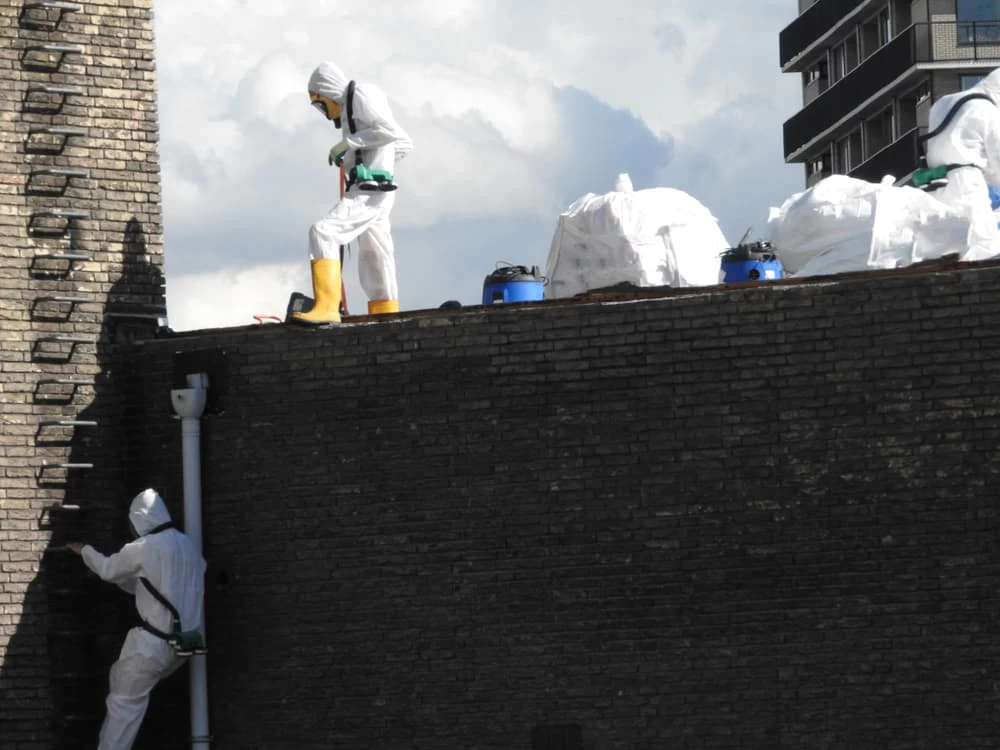
On project day, the work area is sealed and contained before removal begins. Our certified handlers wearing proper protective equipment remove the materials using regulated techniques whether that’s pipe insulation in a boiler room, floor tile in a kitchen, or textured ceiling material in a finished room. Everything is packaged according to NYS DEC requirements and transported to an approved disposal facility by a licensed hauler. Nothing gets thrown in a dumpster. Nothing gets left behind.
Once removal is complete, post-abatement air clearance testing is conducted. This is the step that actually confirms the space is safe and it produces the written documentation you’ll want on file, whether you’re continuing a renovation, selling the property, or simply closing the chapter on a problem that needed to be solved.
Every Material, Every Surface, Handled by the Book
Asbestos doesn’t show up in just one place in an older home. In McIntyre properties especially the farmhouses, colonial-era structures, and mid-century homes that define this part of the Town of Stanford it tends to show up in several places at once. Pipe insulation and boiler wrap are among the most common finds, particularly in homes with older steam or hot water heating systems. Asbestos floor tile removal is another frequent need, especially in kitchens and basements where nine-by-nine vinyl tiles were laid during the 1950s and 1960s. Asbestos popcorn ceiling removal comes up regularly in finished lower levels and common rooms that were updated during that same era.
Beyond the interior, rural properties in this part of northeastern Dutchess County often have outbuildings, barns, and accessory structures with asbestos cement roofing or siding materials that aren’t always on a homeowner’s radar but carry the same regulatory requirements as anything inside the main house. We handle all of it: interior and exterior, residential and outbuilding, primary structure and accessory space.
Every project we complete includes inspection, containment, certified removal, regulated disposal, and post-abatement air clearance testing. The clearance report you receive at the end isn’t a formality it’s the document that confirms the work was done correctly, by a licensed contractor, in compliance with NYS DOL Code Rule 56. For a McIntyre property with the kind of history these homes carry, that documentation is a genuine asset not just a box checked, but proof that the property has been properly cared for.
Does my older McIntyre farmhouse actually need a professional asbestos inspection?
If your home was built or significantly renovated before 1985, the honest answer is yes especially in McIntyre and the surrounding Town of Stanford, where a large portion of the housing stock predates the 1980s by decades. Asbestos was used so widely across so many building materials that it’s genuinely difficult to know what’s present without testing. Pipe insulation, floor tile adhesive, plaster, roofing shingles, exterior cement siding, attic insulation any of these could contain asbestos, and most of them look completely ordinary to the untrained eye.
An inspection doesn’t mean you have a problem. It means you’ll know either way. And in a rural area like McIntyre, where properties often have multiple structures and decades of layered renovations, knowing what you’re working with before you start any project is far less disruptive than discovering it mid-renovation when work has to stop.
How much does asbestos removal typically cost for a Dutchess County home?
Most asbestos removal projects in the Dutchess County area run somewhere between $1,300 and $3,100, with the average landing around $2,200. Where your project falls within that range depends on the type of material, how much of it there is, where it’s located, and whether it’s friable meaning it can be crumbled or released into the air or intact. Pipe insulation removal in a boiler room is a different job than floor tile removal in a finished basement, and pricing reflects that.
It’s also worth knowing that if your asbestos discovery was triggered by a covered event water damage from a burst pipe, storm damage that exposed roofing material your homeowner’s insurance may cover part or all of the cost. We bill insurance directly, so you’re not stuck managing the paperwork while also managing the project. That’s a detail worth asking about before you assume you’re paying entirely out of pocket.
Can I legally remove asbestos myself in New York State?
New York State does provide a narrow homeowner exemption that allows owner-occupants of single-family residences to perform certain asbestos work themselves. But the exemption is more limited than most people expect, and it comes with real personal risk. It does not apply to rental properties, commercial buildings, or any property undergoing significant renovation. And critically, it doesn’t apply to the disposal side of things asbestos waste still has to be handled and transported in compliance with NYS DEC regulations, which requires a licensed hauler.
For most McIntyre homeowners, the practical reality is that DIY asbestos removal isn’t worth the risk. If the material is friable or becomes friable during removal you’re dealing with airborne fibers in an enclosed space. Beyond the health risk, work done outside of NYS DOL Code Rule 56 requirements doesn’t produce the clearance documentation that lenders, buyers, and contractors will ask for. Licensed abatement is the only path to a result you can actually document and stand behind.
What asbestos-containing materials are most common in McIntyre area homes?
In the older housing stock throughout the Town of Stanford and the McIntyre area specifically, the most frequently encountered asbestos-containing materials are pipe insulation and boiler wrap, nine-by-nine vinyl floor tiles and their adhesive backing, plaster with asbestos additives, popcorn or textured ceiling coatings, asbestos cement exterior siding, and roofing shingles. Steam and hot water heating systems common in farmhouses and older rural homes throughout this part of Dutchess County are a particularly frequent source, because the pipe insulation used in those systems was often heavily asbestos-based.
Properties in this area also tend to have outbuildings, barns, or detached garages that were built or re-roofed using asbestos cement sheets, which were widely used in agricultural and rural construction through the 1970s. These structures carry the same regulatory requirements as the main house the material doesn’t become less regulated because it’s in a barn rather than a bedroom. If you’re planning any renovation or demolition work on a secondary structure, it’s worth having it assessed at the same time as the main property.
How long does an asbestos abatement project take from start to finish?
For a straightforward residential project a single area, one type of material you’re typically looking at one to three days for the actual removal work. Larger or more complex projects, like a whole-house abatement before a major renovation, can take longer depending on the scope. The inspection and lab testing phase that comes before removal usually adds a few days to a week, depending on how quickly results come back from the laboratory.
One thing that affects timing in the McIntyre area specifically is seasonal access. If you’re dealing with a property that has limited access during winter months, or if freeze-thaw conditions have damaged pipe insulation in a crawl space or basement, it’s worth scheduling sooner rather than later. Deteriorating asbestos materials don’t stabilize on their own cold weather and moisture accelerate the breakdown of older insulation and roofing materials, which can turn a contained problem into a more urgent one. Getting an inspection scheduled before conditions worsen is almost always the better call.
Will asbestos abatement affect the sale of my McIntyre property?
In the current Dutchess County real estate market where buyers, home inspectors, and lenders are all paying close attention to environmental disclosures known asbestos in a property is a complication. It doesn’t necessarily kill a deal, but it creates leverage for buyers and can slow the transaction down significantly. Sellers who haven’t addressed it often end up negotiating on price or agreeing to abatement as a condition of sale anyway, usually under more time pressure and with less control over who does the work.
Addressing asbestos before listing with a licensed contractor and documented post-abatement air clearance puts you in a much stronger position. You’re not hiding anything, and you’re not leaving it as an open question for the buyer’s inspector to flag. You have paperwork that shows the work was done correctly, by a licensed contractor, in compliance with NYS DOL Code Rule 56. For a McIntyre property with the kind of history these homes carry, that documentation is a genuine selling asset not just a box checked, but proof that the property has been properly cared for.