I needed a professional consultation explanation of procedure for safe removal of Asbestos in my apartment complex. Without having an account yet, I was very impressed with the caring, knowledgeable and generous advice offered by Jessica, and will look forward to doing business in the future. Thank you so much! I feel much more informed about a sometimes scary endeavor. Peace. Nancy Silva Mineola, NY.
Mia Munoz
Used this company to clean up some water flood in my house. They were fast and easy to work with.very professional, Would recommend to anyone!
Nini Valle
Great company, had a flood and they responded quickly and efficiently. Billed my insurance company directly. I highly recommend this company!
joe colapietro, jr
I had pipe freeze in my basement right before a snow storm and they made to within an hour to help start the clean up process. They we by our side throughout the entire process and even helped with the insurance company. They did such a great job with the cleanup, repair, remidiation, I contracted them to perform the repairs and finishes in the basement. They came with enough manpower and material to get the job done. Leo and Jessica were nothing but a pleasure to deal with!!
Cristian Arredondo c
I had some water damage in my home and Green Island was able to take care of my issue quickly and effectively. I am very pleased with the work they did. They responded quickly and were very professional.
Michael M
Outstanding service! From the office to the field crew everyone was friendly, helpful and responsive. I highly recommend Green Island Group.
Most people in Melville aren’t thinking about asbestos until a contractor stops mid-demo and tells them they need to. That moment standing in a half-torn kitchen or a basement you were finally going to finish is when the real cost of skipping this step becomes obvious. The good news is that when it’s handled correctly, you’re not looking at weeks of delays. You’re looking at a clear path forward with documentation that satisfies your contractor, your permit office, and your real estate attorney.
Melville’s housing stock is heavily mid-century. The split-levels and ranches built during the postwar boom throughout the Half Hollow Hills area were constructed when asbestos was standard practice in floor tiles, pipe insulation, popcorn ceilings, and joint compound. These materials aren’t dangerous when they’re left alone, but the moment a renovation starts, the risk changes. Getting a licensed assessment before work begins isn’t just smart it’s legally required under New York State Industrial Code Rule 56 before any renovation or demolition permit is issued by the Town of Huntington.
On the commercial side, Melville’s Route 110 corridor is lined with office buildings from the 1960s through the 1980s. As those properties get renovated, repositioned, or torn down to make way for mixed-use redevelopment, asbestos abatement becomes a non-negotiable part of the permitting process. Whether you’re managing a corporate facility or preparing a single-family home for sale, the outcome is the same: you need it done right, documented properly, and completed without dragging out your timeline.
We’re a licensed asbestos abatement contractor serving Melville and the surrounding Suffolk County communities. We work on both residential and commercial projects from the 1960s ranch homes tucked off Walt Whitman Road to the multi-floor office buildings near LIE Exit 49 that have been sitting on the same footprint for decades.
Every technician on our crew is individually certified under New York State Department of Labor requirements. Every project we complete comes with full documentation NYSDOL notification records, waste manifests, and clearance air monitoring results. That paperwork matters whether you’re closing on a $1.2 million home in the Half Hollow Hills area or managing a facility upgrade for a corporate tenant along the Broad Hollow Road corridor.
We don’t subcontract the work out and hope for the best. The people who show up are the people accountable for the result. In a community where your home or building represents a serious investment, that’s not a small thing.
No Guesswork Here's Exactly What the Process Looks Like
It starts with an inspection. A certified inspector walks the property, identifies any materials that could contain asbestos, and collects bulk samples for laboratory analysis. In Melville’s mid-century homes, that typically means checking the vinyl floor tiles, the texture on the ceilings, the insulation around the boiler and pipes, and any original drywall joint compound. In commercial buildings, we’re also looking at ceiling tiles, duct wrap, and fireproofing on structural steel.
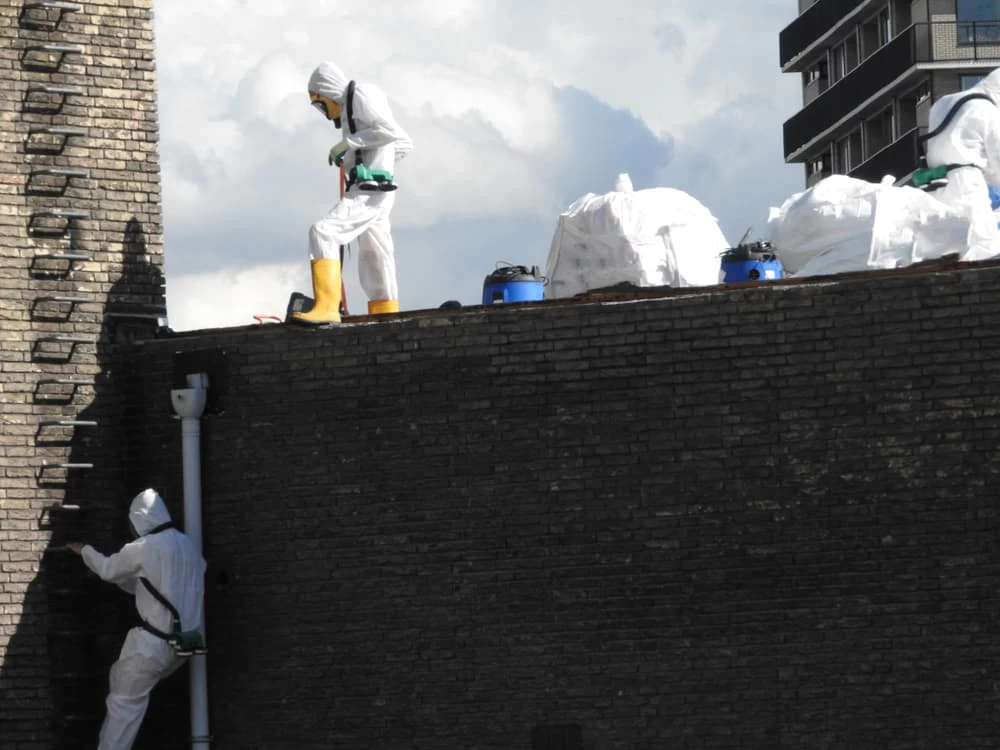
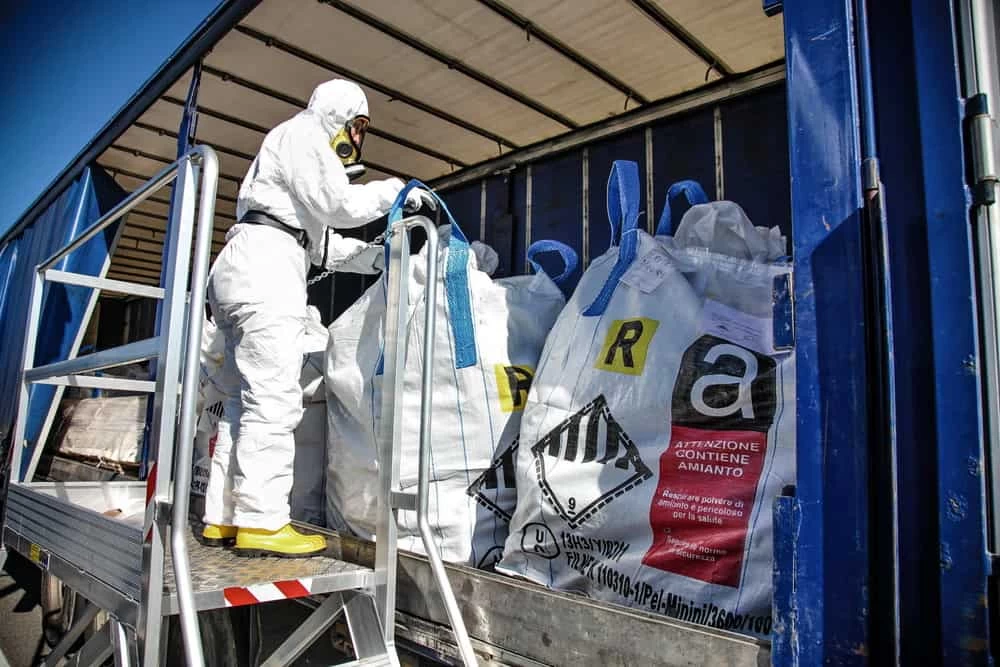
Once the lab results come back, you’ll know exactly what you’re dealing with and what needs to happen before your renovation or demolition can move forward. If abatement is required, we handle the NYSDOL project notification, set up proper containment with negative air pressure and HEPA filtration, and remove the materials according to state protocol. Nothing leaves the site without being properly packaged, labeled, and transported to a licensed disposal facility. That’s not optional it’s the law, and it’s how we operate on every job.
After abatement is complete, we conduct final clearance air monitoring to confirm the space is safe before containment comes down. That clearance report is what your contractor, your permit office, and your real estate attorney need to see before the next phase begins. For homeowners working toward a closing or a renovation start date, this step is what keeps everything on schedule.
What's Covered From the First Sample to Final Clearance
We handle the full scope inspection, testing, abatement, and clearance air monitoring so you’re not coordinating between three different companies while your renovation sits on hold. In Melville, the most common residential requests we see involve asbestos tile removal from kitchens and basements, asbestos popcorn ceiling removal in living areas and bedrooms, and pipe and boiler insulation in older mechanical rooms. These are not jobs for a general contractor with a respirator they require licensed abatement professionals, proper containment, and state-mandated disposal procedures.
For commercial properties along the Route 110 corridor and within Melville’s established corporate parks, we handle larger-scope projects involving ceiling tiles, floor systems, pipe insulation, and duct wrap. As the Town of Huntington continues to push forward with the redevelopment of aging office properties into mixed-use residential and retail projects like the Melville Crossing proposal and the broader Melville Town Center initiative asbestos abatement is a required step before any demolition permit gets issued. We have the capacity and the commercial project experience to execute those scopes without disrupting active business operations.
Every project, residential or commercial, comes with a complete documentation package. That includes the NYSDOL project notification, all lab reports, waste manifests, and the final clearance results. If you’re preparing for a home sale, that package is what your buyer’s attorney is going to ask for. If you’re managing a corporate facility, it’s what your compliance file needs to reflect.
Do I need asbestos testing before renovating my home in Melville, NY?
Yes and it’s not just a recommendation, it’s a regulatory requirement. Under New York State Industrial Code Rule 56, an asbestos survey is required before any renovation or demolition that could disturb building materials in structures built before April 1, 1987. The Town of Huntington won’t issue a renovation or demolition permit without confirmation that asbestos has been assessed and addressed where necessary.
In Melville specifically, the majority of the residential housing stock was built during the 1950s, 1960s, and 1970s which means a large percentage of homes in the Half Hollow Hills area fall squarely within that window. If you’re planning a kitchen remodel, a bathroom gut, a basement renovation, or any work that involves disturbing existing flooring, ceilings, or pipe insulation, you need a licensed inspector to assess the materials before your contractor touches anything. Getting this done upfront keeps your project on schedule and keeps you on the right side of state law.
How much does asbestos removal typically cost in Melville, NY?
Cost depends on what’s being removed, how much of it there is, and where it’s located. For a standard residential job say, asbestos tile removal in a kitchen or basement, or popcorn ceiling removal in a single room you’re typically looking at somewhere in the range of $1,500 to $4,000 depending on square footage and access. Larger scopes involving pipe insulation, multiple rooms, or full-floor commercial abatement will be higher, sometimes significantly so.
In Melville, where median home values are now well over $1 million, the cost of proper abatement is a small fraction of what’s at stake in a real estate transaction or a major renovation. Skipping it or cutting corners doesn’t save money it creates liability. A buyer’s attorney who finds undisclosed asbestos during due diligence can kill a deal or renegotiate the price far below what the abatement would have cost. The smarter move is always to get it done correctly with full documentation before it becomes someone else’s leverage.
What materials in older Melville homes are most likely to contain asbestos?
The most common sources we find in Melville’s mid-century housing stock are the 9-inch by 9-inch vinyl floor tiles that were standard in kitchens, bathrooms, and basements from the 1950s through the 1970s along with the black mastic adhesive used to install them. Popcorn acoustic ceiling texture is another frequent one, applied widely through the late 1970s and into the mid-1980s. Pipe and boiler insulation in older oil-heated homes is also a common find, particularly in homes with original cast-iron radiator systems.
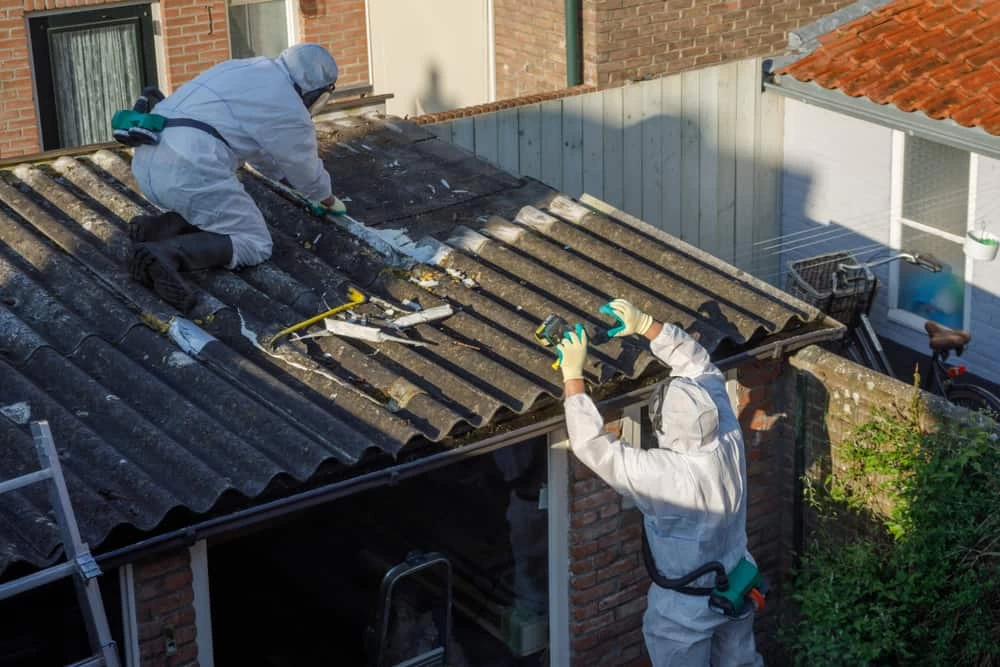
Beyond those, joint compound and drywall tape used before 1977 frequently contained asbestos, as did transite board siding and roofing shingles on some older properties. The important thing to understand is that these materials aren’t necessarily dangerous just because they exist asbestos is most hazardous when it’s disturbed and fibers become airborne. That’s why the trigger is almost always a planned renovation, a sale, or a permit application. If you’re not touching it and it’s in good condition, the immediate risk is low. But the moment a contractor starts cutting, drilling, or demoing, the equation changes.
How long does asbestos abatement take for a typical Melville home?
For a standard residential scope one or two materials, a contained area like a basement or a single floor the abatement work itself typically takes one to three days. The timeline that most homeowners don’t account for is what comes before and after: the inspection, lab turnaround for sample analysis, NYSDOL project notification, and final clearance air monitoring. From the time you make the first call to the time you have a clearance report in hand, you’re usually looking at one to two weeks for a straightforward residential job.
If you’re working toward a real estate closing or a contractor start date, that lead time matters. The sooner you get the inspection scheduled, the more runway you have to address anything that comes up without it affecting your timeline. Spring and fall are the busiest seasons for asbestos abatement on Long Island as renovation season peaks if you’re planning a project during those windows, earlier is always better. We try to move quickly for clients in Melville and the surrounding Half Hollow Hills area, but the regulatory steps have minimum timeframes that can’t be compressed.
Can asbestos abatement be done while my family is still living in the house?
In most cases, yes but it depends on the location and scope of the work. For contained abatement in a basement, a single room, or a mechanical space, families can often remain in the home as long as the affected area is properly sealed off and negative air pressure is maintained throughout the job. The containment setup is specifically designed to prevent fibers from migrating into the rest of the living space.
That said, for larger scopes full-floor tile removal, popcorn ceiling abatement across multiple rooms, or work in a central HVAC area it’s generally safer and more practical to arrange for the family to be out of the home during the active abatement phase. We’ll walk you through what makes sense for your specific situation during the initial inspection. The final clearance air monitoring at the end of the job is what confirms the space is safe before containment comes down and normal activity resumes that step isn’t skipped regardless of scope.
Does asbestos abatement affect a home sale in Melville's real estate market?
It can cut both ways. Undisclosed asbestos or asbestos that was removed improperly without documentation is one of the more common issues that surfaces during buyer inspections and attorney due diligence in high-value real estate transactions. In Melville, where homes are regularly trading at or above $1.2 million, buyers and their attorneys are thorough. If asbestos is flagged and there’s no documentation showing it was properly abated, you’re looking at renegotiation, price reduction, or a deal that falls apart entirely.
On the other hand, a seller who can hand over a complete abatement package inspection report, lab results, NYSDOL notification, waste manifests, and clearance air monitoring is in a much stronger position. It removes a major objection before it becomes one. Real estate attorneys and agents in the Half Hollow Hills market see this regularly, and the ones who’ve been through it know that documented abatement is an asset in a transaction, not just a cost. Getting it done before you list, rather than scrambling after an inspection flags it, is almost always the better play.