Middletown's Older Homes Deserve More Than a Guess
We provide licensed asbestos removal in Middletown, NY with the clearance documentation your contractor, lender, or real estate attorney actually needs.
I needed a professional consultation explanation of procedure for safe removal of Asbestos in my apartment complex. Without having an account yet, I was very impressed with the caring, knowledgeable and generous advice offered by Jessica, and will look forward to doing business in the future. Thank you so much! I feel much more informed about a sometimes scary endeavor. Peace. Nancy Silva Mineola, NY.
Mia Munoz
Used this company to clean up some water flood in my house. They were fast and easy to work with.very professional, Would recommend to anyone!
Nini Valle
Great company, had a flood and they responded quickly and efficiently. Billed my insurance company directly. I highly recommend this company!
joe colapietro, jr
I had pipe freeze in my basement right before a snow storm and they made to within an hour to help start the clean up process. They we by our side throughout the entire process and even helped with the insurance company. They did such a great job with the cleanup, repair, remidiation, I contracted them to perform the repairs and finishes in the basement. They came with enough manpower and material to get the job done. Leo and Jessica were nothing but a pleasure to deal with!!
Cristian Arredondo c
I had some water damage in my home and Green Island was able to take care of my issue quickly and effectively. I am very pleased with the work they did. They responded quickly and were very professional.
Michael M
Outstanding service! From the office to the field crew everyone was friendly, helpful and responsive. I highly recommend Green Island Group.
When asbestos is properly removed and cleared by a licensed contractor, your renovation moves forward, your home is legally safe to occupy, and you have a written clearance certificate that holds up at closing, at the permit office, and in front of any inspector. That piece of paper matters more than most people realize until they don’t have it.
Middletown has one of the oldest housing stocks in the country over a third of homes here were built before 1939. That means the floors you’re pulling up, the pipes in the basement, the ceiling texture in the back bedroom they were installed or renovated during the decades when asbestos was used in almost everything. It’s not a worst-case scenario. It’s just the reality of owning an older home in this city.
The winters here don’t help either. Freeze-thaw cycling in Middletown’s valley location puts real stress on older pipe insulation and floor tile adhesives. When those materials start to crack and deteriorate, previously stable asbestos can become an active exposure risk. Getting ahead of it is always the right move.
Every License That Matters and the Track Record to Back It
We hold a current New York State Department of Labor Asbestos Contractor License, EPA certifications, and multi-county general contractor licenses covering Orange County and the broader Hudson Valley region. These aren’t credentials listed on a brochure they’re publicly verifiable, government-issued licenses you can look up yourself on the NYS DOL website.
Beyond licensing, we’ve performed environmental remediation work for the NYS Office of General Services, the Dormitory Authority of the State of New York, and the NYS Office of Mental Health the same state agency connected to the former Middletown State Psychiatric Hospital, one of the most recognized landmarks in this city. Government agencies don’t hand out contracts without auditing insurance, safety records, and licensing in detail.
We also hold dual Minority/Women-Owned Business Enterprise certification from both New York State and New York City a government-verified designation that requires ongoing financial and operational compliance. That level of institutional accountability is rare in this market, and it means you’re not just taking our word for it.
No Surprises Here's Exactly What Happens at Your Property
It starts with a site assessment. Before any work begins, the materials in question are identified and, if needed, sampled and tested by a certified industrial hygienist. If asbestos-containing materials are confirmed, you get a clear scope of work, a written estimate, and a timeline before anything moves forward. No pressure, no vague verbal quotes.
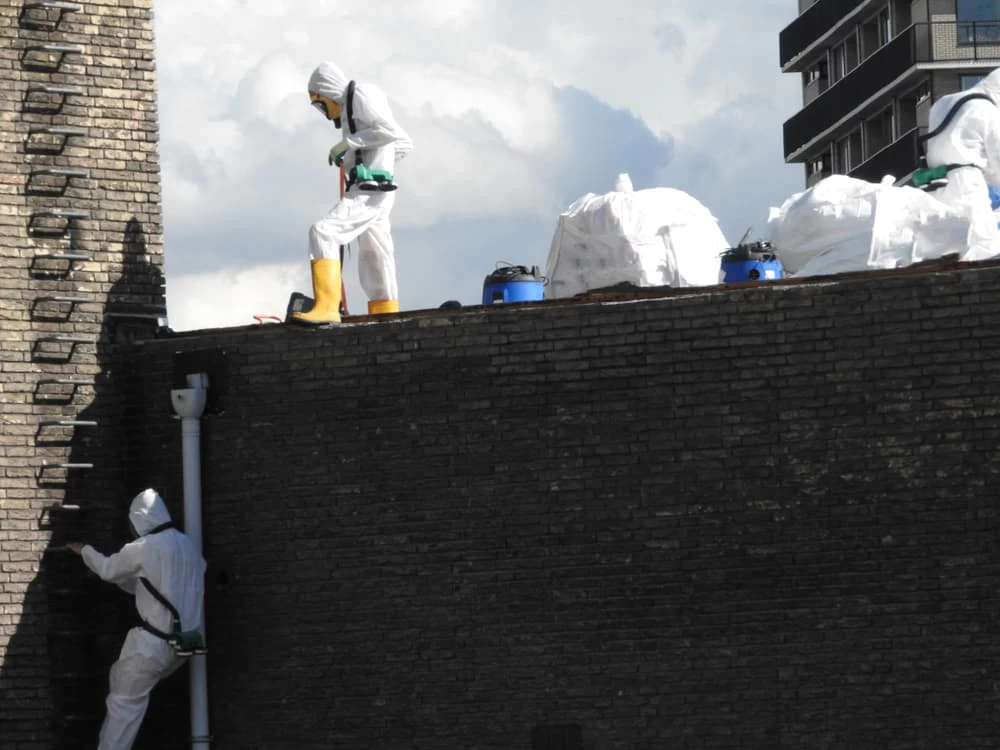
Once the project is approved, the work area is properly contained and sealed off negative air pressure, protective barriers, full PPE for every worker on site. In Middletown, where many homes have older pipe insulation in basements or mechanical rooms alongside other hazards like lead paint or mold, this containment step is especially important. Disturbing one material without controlling the environment can spread contamination beyond the original area, which is why the setup phase is never rushed.
After removal, an independent industrial hygienist conducts post-abatement air monitoring. This is required by New York State before any space can be reoccupied, and it results in a written clearance certificate the document your building department, lender, or real estate attorney needs to confirm the work was done correctly. Because Middletown operates under its own city building permit system, any renovation triggering a permit will also require this documentation. We make sure you have it.
What We Handle From Discovery to Clearance Certificate
We handle the full scope asbestos tile removal, popcorn ceiling removal, pipe insulation removal, floor tile abatement, joint compound, ceiling tile, and asbestos siding. If it’s in your Middletown home or commercial property and it tests positive, we remove it properly, document it thoroughly, and close the job with independent air clearance.
For homeowners in neighborhoods like Presidential Heights or on Highland Avenue where Victorian-era and mid-century homes are common and renovation discoveries happen regularly we also handle the multi-hazard reality that comes with older properties. Asbestos, lead paint, mold, and water damage frequently coexist in the same spaces. We’re licensed and equipped to address all of it under one roof, which means you’re not coordinating four separate contractors or paying four separate mobilization fees.
For commercial property owners and developers working on Middletown’s downtown corridor the kind of historic renovation happening at properties like the former Montgomery Ward building on North Street we bring the same institutional-grade process we’ve used on government projects. That includes full compliance with NYS DOL Industrial Code Rule 56, proper notification to the Asbestos Control Bureau, and complete post-abatement documentation packages. We also offer 0% APR financing up to $200,000 for qualifying projects and bill insurance companies directly when coverage applies, so cost doesn’t become the reason a job gets done wrong.
Is asbestos common in older Middletown, NY homes and buildings?
Yes and more so than in most surrounding Orange County communities. Middletown has one of the oldest housing stocks in the country, with over a third of its homes built before 1939. Homes that old were frequently renovated during the 1940s through 1970s, which is exactly when asbestos use in building materials was at its peak. Floor tiles, pipe insulation, ceiling texture, joint compound, and roofing materials installed during those mid-century renovations are the most common sources of asbestos in Middletown properties today.
It’s not just residential homes either. Middletown’s downtown commercial buildings, its historic institutional structures, and the railroad-era facilities connected to the city’s O&W Railway heritage all represent a higher-than-average probability of asbestos-containing materials. If your property was built or significantly renovated before 1980, testing before any demolition or renovation work is the right call.
Do I need a permit or state approval for asbestos removal in Middletown?
New York State requires that all asbestos abatement work be performed by a contractor holding a current NYS Department of Labor Asbestos Contractor License. Beyond the contractor licensing requirement, any renovation or demolition project in Middletown that requires a city building permit will also trigger the state’s asbestos notification and assessment obligations if asbestos-containing materials are present or suspected. Because Middletown is a fully chartered city with its own building department unlike the surrounding hamlets and towns the permitting process runs through the city’s code enforcement infrastructure, not a town or village system.
For larger projects, the NYS DOL Asbestos Control Bureau requires advance notification before abatement begins. This notification process, combined with the post-abatement air monitoring requirement, means there’s a documented paper trail from start to finish. That documentation is what protects you as a homeowner, landlord, or developer from liability down the road. We handle the notification and documentation requirements as part of every project, so nothing falls through the cracks on your end.
What does asbestos abatement actually cost for a Middletown home?
The honest answer is that cost depends on what’s there, how much of it there is, and where it’s located. Asbestos tile removal in a single room is a very different scope than pipe insulation removal throughout a basement mechanical room or popcorn ceiling abatement across an entire floor of a Victorian home on Highland Avenue. Small, localized jobs can run a few hundred dollars. Larger or more complex projects especially in Middletown’s older multi-unit buildings or commercial properties can run several thousand.
What most people don’t factor in upfront is the cost of the post-abatement air monitoring and clearance certificate, which is a separate line item from the abatement itself but required by New York State before the space can be legally reoccupied. We provide written estimates that include all phases of the work so there are no surprises at the end. For projects where cost is a concern, we offer 0% APR financing up to $200,000 for qualifying jobs which makes professional abatement financially accessible even when the discovery is unplanned and unbudgeted.
Can I stay in my home during asbestos abatement in Middletown?
It depends on the scope and location of the work. For small, contained projects like removing asbestos floor tile in a single room or abating pipe insulation in a basement mechanical room it’s often possible to remain in other parts of the home as long as the work area is properly sealed and under negative air pressure. For larger projects involving multiple rooms, HVAC-adjacent materials, or significant square footage, temporary relocation is typically the safer and more practical option.
The determining factor is always containment integrity. New York State requires that abatement areas be sealed and maintained under negative air pressure throughout the work, which prevents fiber migration into adjacent living spaces. An independent industrial hygienist verifies that the air is clear before the containment comes down and the space is reoccupied. We’ll give you a straight answer about whether staying put is realistic for your specific project not a blanket policy that ignores the actual scope of your job. In Middletown’s older homes, where abatement sometimes uncovers additional materials once work begins, having that honest conversation upfront matters.
I'm selling my home in Middletown does asbestos need to be removed before closing?
Not always removed, but always disclosed. New York State requires sellers to disclose known environmental hazards, including the presence of asbestos-containing materials, as part of the real estate transaction process. Whether removal is required before closing typically depends on the buyer’s lender and the terms negotiated in the purchase agreement. FHA and VA loans, in particular, often require remediation of identified hazards before the loan will fund.
In practice, asbestos discovered during a home inspection in Middletown’s active real estate market usually triggers one of three outcomes: the seller removes it before closing, the buyer negotiates a price reduction to cover the cost, or the parties agree to an escrow holdback pending post-closing remediation. If you’re the seller and you choose to remediate, having a written clearance certificate from a licensed contractor and independent industrial hygienist is what gives the buyer’s attorney and lender confidence that the work was done correctly. We provide that complete documentation package on every project, which is exactly what’s needed to keep a transaction on track.
What's the difference between a licensed asbestos contractor and a general contractor in New York?
In New York State, a general contractor license does not authorize a contractor to perform asbestos abatement. Asbestos abatement requires a completely separate NYS Department of Labor Asbestos Contractor License, which involves a distinct application process, insurance requirements, worker certification standards, and regulatory oversight by the NYS DOL Asbestos Control Bureau. A general contractor who removes asbestos without this specific license is performing illegal work regardless of how long they’ve been in business or how many other jobs they’ve completed.
This distinction matters a lot in Middletown’s renovation market, where older homes are being updated regularly and contractors of all types encounter asbestos-containing materials in the course of normal work. The problem is that work performed by an unlicensed contractor won’t produce the post-abatement clearance documentation that New York State requires, which means the space can’t be legally reoccupied and the work may need to be redone entirely by a licensed contractor at your expense. Our NYS DOL Asbestos Contractor License is publicly searchable we’ll give you the license number and the exact steps to verify it on the state’s website, because a credential you can confirm yourself is worth more than one you’re just asked to take on faith.