Miller Place Homes Have a Hidden History Worth Knowing
Most homes in Miller Place were built right in the middle of the asbestos era and if yours was built between 1955 and 1985, there’s a real chance it’s still in there. We handle the testing, removal, and documentation so you can move forward without the guesswork.
I needed a professional consultation explanation of procedure for safe removal of Asbestos in my apartment complex. Without having an account yet, I was very impressed with the caring, knowledgeable and generous advice offered by Jessica, and will look forward to doing business in the future. Thank you so much! I feel much more informed about a sometimes scary endeavor. Peace. Nancy Silva Mineola, NY.
Mia Munoz
Used this company to clean up some water flood in my house. They were fast and easy to work with.very professional, Would recommend to anyone!
Nini Valle
Great company, had a flood and they responded quickly and efficiently. Billed my insurance company directly. I highly recommend this company!
joe colapietro, jr
I had pipe freeze in my basement right before a snow storm and they made to within an hour to help start the clean up process. They we by our side throughout the entire process and even helped with the insurance company. They did such a great job with the cleanup, repair, remidiation, I contracted them to perform the repairs and finishes in the basement. They came with enough manpower and material to get the job done. Leo and Jessica were nothing but a pleasure to deal with!!
Cristian Arredondo c
I had some water damage in my home and Green Island was able to take care of my issue quickly and effectively. I am very pleased with the work they did. They responded quickly and were very professional.
Michael M
Outstanding service! From the office to the field crew everyone was friendly, helpful and responsive. I highly recommend Green Island Group.
When a renovation contractor stops mid-job because something doesn’t look right, or a home inspection comes back with a flag three days before closing, the last thing you need is more uncertainty. What you need is someone who can come out quickly, tell you exactly what you’re dealing with, and handle it the right way legally documented, properly cleared, and ready to hold up to scrutiny.
Miller Place’s housing stock tells a specific story. The bulk of homes here were built in the 1960s and 1970s, which is precisely when asbestos-containing materials were most common in American residential construction. Popcorn ceilings, vinyl floor tiles, pipe insulation, boiler wrap these are the materials that show up in Miller Place homes on this part of the North Shore, and we’re trained to find and remove them.
With a median home value pushing well above $600,000 in this area, you’re not just protecting your family’s health you’re protecting a significant financial asset. Getting this done right the first time, with proper air clearance documentation and full compliance with New York State’s ICR 56 regulations, means no surprises when it’s time to sell, renovate, or pull a permit through the Town of Brookhaven.
We Know Miller Place's Housing Stock and What's Hiding in It
We are a licensed asbestos abatement contractor serving Miller Place and the surrounding North Shore communities, including Sound Beach, Rocky Point, Mount Sinai, and Port Jefferson. We hold a valid New York State Department of Labor asbestos-handling license and operate in full compliance with Industrial Code Rule 56 the state regulation that governs every phase of asbestos work, from initial inspection to final air clearance.
We’re not a national franchise dispatching from a call center. We know what a 1968 ranch in Miller Place looks like inside, and we know where the asbestos tends to hide in homes like yours. That local familiarity matters when you’re trying to get answers fast and move a project forward.
Every project we complete ends with a full documentation package inspection report, abatement records, and air clearance certificate because that’s what Town of Brookhaven permitting and real estate transactions actually require.
No Guesswork Here's What Happens From the First Call
It starts with an inspection by a certified asbestos inspector. Before anything is disturbed, we identify the materials that need to be tested floor tiles, ceiling texture, pipe insulation, joint compound, whatever is relevant to your specific home and project. Samples go to an accredited lab, and we give you clear results with a straightforward explanation of what they mean.
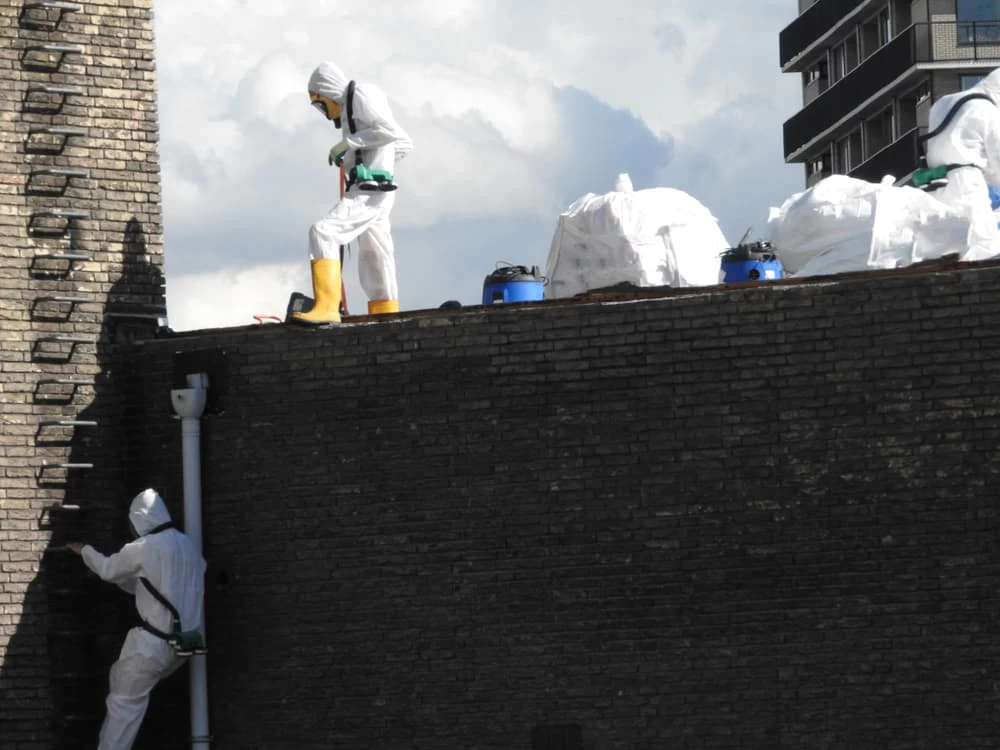
If asbestos is confirmed, we build a scope of work based on what’s actually there not a one-size-fits-all package. Abatement is performed under full containment with negative air pressure and HEPA filtration, following all NYS DOL ICR 56 requirements. For Miller Place homeowners navigating a renovation permit through the Town of Brookhaven, we make sure the documentation is in order before work begins so there are no delays on the back end.
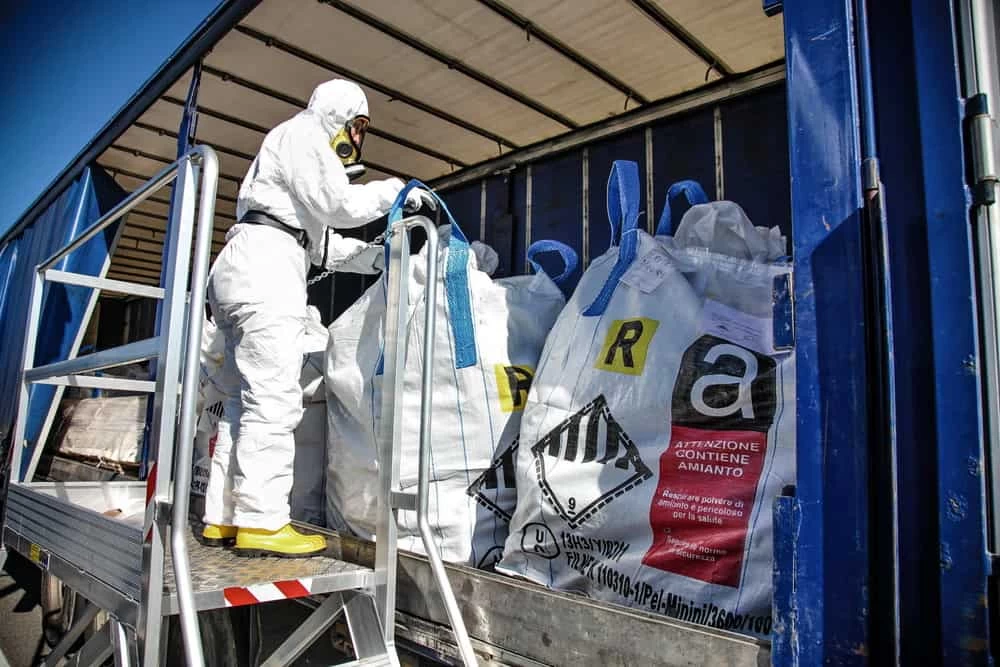
Once abatement is complete, a certified air clearance test is performed to confirm the space is safe. You receive a complete documentation package at the end everything you need for your contractor, your real estate attorney, or your building inspector. The process is straightforward, and we keep you informed at every step so there are no surprises.
Asbestos Remediation for North Shore Long Island Homes
What's Covered Depends on What Your Home Actually Has
The most common asbestos abatement calls we get from Miller Place homeowners involve popcorn ceiling removal, vinyl floor tile and mastic removal, and pipe or boiler insulation all materials that were standard in the 1960s and 1970s construction that defines this area’s housing stock. We handle all of it under one roof, which means you’re not coordinating between multiple contractors or getting partial scopes that leave something behind.
Asbestos popcorn ceiling removal is one of the most frequently mishandled jobs in residential renovation. Many general contractors don’t test first and disturbing asbestos-containing ceiling texture without containment is a serious health risk. We test before anything is touched, and if it comes back positive, we perform full enclosure abatement before your renovation continues.
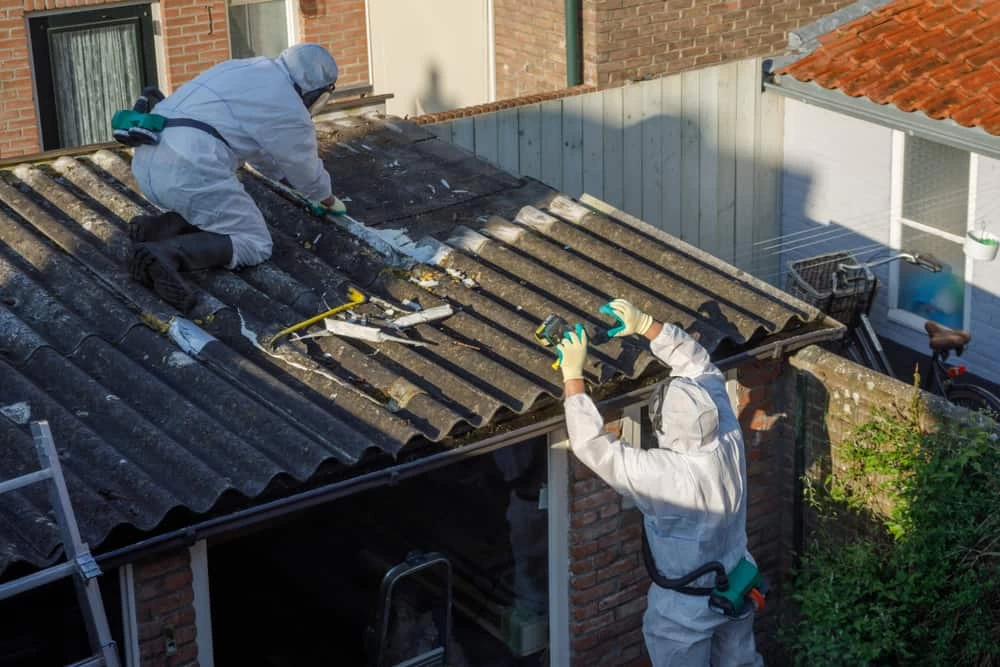
For asbestos tile removal, that includes both the tile itself and the black adhesive mastic underneath a detail that gets missed more often than it should. We also handle pipe insulation, boiler wrap, attic insulation, roofing materials, and joint compound, depending on what your home requires. Every job is scoped to what’s actually present, documented for compliance with Suffolk County and New York State requirements, and closed out with air clearance certification so you have a clean record.
How do I know if my Miller Place home actually has asbestos in it?
The honest answer is that you can’t know for certain without testing but the age of your home is the strongest indicator. If your Miller Place home was built between the mid-1950s and the mid-1980s, there’s a meaningful probability that asbestos-containing materials are present somewhere in the structure. The most common locations are vinyl floor tiles and the black mastic adhesive beneath them, acoustic spray texture on ceilings, pipe and boiler insulation in the basement, and attic insulation.
Visual inspection alone is not reliable. Asbestos fibers are microscopic, and many asbestos-containing materials look identical to their non-asbestos counterparts. The only way to confirm is through lab-analyzed samples collected by a certified inspector. If you’re planning any renovation work even something as routine as pulling up old flooring or removing a popcorn ceiling testing before you start is the right move, not an optional one.
Does New York State require a licensed contractor for asbestos removal, or can I do it myself?
New York State requires that all asbestos abatement work be performed by a contractor holding a valid NYS Department of Labor asbestos-handling license, and that all workers on the job be individually certified under Industrial Code Rule 56. This applies to residential projects, not just commercial ones and it applies regardless of the size of the job. Removing a small section of floor tile or a single ceiling is still regulated work under state law.
Doing it yourself or hiring an unlicensed handyman to handle it creates real legal exposure. If asbestos contamination is later discovered, you could be held liable for cleanup costs, and unlicensed abatement work can create problems when you try to sell your home or close out a building permit with the Town of Brookhaven. The documentation that comes with licensed abatement work is not just a formality it’s the paper trail that protects you.
What does asbestos abatement cost for a typical home in Miller Place?
Cost depends on what materials are present, where they are, and how much square footage is involved. For a standard residential job say, popcorn ceiling removal in a few rooms or vinyl floor tile abatement in a kitchen and basement you’re generally looking at a range that reflects the cost of certified labor, proper containment setup, lab testing, waste disposal, and air clearance. Smaller scopes can run a few hundred dollars for testing alone, while full abatement projects in larger homes can reach several thousand dollars depending on the scope.
In Miller Place, where homes frequently change hands at prices well above $600,000, the cost of professional abatement is almost always a fraction of what a failed home inspection or a delayed closing would cost you. We provide written scopes of work with upfront pricing before anything starts no vague estimates that expand after the fact. You know what you’re paying for and why before we begin.
Can asbestos abatement be done while my family is still living in the house?
In most cases, yes but it depends on the scope and location of the work. For contained abatement in a single room or area, like a basement boiler room or a specific floor section, the rest of the home can typically remain occupied as long as proper containment barriers are in place and the work area is sealed off from living spaces. For larger projects involving multiple rooms or shared HVAC systems, temporary relocation during the active abatement phase may be the safer approach.
We discuss this with you before the project starts so you can plan accordingly. For Miller Place families with children in the home, we take containment seriously negative air pressure, sealed work zones, and HEPA filtration are standard on every job, not optional add-ons. After abatement is complete, air clearance testing confirms that fiber levels are within safe limits before the space is reopened. You don’t just take our word for it the lab results say so.
Do I need an asbestos inspection before renovating or selling my home in Miller Place?
If your home was built before 1985 and you’re planning any renovation that involves disturbing existing building materials flooring, ceilings, walls, insulation, or mechanical systems a pre-renovation asbestos survey is the right first step and, depending on the scope of work, may be required under New York State regulations. For demolition projects of a certain scale, federal EPA NESHAP rules also come into play.
For home sales in Miller Place, it’s increasingly common for buyers’ agents to request asbestos documentation as part of the due diligence process, particularly for homes from the 1960s and 1970s. Having a clean inspection report or completed abatement with air clearance documentation removes a significant contingency from the transaction and gives buyers confidence. Sellers who handle this proactively tend to have smoother closings. If you’re listing a home in the 11764 ZIP code and it was built in that era, it’s worth getting ahead of it before a buyer’s inspector flags it for you.
What types of asbestos materials are most common in Miller Place homes specifically?
Given that the majority of Miller Place’s housing stock was built in the 1960s and 1970s, the most frequently encountered asbestos-containing materials in this area follow a predictable pattern. Vinyl floor tiles particularly the 9×9 and 12×12 inch tiles common in kitchens, laundry rooms, and finished basements are at the top of the list, along with the black adhesive mastic used to install them. Acoustic spray texture on ceilings, commonly called popcorn ceiling, is the second most common trigger for abatement calls in homes of this vintage.
Pipe insulation and boiler wrap are a consistent issue in homes that were originally built with steam or hot water heating systems, which was standard in this part of Suffolk County during that era. As those systems age or get replaced with modern HVAC, the old insulation gets disturbed and that’s when exposure risk becomes real. Attic insulation, particularly vermiculite-based products, and older roofing or siding materials round out the common list. If your home is in the Miller Place Historic District and has undergone mid-century renovations, there’s an additional layer of complexity worth discussing before any restoration work begins.